Tree · Theaceae
Japanese Stewartia
Stewartia pseudocamellia
Give it a little time and it gives back generously, with summer flowers, glowing fall color, and patchwork bark.
Partial shade
Every 3–7 days
USDA 5–8
12–40 ft · 3.7–12.2 m
Overview
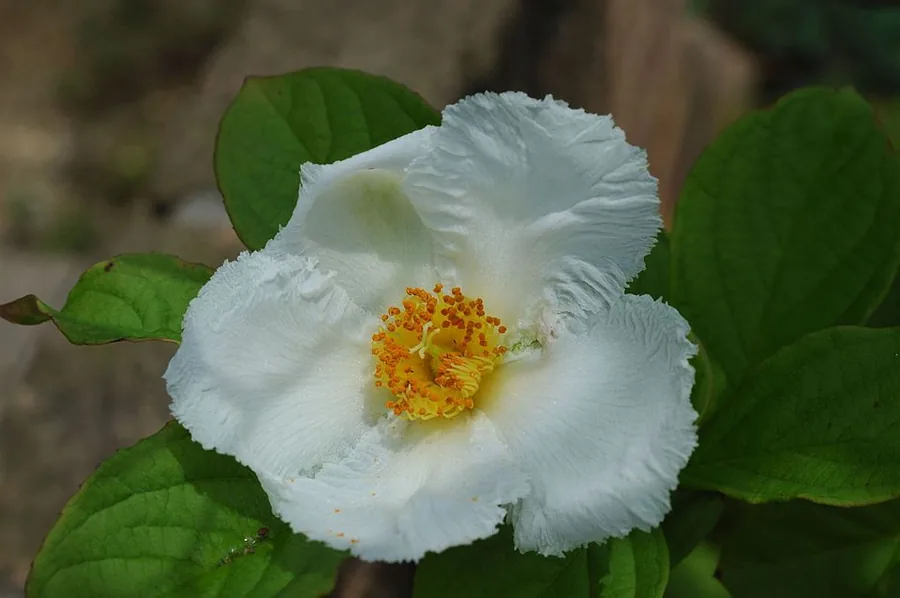
Japanese stewartia is a small deciduous tree from the tea family, the same cheerful group behind the camellias, and it makes a wonderful choice even if you're new to trees. It has something to offer in every season. White cup-shaped flowers open through early and mid summer, the leaves warm to deep red and orange come fall, and the trunk shows off peeling bark in patches of gray, orange, and rust that keeps you company all winter.
Think of this as a tree for a gardener happy to wait, and that patience is easier than it sounds. It grows slowly, needs a little while to feel at home in a new spot, and won't shrug off drought, baking heat, or soggy roots, so the one thing to get right is where you plant it. Settle it into a good home and it asks for very little, which makes it a forgiving, low-fuss friend once it's rooted.
Plant it somewhere you'll pass often, because each season brings a fresh reason to smile at it. Give it moist, acidic, well-drained soil and a spot with gentle morning sun and shelter from harsh afternoon glare, and any early stumbles are easy to recover from while it rewards your care with years of quiet, four-season charm.
Care
The short version: offer it part shade sheltered from hot afternoon sun, moist and acidic well-drained soil that never dries out or sits soggy, and a little patience while it gently settles in, and you'll do just fine.
Light
Your stewartia will be happiest in part shade with a little shelter from the hot afternoon sun. It can manage full sun in cooler places, but where summers turn hot the leaves scorch, so a spot with soft morning light and afternoon shade keeps it looking lovely and takes the guesswork out of siting.
Water
Aim to keep the soil evenly moist, giving it a deep drink every 3 to 7 days whenever the weather runs dry. This tree simply can't cope with drought, so try not to let the root zone dry out, and a comfy layer of mulch will help hold moisture and keep the roots cool for you.
Soil
Settle it into moist, well-drained, acidic soil that's rich in organic matter, ideally a sandy loam. Aim for a pH somewhere between 5.0 and 6.5, which is easy to check. It sulks in heavy clay or dry, rocky, or waterlogged ground, so a little work improving the site before planting saves you worry later.
Temperature
It's hardy from about -20°F to 86°F (-29°C to 30°C), so cold winters won't faze it, though it does find fierce summer heat harder going. In hot regions, a bit of shelter from afternoon sun and steady moisture make all the difference, and both are simple to provide.
Humidity
Ordinary outdoor humidity suits it just fine, so there's no target number to chase and one less thing to fret about. What really counts is steady soil moisture and shelter from drying heat, since it's dry, baking air that scorches the leaves.
Feeding
Feed it just once in early spring with a balanced or acid-forming slow-release fertilizer meant for acid-loving woody plants. One seasonal feeding is truly all it needs, and a formula made for acid lovers gently helps keep the soil on the acidic side it prefers.
Pruning
You'll be glad to hear this tree needs almost no pruning. Simply remove any dead, damaged, or crossing branches in late winter or early spring while it's dormant, and beyond that, relax and let its naturally graceful shape unfold on its own.
Repotting
Stewartia is rarely repotted and dislikes having its roots disturbed, so the kindest thing is to leave it be once it's settled. Roots circling the drainage holes, water rushing straight through, or new growth that stalls are gentle signs a young potted tree could use a bit more room.
Size & spacing
Give this tree room to stretch, since over many years it can reach 12 to 40 feet (3.7 to 12 m) tall and spread 8 to 25 feet (2.4 to 7.5 m) wide. Plant it well clear of buildings and other trees so its open canopy and patterned bark have all the space they need to shine.
When to plant
Because stewartia would rather not be moved, a little care with timing pays off and takes the pressure off you. Set out young container-grown trees in spring so the roots get a full, easy season to take hold, and then simply enjoy watching for the white flowers from June into August.
Northern hemisphere
Southern hemisphere
Typical months for a temperate climate: start earlier in warm zones, later where spring frosts linger.
- Plant: Spring, using young container-grown plants for best establishment
- Harvest: White cup-shaped flowers in early-to-mid summer (June to August)
Hardiness
USDA hardiness zones: 5–8
Temperature: down to -29°C
Troubleshooting
The comforting news is that this tree draws few serious pests, and most trouble comes down to the site rather than bugs or blight, which means it's usually within your power to fix. Keep a gentle eye on the roots and the leaves, since soggy ground and dry summer heat lie behind nearly every hiccup. Match what you're seeing below and adjust the conditions early, and your tree bounces back before any real decline sets in.
Drooping, yellowing leaves and a tree that fades from the top
Take heart, because this problem is fixable if you catch it. It points to root rot from ground that stays too wet, which starves the roots of air until they darken and go soft and the crown starts to thin. Gently lift a young tree and settle it into a raised, freer-draining spot, hold back on watering while the soil is still soaked, and mix some organic matter into the bed to loosen heavy earth.
Fix:
- Improve drainage or relocate young trees to a better-drained, raised site
- Reduce supplemental watering once soil is saturated
- Amend planting area with organic matter to improve structure
Crisp brown leaf edges when summer turns hot
Don't worry, this is a common summer hiccup and an easy one to ease. Those dry, brown margins are leaf scorch, the way the tree tells you it has run short of water in hot, exposed heat, and you'll usually notice it first on whichever side bears the fiercest afternoon sun. Give it a deep, generous soak through dry weeks, tuck a layer of mulch over the roots to keep them cool and moist, and offer a little afternoon shade wherever the light is harsh.
Fix:
- Water deeply during dry periods
- Apply mulch over the root zone to retain moisture and keep roots cool
- Provide afternoon shade where exposure is harsh
Toxicity
Here's a lovely bit of reassurance for a home with pets: Japanese stewartia is not toxic. It doesn't appear on the ASPCA's poison lists, and no part of it is known to harm cats, dogs, horses, or other animals. Like any plant, a big mouthful of leaves might unsettle a stomach for a moment, but there's truly nothing dangerous to fear.
Safe for
People · Cats · Dogs · Horses · Rabbits · Livestock · Birds
Cats Safe
You can relax if a cat rubs against the trunk or bats at a fallen leaf, because this tree holds nothing that could poison it.
Dogs Safe
A dog chewing on a low branch has nothing to fear here, though a really big mouthful of leaves may leave it with a brief, harmless tummy ache.
Horses Safe
Feel free to let horses graze near the tree, since it holds no compounds that would trouble them.
Rabbits Safe
Rabbits are perfectly fine around it, so the odd nibble of leaf or bark does them no harm at all.
Livestock Safe
Cattle, goats, and sheep can share a pasture with this tree without any concern, because no part of it is toxic to grazing animals.
Birds Safe
Birds that roost in the branches or peck at the seed capsules stay perfectly safe, since there's nothing toxic to reach.
People Safe
You needn't fear for adults or curious children around this tree. It's grown for its flowers and bark, not for the plate, so simply enjoy the show and leave the nibbling to nobody.
No special handling required; as with any plant, discourage pets from chewing foliage to avoid mild stomach upset.
Varieties
A handful of named selections and close relatives are lovely to know about, most chosen for bigger flowers or better bark. These are the ones you're most likely to come across at the nursery.
'Ballet'
If you'd love bigger blooms, this selection delivers larger flowers on a strong, spreading frame.
'Milk and Honey'
Gardeners cherish this one for its handsome peeling bark and its dependable, worry-free flowering.
Stewartia koreana (Korean stewartia)
A close cousin, treated as a synonym or variety of S. pseudocamellia, whose broad camellia-like white flowers open a touch flatter.
Stewartia monadelpha (tall stewartia)
A related species with lovely smooth cinnamon-brown to tan peeling bark that grows to around 20 to 25 feet.
How to propagate
You can raise a new stewartia from either seed or cuttings, and while neither is quick, both are within your reach. Cuttings hand you the faster, more dependable result, and seed is the long, gentle game for when you have patience to spare.
SeedDemanding
Collect ripe seed in fall; seed requires warm then cold stratification and may take many months to germinate · 1 to 2 years or more to a transplantable seedling
Growing from seed is a labor of love, so be kind to yourself if it feels slow. Collect ripe seed in fall and give it a warm spell followed by a cold one to unlock its double dormancy, which is why sprouting comes slow and a little uneven. Once seedlings do appear, they'll want a year or two, and sometimes longer, before they're sturdy enough to move on.
Stem cuttingsModerate
Take softwood cuttings in early summer · Several weeks to root, then grow on for a season or more
Cuttings are the friendlier, faster path, and they're well within your reach. Snip softwood cuttings in early summer, dip them in rooting hormone, and keep them under mist, and they'll take root in just a few weeks. Let them grow on for a season or more, and you'll have a young tree ready to plant out.
Myths
Stewartia is just another kind of camellia.
It's an easy mix-up to make, since the blooms really do resemble a camellia's and the two share the tea family. Rest easy on the difference, though: stewartia stands in its own genus as a deciduous tree, so unlike the evergreen camellia it lets go of its leaves each fall.
Japanese stewartia is an easy, fast-growing shade tree.
It takes its own gentle, unhurried pace, needs time to settle after planting, and would rather not be moved once it's home. Between its dislike of drought, heat, and soggy roots, it's kinder to think of it as a rewarding but demanding tree, not a quick beginner's shade tree.