Herb · Musaceae
Banana
Musa acuminata
Offer it warmth, rich soil, and steady water, and this gentle giant of an herb will keep sending up new stems for years.
Full sun
Every 2–4 days
59–86°F · 15–30°C
270–600 days
Overview
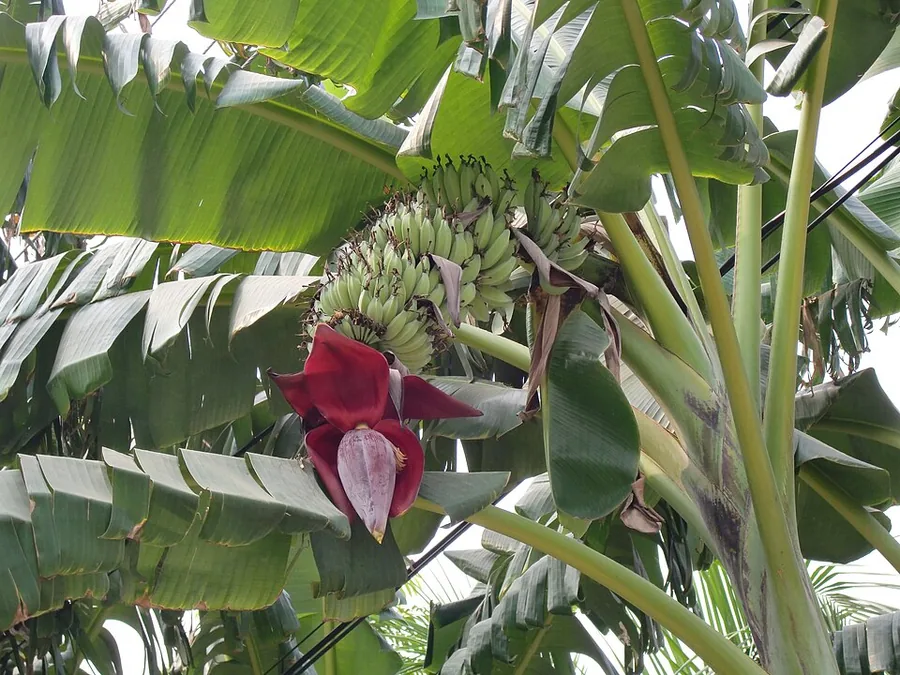
Here is a happy surprise for any new grower: the banana is not really a tree but a giant herb, the biggest one there is. The trunk you see is a pseudostem, a snug column of leaf sheaths that holds everything upright until flowering time. Each stem grows quickly, fruits a single time, and then bows out, passing the work along to the suckers gathered at its feet.
Born in the tropics, banana simply asks for heat and humidity to feel at home, and it will repay you generously for both. It thrives outdoors in USDA zones 9 to 11, and if you garden somewhere colder, do not worry, because a large pot you bring inside for winter does the trick. Give it sun, deep rich soil, and plenty of water, and one plant grows into a clump that renews itself again and again.
Growing a banana is a patient, rewarding project, so go easy on yourself while you wait. A new stem needs 9 to 20 months to reach harvest, which means the payoff comes slowly. Once your clump is established, though, the followers ripen one after another, and even before any fruit, those bold leaves more than earn their keep.
Care
The short version: give it full sun and warmth, deep rich soil kept evenly moist, and a steady diet of high-potassium feed through the growing season, and step in with cold protection the moment frost threatens.
Light
Banana loves full sun, which powers its fast and hungry growth, but do not fret if your spot has some shade, since it will tolerate partial shade and carry on. The more light you can give it, the sturdier the stem and the sweeter the fruit.
Water
This is a thirsty plant, so think generous. Keep the soil evenly moist all the time yet never waterlogged, watering every 2 to 4 days and a touch more in heat or wind. Deep, well-drained ground is your friend here, letting you water freely without ever drowning the roots.
Soil
Plant it in deep, fertile, well-drained loam rich with organic matter, which both feeds the roots and holds the moisture banana craves. A pH anywhere between 5.5 and 7.0 keeps it perfectly content.
Temperature
Banana is happiest between 59°F and 86°F (15°C to 30°C). Its growth eases off as things cool toward 60°F (16°C), and a freeze at or below 32°F (0°C) will cut the leaves down, so real warmth is what it needs to crop.
Humidity
Coming from the tropics, banana likes the air humid, around 50% to 80%. Dry air can brown the leaf edges, so a sheltered, muggy corner outdoors or a lightly misted spot indoors keeps the foliage looking lush and lovely.
Feeding
Banana is a heavy feeder with a real appetite for potassium, so do not be shy with it. A high-potassium fertilizer at roughly a 3-1-6 N-P-K ratio, given about once a month through the warm growing season, keeps the leaves green and the fruit filling out nicely.
Pruning
Tidy away dead or torn leaves whenever you see them, and once a stem has fruited, go ahead and cut that pseudostem to the ground, since it only fruits the one time. Thinning the crowd of suckers down to one or two followers per clump is kind to the plant, keeping all its energy where it counts.
Repotting
A potted banana likes to move up every 1 to 2 years, or sooner if roots circle the pot, growth stalls, or suckers pack the surface. Shift it into a larger pot as the warm season begins so it can spread its roots before the big push of growth.
Size & spacing
This is a generous, big-hearted plant, reaching 6.5 to 16 feet (2 to 5 m) tall and spreading 5 to 10 feet (1.5 to 3 m) wide. Give it plenty of open room from the start, since the clump only widens as fresh suckers fill in around it.
When to plant
Banana follows warmth rather than the frost calendar, so let that guide you. Plant in spring once the soil and air have warmed up, let the stem build over the long growing season, and look for fruit anywhere from 9 to 20 months later. If your winters turn harsh, simply grow it in a pot and bring it indoors before the cold sets in.
Northern hemisphere
Southern hemisphere
Typical months for a temperate climate: start earlier in warm zones, later where spring frosts linger.
- Plant: Spring, after the last frost when soil and air are warm (zones 9 to 11)
- Harvest: Each pseudostem flowers and fruits once, about 9 to 20 months after planting, then is cut down and replaced by suckers
Hardiness
USDA hardiness zones: 9–11
Temperature: down to -7°C
Troubleshooting
Most banana worries come down to cold, hungry soil, or a fungus in the ground, and the good news is that the plant tells you which. Read its leaves and its pseudostem and the answer is usually clear. Match the signs below and step in early, and a setback rarely turns into a real loss.
Lower leaves yellowing and wilting from the bottom up
If the bottom leaves yellow and droop while the rest looks fine, you may be seeing Panama disease, a Fusarium fungus that lives in the soil and slowly blocks the plant from within. Slice into a pseudostem and tell-tale brown or red streaks run through the tissue. There is no cure once it settles in, so the kindest thing for the rest of your garden is to dig out and destroy the sick plant and avoid putting a vulnerable cultivar back in that same patch, because the fungus stays for years.
Fix:
- Remove and destroy infected plants
- Do not replant susceptible cultivars in the same soil
- Use resistant cultivars where available
Leaves turning black and collapsing after a cold snap
Take heart if a chilly night leaves the foliage looking ruined, because cold damage looks worse than it usually is. This is a tropical plant, so chilling begins below 60°F (16°C) and a freeze at or below 32°F (0°C) burns the leaves away. Once the frost danger has passed, trim the dead foliage, tuck a thick blanket of mulch over the rhizome, and in most cases fresh shoots push up from below come spring.
Fix:
- Cut away dead foliage once frost danger passes
- Mulch heavily over the rhizome
- Allow the plant to resprout from the rhizome in spring
Older leaves yellowing or scorching at the edges
Because banana eats so much, a potassium or nutrient shortage is easy to fix once you spot it. The oldest leaves show it first, yellowing or scorching along their edges while the new growth comes in thin and weak. A simple soil or leaf test will confirm what is missing, and then a high-potassium fertilizer at roughly a 3-1-6 N-P-K ratio, kept up through the warm season, brings the whole plant back to health.
Fix:
- Apply a high-potassium fertilizer (about 3-1-6 N-P-K)
- Feed regularly through the warm growing season
Toxicity
You can breathe easy here, because the banana is non-toxic from root to fruit. The ASPCA lists it as safe for cats and dogs, and the same goes for other animals and for people. The worst a big mouthful of leaves might do is loosen a stomach a little, just as any rich plant material can.
Safe for
People · Cats · Dogs · Horses · Rabbits · Livestock · Birds
Cats None
You can relax about a curious cat here, since the ASPCA marks banana as non-toxic to them. The most that might happen is a passing tummy ache if one really overdoes the leaves, and that goes for almost any houseplant.
Dogs None
Banana is gentle company for dogs, and you will even find the ripe fruit baked into plenty of dog treats. A dog that wolfs down a pile of leaves might get a softer stool for a day, but nothing in the plant can truly poison them.
Horses Safe
Horses come to no harm grazing the leaves, and a good many enjoy a peeled banana too. There is simply nothing toxic in the plant to worry them.
Rabbits Safe
Rabbits are perfectly safe with banana, though the fruit is sweet and rich, so it is kindest as a small now-and-then treat rather than a daily ration.
Livestock Safe
Cattle, goats, and sheep can tuck into the leaves and stems with no trouble at all, and in many tropical places the plant is grown to feed them.
Birds Safe
Birds love ripe banana, and both the fruit and the foliage are safe for them. Your backyard hens or a pet parrot can happily share a slice.
People Safe
Bananas are an everyday food on most tables, eaten raw or cooked, with no toxin anywhere in the plant. Even the green fruit and the tender inner stem find their way into kitchens around the world.
Safe around pets; fruit and foliage are non-toxic, though eating large amounts of any plant material can cause mild digestive upset.
Varieties
Most bananas you might grow at home come down to a handful of well-known cultivars, and it helps to meet them before you settle on one.
Dwarf Cavendish
If you want a forgiving first banana, this short-stemmed seedless dessert type is a lovely choice, since it settles happily into containers and stands up to wind, which is why it leads the pack for indoor and small-space growing.
Cavendish
This is the familiar dessert banana stacked on supermarket shelves, and being sterile and seedless, it is only ever raised from suckers.
Lady Finger
These tall, graceful plants reward you with small, intensely sweet sugar bananas.
Lacatan
Among the very tallest bananas you can grow, this one makes a real statement.
How to propagate
Making more bananas could hardly be simpler, because every clump kindly throws up new shoots on its own. You raise fresh plants from those shoots or from a piece of the underground rhizome, and never from seed.
Offsets & pupsEasy
Warm season (spring to summer) · Roots in a few weeks; first fruit in about 9 to 20 months
The gentlest and surest way to make more bananas is to lift a sword sucker, which is a young shoot about 4 to 5 feet tall with slim leaves, easing up a piece of the rhizome along with it. Set it out in the warm season and it will take root within a few weeks, then carry its first bunch about 9 to 20 months on, so be patient and the reward arrives.
DivisionModerate
Warm season (spring to summer) · Several weeks to root
You can also divide the rhizome into pieces during the warm season, making sure each holds healthy white tissue and a bud or two, and each piece will root over several weeks. Do not look to seed for this, since edible bananas are sterile and seedless.
Myths
Bananas grow on trees.
It is an easy thing to assume, but the banana is really a giant herbaceous perennial rather than a true tree. That trunk-like column is a pseudostem, packed from tightly wrapped leaf sheaths with no wood in it anywhere. Many people fondly call it the world's largest herb, a title that is popular even if it is gently debated.
You can grow an edible banana from the seeds in store-bought fruit.
It would be wonderful if it worked that way, but dessert bananas like Cavendish are sterile and seedless, so there are simply no living seeds to sow. Happily, new plants come along just fine from suckers, pups, or divisions of the rhizome.