Ornamental · Araceae
Water Lettuce
Pistia stratiotes
A soft floating rosette that grows with almost no fuss, as long as you keep it far from any wild pond or stream.
Full sun
59–86°F · 15–30°C
USDA 9–11
3–6 in · 8–15 cm
Overview
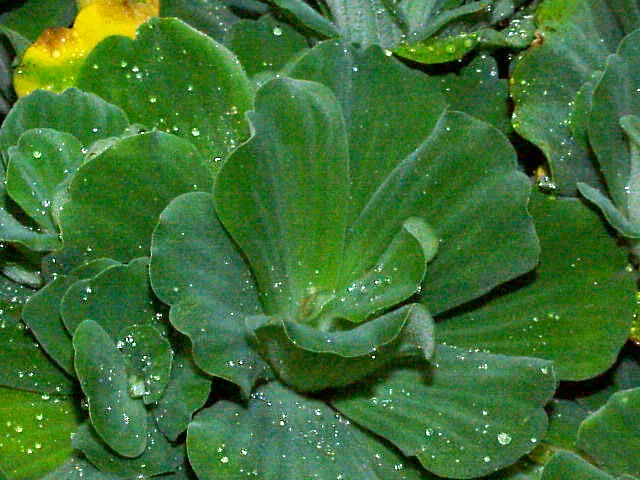
If you have never grown a floating plant before, water lettuce is a kind place to begin. It drifts on the surface as a soft, ribbed rosette that really does look like a little head of pale blue-green lettuce, and it asks for no soil at all. It feeds straight from the water while feathery roots trail below, and in warm, still, nutrient-rich water under full sun it fills in fast, so you will feel successful early.
That same eagerness is the one thing to respect. Across the warm southern states water lettuce has turned into a serious invasive aquatic weed, and many states ban it outright. Loose in a wild pond it builds a heavy mat that shuts out light and oxygen and harms the life beneath, so enjoy it only in a contained feature well away from any drain, stream, or pond outlet. Kept within that one boundary, it is a very forgiving plant to look after.
Care
The short version: float it on warm, still water in full sun, keep the level topped up and the water rich, lift the extra daughter plants by hand when they crowd, and never let a single fragment slip into natural water. Mistakes here are easy to undo.
Light
Full sun brings out its best, though it manages in partial sun or light shade without complaint. A floating patch in strong light fills in fast, so plan to thin it now and then rather than fuss over coaxing it along.
Water
This is a plant that lives on the water, never in soil. Rest the rosette on still or slow-moving water with its feathery roots hanging free below, and keep the level topped up so it never settles onto the bottom. Warm, calm, nutrient-rich water in full sun makes it happiest.
Soil
There is no soil to worry about, since the plant floats free and takes its food from the water. Aim for water in the 6.0 to 7.5 pH range, sitting on the neutral side of slightly acidic, and it will settle in nicely.
Temperature
Warmth is what water lettuce loves, and it does beautifully from about 59°F to 86°F (15°C to 30°C). Cold is its one real weakness, and a frost or a spell of near-freezing water will turn the rosettes to mush, so bring the season to a gentle close before then.
Humidity
Floating right at the air-water line, it sits in high humidity all on its own. There is no number to fuss over here, because the open water around it keeps the air moist for you.
Feeding
You can relax about feeding, since none is needed. The plant draws its nutrients straight from the water and grows fastest in rich, even polluted water, where the spread can turn explosive, so adding fertilizer only feeds a problem.
Pruning
Pruning here is really gentle crowd control. Thin and lift the spare daughter rosettes by hand, rake, or net through the season to ease the spread, and compost whatever you pull on dry land, never back in or near the water.
Repotting
not applicable - free-floating, never potted
Size & spacing
Each little rosette stays modest at 3 to 6 inches (8 to 15 cm) tall and 6 to 18 inches (15 to 46 cm) wide, but they knit together edge to edge. Leave a bit of open water between clusters and skim off the extras, and the surface stays clear.
When to plant
Water lettuce is tender and the first frost will end it, so think of it as a warm-season friend only. Set it out in late spring once the chill has gone and the water has warmed, and it will drift and grow happily through the heat of summer before fading again as the season closes.
Northern hemisphere
Southern hemisphere
Typical months for a temperate climate: start earlier in warm zones, later where spring frosts linger.
- Plant: After all danger of frost has passed and water has warmed in late spring; the plant is tender and killed by frost, so in cold-winter areas it is grown as a warm-season annual.
- Harvest: Tiny, inconspicuous pale flowers hidden in the leaf center, summer to early winter (rarely noticed)
Hardiness
USDA hardiness zones: 9–11
Temperature: down to -7°C
Troubleshooting
Most troubles with water lettuce come not from a struggling plant but from one that is thriving a little too well. The signs below are really about keeping its enthusiasm in check, and catching them early makes everything simple to manage.
A floating mat creeping across the whole pond
Water lettuce keeps sending out daughter rosettes on stolons and sets plenty of seed, so a handful of plants can cover a pond in a single warm season, and sunny, nutrient-rich water only speeds it along. The reassuring part is that raking or netting them out again and again keeps things well in hand, and composting all you pull on dry land makes sure nothing drifts back to the water.
Fix:
- Physically remove plants by raking, seining, or netting them from the surface
- Remove repeatedly through the season to keep the mat from re-forming
- Dispose of all removed material by composting on dry land, well away from any water
- If using herbicide on large infestations, treat in sections to avoid oxygen crash from decaying plants killing fish
Dark, still water with fading plants and fish below
As the mat grows thick it shades out the submerged natives and seals off the surface, so the oxygen fish need drops away, and the piled-up growth pulls out even more as it rots and loads the water with nutrients. Clearing the mat mechanically as early as you can helps a great deal, staging the removal so a sudden die-off does not crash the oxygen, and reporting any wild infestation to your state aquatic invasive species office.
Fix:
- Remove the mat mechanically as early and completely as possible
- Stage removal or chemical treatment to avoid a sudden oxygen crash from mass plant die-off
- Report infestations of natural water bodies to state aquatic invasive species authorities
It may be against the law to own or move where you live
Many states list Pistia stratiotes as a prohibited noxious aquatic weed, which makes selling, keeping, or moving it unlawful, among them Florida, Texas, California, Alabama, South Carolina, Connecticut, North Carolina, and Wisconsin. Check your state's rules before you bring one home, and where it is banned the kind thing is to skip it, compost any you already have on dry land, and never carry plants or fragments between water bodies or across state lines.
Fix:
- Confirm your state's regulatory status before obtaining or growing the plant
- If it is prohibited in your state, do not acquire it and remove and destroy any existing plants by composting on dry land
- Never transport plants or fragments between water bodies or across state lines
Rosettes going soft and brown after a cold snap
Because water lettuce is tender and frost-sensitive, freezing weather browns the leaves and turns them to mush. In cold-winter regions the easy path is to grow it as a warm-season annual and simply start fresh each spring, and where it is legal you can carry a few plants over indoors in a bright, frost-free tub of warm water.
Fix:
- Treat as a warm-season annual in cold-winter regions
- Where legal, overwinter a few plants indoors in a bright, frost-free tub of warm water
Toxicity
Despite the friendly name, water lettuce is not something to eat. The leaves hold sharp calcium oxalate crystals that sting the mouth and stomach, so a curious pet, grazing animal, or child who bites one gets a mild but unpleasant burn. The larger worry is to the wider world, since this is a banned invasive weed that must never reach open water.
Toxic to
Cats · Dogs · Horses · Rabbits · Livestock · Birds · People
Cats Mild
A cat that chews the leaves ends up with a mouthful of calcium oxalate crystals that sting, so expect drooling, pawing at the mouth, and sometimes a little vomiting. It is usually mild and settles once the plant is out of reach.
Dogs Mild
A dog that bites into the foliage feels that same burning in the mouth and throat, and drooling or an upset stomach can follow. It rarely turns serious, and most dogs soon decide the bitter leaves are not worth another try.
Horses Mild
Horses tend to steer clear of the gritty rosettes, and the oxalate crystals make a mouthful unpleasant rather than harmful. One that does graze some may show a little mouth irritation or mild drooling, so it is still wise to keep the plant out of paddock water.
Rabbits Mild
The crystals in the leaves irritate a rabbit's tender mouth, so this is not a green to offer. A nibble can bring on drooling or a brief dip in appetite, so leave it aside and stick to rabbit-safe forage.
Livestock Mild
Cattle, goats, and sheep mostly walk right past it, and the bitter oxalate-laden leaves put them off after more than a taste. Any that do eat some may drool or go off their feed for a while, so fencing stock away from infested water is the safe move.
Birds Mild
Pet and backyard birds can pick up the same mouth irritation from pecking the foliage. The effect is mild, but it is not a plant to leave where birds forage, so offer them food made for them instead.
People Mild
Despite the name, this is no salad green. Chewing the leaves brings burning and swelling in the mouth from the oxalate crystals, and the sap can leave skin or eyes itchy, so wash up after handling and keep it away from small children.
Wash hands after handling and keep plants and trimmings away from pets and small children; sap and crushed leaves can irritate skin, mouth, and eyes.
Helpline numbers

United States
ASPCA Animal Poison Control: (888) 426-4435 (fee applies)
Poison Control: (800) 222-1222



Canada
Poison Centres: 1-844-764-7669
Varieties
There is really just one plant to know here, along with a floating look-alike that is easy to confuse it with. Both carry the same invasive habit, so it helps to tell them apart before you bring one home.
Pistia stratiotes (species)
The wild species is the one you will actually meet, a velvety, ribbed, pale blue-green rosette trailing feathery roots, and even the dwarf ornamental picks sold here and there carry the very same invasive habit and legal limits.
Water hyacinth (Pontederia / Eichhornia crassipes) - look-alike, not a variety
Often set out beside water lettuce and muddled with it, water hyacinth is a different floating plant, with glossy rounded leaves on swollen bulb-like stalks and showy lavender flowers, and it is every bit as notorious a mat-forming, regulated weed.
How to propagate
Water lettuce almost multiplies on its own, which is both its charm and its catch. It spreads in two ways, and both move faster than you would ever expect from a pond plant.
Offsets & pupsEasy
Warm growing season (late spring through summer) · Days to a few weeks
All through the warm months from late spring into summer, the plant keeps pushing out daughter rosettes on stolons, and a separated pup roots and gets going on its own within days to a few weeks. That same easy spread is just what makes it invasive, so multiply it only where it is legal and keep every plant well away from natural water.
SeedModerate
Warm season; seed germinates in warm water (above about 68 degrees F) · Weeks
It also sets plenty of water-dispersed seed that sprouts in warm water above about 68°F (20°C) and takes a few weeks to get established. Those drifting seeds can start fresh infestations far from the parent, which is much of why the plant is so hard to be rid of once it is loose.
Myths
Water lettuce is a harmless little floating plant that is safe to drop into any pond.
In truth it is a banned or regulated noxious aquatic weed in many states, Florida, Texas, and California among them. Left in open water it breeds into dense mats that smother light and oxygen, kill native plants and fish, and choke waterways. Keep it away from natural water, and compost whatever you remove on dry land.