Houseplant · Araceae
Alocasia Zebrina
Alocasia zebrina
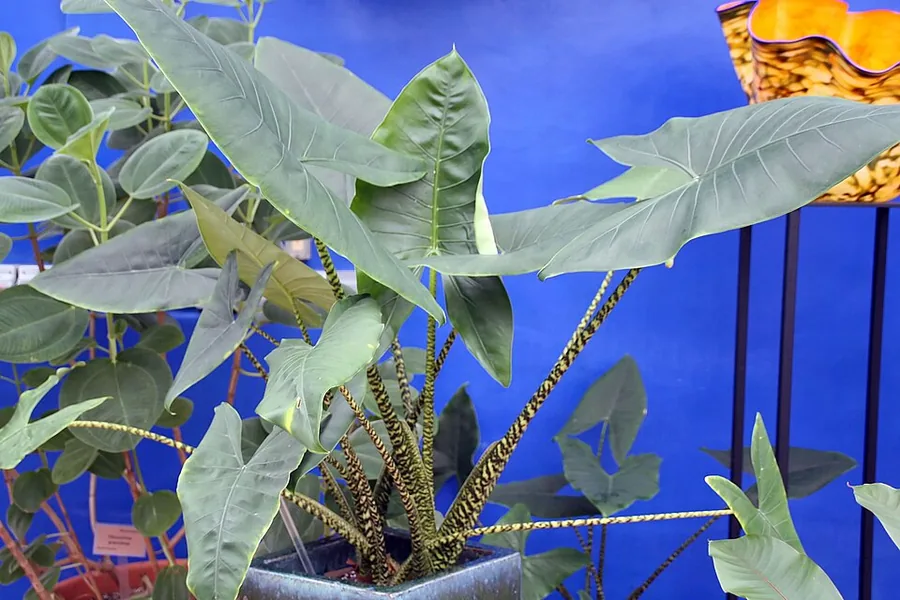
Arrow-shaped leaves ride high on stems patterned like a zebra, turning this houseplant into a piece of living art.
Bright indirect
68–77°F · 20–25°C
USDA 10–12
3 ft · 0.9 m
Overview
The name fits the plant beautifully, since each glossy, arrow-shaped leaf rides up on a stem dressed in cream and dark stripes. It hails from the warm, damp forest floors of the Philippines, and once you picture that home, its needs make a lot more sense. You are growing this one for its bold silhouette rather than for any flowers.
Yes, zebrina has a name for being tricky to please, and there is truth in that, but none of it is beyond a careful beginner. It frets over watering, longs for moisture in the air, and pouts if its roots stay drenched. Offer it bright indirect light and a gentle, watchful hand with the watering can, and it rewards you with quick new leaves all spring and summer before it settles into a calm winter nap.
Before it joins your home, there is one thing worth holding onto: the whole plant is toxic to pets and people because of the calcium oxalate crystals tucked through its tissue. None of that makes it any less lovely, it just means giving it a thoughtful home up and out of reach of curious cats, dogs, and small children.
Care
The short version: offer bright indirect light, plenty of humidity, and steady warmth from 68°F to 77°F (20°C to 25°C). Wait until the top half of the soil feels dry before watering again, go gentle in winter, and always keep the roots from sitting wet.
Light
Settle zebrina into bright indirect light, the bright glow near a window that never lands harsh midday sun on the leaves. It will get by in partial shade or medium light, though the stems grow longer and weaker when it does. Strong direct sun burns the foliage, so soften a bright window with a sheer curtain.
Water
Wait for the top half of the soil to dry before watering again, then water well and let every drop drain through. Soggy roots are this plant's least favorite thing, and too much water is the quickest path to rot and spotted leaves. Pull right back in winter, when it rests and drinks far less than it does in summer.
Soil
Reach for an organically rich, well-draining mix that holds a little moisture without ever turning into mud. The genus is easygoing about texture and handles clay, loam, or sand, and it stays content across a generous pH span of 5.5 to 8.0.
Temperature
Keep things comfortably warm, somewhere between 68°F and 77°F (20°C to 25°C). As a tropical plant it has no patience for cold, so steer it clear of drafty windows and chilly rooms, and bring any summering plant back indoors well before the evenings start to bite.
Humidity
Zebrina craves high humidity, a fair bit more than most homes naturally hold. A pebble tray, a small humidifier, or a bright, steamy bathroom each go a long way. Dry air wears the plant down and rolls out a welcome for spider mites.
Feeding
Feed it only through the growing season, from spring into summer, while it is busy unfurling new leaves. A regular fertilizer on a seasonal rhythm is all it asks for. Set feeding aside in winter while it rests, since it simply cannot make use of the nutrients then.
Pruning
There is hardly any pruning to fuss over with this one. Just clip away dead, yellowing, or damaged leaves as you spot them, snipping at the base. Clearing off tired foliage keeps it looking its best and takes away the little nooks where pests like to hide.
Repotting
No set schedule exists for zebrina, so let the plant lead and move it up when it outgrows its pot or the mix starts to break down. Stepping it into a slightly bigger pot in spring, as growth gets going, gives the roots the kindest possible start.
Overwintering
Zebrina lives as an indoor plant all year and is treated like any other houseplant. If yours spends summer outside, carry it back in before the first autumn frost and keep it cool, around 60°F to 65°F (16°C to 18°C), and humid, watering only a little while it rests over winter.
Size & spacing
Indoors it climbs to roughly 3 feet (91 cm) tall and about the same across, so set aside a patch of floor or table where the arching leaves and upright stems can open out without bumping into anything.
Troubleshooting
Almost every wobble with zebrina comes down to water or light, and that is reassuring, because both are easy to adjust. Watch the leaves and stems for early hints, and remember that one symptom can mean two different things, so a quick feel of the soil usually points you the right way.
A soft base and drooping even though the soil is wet
A plant that flops while sitting in damp soil is usually telling you it has root rot from too much water, and the good news is you can often save it. Gently slide it out and check: firm white roots are fine, but soft brown slimy ones need to go. Trim those away, settle it into fresh airy mix, water more sparingly, and let the pot drain freely.
Fix:
- Reduce watering frequency
- Repot into fresh, well-draining mix and remove rotted roots
- Ensure the container drains freely
Stems growing long and weak as they lean toward the glass
If the stems are stretching out thin and floppy and the whole plant tips toward the window, take heart: it is simply asking for more light. Shift it somewhere brighter with bright indirect light, and turn the pot a quarter turn each week so it fills out evenly rather than leaning one way.
Fix:
- Move to a brighter spot with bright indirect light
- Rotate the plant periodically for even growth
Faint webs and a speckled, bronzed look across the foliage
When the air indoors turns dry, spider mites tend to move in, leaving the leaves dotted and dull with thin webbing tucked under them. Don't panic: a good rinse, a little extra humidity, and a treatment of insecticidal soap or horticultural oil applied as the label directs will turn it around. Move the plant away from its neighbors for a while so the mites have nowhere to spread.
Fix:
- Rinse foliage and increase humidity
- Treat with appropriate insecticidal soap or horticultural oil per label
- Isolate the plant to limit spread
A sticky film with bugs gathered along stems and leaves
Little white fluffy patches are mealybugs, and tight groups of soft tiny insects are aphids, and both leave a tacky honeydew behind as a giveaway. Wipe them off by hand, then treat with insecticidal soap or horticultural oil following the label. Keep the plant on its own and treat again every so often until no new bugs show up.
Fix:
- Wipe off insects and treat with insecticidal soap or horticultural oil per label
- Isolate the plant and repeat treatment as needed
Losing leaves and pausing growth as the cold arrives
Try not to worry when leaves thin out and growth stalls in the colder months, because this is almost always just the plant taking its winter rest, especially if the rhizome stays firm to the touch. Water less, set the heavy feeding aside, and keep it cozy and well lit. Once spring returns, it will wake up and start growing again on its own.
Fix:
- Reduce watering and stop heavy feeding during dormancy
- Keep the plant warm (cool but not cold) and in good light
- Resume normal care as growth restarts in spring
Leaves taking on a yellow cast
When a leaf goes yellow, water is the usual culprit, though a too-dim spot can cause it as well. Feel the soil first, since too much and too little water both look the same on the leaf, and that one check saves you from guessing wrong. Aim for soil that stays evenly damp but never sodden, and give the plant the bright indirect light it loves.
Fix:
- Adjust watering to keep soil evenly moist but not saturated
- Correct light levels to bright indirect light
Toxicity
There is no sugarcoating this one: it is a truly toxic plant. Every part is loaded with sharp calcium oxalate crystals that sting the mouth and throat as soon as anything bites down. Give it a home safely out of reach of pets and children, and get into the habit of washing your hands once you have handled it.
Toxic to
Cats · Dogs · Horses · Rabbits · Livestock · Birds · People
Cats Moderate
If a cat takes a bite, those tiny oxalate needles go right into its mouth, so you may see it drooling, pawing at its lips, and showing a sore, puffy tongue. Retching and a hard time swallowing tend to come along soon after.
Dogs Moderate
A dog that chews a leaf runs into the very same sting, with the mouth, tongue, and lips swelling and stinging within minutes. Plenty of drooling, an upset stomach, and difficulty getting food down usually follow close behind.
Horses Moderate
Those same crystals leave a horse with a sore, swollen mouth and lips, lots of drooling, and trouble swallowing. Since horses are unable to vomit, the soreness tends to linger in the mouth and throat instead.
Rabbits Toxic
A rabbit's mouth and belly get the same burning sting from the oxalate crystals that any grazing animal would, so a nibble simply is not safe. Keep the plant somewhere a roaming rabbit could never reach.
Livestock Toxic
If cattle, goats, or sheep graze on the leaves, they meet the same burning, swelling, and drooling, and they often quit eating afterward. It is worth fencing the plant off anywhere stock might wander.
Birds Toxic
A nosy bird that nibbles a leaf gets that same sharp oxalate sting to its beak and mouth. Since no part of the plant is gentle on them, keep it fully away from any pet birds.
People Caution
This is not a plant anyone eats, and a single bite brings a quick burning and swelling in the mouth and throat. The sap can sting skin and eyes too, so wash up after handling it and keep it out of the way of little ones.
Sap and chewed tissue release needle-like calcium oxalate raphides; keep away from pets and children and wash hands after handling
Helpline numbers

United States
ASPCA Animal Poison Control: (888) 426-4435 (fee applies)
Poison Control: (800) 222-1222



Canada
Poison Centres: 1-844-764-7669
How to propagate
Unlike a lot of houseplants, zebrina will not root from a snipped cutting, so don't worry about trying. The kind way to grow your collection is to divide the rhizome and tease off the young pups it sends up.
DivisionModerate
Spring to summer · Several weeks
Making new plants here is friendlier than it sounds, because you simply divide what you already have. During spring or summer, ease the plant out of its pot and gently separate the little pups that grow along the rhizome or corm, giving each one its own container. Let those new divisions have several weeks to settle and root before you look for fresh leaves.
Myths
All elephant ears are one and the same, so you can drop whichever one you like into the yard without a second thought.
Several different genera share that one common name, and they really do not all act alike. UF/IFAS steers gardeners toward the ornamental Alocasia rather than the invasive elephant ears Colocasia esculenta and Xanthosoma sagittifolium, and cautions against setting any of them near natural waterways. Make sure you know exactly which plant you have before it ever reaches the soil.