Houseplant · Araceae
Black Velvet Elephant Ear
Alocasia reginula 'Black Velvet'
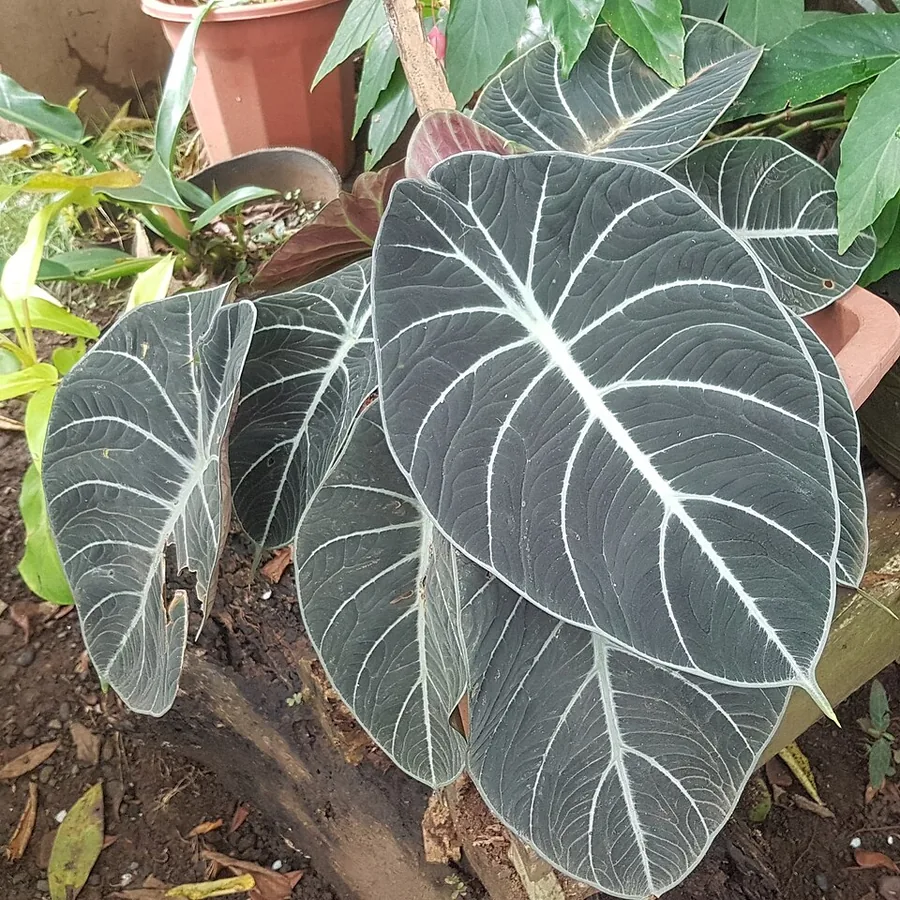
A petite jewel alocasia wearing velvety black leaves laced with silver veins, ready to reward a thoughtful touch.
Bright indirect
USDA 10–12
18 in · 46 cm
Overview
Among the little jewel alocasias, the Black Velvet stands out for its thick, almost black leaves stitched with bright silver veins. It keeps a tidy, small frame and tops out at only about 18 inches (46 cm) tall, so think of it as a tabletop companion rather than the giant elephant ear that comes to mind. It is part of the aroid family, with roots reaching back to the rainforests of Borneo.
If you enjoy a plant that asks for a little attention, this one is a lovely match. It takes its time growing, has no fondness for cold, and will rot the moment its soil stays too wet, so the whole knack lies in tuning in to what it wants and going easy on the water. You can absolutely get the rhythm down, and when you do, those dark, textured leaves become some of the most beautiful foliage you can grow inside.
One gentle heads-up before you start: every part carries calcium oxalate crystals that sting the mouth and skin. The plant is truly toxic to pets and a real hazard for little ones, so set it somewhere curious paws and mouths simply cannot get to.
Care
The short version: offer bright indirect light, plenty of humidity, and steady warmth, and water only after the top half of the soil has dried out. Overwatering is the one mistake that does the most harm, so go gently.
Light
Set it in bright, indirect light, the soft glow beside a window without the fierce midday sun that would scorch those dark leaves. It will get by in partial shade, though skimping on light slows an already unhurried grower and mutes that velvety depth of color.
Water
Watering trips up most growers, so let it guide your confidence. Wait until the top half of the soil has dried before you water again, and pull back through winter, since the genus rots quickly when left wet. One simple habit helps most of all: never let the pot sit in a saucer of standing water.
Soil
Reach for a moist but well-drained, organically rich mix that holds a little water without turning into a swamp. A pH from 5.0 to 8.0 is perfectly fine, but drainage counts for far more than hitting an exact number, because dense, water-logged soil is what leads to root rot.
Humidity
Being a high-humidity plant, it feels most at home in the damp air of a rainforest floor. Dry indoor air leaves it stressed and tempts spider mites, so a humid corner, a pebble tray, or a small humidifier makes a real difference.
Feeding
Offer food during the active spring and summer stretch, then ease back or stop altogether through winter dormancy. A seasonal feeding pattern fits it well, since there is nothing to gain by pushing nutrients on a resting plant.
Pruning
There is no shaping needed at all, which keeps things easy. Simply take off dead, yellowed, or damaged leaves as you notice them to keep the plant neat and give pests fewer places to hide.
Repotting
Only repot when it truly calls for it, since this cultivar dislikes being disturbed and grows slowly anyway. Spring or summer is your window, and you can divide at the same time for more plants, while a fresh fast-draining mix at each repot helps keep rot at bay.
Overwintering
Ahead of the first fall frost, bring pots to a humid, cool spot around 60°F to 65°F (16°C to 18°C) and cut back on watering. Freezing weather takes the foliage, but the plant can quietly rest through winter and send up fresh leaves once warmth returns.
Size & spacing
Look forward to a compact little plant, up to about 18 inches (46 cm) tall when mature. Its slow pace and modest size make it a comfortable fit on a shelf or tabletop rather than down on the floor.
Troubleshooting
Nearly everything that troubles this plant traces back to water, humidity, or cold, and once you know that, the worries shrink. Look at the leaves and the soil side by side, since one symptom can mean too much water just as easily as air that is too dry. Find the match below, act early, and you will usually catch things before they spread.
A drooping plant with soft, yellowing growth even when the soil feels damp
What you are seeing is root rot, and the usual cause is simply a bit too much water held by a heavy mix that never dries out. Slide the plant from its pot and feel the roots: healthy ones stay firm and pale, while rotted ones go brown or black and soft. Don't worry, this is recoverable. Water less from now on, snip away the mushy roots and any flopped growth, and settle the plant into a fresh, gritty, fast-draining medium.
Fix:
- Reduce watering immediately
- Repot into fresh, gritty, fast-draining medium
- Remove rotted roots and any collapsed growth
Brown patches forming on leaves while the soil stays soggy
These leaf spots usually appear when the soil stays wet for too long, and NC State groups them with root rot as a sign that watering has been heavy. The good news is the fix is gentle and simple. Water a little less often, open up the drainage and air around the plant, and remove the most damaged leaves. Once the foliage stops sitting in moisture, new spots tend to stop forming.
Fix:
- Reduce watering frequency
- Improve drainage and air circulation
- Remove badly affected leaves
A dusty, mottled look with delicate webbing across the foliage
That speckled, faded appearance comes from spider mites, which love settling on indoor plants once the air dries out. Turn a leaf over and look closely for the tiny mites and their fine webbing, both of which get worse in low humidity. They are very manageable: rinse the leaves off, lift the humidity around the plant, and keep treating gently until the mites have moved on.
Fix:
- Rinse foliage
- Raise humidity
- Treat as appropriate for spider mites
Tacky film and little cottony clumps tucked into the leaf joints
Those signs usually mean mealybugs, and sometimes scale right beside them, both of which gravitate toward plants kept indoors. Peek into the leaf axils and along the undersides for those soft white clusters. Take heart, a steady hand clears them: wipe away everything you can spot, treat the rest, and look the plant over now and then so a few survivors never get the chance to come back.
Fix:
- Wipe off visible pests
- Treat infestation as appropriate
Leaves fading away once the season turns chilly
More often than not this is cold damage and natural dormancy, not a plant on its way out. Freezing weather will take the foliage, yet in mild zones the plant returns from the base when warmth comes back, and a potted one can simply ride out the season indoors. Before frost arrives, shift pots to a humid, cool spot around 60°F to 65°F (16°C to 18°C), water less, and let it rest until you see growth picking up again.
Fix:
- Bring pots indoors before frost to a humid, cool spot around 60-65°F
- Reduce watering over winter
- Allow the plant to rest and resume growth when warmth returns
Toxicity
Please handle this as a toxic plant, and you will both stay safe. Every part holds insoluble calcium oxalate crystals, tiny needle-like spikes that sting the mouth and throat if chewed and leave skin red and itchy where the sap touches. Keep it well clear of pets, livestock, and small children, and give your hands a wash after you have worked with it.
Toxic to
Cats · Dogs · Horses · Rabbits · Livestock · Birds · People
Cats Moderate
If a cat takes a bite, the reaction comes on quickly: a burning mouth, swollen lips, tongue, and throat, lots of drooling, vomiting, and trouble getting food down.
Dogs Moderate
A dog that chews any part runs into the same painful sting, showing a swollen, sore mouth, drooling, pawing at the muzzle, vomiting, and difficulty swallowing.
Horses Moderate
In horses the oxalate crystals bring on a tender, swollen mouth and throat along with drooling and trouble swallowing, so place it far from anywhere a grazing animal could reach.
Rabbits Toxic
Those same stinging crystals make the plant unsafe for rabbits as well, so be sure they never get a chance to nibble the leaves.
Livestock Toxic
Cattle, goats, and sheep face the same danger, since the calcium oxalate irritates the mouth and gut, so the plant simply has no business where livestock browse.
Birds Toxic
The crystals can hurt pet birds too, so keep their cages and perches well clear of the foliage.
People Caution
No part of this plant is food for anyone. A bite leaves the mouth burning and swollen, and the sap can turn skin red and itchy, so wash your hands afterward and keep it away from small children.
All parts contain calcium oxalate crystals; sap can cause contact dermatitis
Helpline numbers

United States
ASPCA Animal Poison Control: (888) 426-4435 (fee applies)
Poison Control: (800) 222-1222



Canada
Poison Centres: 1-844-764-7669
How to propagate
Happily, there is just one reliable way to grow more of this plant, and it calls for a gentle touch rather than any expert know-how.
DivisionModerate
Spring to summer · Several weeks
Division is the most dependable route, and NC State names separating the offsets as the way to multiply alocasia. Aim for spring or summer while the plant is actively growing. Gently lift it, ease the rhizomes and offsets apart, pot each piece on its own, and allow several weeks for them to settle and root before fresh leaves appear up top.
Myths
An alocasia that sheds its leaves over winter must be dead.
When the foliage fades back in cold weather and dormancy, it can look frightening, but the plant is rarely gone. Freezing truly does kill the leaves, yet in mild zones it sprouts again from the base once warmth returns, and a potted one carried indoors will come back too. Let it rest and give it time before you decide it is finished.