Vegetable · Convolvulaceae
Sweet Potato
Ipomoea batatas
With full sun, warm soil, and a long summer, the sweet potato quietly fills the earth with roots, and you barely have to fuss.
Full sun
Every 5–7 days
64–95°F · 18–35°C
90–120 days
Overview
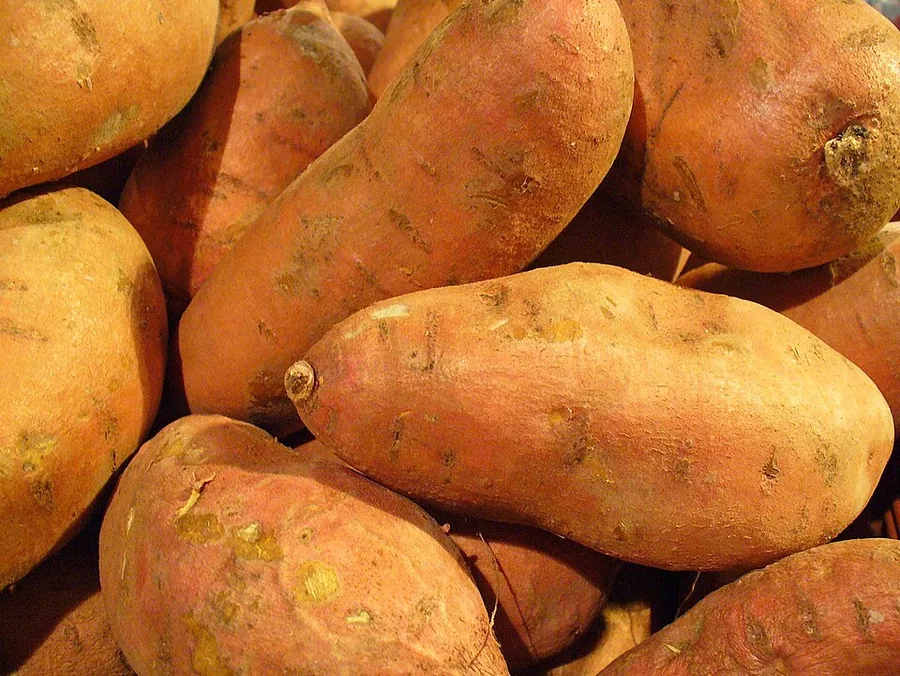
If this is your first time growing sweet potatoes, relax, because they are one of the more forgiving crops you can try. Under all that leafy sprawl, the plant is a heat-loving vine quietly fattening its storage roots below the soil. It sits in the morning glory family rather than the nightshade family of the Irish potato, so despite the shared name the two are not related. Give it a long, warm summer and even a couple of plants will spread to fill a bed and reward you well.
Once it settles in, this plant asks very little of you. Its vines wander 3 to 15 feet (90 cm to 4.5 m) across the ground and crowd out weeds while they travel, and the real treasure is swelling quietly out of sight beneath them. Even the young leaves and shoot tips are good to eat, cooked much like spinach in many parts of the world, so nothing has to go to waste.
The one thing it truly needs is warmth. Sweet potatoes languish in cold ground and cannot survive a frost, so your part is simple: wait for a warm bed, give them a long stretch of summer, and be patient while the roots quietly fill out below. Do that and you will feel like a natural.
Care
The short version: give them full sun and loose, well-drained soil mounded into a raised ridge, water them to about 1 inch a week and ease off near harvest, and feed only lightly with a low-nitrogen mix so they build roots rather than a jungle of leaves. It is hard to go far wrong.
Light
Sweet potatoes love full sun and are happiest with six to eight hours a day, which powers the leafy growth that feeds the roots below. A little afternoon shade will not ruin them, so do not worry, but the sunnier the spot, the better your harvest.
Water
Aim for about 1 inch of water a week, given as deep, thorough soakings, and let the surface dry out a little between them. As harvest draws near, gently cut back, because a sudden drink after a dry spell can crack the roots as they swell too quickly. It is an easy balance to strike.
Soil
Give them loose, well-drained loamy or sandy soil, and if you can, heap it into raised ridges so the roots have room to stretch and never sit in wet ground. They like a mildly acidic pH of 5.5 to 6.5, though they are not fussy about much else.
Temperature
This is a warm-climate crop that genuinely enjoys heat, somewhere between 64°F to 95°F (18°C to 35°C). Cold soil brings it to a standstill and frost finishes it off, so there is no need to rush it outdoors in spring. Let the weather settle first.
Humidity
Everyday summer humidity in the 40% to 70% range suits them just fine, and outdoors there is really no number to worry about. Warmth and sunshine matter far more to this plant than the moisture in the air.
Feeding
Go light here, because less really is more. Mix a low-nitrogen fertilizer like 5-10-10 into the bed before planting, then sidedress once more before the vines close over the row. Too much nitrogen just grows lush leaves and shortchanges the roots you are hoping for.
Pruning
You do not need to prune for the roots at all, which is one less thing to think about. Trim the vines only to keep a bed tidy or to stop them wandering too far, and rather than binning the tender shoot tips, cook them up as greens.
Size & spacing
The plants themselves stay low, only 6 to 12 inches (15 to 30 cm) tall, but their vines ramble a generous 3 to 15 feet (90 cm to 4.5 m) wide. Give each one plenty of room to roam, or simply guide the vines back so they do not smother their neighbors.
When to plant
Everything with sweet potatoes comes back to warmth, and a frost will end the season, so timing is your friend here. Start slips indoors from a stored root in late winter, wait until spring has truly warmed the soil before setting them out, and lift the roots in fall before frost arrives. Follow that rhythm and the plant does the rest.
Northern hemisphere
Southern hemisphere
Typical months for a temperate climate: start earlier in warm zones, later where spring frosts linger.
- Sow: Sprout slips from a stored root indoors 6-8 weeks before transplanting
- Plant: After all danger of frost once soil is warm, roughly April through early July
- Harvest: Harvest storage roots in fall before the first frost
Hardiness
USDA hardiness zones: 9–11
Temperature: down to -7°C
Troubleshooting
Here is the reassuring part: almost every sweet potato problem stays hidden underground and only turns up when you dig, and there are just a few to learn. Get to know the handful of pests and the one fungus below and you can harvest clean roots season after season. Find the match, take gentle action, and you will be ready for next year.
Tiny stem-end holes and bitter, tunneled roots
Sadly this one is the sweetpotato weevil, the most serious pest the crop faces, but knowing it helps. The adults nibble small holes near the stem end while the larvae tunnel through the flesh, packing it with frass until the root turns dark and bitter. Dig up and destroy every affected root and vine, and please do not save any of that material to raise next year's slips.
Fix:
- Remove and destroy infested roots and vines
- Do not save infested material for propagation
Rough holes gnawed into the roots
These are wireworms, the slender larvae of click beetles, and they carve shallow pits that deepen into ragged holes as the roots grow. They love ground that was recently grass, so it helps to keep away from sod. Lift your roots as soon as they size up and you cut their feeding short.
Fix:
- Harvest promptly once mature to limit feeding time
- Avoid planting in recently turned sod
Dark patches creeping over the root skin
Take heart, because scurf is a fungus that only stains the skin and goes no deeper. The dark spots grow and blur together, yet the flesh beneath stays sound and perfectly good to eat. It arrives on infected planting stock, so set aside the worst roots and begin your next crop only from clean, healthy slips.
Fix:
- Discard heavily affected roots
- Start next crop only from clean, disease-free slips
Toxicity
You can breathe easy with this one, because the sweet potato is safe for people and pets alike. The ASPCA lists the vine as non-toxic to cats, dogs, and horses, and the cooked root and tender greens are food for your family and your animals. There is nothing here you need to keep out of reach.
Safe for
People · Cats · Dogs · Horses · Rabbits · Livestock · Birds
Cats None
Perfectly safe company for a cat. A curious nibble of the vine will not poison it, though a big mouthful of any greenery might bring on a little drool or a passing upset tummy.
Dogs None
Nothing toxic here at all, and cooked sweet potato is a familiar ingredient in dog treats. Keep portions modest, since a bellyful of fibrous root or vine can loosen a dog's stool.
Horses None
A horse can graze the foliage with no risk of poisoning. As with any rich new feed, bring it in gradually so the gut has time to adjust comfortably.
Rabbits Safe
The leaves and vine tips make safe forage, and a little cooked root is fine too. Go gently, because too much starchy root in one sitting can unsettle a rabbit's delicate gut.
Livestock Safe
Goats, sheep, and cattle handle the vines and roots just fine, and in many regions the leafy tops are grown on purpose as fodder. Give them plenty of clean water and change their feed over slowly so things stay settled.
Birds Safe
Chickens and other poultry will gladly peck at cooked root and chopped greens with no danger at all. Serve it as one part of a varied diet rather than the entire meal.
People Safe
For people, cooked sweet potato is a wholesome staple, and the young leaves and shoots are enjoyed as a cooked green. Eat it as freely as you like, keeping in mind that only the raw root is tough to digest in any quantity.
Although non-toxic, eating large amounts of any plant material can cause mild stomach upset in pets.
Varieties
There are hundreds of cultivars out there, which sounds daunting, but only a few orange-fleshed favorites show up in most home gardens. Start with these friendly names and you cannot really go wrong.
Beauregard
A popular orange-fleshed variety that beginners love for its generous harvests and its habit of maturing earlier than most.
Covington
Bred by NC State, this rose-skinned, orange-fleshed favorite gives you even, dependably sweet roots you can count on.
Georgia Jet
A quick, orange-fleshed type that is a kind choice for shorter, cooler seasons where slower varieties simply run out of time.
How to propagate
Sweet potatoes are not grown from seed in the garden, and that is good news for a beginner. You raise them from slips, the little sprouts a single stored root sends up, so one grocery-store tuber can turn into a whole bed of plants for free.
Stem cuttingsEasy
Spring, after the soil has warmed and frost danger has passed · 2 to 3 weeks
Sweet potatoes begin with slips, the little rooted sprouts you snap from a stored root once it starts to shoot. Plant those slips out as cuttings after spring soil has warmed and frost has passed, and they settle in and root happily within 2 to 3 weeks. It is a genuinely easy way to start.
Myths
The whole sweet potato plant must be poisonous since it is kin to the toxic morning glories.
You can relax here, because the roots and cooked leaves of the food sweet potato are enjoyed all around the world, and the ASPCA lists the plant as non-toxic. The mix-up traces back to the seeds of certain ornamental morning glories, which are entirely different Ipomoea species and a separate matter.
Sweet potatoes and everyday Irish potatoes are really the same sort of plant.
They are not even distant cousins, so do not let the name fool you. The sweet potato is a climbing member of the morning glory family that fattens its roots into storage organs, while the Irish potato belongs to the nightshade family and grows its tubers on underground stems.