Ornamental · Crassulaceae
Stonecrop
Sedum
Hand it the sunniest, sharply drained corner you have, and stonecrop rewards a first-time grower with almost no fuss.
Full sun
Every 10–21 days
60–90 days
USDA 3–9
Overview
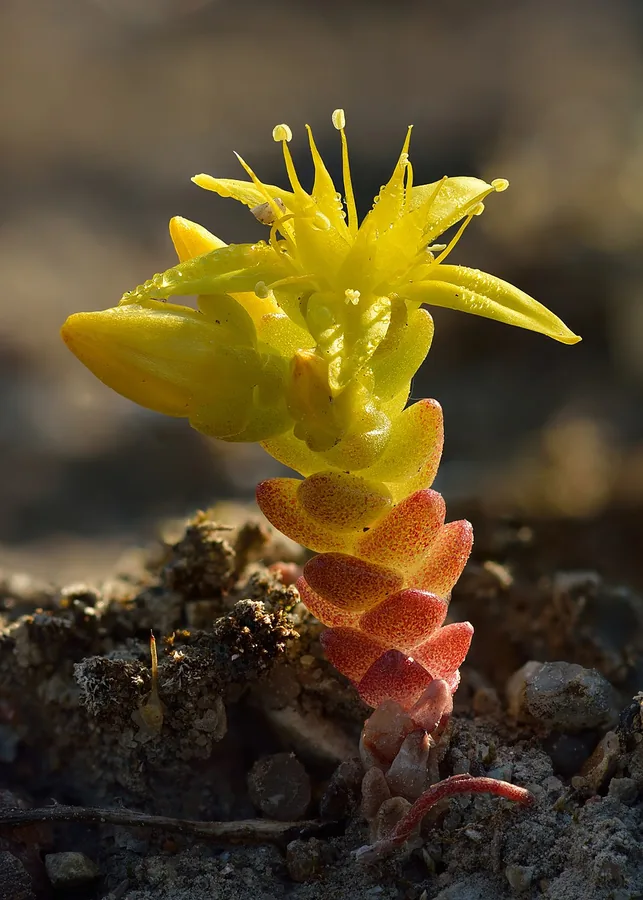
If there is a bare, difficult spot in the garden where nothing seems happy, stonecrop is the plant that will settle in and thrive there. These low, fleshy succulents tuck water away inside their leaves, so heat, drought, and thin rocky ground barely faze them. Most spread into soft creeping mats that weave together into a living carpet, and they look right at home in rock gardens, gravel, on green roofs, and in the dry cracks between paving stones.
Part of the fun is how much they vary. Some forms shine gold or chartreuse, others deepen to a rich bronzy-red, and plenty take on warmer color as the weather turns cold. Come summer, star-shaped flowers in yellow, white, pink, or red bring in the bees and butterflies, and once those fade the foliage keeps the display going all year. They are wonderfully tough too, with the hardiest kinds happily riding out winters as cold as -40°F (-40°C).
The one kindness stonecrop would rather you skip is pampering. Give it rich soil and regular water and it grows soft, floppy, and leggy, and soggy roots can rot it away from below. Keep the soil lean and dry, hand it the brightest spot you can find, and honestly the hardest thing about growing it is learning to leave it be. Any early stumble is easy to recover from.
Care
The short version: full sun, a gritty and sharply draining lean mix, and water only once the soil is completely dry underneath. Feeding is unnecessary, so you can mostly just relax and enjoy it.
Light
Stonecrop loves full sun, and the more hours it gets, the happier it is. It will put up with partial sun or a little light shade, but in deeper shade the stems stretch and flop, and those pretty gold and red tones fade back to plain green.
Water
Because it is a succulent, let the soil dry out all the way before you water, then give it a good soak and wait. Settled-in plants often manage on rainfall alone and want only a top-up every 10 to 21 days during a long dry stretch. If there is one mistake to steer clear of, it is overwatering, which harms stonecrop more than anything else.
Soil
Aim for lean, gritty soil with really sharp drainage, the sandier and more gravelly the better. A pH anywhere from 6.0 to 7.5 works nicely, and it copes happily with poor ground that would defeat fussier plants. The thing it truly cannot handle is heavy soil that stays wet around the roots.
Temperature
This little plant takes an astonishing spread of temperatures, from -40°F to 100°F (-40°C to 38°C), which is how the hardy kinds come through such harsh winters. Good drainage matters even more than the cold, since wet soil in winter is the real thing to watch.
Humidity
Dry air will not bother it in the slightest, so there is no humidity level to chase. What does deserve a little care is damp, stagnant air, which encourages rot and gives slugs somewhere to hide.
Feeding
Feed it lightly, or really not at all. Stonecrop is built to grow lean, and too much food leaves it floppy and leggy, so at the very most one gentle dose of balanced fertilizer in spring is plenty.
Pruning
Trim back any leggy or flopped stems to neaten the mat and encourage fuller, denser growth, and simply pinch in the runners that wander too far. After the flowers finish, snip off the spent flower stems.
Repotting
For plants in pots, refresh them every 2 to 3 years, or sooner if the mat crowds the container, thins out in the middle, or the water rushes straight through. Each time, settle it into fresh gritty, fast-draining mix.
Size & spacing
Most creeping stonecrops keep low, only about 2 to 6 inches (5 to 15 cm) tall, while each one spreads 12 to 24 inches (30 to 60 cm) wide into a generous mat. Give them room for that spread and they knit together into solid, even cover.
When to plant
Stonecrop is comfortable across zones 3 to 9, so most gardens can grow it happily. Wait until the last frost has passed in spring, then set young plants out any time on through early fall. The cheerful star-shaped flowers arrive over summer, roughly from June into August.
Northern hemisphere
Southern hemisphere
Typical months for a temperate climate: start earlier in warm zones, later where spring frosts linger.
- Sow: Late winter to early spring (8-10 weeks before last frost); most types are grown from cuttings or division rather than seed
- Plant: Spring after last frost through early fall
- Harvest: Summer (June to August); star-shaped yellow, white, pink, or red flowers attract pollinators
Hardiness
USDA hardiness zones: 3–9
Temperature: down to -40°C
Troubleshooting
Stonecrop rarely gives you much trouble, and when it does the cause is almost always a little too much water or not quite enough sun. The stems and roots show you the first signs, so a quick look usually tells you what to change. Find your plant's symptom below and make the small fix early, and it bounces back.
Soft, blackened stems caving in from the middle
What you are seeing here is root and stem rot, and sadly it claims more sedums than any other trouble. It comes from water lingering too long in heavy or poorly drained soil, not from a disease you could spray away. There is no need to panic though: stop watering, trim out every soft, rotted stem, and re-root the firm pieces in fresh gritty mix on a raised, sharply drained spot, and the plant carries on.
Fix:
- Stop watering and let the soil dry out completely
- Cut away all soft, rotted stems and roots and discard them
- Re-root healthy firm cuttings in fresh gritty, fast-draining mix
- Replant in a raised, lean, sharply drained site or amend heavy soil with coarse sand and grit
Stretched, floppy stems losing their color to green
Nearly always this comes down to too little sun, sometimes helped along by soil that is a touch too rich or too wet, feeding soft and sprawly growth. The fix is a gentle one: move it into full sun, shear the leggy stems back hard so a tighter mat fills in, and ease up on the water and feeding. Gold and red forms keep their color only with the strongest light you can offer them.
Fix:
- Move or transplant to a full-sun location
- Shear back leggy stems to force denser, more compact regrowth
- Stop fertilizing and grow in leaner, grittier soil
- Reduce watering
Nibbled, ragged leaves with the odd slime trail
Damage that shows up overnight along with shiny slime trails usually means slugs and snails are grazing the fleshy growth. If instead you spot little bumps, white cottony fluff, or clusters of soft insects along the stems, that points to scale, mealybugs, or aphids. Collect the slugs by hand once it is dark, rinse the rest away with insecticidal soap or a firm jet of water, and clear the damp, shaded litter where they like to shelter.
Fix:
- Hand-pick slugs and snails or use slug bait/traps
- Wipe off or spray scale, mealybugs, and aphids with insecticidal soap or a strong water jet
- Improve airflow and avoid overly damp, shaded conditions that favor slugs
Toxicity
Here is reassuring news for anyone with curious pets or little ones underfoot: stonecrop is non-toxic. The ASPCA lists it as safe for both cats and dogs, and it poses no real threat to other animals or to children. The only small thing to note is that a few species have sap that can leave a mild itch on sensitive skin.
Safe for
People · Cats · Dogs · Horses · Rabbits · Livestock · Birds
Cats None
Cats are safe around stonecrop, and it is not on the ASPCA toxic list. A curious one that chews a leaf might get a slightly upset tummy, just as with any plant outside its usual diet, but nothing worse than that.
Dogs None
Dogs can share a space with stonecrop with nothing to fear. At most a nibble brings a bit of drooling or a loose stomach that clears up on its own.
Horses Safe
No case of stonecrop poisoning a horse has been reported, and it is not flagged as a pasture danger. A horse that grazes a little of the foliage will be perfectly fine.
Rabbits Safe
Rabbits can nibble the fleshy leaves without any harm. As with any new green, offer it gradually so a big sudden helping does not upset their digestion.
Livestock Safe
Cattle, goats, and sheep are not poisoned by stonecrop, and most stock walk right past it in favor of tastier grazing anyway.
Birds Safe
Stonecrop is no toxic threat to garden or pet birds, and chickens may peck at the low mats from time to time with no ill effect.
People Safe
Stonecrop is safe to grow and handle with children around. The sap of a few species can leave a mild itch on sensitive skin, so wash your hands after a long spell of trimming or planting.
Generally safe to handle, but the sap of a few sedum species may cause mild skin irritation in sensitive people; wash hands after extensive handling.
Varieties
Stonecrop comes in a lovely range of colors and shapes, from spiky gold to low red mats. Here are the ones you are most likely to come across.
Sedum rupestre 'Angelina'
A vigorous, low creeping carpet of spiky gold-to-chartreuse needles that turn reddish-orange through the cold months of fall and winter, lifting yellow flowers in summer.
Sedum spurium 'Dragon's Blood'
A low two-row stonecrop that spreads into bronzy-red foliage and opens deep red star-shaped flowers through summer.
Sedum album
An evergreen mat former with small, green, fleshy leaves and white summer flowers, and the very species the ASPCA names as non-toxic Stonecrop.
Sedum acre
Gold moss stonecrop, tiny-leaved and bright yellow in flower, which self-seeds so freely that it can spread fast enough to turn weedy.
Upright border sedums (now Hylotelephium, e.g. 'Autumn Joy')
A separate group of taller, clump-forming border perennials, reclassified into Hylotelephium, that stand upright instead of creeping into low mats.
Companions
Stonecrop pairs best with other sun-loving, drought-tough plants that want the same lean, dry, gritty soil, and worst with anything that needs rich, wet ground and shade.
Plant near
Sempervivum (hens and chicks): Another sun-loving, drought-tolerant succulent with the same lean, well-drained soil needs for rock gardens and green roofs.
Creeping thyme: Low, sun-loving, drought-tolerant mat former that shares the same gritty, well-drained, dry conditions between pavers and on slopes.
Keep apart
Moisture-loving shade plants: Plants needing rich, consistently moist soil and shade require conditions (wet soil) that rot sedum and shade that makes it leggy.
How to propagate
Stonecrop is about as easy to multiply as a plant gets, which is welcome news if you are just starting out. A broken stem or even a fallen leaf will often take root all on its own, so one small plant soon turns into many.
Stem cuttingsEasy
Spring to summer · 2 to 4 weeks to root
This is the simplest method and the one most gardeners reach for first. In spring or summer, snip off a stem, let the cut end dry and callus over for a day, then either tuck it into gritty mix or just lay it on the soil, where it takes root at the nodes in 2 to 4 weeks.
DivisionEasy
Spring or early fall · A few weeks to a season
Lift a settled mat in spring or early fall, tease or cut it into chunks, and replant the pieces wherever you would like more. Each division gets comfortable over a few weeks to a full season.
Leaf cuttingsEasy
Spring to summer · 3 to 6 weeks
Gently pull off a healthy leaf, keeping a little stub of stem attached, and lay it on gritty mix during the spring or summer growing spell. Fresh roots appear over 3 to 6 weeks.
SeedModerate
Late winter to spring · Several weeks to germinate
Species sedums grow from seed sown in late winter or spring, taking several weeks to germinate. Named cultivars will not come true from seed, so lean on cuttings or division to hold onto their color and shape.
Myths
Sedums only do well in rich soil with regular watering.
It is actually the reverse. Stonecrops evolved for hard, dry, stony ground, so what they really want is lean, gritty soil, sharp drainage, and very little water. Treat them to rich earth and steady watering and you will get soft, leggy growth and fatal root and stem rot.