Herb · Lamiaceae
Summer Savory
Satureja hortensis
With full sun and dry roots, this easygoing peppery herb rewards even a first try.
Full sun
Every 5–10 days
59–86°F · 15–30°C
50–70 days
Overview
If this is your first herb, summer savory is a kind place to start. It is a fast annual from the mint family, and it brings a warm, peppery taste to beans and stews without asking much of you. Coming from the Mediterranean, it simply wants sun, ordinary soil, and roots that stay on the dry side. Cooks have loved it so long that one of its oldest names is just the bean herb.
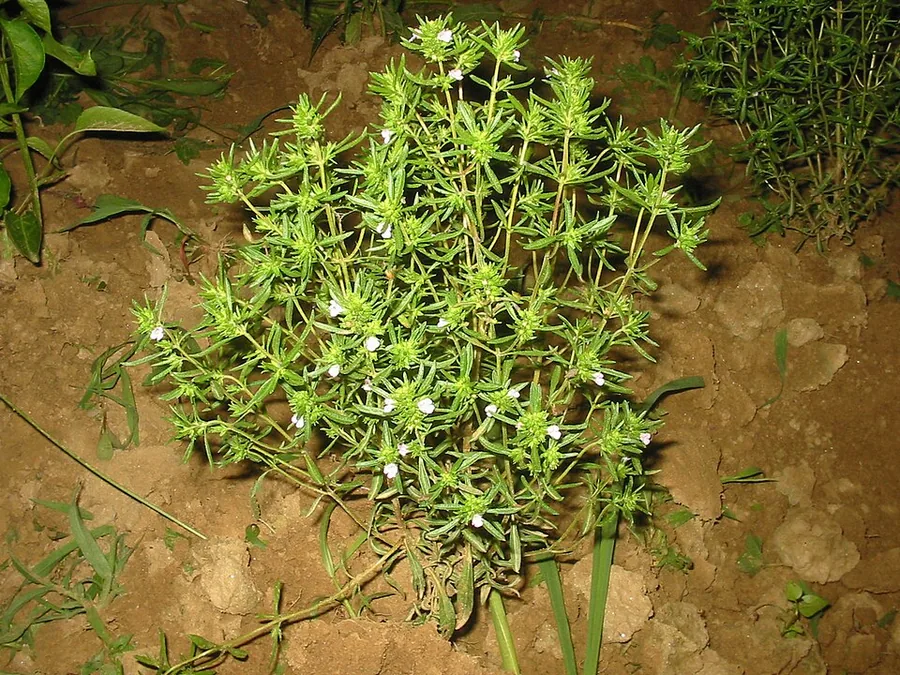
The plant stays small and easy to tuck in, usually 10 to 18 inches (25 to 45 cm) tall, with slim stems and narrow gray-green leaves. Come summer it opens little white-to-pink flowers, and that is your friendly signal, because the leaves are sweetest in the days right before those buds break. Keep pinching and picking, and it answers with soft, bushy new growth.
Best of all, savory forgives a beginner. It comes up fast, wants almost no feeding, and shrugs off a missed watering once it has settled in. The only two things it truly minds are soggy soil and deep shade, so steer clear of those and most stumbles are easy to undo.
Care
The short version: give it full sun, soil that drains well, and a gentle hand with the watering can. Feed it only a little, pinch the tips as you go, and gather the leafy tops just before the flowers arrive.
Light
Savory is happiest in full sun, ideally 6 or more hours a day. With less, it tends to stretch, flop, and grow leggy on thin, woody stems, so bright light is really its secret to staying compact and full of flavor. Give it the sunniest spot you have and it will reward you.
Water
Let the top of the soil dry before you water again. Keep it a little moist while the young plant settles in, then relax and ease off, because this Mediterranean herb takes dry spells in stride and dislikes wet feet. When in doubt, waiting a day longer is far safer than watering too soon.
Soil
Savory does best in well-drained loam with a bit of organic matter mixed in, yet it happily puts up with poorer ground too. It stays easygoing about pH across a broad band, anywhere from 6.0 to 8.0, so even slightly alkaline soil will suit it just fine.
Temperature
Warm weather is what savory loves, roughly 59°F to 86°F (15°C to 30°C). It is a frost-tender annual, so let the cold pass before you set it outside, and know that the first hard freeze will gently bring its season to a close.
Humidity
This is a dry-climate herb that prefers low humidity, around 30% to 50%. Damp, still air can invite problems, so give the plant a little space and let a breeze move through its leaves.
Feeding
A light touch is all it needs. Savory is a light feeder that gets by on a small dose of balanced or low-nitrogen fertilizer at planting time and little more. Too much nitrogen only pushes soft, floppy stems and softens the flavor, so less really is more here.
Pruning
Pinch and harvest the leafy tips often, before the plant blooms, to keep it bushy and the leaves tender. If you spot flower buds forming, snip them off, since flowering is what turns the taste sharp and the leaves a little coarse.
Size & spacing
A grown plant stands about 10 to 18 inches (25 to 45 cm) tall and spreads 8 to 12 inches (20 to 30 cm) across. Give each one a bit of breathing room so air moves freely and the roots have every chance to stay dry.
When to plant
Savory loves warmth and cannot take frost, so there is no rush. Start a few seeds indoors a little before the last frost, or wait and sow them straight into warm spring soil, then enjoy picking the leafy tops all summer until the plant flowers and the season eases to a close.
Northern hemisphere
Southern hemisphere
Typical months for a temperate climate: start earlier in warm zones, later where spring frosts linger.
- Sow: About 4-6 weeks before the last frost; sow shallowly because light aids germination
- Plant: After all danger of frost has passed and soil has warmed in late spring
- Harvest: Harvest leafy tops just before or as the plant comes into flower; small tubular white-to-pink flowers appear in summer
Hardiness
USDA hardiness zones: 2–11
Temperature: down to -46°C
Troubleshooting
Nearly every savory worry comes back to one of two things, too much water or too little sun, and both are easy to put right. Watch the roots, stems, and leaves for early signs, and a small change is usually all it takes. Find your plant below and act while the trouble is still small.
Drooping, yellowing leaves and soft, darkened roots
Take heart, because this is root rot, and it comes from soil that stays too wet rather than from thirst. Savory is a Mediterranean herb that hates sitting in water, so the cure is simply better drainage and a longer pause between waterings. If you catch it early on a potted plant, lift it out and settle it into fresh, fast-draining mix, and it can bounce right back.
Fix:
- Improve drainage and reduce watering frequency
- Move container plants to a sunnier, better-drained spot
- Replant in well-drained soil if rot is limited
Sticky film and little bugs clustered on new shoots
Those tiny soft bugs crowding the tips are aphids, and the sticky shine they leave behind is honeydew. A firm spray of water washes most of them away, and since savory is headed for the kitchen, the simplest answer is often to snip the worst tips and use them. Save insecticidal soap for a stubborn crowd that just will not quit.
Fix:
- Rinse off insects with a strong spray of water
- Harvest and use affected tips
- Use insecticidal soap only if needed on an herb intended for eating
Tall, floppy stems that turn bare and woody
When a plant turns leggy, it is stretching toward light it is not getting, or it simply has not been pinched enough. Move it into full sun, ideally 6 or more hours a day, and begin nipping the tips often. Each harvest nudges the plant to branch and fill back out instead of reaching.
Fix:
- Move to full sun (6+ hours)
- Pinch and harvest tips frequently to promote branching
Flavor fades as the plant starts to bloom
This is just flowering, the plant's natural shift from making leaves to setting seed. The finest flavor sits in the leafy tops right before the buds open, and it softens once blooming begins. Pick at the first sign of buds, pinch those buds off to stretch the harvest, and start a fresh batch every 3 to 4 weeks so young leaves keep coming.
Fix:
- Harvest leafy tops before or at first bud
- Pinch off flower buds to extend the leaf harvest
Toxicity
Here is a comforting one for homes with pets: summer savory is a kitchen herb that is safe all around. Its leaves flavor your cooking and will not harm cats, dogs, rabbits, or grazing animals that sample a bite. Nothing here needs to be fenced off or kept out of reach.
Safe for
People · Cats · Dogs · Horses · Rabbits · Livestock · Birds
Cats None
Perfectly safe for cats. A curious nibble of this kitchen herb will do no harm at all.
Dogs None
No worries for dogs. A pup that grazes on the leaves will find nothing in them that could hurt.
Horses Safe
Horses are safe as well, since the foliage they might browse holds no toxic compounds.
Rabbits Safe
Rabbits can enjoy the leaves without any worry, though a mixed diet still serves them best.
Livestock Safe
Grazing animals like cattle, goats, and sheep can browse it freely with no ill effect.
Birds Safe
Pet birds and backyard hens stay perfectly fine near it, since the herb carries nothing harmful to them.
People Safe
A cherished kitchen herb that is lovely to eat, its leaves flavor beans, stews, and roasts.
Aromatic edible herb that is safe to handle and grow around people and pets.
Varieties
There are two savories worth telling apart, the tender annual most of us grow and its hardier perennial relative.
Winter savory (Satureja montana)
Its tougher perennial relative stays green through the year across roughly USDA zones 5 to 10 and carries a bolder, slightly bitter taste, so it can fill in for the milder annual in every season.
How to propagate
Savory is about as easy as herbs get to raise from seed, and a few spaced-out sowings will keep tender leaves coming your way all season long.
SeedEasy
Sow indoors about 4-6 weeks before the last frost, or direct-sow outdoors after frost danger passes; sow shallowly because light improves germination. · Germinates in roughly 1-2 weeks and is typically harvestable within about two months of sowing.
Savory could not be easier to raise from seed, so try not to overthink it. Start a few indoors about 4 to 6 weeks before your last frost, or simply scatter them into warm spring soil once the cold has passed, and press them in shallow since a little light helps them wake up. Seedlings poke through in a week or two, and you will be picking leaves within roughly two months. Sow a new little row every 3 to 4 weeks and the tender harvest just keeps on giving.
Myths
Growing summer savory next to beans will keep bean beetles off the crop.
Savory truly earns its bean herb nickname at the stove, where it pairs wonderfully in bean dishes, not out among the rows fighting pests. The idea that it drives bean beetles away is a separate claim. Extension experts caution that companion-planting charts like this one often are not supported by research.