Vegetable · Fabaceae
Runner Bean
Phaseolus coccineus
A sunny spot, something tall to climb, and water that never runs dry are all this forgiving climber asks to crop until frost.
Full sun
Every 3–7 days
50–77°F · 10–25°C
65–75 days
Overview
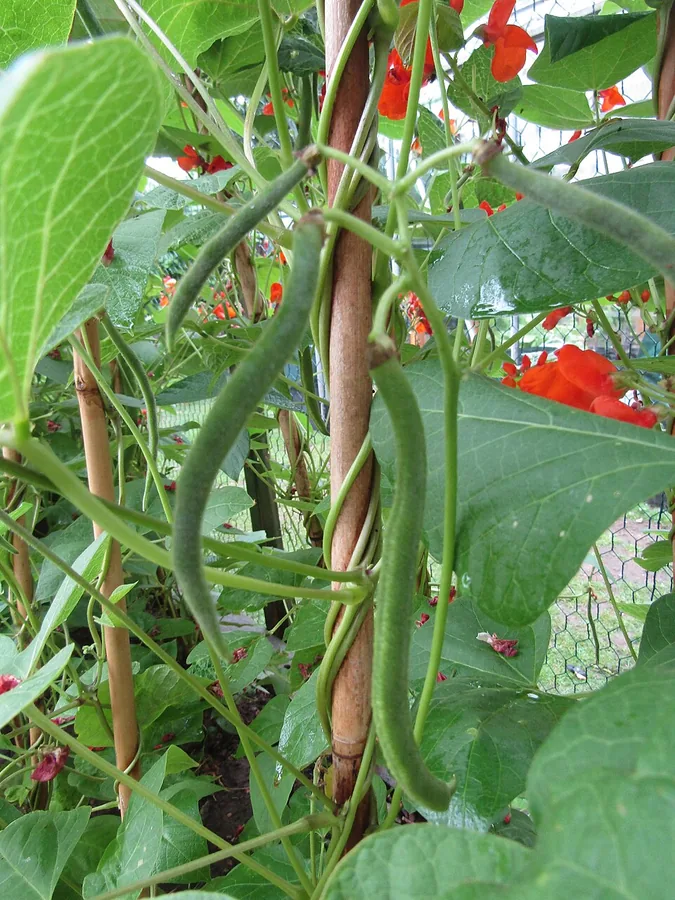
If this is your first climbing vegetable, the runner bean is a kind place to start. It shoots up fast and twines on its own, grown as much for its bright flowers as for its long, tender pods, and it belongs to the bean family. In the mild ground of zones 7 to 11 the fleshy roots live through winter and it returns as a perennial, though there is no harm in simply treating it as an annual like most gardeners do. Give it a tall support to lean on and it will climb 6 to 10 feet before the season is out.
From early summer until the first frost, the vines keep sending out blooms in scarlet, white, or a pretty mix of pink and white, and bees and hummingbirds will find them fast. Each flower that sets becomes a green pod, best gathered while it is still young and tender. If a few slip past you and turn tough, do not worry, since the mature seeds inside shell out into good beans for cooking fresh or drying for later.
Runner beans are gentle on a beginner and quick to forgive a wobbly start. They pull their own nitrogen from the air, so they need very little feeding, and once you hand them something to grip they do the climbing themselves. What they really care about is cool summers and even moisture, because a hot spell is the one thing that makes the flowers drop before they can set into pods.
Care
The short version: plant runner beans in full sun with a tall support to climb, keep the fertile, well-drained soil evenly moist at about 1 inch of water a week, and go easy on feeding since the plants fix their own nitrogen.
Light
Runner beans are happiest in full sun, with no shade on their list of what they will put up with. All that direct light is what powers the quick climb and the long run of flowers, so pick the brightest, sunniest corner you have and they will thank you for it.
Water
Try to give them about 1 inch of water a week and keep the soil evenly damp, most of all while they are in flower and filling out pods. Sandy ground drains quickly and will want watering a little more often. That steady moisture is also your best friend for holding onto the flowers when the weather turns warm.
Soil
Give them a fertile, well-drained loam sitting somewhere around pH 6.0 to 7.0. A little compost dug in before you sow gets them off to a comfortable start, and the deep climbing roots will handle the rest.
Temperature
They settle in best when the days sit between 50°F and 77°F (10°C to 25°C), so a cool summer really is their kind of weather. When the heat climbs higher than that, the flowers tend to let go before they can set pods, so do not be discouraged if a hot stretch pauses the crop.
Humidity
Ordinary outdoor air, somewhere around 40% to 70% humidity, is all these beans ask for. There is nothing to measure or worry over here, so just leave a little space between plants so fresh air can move through the leaves.
Feeding
Go easy at the feeding bench, because these plants make their own nitrogen. A gentle 5-10-10 worked in at planting is all they need, and piling on more nitrogen only grows leafy vines at the expense of the beans you are after.
Pruning
There is very little pruning to do, which is one more reason beginners get on well with them. Once a vine reaches the top of its support, just pinch out the growing tip to nudge it into branching and setting more pods, and keep clearing away spent pods to keep the harvest coming.
Repotting
Runner beans are not really a plant for pots. The kindest thing you can do is sow them straight into the garden at the foot of a tall support, rather than trying to raise them in a container.
Size & spacing
Expect the vines to reach 6 to 10 feet (1.8 to 3 m) tall while staying fairly narrow at the base, spreading only about 12 to 24 inches (30 to 60 cm). Set each plant against a strong, tall support and leave a little breathing room so air can reach the leaves.
When to plant
There is no rush and no trick to the timing, just wait out the frost. Once the last spring frost has passed and the soil has warmed to 50°F to 60°F (10°C to 16°C), sow the seeds straight into the garden, and you can look forward to picking tender young pods about two months on, all the way to the first autumn frost.
Northern hemisphere
Southern hemisphere
Typical months for a temperate climate: start earlier in warm zones, later where spring frosts linger.
- Sow: Optional: 2-3 weeks before the last spring frost in biodegradable pots to avoid root disturbance.
- Plant: After the last spring frost, once soil is at least 50-60°F (10-16°C).
- Harvest: Flowers from early-to-mid summer until frost; harvest young pods (10-15 cm / 4-6 in) about 65-75 days after sowing.
Hardiness
USDA hardiness zones: 7–11
Temperature: down to -18°C
Troubleshooting
Almost everything that goes wrong with a runner bean shows up in one of three places: the flowers, the pods, or the leaves. The good news is that these signs are easy to read, and catching them early usually means you can step in and save the crop. Look through the problems below, find the one that matches, and act while it still makes a difference.
Blossoms drop before any pods form in the heat
If the flowers keep opening and then falling without leaving a pod behind, this is blossom drop, and a heat wave is nearly always the cause. Once daytime temperatures climb past 80°F to 90°F (27°C to 32°C), the pollen quits working and the blooms let go before they can set. Keep the roots cool and evenly watered, drape a little afternoon shade over the plants when it is really hot, and take heart, because pod set returns on its own as soon as the weather softens.
Fix:
- Keep soil evenly moist and mulch to moderate root-zone temperature
- Provide light afternoon shade during heat waves
- Wait for cooler weather, when pod set typically resumes
Leaves turn lacy or curl up out of shape
Leaves chewed down to lace with plump yellow grubs on the underside usually mean the Mexican bean beetle, while curled young shoots crowded with tiny soft insects point to aphids. Pick off the beetles, their larvae, and the orange egg clusters by hand, wash the aphids away with a firm spray of water, and only reach for insecticidal soap if things get truly out of hand. Keep an eye out early, tuck row fabric over young plants, and welcome lady beetles, which quietly do a lot of this work for you.
Fix:
- Hand-pick beetles, larvae and egg masses
- Dislodge aphids with a strong spray of water
- Apply insecticidal soap to heavy infestations
Pods grow tough and stringy instead of tender
When pods are left hanging too long they grow over-mature, laying down the fibers and strings that make them snap rather than bend. The gentle fix is to pick them while they are young, at 4 to 6 inches (10 to 15 cm), and to peek at the plants every 2 to 3 days so none get past that tender stage. Even the ones that outrun you are not wasted, since you can shell them for fresh or dried beans.
Fix:
- Harvest pods young, at 10-15 cm (4-6 in)
- Pick every 2-3 days to catch pods at peak tenderness
Toxicity
You can relax about this one. The cooked pods and beans are wholesome food, and the living plant is no danger to pets or livestock. The single thing to keep an eye on is raw mature beans, which hold a natural lectin called phytohaemagglutinin that can unsettle a stomach, so cook dried seeds all the way through and keep them where a curious cat or dog cannot swallow them raw.
Toxic to
Cats · Dogs
Safe for
People · Horses · Rabbits · Livestock · Birds
Cats Caution
Cats are not on the toxic list here, and most will walk right past a runner bean anyway. The one thing to mind is raw mature beans, which carry a lectin that can leave a cat with vomiting or diarrhea if it swallows a few, so keep any dried seeds well out of paw's reach.
Dogs Caution
Runner beans are not a known poison for dogs, but a dog that bolts down raw dried beans can wind up with an upset stomach from that same lectin. Cooked pods and beans sit just fine, so it is only the raw, mature seeds you need to tuck away.
Horses Safe
A horse grazing close by has nothing to fear from this plant. As with any legume, large helpings of raw dried beans are best not offered, but the growing plant itself carries no real threat.
Rabbits Safe
Rabbits can nibble the leaves happily and come to no harm. Just steer them clear of the raw mature seeds, which hold the same troublesome lectin, and let them enjoy the foliage and young pods instead.
Livestock Safe
Cattle, goats, and sheep are in no danger from the growing plant. The only thing to hold back is a quantity of raw dried beans, which are far better cooked than served uncooked.
Birds Safe
Backyard birds and poultry get along fine around runner beans. Keep from tossing them raw dried beans by the handful, since the uncooked seed is rough on the gut, but the pods and foliage give them no trouble at all.
People Safe
For the cook, the pods and beans are a real treat and perfectly safe once they are cooked. Raw mature beans are the one exception, since they hold phytohaemagglutinin, so always give dried seeds a thorough cooking before they reach the table.
Raw or undercooked mature (dry) seeds contain phytohaemagglutinin, a lectin that can cause nausea, vomiting and diarrhea if eaten in quantity; cook seeds thoroughly. Young pods, cooked, are safe.
Helpline numbers

United States
ASPCA Animal Poison Control: (888) 426-4435 (fee applies)

United Kingdom
Animal PoisonLine: 01202 509000 (fee applies)

Australia
Animal Poisons Helpline: 1300 869 738
Varieties
There are only a few kinds of runner bean to know, sorted mostly by the color of their flowers and whether you grow them for the plate, for the show, or for both. A few named favorites are worth getting to know before you sow.
Scarlet Emperor
A much-loved scarlet-flowered heirloom that comes ready in roughly 75 days and keeps offering up long green pods in generous flushes.
Painted Lady
A charming ornamental type, grown as much for its two-tone red-and-white flowers as for the beans it sets.
White-flowered (e.g. 'Czar' / 'Albus')
A dual-purpose choice with white flowers and big white seeds, welcome both as a fresh pod and as a plump shell bean.
Companions
Runner beans shine in the Three Sisters planting, climbing the corn for support and feeding nitrogen back to it and the squash sprawling below.
Plant near
corn: In the Three Sisters planting, corn stalks give the climbing beans a natural support while the beans fix nitrogen for the corn.
squash: Part of the Three Sisters; sprawling squash shades the soil and deters pests while the beans climb the corn and fix nitrogen.
How to propagate
Starting runner beans could hardly be easier. The seeds go right into the ground and come up on their own, with no soaking, chilling, or fuss needed to get them going.
SeedEasy
Direct-sow outdoors after the last spring frost once soil reaches at least 50-60°F (10-16°C). · Germinates in 7-14 days; begins flowering about two months after sowing.
Tuck the seeds in 1 to 1.5 inches (2.5 to 4 cm) deep right at the base of a tall support, once the frost has passed and the soil has warmed to 50°F to 60°F (10°C to 16°C). They will push up in 7 to 14 days and begin flowering about two months later, so there is really no need to start them early, though you can sow indoors 2 to 3 weeks ahead if you would like a jump on the season. In milder zones you can even dig up the fleshy tuberous roots in fall and keep them over winter for an earlier crop the following year.
Myths
Runner beans are toxic, so they are not safe to eat.
Cooked young pods are an everyday vegetable that countless gardeners grow and enjoy without a second thought. The only genuine risk lives in raw or undercooked mature dry seeds, which contain phytohaemagglutinin and can bring on a stomach upset. Cook the dried beans right through and they are completely safe to eat.
Runner beans will only crop well with lots of nitrogen feed.
Like their fellow legumes, runner beans gather their own nitrogen straight from the air thanks to Rhizobium bacteria living in their roots, so they need very little help from you. Feed them heavily and you will only grow a jungle of leaves instead of beans, since all that lushness comes at the pods' expense.