Ornamental · Poaceae
Oats
Avena sativa
A fast, forgiving cool-season grass that happily doubles as a cover crop, a feed grain, and the cat grass on your windowsill.
Full sun
Every 3–7 days
60–120 days
USDA 2–9
Overview
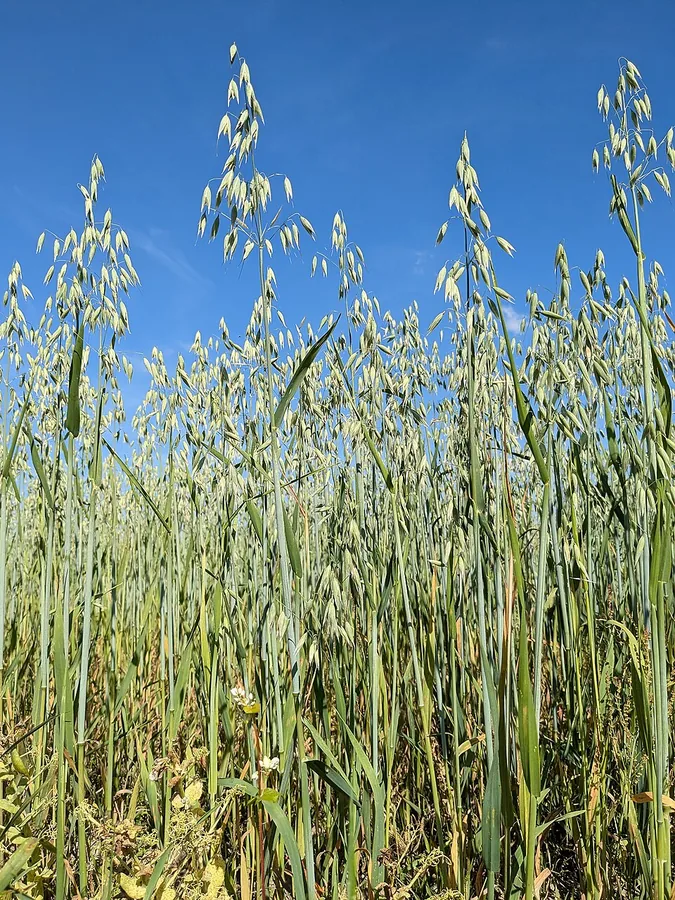
If you are just starting out, oats are a kind place to begin, and that ease is a big part of why they fill so many roles. The very same plant, Avena sativa, turns into a cover crop, livestock forage, the grain in your breakfast bowl, and the cat grass sold for pets to nibble. All that really changes is how you sow it and look after it.
This is a cool-season annual that shows its best in cool, moist weather and simply sulks through heat and drought, so you can grow it with confidence in the mild parts of the year. It comes up quickly, lays down fast weed-smothering cover, and gathers up loose nutrients before rain can carry them off. Many growers pair it with a slow legume like peas or clover, where the oats act as a gentle nurse crop that shelters the young seedlings and then steps aside to hand the bed over.
Where winters grow cold enough, oats fade on their own and spare you the job of ending the stand, which is a small gift to any new gardener. Where they do not, the plant lives through winter and sets seed, so you mow or till before it heads out. Knowing which side of that line your garden sits on is the single most helpful thing to settle before you sow, and once you know it, the rest comes easily.
Care
The short version: oats are happiest in full sun with cool, moist soil and little or no extra feeding, so you have very little to fuss over. Sow the seed straight into the ground, keep it from drying out, and simply keep an eye out for warm winters that let the stand reseed.
Light
Oats love full sun and do their best right out in the open, so give them a bright, unshaded spot. They will put up with a little partial shade, but any more than that thins the stand and leaves it weaker.
Water
As a cool-season grass, oats like things cool and moist and do not cope well with heat or drought, so kindness here means steady moisture. Keep the soil from drying out, since dry spells stress the plant and trim both cover and yield.
Soil
Few cereals forgive as much as oats do. They favor a well-drained loam yet take poor, somewhat acidic, and even wet ground better than most grains, and they handle a pH anywhere from 4.5 to 8.0, so ordinary garden soil is usually plenty.
Temperature
This is a hardy, cool-weather plant that grows across a generous range, from about 21°F to 84°F (-6°C to 29°C), so a chilly stretch will not faze it. It sprouts in cool soil and does its finest work before summer heat settles in.
Humidity
Ordinary outdoor humidity is all oats ask for, so there is no number to chase and nothing to worry over. Good airflow helps more than anything, since crowded, damp stands invite the rusts and other leaf troubles.
Feeding
Oats ask for very little at the table, and as a cover or nurse crop they often need no fertilizer at all, especially in a fall or legume-mix sowing. Go gentle with the nitrogen, because too much makes soft growth that flops over.
Pruning
There is really no pruning to bother with. In mild-winter regions, mow or till the stand before it sets seed to head off weedy volunteers, while in cold climates the plant winterkills on its own and needs nothing from you.
Repotting
none
Size & spacing
A stand stands about 2 to 4 feet (60 to 122 cm) tall, with each plant claiming just 6 to 12 inches (15 to 30 cm) across. Sow it thick and without worry, since oats grow as a close stand rather than spaced out like a garden vegetable.
When to plant
Oats keep time by cool weather and the frost calendar, and the timing is forgiving once you know it. Sow in late summer to early fall, about 40 to 60 days before your first killing frost so the cold can bring the stand down, or sow again in early spring. The plant heads up in spring to summer, with grain ready to gather by mid to late summer.
Northern hemisphere
Southern hemisphere
Typical months for a temperate climate: start earlier in warm zones, later where spring frosts linger.
- Sow: Not typical; direct sown outdoors
- Plant: Late summer to early fall (40 to 60 days before first killing frost, to winterkill) or early spring
- Harvest: Open drooping branched panicle of spikelets in spring to summer; grain harvest mid to late summer
Hardiness
USDA hardiness zones: 2–9
Temperature: down to -46°C
Troubleshooting
Oats ask very little of you and give little trouble, especially when grown as a short-term cover crop, so there is no need to feel anxious. The few issues that do surface usually appear across the whole stand rather than on a single plant. Match what you notice to the notes below and step in early, and you will keep any small problem from spreading.
Grazing cattle, sheep, or goats fall ill on stressed forage
Rest easy, because the plant itself is not the poison. When oats are hit by drought, frost, or a heavy dose of nitrogen, the forage can gather nitrate, and it is that nitrate which upsets grazing ruminants such as cattle, sheep, and goats. A simple habit keeps everyone safe: test stressed or heavily fed forage before grazing, pass on drought- or frost-stressed stands, and remember that ensiling lowers nitrate. The standing plant and the grain stay perfectly safe for your pets and family.
Fix:
- Test stressed or heavily fertilized forage for nitrate before grazing or feeding
- Ensiling can reduce nitrate levels
- Avoid grazing drought- or frost-stressed stands
Oats live through winter and reseed rather than fading away
Take heart, because this one is easy to handle. If your winter stays gentle, the stand never meets the deep cold it needs to fade away, so it greens back up, forms heads, and scatters seed for the following year. Oats fade out on their own only in Zone 6 and colder and through much of Zone 7. Anywhere milder, simply plan to mow or till before the plants set seed, and you will stay ahead of it with room to spare.
Fix:
- Mow or till the stand before seed set
- Terminate by herbicide or mowing soon after the vegetative stage
- Do not rely on winterkill termination in mild-winter areas
Rusty spots, dark powder, or yellowed and stunted blades
These are the familiar cereal ailments, and they seldom amount to much on a short-lived stand. Crown and stem rust turn up as orange-brown pustules, smut shows dark powdery masses, and barley yellow dwarf virus, brought in by aphids, yellows and reddens the leaves while it stunts the plant. Rotate away from other cereals, begin with clean or resistant seed, and keep aphids in check, and you will have very little to fret about. Grown as a quick cover crop, oats rarely take enough damage to matter.
Fix:
- Rotate away from cereals
- Use clean, treated, or resistant seed where available
- Control aphids that vector barley yellow dwarf
Tall stems tip over and settle flat on the soil
Don't worry if you spot this, because it is rarely a real setback. It is called lodging, and it tends to mean the ground was a bit too rich or got a touch too much nitrogen, which pushes soft, top-heavy growth that a strong rain or gust can lay over. Ease off the extra nitrogen when you grow oats as a cover or nurse crop, and you will avoid most of it. If grain was never your goal, a lodged stand is no loss at all, and it still smothers weeds and makes a tidy mulch.
Fix:
- Avoid extra nitrogen fertilizer when grown as a cover or nurse crop
- Mow tall growth before it lodges if managing biomass
Toxicity
You can breathe easy here, because oats are about as safe as a plant gets. The grain nourishes people and animals alike, and the grass is raised on purpose as cat grass for pets to nibble, so nothing here poses a danger to cats, dogs, horses, rabbits, birds, livestock, or children. The one gentle caveat is for grazing ruminants, since drought- or frost-stressed forage can carry nitrate worth testing for.
Safe for
People · Cats · Dogs · Horses · Rabbits · Livestock · Birds
Cats Safe
This is the classic cat grass, raised on purpose for cats to nibble, so you can relax. A little chewing does no harm and may even help your cat pass a hairball.
Dogs Safe
Your dog can graze the blades without any worry, and the same pet grass grown for cats suits dogs just as well. Plain oats and oat grass appear on no toxic-plant list.
Horses Safe
Oats have fed horses for generations, and the grass is fine for them to graze. Nothing in the plant will poison them.
Rabbits Safe
Rabbits thrive on oat hay and fresh oat grass, both a comfortable part of their everyday diet.
Livestock Safe
The plant itself is wholesome forage and carries no toxin. The single thing to keep an eye on is nitrate, which can gather in oats stressed by drought, frost, or heavy nitrogen, so test any questionable forage before you turn ruminants out on it.
Birds Safe
Oats are a familiar bird feed, and chickens and wild birds happily eat the grain and pick at the grass.
People Safe
The grain is a staple on many tables, eaten as oatmeal, oat flour, and much more. This plant is grown for people to enjoy.
Like other cereal grasses, drought- or frost-stressed oat forage can accumulate nitrates that may harm grazing ruminant livestock, but the plant is not poisonous to pets or people.
Varieties
Oats come in a handful of types sorted by season and purpose, and these are the ones worth learning to tell apart.
Spring oats
The kind most gardeners reach for, sown in spring or late summer, forming heads without needing any cold spell and fading away once hard frost arrives.
Winter oats
Hardier types suited to mild-winter regions, where they carry through the cold and head up the next spring.
Forage / hay oat varieties
Chosen for their generous leafy growth, like ForagePlus, and cut for hay, silage, or grazing rather than for grain.
Hull-less (naked) oats
These thresh free of the hull to leave a bare groat, valued for both feed and food.
Companions
Oats earn their keep beside slow-starting legumes, where they nurse the young plants along and then bow out as the season turns.
Plant near
Field peas: Oats serve as a nurse crop, providing quick weed-suppressing cover and support while the slower legume establishes.
Clover: Oats nurse establishing clover, suppressing weeds and scavenging nutrients while winterkilling to release the legume.
Hairy vetch: Oats added to slow-establishing vetch improve legume survival and provide cover that winterkills in many areas.
How to propagate
Oats grow from seed and nothing else, sown right where they are meant to grow, so getting started could hardly be simpler.
SeedEasy
Late summer to early fall or early spring · Germinates quickly (germinates at about 38 degrees F); usable cover in 6 to 10 weeks
Oats grow from seed alone, and you sow it right outdoors in late summer to early fall or in early spring, so there is nothing fussy to manage. Drill it at about 60 to 75 pounds an acre, or broadcast 80 to 100 pounds an acre, tucking the seed half an inch to an inch deep. It sprouts even in cool soil down to about 38°F (3°C) and gives you usable cover in 6 to 10 weeks, which is exactly why it makes such a quick, forgiving, dependable crop to begin with.
Myths
Cover-crop oats are a different plant from food oats and the oat grass sold as cat grass.
You can set that worry aside. Cover-crop oats, forage and hay oats, grain oats, and the grass raised for cats to nibble are all the same plant, Avena sativa. What sets them apart is only how you sow and tend them.
Oats always winterkill and end themselves, so you never have to kill the stand.
It would be lovely if that always held, but oats fade on their own only where winters turn cold enough, roughly Zone 6 and colder and much of Zone 7, down into the low 20s degrees F. In milder places they carry through the winter and set seed, so you will need to mow or till the stand before it heads out.