Ornamental · Poaceae
Bahiagrass
Paspalum notatum
Tough, drought-proof, and content in poor sandy soil, bahiagrass keeps its footing where finer lawns give up.
Full sun
Every 3–7 days
60–90 days
USDA 7–11
Overview
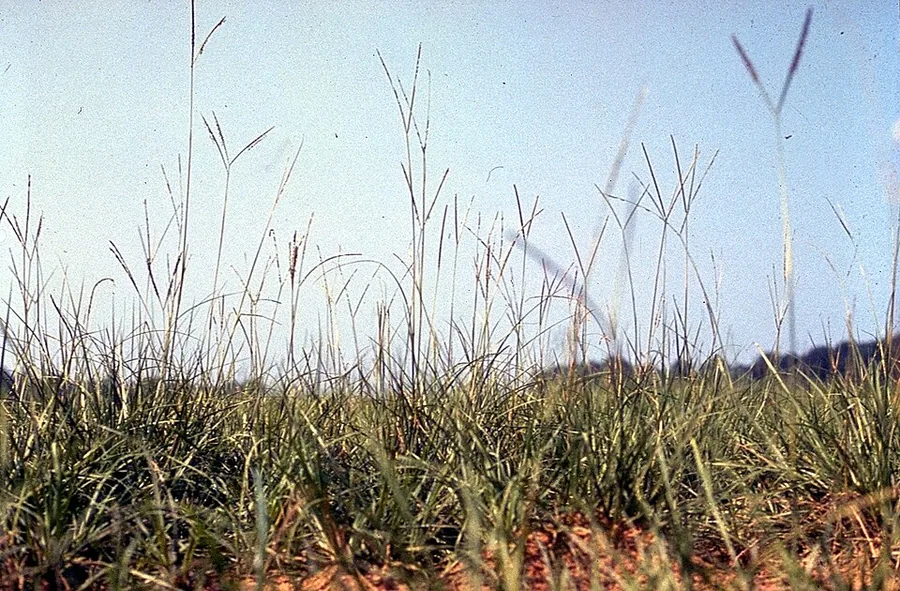
Bahiagrass is a warm-season perennial whose deep, far-reaching roots are the real reason it weathers drought so calmly. Its home was South America, and it found a lasting place across the warm, sandy lower South, where it now does duty as lawn, pasture, and roadside cover. You will recognize it right away by the tall seedheads that split into a two-pronged Y above the turf.
The lovely thing about this grass is how little it asks of you. It does well in infertile, acidic, sandy soil that would leave other grasses hungry, lives happily on light feeding, and seldom needs watering once it has rooted. What you get back is an open, coarse, light-green turf rather than a thick carpet, along with a steady parade of seedheads all summer.
Think of this one as a worker rather than a showpiece. Offer it full sun and room to roam and it will crowd out weeds and hold a slope together with hardly any effort from you. Ask it to pass for a fine lawn, though, and you will be mowing weekly and still chasing seedheads, so it pays to let it be what it is.
Care
The short version: give it full sun, infertile acidic sandy soil, and very little water once it has rooted. Mow high at 3 to 4 inches, feed lightly, and expect frequent summer mowing to keep the seedheads in check.
Light
Bahiagrass wants full sun to truly settle in, and it will not hold a stand in the shade. The more direct light it soaks up, the thicker and more weed-resistant the turf becomes, so a bright, open spot serves it best.
Water
Once it has rooted, this is among the most drought-tolerant lawn grasses you can grow, all thanks to those deep roots. Water only when it needs it, roughly half to three-quarters of an inch at a time, and let it brown off into dormancy during a dry spell rather than fighting nature. New plantings are the one exception and want steady water through the first 2 to 3 weeks.
Soil
This grass genuinely favors infertile, sandy, acidic ground where pickier lawns struggle, finding its sweet spot around pH 5.5 to 6.5. Let the pH drift much higher and the blades fade and stall, so the kindest thing you can do is keep the soil on the acidic side.
Temperature
Being a warm-season grass, it greens with the heat and browns in the cold, comfortable across a range of about 19°F to 100°F (-7°C to 38°C). Through winter it simply slips into dormancy rather than dying off, all within its hardiness range.
Humidity
An established lawn pays no mind to outdoor humidity, so that is one less thing to track. What matters more is letting the blades dry out between waterings, because it is lingering leaf wetness that opens the door to dollar spot.
Feeding
Bahiagrass is a light feeder and asks for only about 1 to 2 pounds of nitrogen per 1000 square feet across the year, given through the spring and summer growing season. Where the soil runs high in pH, a dose of iron as ferrous sulfate sets right the yellowing that lime-heavy ground tends to bring on.
Pruning
Keep the mower high, at 3 to 4 inches, and never take off more than a third of the blade in a single pass. Through summer the tall Y-shaped seedheads spring up within days, so plan on mowing often to keep them low, and run a sharp blade since the tough stalks wear an edge down fast.
Repotting
none
Size & spacing
The mowed turf itself stays low at 3 to 4 inches (8 to 10 cm), while each plant spreads 1 to 3 feet (30 to 100 cm) to weave a stand together. Plant or sprig with that spread in mind so the cover closes up without leaving long bare gaps.
When to plant
Bahiagrass likes a warm bed to wake up in. Sow seed or lay sod from spring into early summer so the new stand has the whole warm season to root and fill out before cooler weather slows everything down.
Northern hemisphere
Southern hemisphere
Typical months for a temperate climate: start earlier in warm zones, later where spring frosts linger.
- Plant: Seed or sod in spring to early summer once soil is warm, allowing establishment before cool weather
- Harvest: Summer; tall two-spike Y- or V-shaped seedhead racemes
Hardiness
USDA hardiness zones: 7–11
Temperature: down to -18°C
Troubleshooting
Here is the reassuring part: most bahiagrass troubles are only skin deep and easy to read once you know the signs. Seedheads, yellowing, thin patches, and small bleached spots each trace back to a clear cause. Find the picture below that matches yours, then step in gently before it spreads.
Fast-wilting patches over soft, tunneled ground
If the turf wilts quickly over spongy soil laced with little tunnels, the likely culprits are mole crickets, the toughest insect bahiagrass deals with as they burrow and feed on the roots. You can settle the question with a simple soap flush: stir 1 to 2 ounces of lemon dish soap into 2 gallons of water and pour it over a 2-square-foot patch, and the crickets come up within minutes. Treat the young nymphs in early summer before they multiply, and a vigorous lawn will shrug off light feeding on its own.
Fix:
- Treat for mole crickets when young nymphs are active in summer
- Keep turf healthy so it can outgrow light feeding
Pale coin-sized circles dotting the turf
Those small, straw-colored rings are dollar spot, a fungus that moves in when the grass is hungry for nitrogen and the blades stay damp under heavy dew. Look closely for hourglass-banded marks on the blades to be sure. A light feeding of about half a pound of nitrogen per 1000 square feet helps the grass grow right past it, and a habit of watering early so the blades dry by evening keeps it from taking hold again.
Fix:
- Apply a light nitrogen feeding (about 0.5 lb N per 1000 sq ft)
- Water early in the day so blades dry quickly and avoid evening irrigation
Forked seedheads rising above the lawn just after a mow
Take a breath, because nothing has gone wrong here. Those forked stalks are simply what healthy bahiagrass does as the days lengthen into summer, and they push up fastest in that warm stretch. Keeping them in check is straightforward: mow every 7 to 14 days, and run a sharp blade since the tough stems wear an edge down quickly. If you would rather a neater look, reach for the Argentine type, which sends up fewer and shorter seedheads than the common kinds.
Fix:
- Mow frequently in summer (every 7 to 14 days) to keep seedheads down
- Keep a sharp, heavy-duty rotary blade because the tough seedstalks dull blades
- Choose Argentine for fewer, shorter seedheads if a tidier look is wanted
Pale blades holding greener veins on chalky ground
When the blades fade but the veins stay green, you are looking at iron chlorosis, which turns up once the soil pH rises above 7.0 and ties up the iron the grass needs. The cure is gentle and quick: a feeding of ferrous sulfate, about 2 ounces per 1000 square feet, brings the color back within days, and you can repeat it every 6 weeks or so if the paleness creeps in again. For the long run, let the soil stay acidic and skip the lime.
Fix:
- Apply ferrous sulfate at about 2 oz per 1000 sq ft, repeating roughly every 6 weeks as needed
- Avoid raising soil pH; do not over-lime
Toxicity
You can relax about a bahiagrass lawn, which is safe for pets and people and stays off the ASPCA toxic-plant lists. The only real cautions touch grazing animals, since the summer seedheads may carry an ergot fungus, and hay-fever sufferers bothered by the pollen. A simple mow of the seedheads clears the grazing risk entirely.
Safe for
People · Cats · Dogs · Horses · Rabbits · Livestock · Birds
Cats None
Your cat is welcome on a bahiagrass lawn. A nibbled blade or two may bring up the odd small hairball, as any grass might, yet the plant holds no toxin to worry about.
Dogs None
Let your dog romp and roll across bahiagrass to its heart's content. Nothing in the blades is poisonous, and the tough turf stands up beautifully to busy paws.
Horses Moderate
The grass makes good, safe forage on its own. The single thing to watch is the summer seedheads, which can pick up an ergot fungus that brings tremors and an unsteady, staggering walk. Mow the seedheads away and that worry goes with them, and a horse already affected steadies once it is moved off the pasture.
Rabbits Safe
Rabbits can graze bahiagrass with nothing to fear, since neither the leaves nor the roots carry any toxin.
Livestock Moderate
Cattle, goats, and sheep graze bahiagrass as pasture across wide areas. The only trouble comes from ergot-infected seedheads, which can lead to paspalum staggers, a tremoring and off-balance state. Keeping those seedheads mowed down lifts the danger away.
Birds Safe
Birds happily peck the seed and forage across bahiagrass with no harm to them at all.
People Safe
You can walk, sit, and play on a bahiagrass lawn with confidence. The lone caveat is the pollen, which may bother those with hay fever, so a sensitive gardener might mow before the seedheads open.
Safe as a lawn for pets and people. Two grazing-only nuances: grass pollen is allergenic to sensitive people, and for livestock the Paspalum seedheads can be infected with ergot (Claviceps paspali) whose sclerotia cause paspalum staggers (tremors and incoordination) in grazing cattle and horses. Mowing off seedheads removes this risk; it does not affect pet or human safety of the lawn.
Varieties
A handful of named types covers nearly every planting, and the best one for you depends on whether you are after a tidier lawn or hardier pasture. These are the ones worth getting to know.
Pensacola
The go-to type for most plantings, with narrow leaves and an easy way with cold, though that hardiness comes paired with tall, plentiful seedheads.
Argentine
A broader-bladed pick that forms denser, more even sod with fewer and shorter seedheads, so it reads as the neater choice for a lawn even if it minds the cold a bit more.
Tifton 9
A refined Pensacola selection from USDA-ARS and the University of Georgia, bred for sturdier seedlings and longer leaves and raised mainly for pasture and forage.
TifQuik
A quick-sprouting selection within the Pensacola line that settles in fast for pasture and forage.
How to propagate
Take heart, because bahiagrass is among the easier warm-season grasses to get started, whether you sow it from seed or lay it as sod. Either path rewards a little patience, since it takes its time knitting into full cover.
SeedEasy
Spring to early summer when soil is warm · Several weeks to a few months; scarified seed speeds germination
Here is a friendly surprise: bahiagrass is one of the few warm-season lawn grasses you can grow straight from seed, which is how most new stands get going. Wait until the soil has warmed in spring to early summer to sow, and give it several weeks to a few months to fill in, since it comes up slowly. If you can track down scarified seed, it sprouts a little quicker.
DivisionModerate
Warm season; spring to summer · A few weeks for sod to root; plugs and sprigs are slow to fill in
Laying sod or setting in sprigs and plugs through the warm months gives you cover sooner than seed, and sod takes root in just a few weeks. The trade-off to keep in mind is that bahiagrass never knits into tight, even sod slabs, and plugs are slow to grow together into a solid stand.
Myths
Bahiagrass makes a fine, manicured lawn like Bermuda or St. Augustine.
It grows open, coarse, light-green sod and keeps lifting tall Y-shaped seedheads right through summer, so no amount of mowing will give you a carpet-smooth lawn. Where it truly shines is broad, low-care ground such as pastures, roadsides, and erosion control, places where its toughness and drought resistance matter far more than a polished finish.