Ornamental · Poaceae
Blue Fescue
Festuca glauca
A neat silver-blue tuft that asks little and forgives a lot on hot, dry, lean ground.
Full sun
Every 7–14 days
USDA 4–8
8–12 in · 20–30 cm
Overview
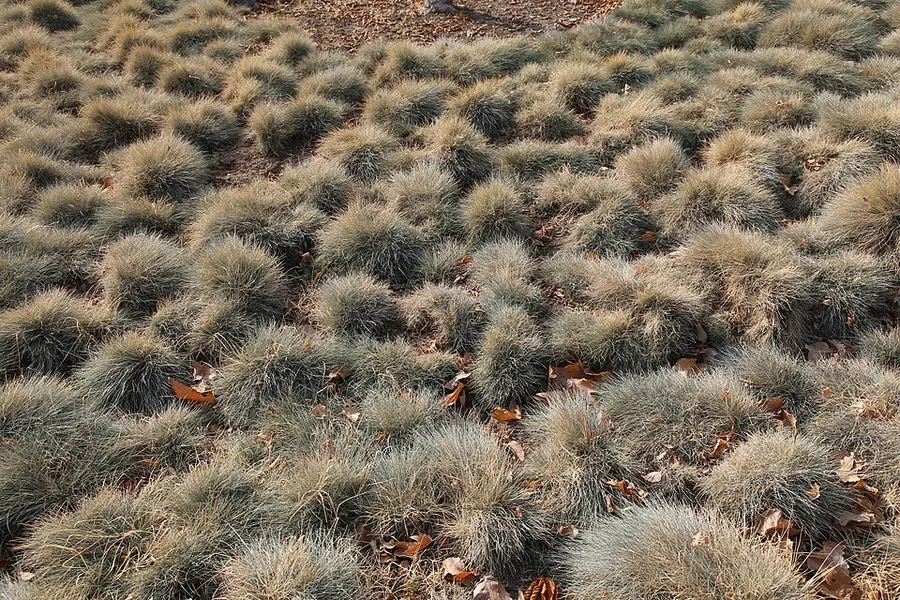
Blue fescue is a small, well-behaved ornamental grass that gathers into a rounded silver-blue tuft about a foot tall, and it makes a wonderful starter plant. It hails from the cooler corners of Europe, and it wins a spot in the garden through color and shape rather than size, keeping its neat dome all season long. Place it where the blue can catch the light beside gravel, dark mulch, or leafier green neighbors.
The happy surprise is how little it needs from you. Set it in full sun with sharp drainage in lean or even rocky soil, and it shrugs off drought and cold all the way down to zone 4. The things that trip it up are rich ground and soggy roots, which leave the clump floppy or rotted, so the gentle rule is to plant it tough and water it lightly.
The only thing to plan for is its short life, since a clump tends to empty from the middle after 2 to 3 years. That sounds like a worry, but it just means dividing it or starting fresh now and then, which any first-timer can manage. Do that, keep it in full sun, and a row of tidy blue domes will reward you season after season.
Care
The short version: full sun, lean and sharply drained soil, and just a little water once it has settled in. You will hardly ever feed it, you shear it back in early spring, and you divide the clump every 2 to 3 years before the center gives out.
Light
Give blue fescue full sun and it will thank you with its best color, because that strong light is exactly what draws out the silver-blue. A plant left in too much shade greens up and flops a little. It will accept light shade if it must, though the foliage loses some of its sparkle.
Water
Once it has settled in, this is a tough, drought-friendly plant, so water it sparingly and let the soil dry out between drinks. It really dislikes wet, soggy ground, and overwatering is the quickest way to rot the crown, so erring on the dry side is the safe, forgiving choice.
Soil
Plant it in average to lean, sharply drained soil, and don't fuss if the ground is poor, dry, or rocky, because that suits it perfectly. It does rot in wet or heavy clay, so good drainage matters far more than rich feeding. Any pH from 5.5 to 7.5 will make it happy.
Temperature
This is a genuinely cold-hardy little grass, taking winters down to about -29°F (-34°C) and summer warmth up to 86°F (30°C). The bigger stress is a hot, humid summer rather than the temperature on its own, which can wear it down, so don't be alarmed by a tough cold snap.
Humidity
Low humidity is what it loves, right in line with its taste for dry soil. Hot, muggy summers are the hard part and can make the clump rot or fade, so a breezy spot and dry roots will go a long way toward keeping it content.
Feeding
You can practically forget about feeding this one. A single light feeding in spring is all it ever wants, and rich soil actually works against you by encouraging floppy, weak growth. Lean ground is honestly where this grass looks its very best.
Pruning
In early spring, shear or comb the clump back to about 3 to 4 inches to clear out the old brown blades before fresh growth pushes through. That one yearly haircut is all it takes to keep the tuft looking neat and renewed.
Repotting
Instead of repotting, just divide the clump every 2 to 3 years to keep it lively. When the center turns brown and bare or the tuft starts thinning, the plant is gently letting you know it is time to lift and split.
Size & spacing
Each plant stays small and tidy, reaching about 8 to 12 inches (20 to 30 cm) tall and roughly the same across. Give plants around 10 to 12 inches (25 to 30 cm) of room so each blue dome reads as its own neat little mound.
When to plant
Blue fescue is a cool-season grass that does most of its growing in the gentler ends of the year, which makes its timing easy to follow. Set new plants out in spring once the last frost has passed or in early fall, and watch for its modest flower spikes from late spring into early summer. Early spring is also your window to shear and divide.
Northern hemisphere
Southern hemisphere
Typical months for a temperate climate: start earlier in warm zones, later where spring frosts linger.
- Sow: Late winter to early spring (species only; named blue cultivars do not come true from seed)
- Plant: Spring after last frost or early fall
- Harvest: Late spring to early summer (June-July)
Hardiness
USDA hardiness zones: 4–8
Temperature: down to -34°C
Troubleshooting
Almost every blue fescue hiccup comes down to one of two things: too much water or not enough sun, and both are easy to put right. The center hollowing out is the other near-certainty as a plant ages, and it is nothing to be discouraged about. Find what matches below, and a move, a haircut, or a division will usually set things straight.
Yellowing leaves and a soft, collapsing crown
When a plant turns yellow and caves in, soggy roots are nearly always behind it, and heavy, rich, or poorly drained soil brings on crown and root rot. A long hot, humid summer can send it sliding the same way. You can usually turn this around: give it a fresh spot in lean, fast draining soil and full sun, water far less, and trim away the tired blades so it can bounce back once cooler days arrive.
Fix:
- Move or replant in sharply well-drained, lean soil with full sun
- Reduce watering and avoid wet feet
- Cut back declining foliage and allow recovery in cooler weather
A hollow brown middle inside a ring of green
Try not to worry if you see this, because it is just the plant's short life at work, and blue fescue naturally starts emptying from the center after 2 to 3 years. A clump left undivided too long will reach that point sooner. The remedy is simple and forgiving: lift the whole thing in early spring, toss the spent middle, and tuck the healthy outer pieces back in.
Fix:
- Dig up the entire clump in early spring
- Discard the dead center and divide the vigorous outer portions into smaller sections
- Replant the divisions in well-drained soil and water in
The blue softening to a plain green
Don't take it as a failing, because that lovely silver-blue is really a sun effect, and a plant sitting in too much shade simply greens up and loosens. Age has a hand in it too, with older clumps leaning toward a greener summer shade. Move it into full sun and divide any tired clumps, and the bright blue comes right back.
Fix:
- Transplant to a full-sun location
- Divide and replant aging clumps to restore vigor and color
Toxicity
Here is some lovely reassurance for pet and livestock owners: blue fescue is not toxic. It is a true grass with no poisonous parts, and it is safe around cats, dogs, horses, rabbits, and grazing stock alike. A pet that overdoes the nibbling might bring a little back up the way any grass goes, and the pollen can nudge hay fever in sensitive folks, but nothing here will poison a soul.
Safe for
People · Cats · Dogs · Horses · Rabbits · Livestock · Birds
Cats None
You can relax with a curious cat nearby, since the plant carries nothing harmful. If your cat chews a few blades and brings them back up, that is just the usual grass habit at work, not a sign of trouble.
Dogs None
There are no toxins to fret about here, so a dog can snuffle and nose through the clump freely. The worst that happens is a big mouthful of grass coming back up a little later.
Horses Safe
Horses are perfectly fine around it. This is a true grass, so a grazing horse takes no harm from a mouthful.
Rabbits Safe
Rabbits can nibble fescue with nothing to fear. Rabbits and deer browsing the clumps is actually one of the friendly reasons gardeners welcome it.
Livestock Safe
Cattle, goats, and sheep are all safe with it. Fescue is a familiar pasture grass, and this ornamental kind behaves just the same.
Birds Safe
Birds have nothing to worry about from the plant, and the little seed heads even invite finches and other small visitors to drop by.
People Safe
People are safe with it as well. The one gentle note is the grass pollen, which may stir up hay fever in anyone who already reacts to it.
Not poisonous, but pets that nibble grass may vomit, and grass pollen can aggravate allergies in sensitive people.
Varieties
Most of the blue fescue you will meet is one of a few named selections, sorted mainly by how blue they stay and how well they take the heat. Here are the ones worth getting to know.
Elijah Blue
This is the one you will see most often, beloved for its soft, silvery powder-blue blades.
Boulder Blue
A fine-textured choice in steely slate-blue that handles heat and drought more gracefully than most.
Cool as Ice
Picked for its especially icy silver-blue tone, the coolest shade you will find in the bunch.
Beyond Blue
A sport of Elijah Blue that holds its blue longer and brushes off the heat and humidity that wash out the others.
How to propagate
Division is the easiest and most reliable way to make more blue fescue, and it kindly doubles as the cure for an aging clump. Seed works for the plain species but won't carry the named blue selections, so don't be discouraged if it surprises you.
DivisionEasy
Early spring · 4-8 weeks
Division is your friend here, because the named blue cultivars won't come true from seed and splitting an old clump saves both the color and the tidy shape. Lift and divide in early spring, set the lively outer pieces back in, and give them the next 4 to 8 weeks to settle. As a bonus, it is also the very cure for a clump that has gone bare in the middle.
SeedEasy
Late winter to spring · 4-8 weeks
If you would like to try seed, the plain species grows happily from a sowing made late winter into spring and roots in roughly 4 to 8 weeks. Just keep in mind that seedlings drift all over in color and the named cultivars won't come true this way, so seed suits the species rather than a treasured blue selection.
Myths
Blue fescue is a plant-once-and-forget grass that lasts for years.
In truth it is a short-lived cool-season grass, and the middle of the clump tends to empty out within 2 to 3 years. The kind thing for both of you is to divide it every few years or simply replace it once it starts looking tired, and you will keep it crisp.