Ornamental · Poaceae
Cereal Rye
Secale cereale
Sow it late, let it carry your soil through the cold months, and it feeds the ground while crowding out winter weeds.
Full sun
USDA 3–8
2–6 ft · 0.5–1.8 m
Overview
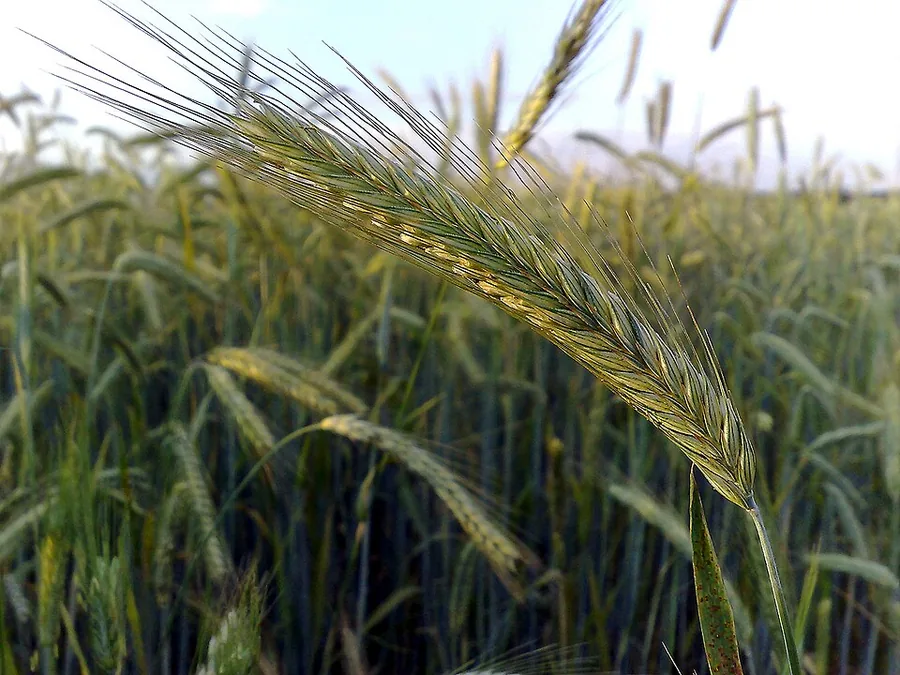
Cereal rye is a forgiving place to start, a tough annual grass in the same family as wheat and barley that seems determined to grow for you. First-timers love it because so little throws it off: it wakes up in cold soil, puts up with poor ground, and overwinters farther north than any other cover crop. Scatter it over a bare bed in fall and it green up the quiet months and hold the space until spring.
The real magic happens out of sight and just above the surface. Rye's dense roots gather up leftover nitrogen before winter rain can carry it off, and the leafy top growth shades out weeds for you. As it breaks down in spring it leaves behind organic matter and a natural residue that slows germinating weed seeds, a helpful quirk called allelopathy.
That same eagerness means the calendar matters more than any fussy care. Cut it on time and you are rewarded with clean soil and a soft mulch; let it go to seed and you have simply planted next year's weed. Most of your job is watching the seasons, not tending the plant, and that is a comforting kind of gardening.
Care
The short version: sow it in fall into full sun and nearly any soil, let the rain water it, skip feeding it altogether, and plan to cut it at flowering before it sets seed. Mistakes here are easy to recover from.
Light
Give rye full sun and it rewards you with the fullest stand and the thickest weed-smothering growth. It will put up with a little shade, but an open, sunny bed is where it truly shines.
Water
Rye leans on natural rainfall and asks for next to no watering once it is up. It shrugs off dry spells and drought better than wheat, so you can sow it and mostly leave it in peace.
Soil
Few cover crops are this easy to please, which takes the pressure off. Rye settles into loam, sand, heavy clay, even shallow rocky and poorly drained ground, and it outperforms other cover crops on infertile, sandy, or acidic soil. A pH anywhere from 5.0 to 7.0 keeps it happy.
Temperature
This is a cold-season grass at heart, so late timing is fine. It germinates at temperatures as low as 34°F (1°C) and keeps growing in cool weather up to around 86°F (30°C), which is exactly why it can be sown so late and still settle in before winter.
Humidity
Ordinary outdoor humidity is all rye asks for, so there is nothing here to manage or stress about. Good airflow in a dense stand helps keep foliar disease at bay, though rye seldom struggles with it anyway.
Feeding
You can put the fertilizer away for this one. Grown as a soil-builder, rye takes no feed at all and instead scavenges the nitrogen left in the soil, gathering up nutrients that would otherwise wash away over winter.
Pruning
Rye is not so much pruned as terminated, and the timing is forgiving once you know the cue. When it flowers in spring, mow it, roll or crimp it flat, or till it under to kill it before it sets seed, which keeps it from reseeding and heads off nitrogen tie-up in the next crop.
Repotting
none
Size & spacing
Sown thickly as a cover crop, rye forms one solid stand rather than tidy spaced plants, so there is no fussing over gaps. It climbs from a low fall clump to 1.5 to 6 feet (45 to 180 cm) tall by spring before you cut it down.
When to plant
Rye keeps a fall-to-spring rhythm, the reverse of most garden plants, and that is part of what makes it so kind to grow. Sow it late in the season, even after the first chill has arrived, and it sprouts in cool soil and settles in as a low clump. When spring warms up it shoots skyward fast, and that growth spurt is your friendly signal to cut it before the seed heads form.
Northern hemisphere
Southern hemisphere
Typical months for a temperate climate: start earlier in warm zones, later where spring frosts linger.
- Sow: Not started indoors; direct-sown.
- Plant: Late summer through fall (later than most cover crops); to midwinter in zones 8 and warmer.
- Harvest: Bolts and heads in spring; terminated before seed set rather than harvested.
Hardiness
USDA hardiness zones: 3–8
Temperature: down to -40°C
Troubleshooting
Rye rarely bothers with pests or disease, so almost every hiccup comes down to timing rather than care, which is reassuring. Cut it too late and an easy cover crop turns into a woody tangle that shortchanges the next planting. Look over the signs below and act before the seed heads set, and you will stay well ahead of any trouble.
When rye gets tall and woody and hard to cut back
Don't worry if you meant to cut it sooner and missed the window, this is a common slip and it is fixable. Once rye runs past flowering the stems stiffen and turn fibrous, the plant resists being killed, and any seed it drops can sprout as a weed next season. There is also nitrogen tie-up, where that woody residue borrows soil nitrogen as it rots and leaves less for your next crop. Cut it at flowering by mowing, rolling, or tilling, give it at least 10 to 14 days before you plant, and offer the next crop a little starter nitrogen to make up the difference.
Fix:
- Terminate at the right stage by mowing, rolling/crimping, or tilling at flowering before seed set
- Terminate at least 10-14 days before planting the following crop to allow decomposition
- Add starter nitrogen or apply nitrogen early to the following crop to offset immobilization
When tiny seeds come up thin after rye
If your carrots or lettuce look patchy after rye, the rye is the gentle culprit, not your sowing. This is allelopathy, where breaking-down rye residue releases compounds that quiet germination, and it leans hardest on small seeds like carrots, lettuce, and onions while transplants and big seeds push right through. The good news is that the effect lifts on its own, usually inside about 30 days. Give it two to three weeks before you direct-seed small crops, or lean on transplants and large-seeded crops until then.
Fix:
- Wait about 2-3 weeks (allelopathy generally tapers off within roughly 30 days) before sowing small-seeded crops
- Use transplants or large-seeded crops, which are far less susceptible
- Allow rye residue to decompose before direct-seeding small crops
When rye passes pests to the next grass crop
Living rye can serve as a green bridge, quietly sheltering insects and pathogens that then step onto a following grass crop such as corn or wheat. This shows up most when you plant into rye that was killed only a few days earlier, so a little patience goes a long way. Kill the rye well before the next grass crop and let the old residue die back, and there is nothing left for those pests to hold onto.
Fix:
- Terminate rye well ahead of planting the next grass crop to break the green bridge
- Allow time between termination and planting so the host residue declines
Toxicity
Cereal rye is a food grain and forage grass rather than a poison, so it is a comfortable plant to have around pets, children, and most grazing animals. The single thing to keep half an eye on is ergot, a fungus that can infect the seed heads and make the grain toxic if eaten in quantity, which mainly matters for livestock and horses on heavily headed rye. Clean foliage and screened grain carry no such risk, so there is little to fret over.
Safe for
People · Cats · Dogs · Horses · Rabbits · Livestock · Birds
Cats None
You can relax with a cat in the house. A curious cat that chews a grassy blade will come to no harm, since the leaves hold nothing toxic.
Dogs None
Dogs are safe here too. The foliage is simply a food-crop grass, so a dog that grazes on it risks nothing worse than a mild tummy from eating too much greenery.
Horses Caution
Clean rye pasture and forage sit well with horses. The one thing to keep an eye on is ergot: heads carrying the fungus hold alkaloids that, eaten in quantity, can bring on poor circulation, lameness, and trouble for pregnant mares, so simply keep horses off heavily headed, ergot-spotted rye.
Rabbits None
Rabbits are welcome to nibble the green blades without any worry. The leaves are a safe grass forage that carries no toxic compounds.
Livestock Caution
Cattle, sheep, and goats take to rye as an everyday forage. The care point is ergot in mature seed heads, where dark sclerotia hold alkaloids that can cause ergotism, so just limit access to ergot-infected grain rather than the leafy growth.
Birds None
Rye grain is a familiar treat for birds, and the plant is safe for poultry and wild birds alike. Clean seed and foliage give them nothing to fear.
People Safe
Rye is an everyday food grain, milled into flour for bread and perfectly safe to eat. The only caution is ergot-contaminated grain, which is screened out of food rye, so grain showing dark sclerotia should simply be set aside.
Like other cereal grasses, rye seed heads can occasionally be infected by ergot (Claviceps purpurea), a fungus whose dark sclerotia produce toxic alkaloids that can cause ergotism in livestock and people if contaminated grain is eaten; this is a grain-consumption concern, not a risk from the cover-crop foliage. Rye pollen can also be a mild seasonal allergen.
Varieties
Most cereal rye is sold plainly as cover-crop seed, yet a handful of named cultivars have been bred for certain climates and jobs. These are the friendly few worth getting to know.
Aroostook
A northern favorite prized for surviving hard cold and heading early, and one of the most trusted cover-crop ryes throughout the mid-Atlantic and cooler regions.
Wheeler
A well-liked mid-Atlantic cover-crop choice, a tetraploid that was bred in Michigan.
Elbon
A southern type at home in Oklahoma and Texas, whose roots double as a trap crop against root-knot nematodes and which heads about two weeks before Abruzzi.
Wrens Abruzzi
A Georgia-bred variety that flourishes across the Southeast but struggles to pull through the colder North.
How to propagate
There is only one way to grow rye and happily it is the simplest one, which is to lay the seed straight onto the soil. It is so cold-tolerant that you can sow it long after most plants have wrapped up for the year, so a late start is nothing to worry about.
SeedEasy
Direct-sow in late summer to fall, later than most cover crops; germinates and establishes in cold soil. · Germinates quickly in fall and establishes before winter; resumes fast growth in spring.
Growing rye could hardly be gentler on a beginner: you scatter the seed right onto the ground, and this is the most cold-hardy cover crop you can plant. Sow it in late summer or fall, later than nearly any other cover crop, and it sprouts fast in cool soil and tucks in as a low clump before winter. That hardiness is your safety net, because even a late sowing will still green up and grow strongly again come spring.
Myths
Cereal rye and ryegrass are one and the same plant.
The two share the word rye and little more. Cereal rye is Secale cereale, the tall, tough grass that serves double duty as a cover crop and a bread grain, while ryegrass sits in the genus Lolium and is grown mostly for lawns and forage. They are simply different grasses, and ryegrass belongs nowhere near a vegetable bed.
Sources
- NC State Extension Gardener Plant Toolbox
- USDA SARE - Managing Cover Crops Profitably
- Penn State Extension
- Iowa State University Extension - Integrated Crop Management
- Kansas State University Agronomy eUpdate
- Texas A&M AgriLife Extension - Bexar County
- ASPCA Animal Poison Control - Toxic and Non-Toxic Plants