Tree · Myrtaceae
Guava
Psidium guajava
Offer it full sun, warmth, and shelter from frost, and your guava tree will thank you with fragrant fruit season after season.
Full sun
Every 5–10 days
90–150 days
USDA 9–11
Overview
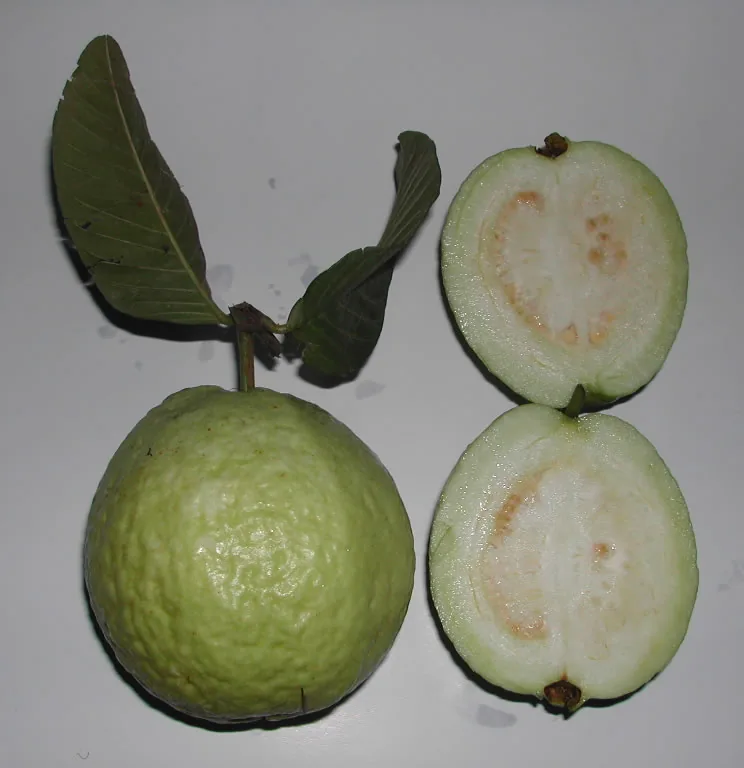
Guava is a fast-growing tropical tree in the myrtle family, born in the American tropics and now at home across the warm parts of the world. It can climb anywhere from 10 to 30 feet (3 to 9 m), but don't let that worry you, since most gardeners simply keep it pruned low so the fragrant, vitamin-rich fruit stays within easy reach.
Here is the reassuring part: this tree is forgiving and quick to reward you. It settles into all sorts of soils, from sand to limestone, and once established it shrugs off a short dry spell without complaint. Its one true weak spot is cold, because a night near freezing will scorch the tender new growth.
Where the winters stay gentle, a guava slips into the garden and starts cropping within a few years. In cooler places, you can raise it in a big pot and roll it under cover when frost threatens, and either way it does just fine. What really brings on the heaviest, sweetest fruit is simply full sun and steady warmth.
Care
The short version: give it full sun and warmth first of all, water deeply through flowering and fruiting, and ease back once the fruit starts to color. Feed lightly across the growing season, prune after harvest so fresh fruiting wood keeps coming, and shelter the tree from even a whisper of frost.
Light
Guava loves full sun for the best fruit, though it will manage in partial sun if it must. Too much shade nudges the tree toward leaves and away from flowers, so pick the brightest spot you have and it will thank you.
Water
Water deeply and regularly while your tree is settling in and right through flowering and fruiting. Grown trees cope with drought, but steady moisture gives you better fruit, and easing off just before harvest sharpens the flavor.
Soil
This is a relaxed tree that happily takes well-drained loam, sand, even limestone. It spans a wide pH band of 4.5 to 7.0, so most garden soils will suit it fine as long as the water drains away.
Temperature
Guava grows contentedly from 32°F to 95°F (0°C to 35°C), but it has no patience for frost. A night near freezing scorches the tender growth, so warmth is the single biggest thing keeping your tree productive.
Humidity
Everyday humidity in the 40% to 70% range suits guava beautifully, echoing the warm, mild-humid tropics it came from. Outdoors there is no need to fuss over a number.
Feeding
Feed monthly through spring and summer with a balanced fruit-tree fertilizer that carries micronutrients. Young trees thrive on light, frequent feeding instead of heavy doses, and piling on nitrogen quietly costs you fruit.
Pruning
Prune after harvest to clear out deadwood, keep the height down for easy picking, and open the canopy to light and air. Since guava fruits on new growth, a gentle tip prune keeps fresh fruiting shoots coming along.
Repotting
A potted guava wants moving up every 2 to 3 years, ideally in spring. Keep an eye out for roots circling the pot or poking through the drainage holes, water rushing straight through, and growth or fruiting that has slowed to a stall.
Size & spacing
Left to its own devices, a guava reaches 10 to 30 feet (3 to 9 m) tall and spreads 10 to 20 feet (3 to 6 m) wide. Most gardeners simply prune well below that so the fruit stays within arm's reach.
When to plant
Guava is a warm-weather tree that simply cannot take frost, so the whole trick of timing is keeping it clear of the cold. Start seed in late winter somewhere warm, move young trees outdoors in spring once frost has passed, and watch for fruit from late summer into fall, with year-round crops in truly frost-free corners.
Northern hemisphere
Southern hemisphere
Typical months for a temperate climate: start earlier in warm zones, later where spring frosts linger.
- Sow: late winter to early spring in warm conditions
- Plant: spring after all danger of frost has passed
- Harvest: flowers in spring; fruit ripens late summer through fall, with some bearing year-round in frost-free climates
Hardiness
USDA hardiness zones: 9–11
Temperature: down to -7°C
Troubleshooting
Nearly every guava worry comes down to cold, pests in the fruit, or a tree busy making leaves instead of flowers. Find what matches below and step in early, before a small setback quietly costs you a whole season's crop.
Shoot tips darkened and drooping after a cold snap
If a cold night has left the shoot tips dark and drooping, take heart, because this is frost damage and the trunk usually comes through fine even when guava has next to no cold tolerance. Give the tree time and wait until spring to trim the dead wood away, since the fresh green will show you clearly where the living part starts. Before the next cold snap, tuck frost cloth over the tree or wrap the trunk and you can spare it the same setback.
Fix:
- Wait until spring to prune out clearly dead wood once new growth shows the live boundary
- Protect with frost cloth, mulch, or trunk wraps during cold snaps
- Grow in a container that can be moved indoors in marginal climates
Tiny larvae inside fruit that goes soft and falls early
Finding little larvae when you slice a fruit open feels awful, but it is a common problem you can get on top of, and the culprit is the fruit fly that loves guava so much. The stung fruit turns soft, changes color, and falls before it should. Pick your crop the moment it begins to ripen instead of leaving it to soften, slip bags over the growing fruit to keep the egg-laying flies off, and clear away every fallen fruit so the pests lose their chance to breed.
Fix:
- Harvest fruit early as it begins to ripen rather than leaving it to fully soften on the tree
- Bag developing fruit to exclude egg-laying females
- Collect and destroy fallen and infested fruit promptly to break the breeding cycle
Plenty of leaves but little or no fruit
A big leafy tree that refuses to fruit is not a failure, and the fix is usually simple, because the real cause is almost always too much nitrogen or too little sun steering the tree toward leaves. Old wood left unpruned adds to it, since the flowers form on fresh shoots. Move the tree into full sun, swap to a balanced fruiting feed, and give it a light prune, and you will coax new fruiting growth along.
Fix:
- Move to or maintain full-sun exposure
- Reduce high-nitrogen fertilizer and use a balanced fruiting formula
- Lightly prune to stimulate fresh fruiting shoots
Toxicity
Guava is one of the easygoing, worry-free ones. The fruit is a beloved food, eaten skin, flesh, and seeds together, and no part of the plant is listed as poisonous to cats, dogs, or other animals. Share ripe fruit freely, and just keep the portions sensible the way you would with any treat.
Safe for
People · Cats · Dogs · Horses · Rabbits · Livestock · Birds
Cats None
You can relax if a curious cat takes a nibble, because no part of the guava is poisonous to them.
Dogs None
A little ripe guava is perfectly fine for a dog. Keep the portion small, since a big helping of any fruit can loosen the stomach.
Horses Safe
There is nothing to fear if a horse grazes the leaves or fruit, as guava holds no toxins for them.
Rabbits Safe
Rabbits can enjoy a small taste of the fruit safely, so long as hay stays the heart of their diet rather than sweet extras.
Livestock Safe
Cattle, goats, and sheep browse guava without any trouble, and the dropped fruit has long been familiar forage across the tropics.
Birds Safe
Birds happily eat ripe guava and carry the seeds off in every direction, which is just how the tree slips into the wild.
People Safe
People love guava fresh or cooked, and you can eat the whole fruit, skin and seeds and all.
The ripe fruit is safe; as with any new food, offer pets only small amounts and avoid letting them swallow large seeds or pits of other fruits.
Varieties
Guava comes in plenty of named cultivars, told apart mostly by flesh color, sweetness, and the size of the tree. A handful show up again and again in home gardens.
Ruby Supreme
You get pink flesh, sweet aromatic fruit, and reliable crops from this Florida favorite.
Mexican Cream (Tropical White)
Its mild, sweet, creamy white flesh sits on a fairly compact tree that fits happily into a smaller garden.
Lucknow 49 (Sardar)
This much-loved Indian cultivar rewards you with heavy crops of large, white-fleshed fruit.
How to propagate
Guava is easy to multiply, and the method you choose decides whether the new tree matches the parent. Seed is the simplest but a bit unpredictable, while cuttings, layering, and grafting each hold a cultivar true.
SeedEasy
Spring in warm conditions · Germinates in 2 to 8 weeks; bears fruit in 2 to 4 years
Growing guava from seed is about as easy as it gets, so don't be shy about trying. Sow in spring while it's warm and you'll see sprouts across 2 to 8 weeks, though the tree won't copy its parent and takes 2 to 4 years to fruit, which makes seedlings a fine choice for rootstock or a little cheerful experimenting.
Stem cuttingsModerate
Warm growing season · Several weeks to root under mist or high humidity
Take semi-hardwood cuttings in the warm growing season and root them with a little bottom heat and some rooting hormone, and you're on your way. Given several weeks under mist or steady humidity they take hold, and best of all they keep every trait of the tree you took them from.
Air layeringModerate
Warm growing season · Roots in about 6 to 10 weeks before severing
Air-layering is a wonderfully dependable way to copy a cultivar true to type, so it rewards a bit of patience. Wrapped in the warm season, the branch roots in roughly 6 to 10 weeks, and only when those roots are showing do you cut it free as a plant of its own.
GraftingDemanding
Warm season onto vigorous seedling rootstock · Unions establish over several weeks
Grafting takes the most skill, yet it is the surest path to guaranteed fruit quality and the standard way to raise named cultivars. Joined to a vigorous seedling rootstock in the warm season, the union knits together over several weeks, and then you have your tree.
Myths
People often assume a guava won't bear unless it's grafted or has another tree beside it for pollination.
Good news for a solo tree: guava is largely self-fertile, and even a seedling will fruit all on its own. Grafting still helps, though for another reason, since it locks in a chosen cultivar and brings fruit sooner. One tree fruits happily without a partner.