Ornamental · Polygonaceae
Buckwheat
Fagopyrum esculentum
Tuck it into warm soil and buckwheat will reward you, covering the ground, smothering weeds, and feeding the bees within a few short weeks.
Full sun
Every 5–10 days
70–90 days
USDA 3–10
Overview
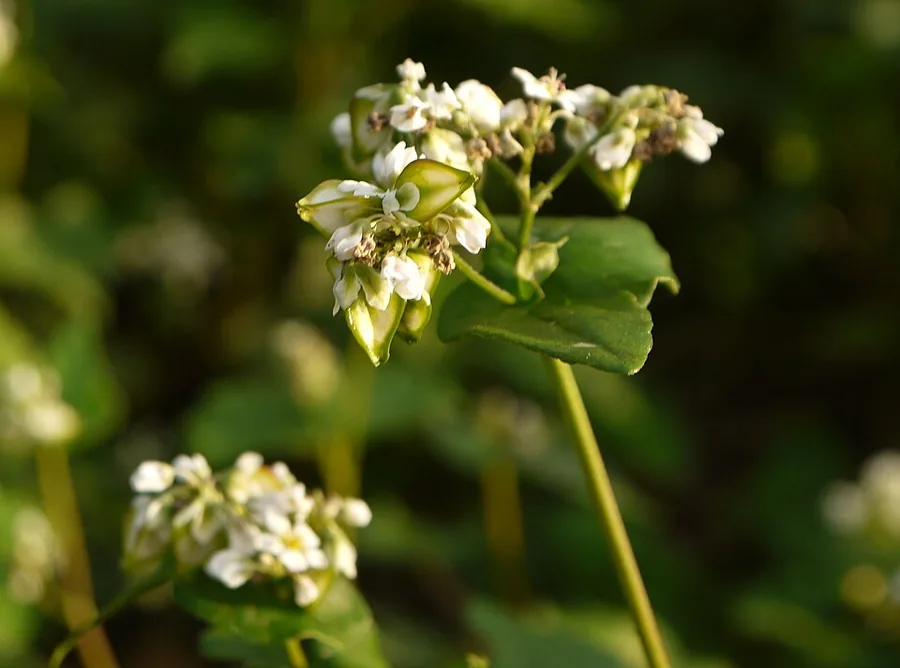
If you want an easy, confidence-building plant, buckwheat is a lovely place to start, because it is one of the quickest things you can put in the ground. The name can be misleading, since it has nothing to do with wheat and is not even a grass. It is really a broadleaf pseudocereal in the knotweed family, grown both for its little triangular grain and as a fast summer cover crop. Within a few weeks of sowing, it kindly carpets bare soil with heart-shaped leaves and a soft haze of small white to pinkish flowers.
What it does so well is buy you time and look after the soil for you. A buckwheat stand smothers weeds before they get a foothold, scavenges phosphorus and shares it with later crops, and brings in bees and other pollinators in cheerful numbers. The one thing it does not do is fix nitrogen, since it is not a legume, so when you need that you can simply grow a legume cover crop alongside it.
Best of all, it asks for almost nothing and grows happily on poor, low-fertility ground where fussier plants would sulk. Its only real soft spot is a tender nature. Buckwheat wilts in heat and dies at the first frost, so think of it as a friendly warm-season filler between main crops rather than something that lasts the year, and you will get along just fine.
Care
The short version: direct sow into warm soil after frost, give it light, well-drained ground that stays evenly moist, leave the fertilizer in the shed, and cut it down at early bloom before it sets seed.
Light
Buckwheat is happiest in full sun and will take partial sun without much fuss, so do not worry if your spot is not perfect. More light simply means faster cover and better flowering, which is the whole joy of growing it.
Water
Aim for steady, even moisture, since buckwheat is not drought tolerant and wilts quickly in hot, dry spells. It does not like wet feet either and struggles on waterlogged or heavy soils, so think moist but well drained and you will keep it content.
Soil
It thrives on light to medium, well-drained loams and actually prefers low-fertility ground, doing poorly on heavy, wet, or high-lime sites. A pH anywhere from 5.0 to 7.0 suits it nicely, and it forgives poor and slightly acidic soil better than most crops, so a humble patch is plenty.
Temperature
Buckwheat is a warm-season annual that is comfortable from about 45°F to 95°F (7°C to 35°C). It is frost-tender, so a single cold night will end it, and it tends to sulk in extreme heat, but ordinary summer warmth keeps it thriving.
Humidity
Plain outdoor humidity is all it ever needs, so there is no number to fuss over. It cares far more about cool, moist soil beneath it than about the air around it.
Feeding
You can happily skip the fertilizer. Buckwheat is grown on low-fertility soils on purpose, and extra nitrogen only makes it flop over. It is not a legume and fixes no nitrogen of its own, yet it kindly scavenges phosphorus and leaves it more available for whatever you plant next.
Pruning
When you are growing it as a cover crop, mow or till at early bloom, roughly 7 to 10 days after the first flowers open. That gently ends the crop before viable seed forms and keeps it from reseeding as a weed later on.
Repotting
none
Size & spacing
Plants reach 2 to 4 feet (60 to 120 cm) tall with a slim spread of 6 to 12 inches (15 to 30 cm). Since you sow it thickly as a stand rather than spacing it out, that narrow footprint is just what lets it knit together and shade out weeds for you.
When to plant
Buckwheat lives for warmth and has no patience for cold, so the timing is simple and forgiving. Direct sow it into warm soil from late spring through midsummer once all danger of frost has passed, enjoy the flowers opening within 3 to 6 weeks, and then either cut it down at early bloom as a cover crop or harvest the grain at about 10 to 12 weeks, comfortably before the first fall frost calls time on it.
Northern hemisphere
Southern hemisphere
Typical months for a temperate climate: start earlier in warm zones, later where spring frosts linger.
- Sow: Not recommended; direct sow only.
- Plant: Direct sow in warm soil after all danger of frost has passed, late spring through midsummer.
- Harvest: Small white to pinkish flower clusters appear within about 3 to 6 weeks; grain harvested at about 10 to 12 weeks.
Hardiness
USDA hardiness zones: 3–10
Temperature: down to -40°C
Troubleshooting
Buckwheat brings very few real pests to worry about, so almost any trouble comes down to timing and weather rather than disease. Look over the signs below, match them gently to what you are seeing, and step in while it can still help.
Buckwheat keeps coming back as a weed in later plantings
If buckwheat turns up uninvited in a later crop, take heart, because this is just volunteer reseeding and it is easy to head off next time. It happens when a stand is left to bloom and drop ripe seed before it gets cut down, so the answer is simply good timing. Mow or till at early bloom, about 7 to 10 days after the first flowers open and before any seed hardens, and gently hoe out the little heart-shaped seedlings while they are still young and tender.
Fix:
- Mow or till at early bloom, about 7 to 10 days after flowering begins, before any seed hardens
- Cultivate or hoe out volunteer seedlings while young
- Avoid letting any stand mature fully to seed
Plants blacken and collapse after a cold night
Seeing the whole stand go dark and limp after a chilly night feels alarming, but it is normal for a frost-tender warm-season annual like buckwheat, which simply cannot survive a single near-freezing night. Nothing can revive it once frost arrives, so there is no need to fret over it. Treat the loss as the natural close of the crop, turn the soft residue back into the soil, and remember to sow only after frost has passed and, for grain, to bring the harvest in before the first fall frost.
Fix:
- Accept frost kill as the natural end of the crop and incorporate residue
- For grain, harvest before the first frost
Thin, weak stand in hot or dry ground
A patchy, struggling stand usually just means the spot was a little too harsh, because buckwheat is not drought tolerant and droops quickly in midday heat, yet it also dislikes heavy, soggy, or high-lime ground. The good news is the remedy is gentle and forgiving: aim for the comfortable middle. Sow into light to medium, well-drained soil that stays evenly moist, and steer away from both bone-dry and waterlogged spots.
Fix:
- Sow into adequately moist, well-drained soil
- Avoid heavy, wet, or droughty sites
No nitrogen boost for the crop that follows
It is a very common surprise, so do not feel caught out: buckwheat is a non-legume in the knotweed family, and however green and lush it looks, it never pulls nitrogen from the air. The kind thing to do is lean on what it truly gives you, which is fast weed cover, phosphorus it scavenges and shares, and a generous load of quick green growth. When the soil really needs nitrogen, you can simply grow a legume cover crop alongside it or right after it.
Fix:
- Use buckwheat for weed smothering, phosphorus scavenging, and quick biomass rather than nitrogen
- Pair or follow with a legume cover crop if nitrogen is needed
Toxicity
For people the news is happy: the grain is a wholesome, gluten-free food and the flowers are a prized honey and pollinator source. The one caution is the green plant. Its flowers and foliage carry a pigment called fagopyrin, and grazing animals that eat a great deal and then stand in the sun can develop fagopyrism, a sunburn-like skin reaction. The seed itself carries none of it, so there is no need to worry over what ends up on your plate.
Toxic to
Cats · Dogs · Horses · Rabbits · Livestock · Birds
Safe for
People
Cats Caution
Most cats leave greens well alone, so there is little to worry about, but a cat that does eat a good helping of the flowering plant can end up with a queasy stomach, and the fagopyrin it takes in may leave pale or thin-furred skin a bit sensitive to sun. A simple precaution is enough: keep a curious cat away from cut bouquets and from standing plants in bloom.
Dogs Caution
A dog that nibbles a stray leaf will almost certainly be fine, so no need to panic, though eating a lot of the green, flowering plant can lead to an upset stomach. Just keep a kind eye on pale-skinned or short-haired dogs for any redness or itching on exposed skin after a sunny spell outdoors.
Horses Moderate
Horses deserve a closer watch here, since heavy grazing on flowering buckwheat followed by time in the sun can bring on fagopyrism. The white-marked and lighter patches of the muzzle and legs may blister, peel, and itch. The remedy is gentle and straightforward: move affected horses out of direct sun and off the plant.
Rabbits Moderate
It is best not to let rabbits graze a lot of the green plant. The fagopyrin in the leaves and flowers can make light skin and thin-furred spots, the ears most of all, react to sunlight with sore, sunburn-like patches, so a little prevention keeps them comfortable.
Livestock Moderate
Cattle, sheep, goats, and pigs are the animals most often affected by fagopyrism. When they graze plenty of flowering buckwheat and then stand out in the sun, their light-colored or exposed skin can swell, blister, and itch. Keeping them off heavy stands in bloom is a simple and caring step.
Birds Caution
Birds enjoy the cleaned grain and it does them no harm at all, since the seed carries no fagopyrin. The only thing to mind is the green plant: heavy feeding on the flowering tops could leave bare or pale-skinned birds sensitive to sun, so the small caution rests with the foliage and never the seed.
People Grain safe
You can enjoy the hulled grain and buckwheat flour with confidence, as they are a wholesome, gluten-free food and perfectly safe to eat. The one gentle caveat is the raw green plant: in rare cases, handling or eating a great deal of the flowering tops has left light skin sensitive to sun, so it helps to remember that the seed is the part people eat, not the foliage.
The cleaned grain and buckwheat flour are safe to eat. Keep pets and livestock from grazing large amounts of the flowering green plant, and be aware that affected light-skinned animals (and rarely people) should be kept out of direct sun after heavy ingestion.
Helpline numbers

United States
ASPCA Animal Poison Control: (888) 426-4435 (fee applies)

United Kingdom
Animal PoisonLine: 01202 509000 (fee applies)

Australia
Animal Poisons Helpline: 1300 869 738
Varieties
A handful of buckwheat types come up again and again, whether you are after grain, flour, or a fast cover crop. These are the friendly few worth knowing by name.
Common buckwheat (Fagopyrum esculentum)
If you grow buckwheat at all, this is almost certainly the one in your hands, a fast warm-season broadleaf bearing white to pinkish flowers, with friendly named cultivars like Mancan and Manor that happily serve as both grain and cover.
Tartary buckwheat (Fagopyrum tataricum)
Think of this as the tougher cousin, with small greenish self-pollinating flowers, a better tolerance for cold, and more rutin, though its grain does taste noticeably more bitter.
Silverhull
A cherished old common-buckwheat type for milling, Silverhull carries silvery-gray, thin-hulled seed that grinds into flour with very little effort.
How to propagate
Buckwheat is wonderfully easy to grow from seed, which is the only way most people start it, so you can plant with real confidence.
SeedEasy
Direct sow in warm soil after all danger of frost, late spring through midsummer. · Germinates in about 3 to 5 days and covers the ground within a few weeks.
Growing buckwheat from seed is about as forgiving as gardening gets, so a first attempt is very likely to succeed. Scatter it straight into warm soil once all danger of frost has passed, anytime from late spring through midsummer, and you will usually see it break ground in just 3 to 5 days. From there it hurries to blanket the soil within a few weeks, which is precisely what makes it such a friendly weed smotherer.
Myths
Buckwheat is a kind of wheat or cereal grass and contains gluten.
It is an easy name to be fooled by, so you are in good company. Buckwheat is really a broadleaf pseudocereal in the knotweed and smartweed family, with no link to true wheat and nothing in common with cereal grasses. It is naturally gluten-free, which is exactly why its flour is such a welcome choice for people who cannot eat wheat.