Tree · Rosaceae
Apricot
Prunus armeniaca
Offer it full sun, sharp drainage, and shelter from late frost, and an apricot tree will hand you sweet golden fruit by early summer.
Full sun
Every 7–14 days
USDA 5–8
15–20 ft · 4.6–6.1 m
Overview
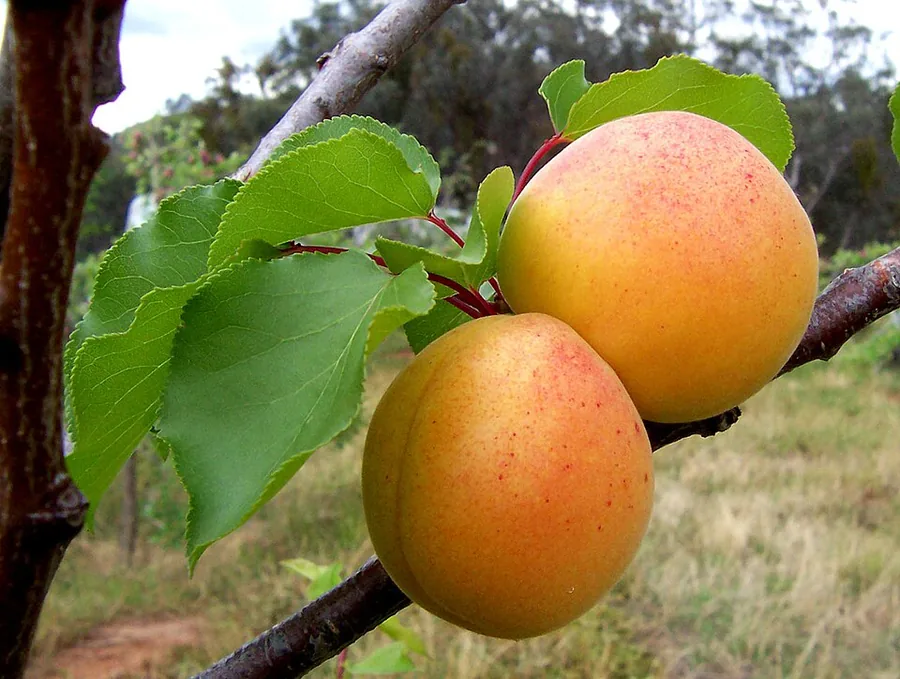
An apricot is among the very first trees to stir in spring, frequently flowering while the rest of the garden still looks bare, and that early energy is part of its charm. It sits in the rose family right beside plums and cherries, with roots in the cold, dry highlands of central Asia. You can see that lineage in how it lives: it copes with hard winter cold down to -13°F (-25°C) while still craving long, warm, sunny summers to sweeten its fruit.
That early flowering is both a blessing and a bit of a wager, and it helps to know that going in. Blooms that open in late winter get first pick of the pollinators, yet they also stand exposed to a late frost that can erase a whole season's crop on a single cold night. Where you set the tree and which variety you grow will shape how often that ever happens, so you have more say in the outcome than it might first seem.
Give an apricot deep, well-drained soil and a little elbow room, and it will reward you by filling out into a generous open-headed tree. Its fruit arrives early, sweet and plentiful enough to eat fresh, dry, or can. The flesh is all yours to savor, but the pits and leaves are not safe for pets or livestock, so it pays to think ahead about where the prunings and dropped stones will go.
Care
The short version: give it full sun, deep well-drained loam, and a frost-safe spot clear of low pockets where cold air pools. Water it deeply while it settles in and the fruit fills out, feed it in early spring, and save your pruning for dry summer weather to keep disease in check. None of this needs to be perfect to work.
Light
Apricots want full sun, and the more they get the better, both for ripening sweet fruit and for staying healthy. A site that stays open to the sky all day also lets the canopy dry quickly after rain, which keeps the fungal diseases this tree is prone to from taking hold.
Water
Give a young tree a deep, regular drink as it settles in, and again while the fruit is swelling, soaking the root zone every 7 to 14 days rather than wetting it lightly and often. A grown apricot copes with dry spells reasonably well, yet a good watering through a dry summer still shows up in tastier fruit.
Soil
Set it in deep, well-drained loam, because waterlogged roots are the fastest way to lose this tree. A soil pH between 6.0 and 7.0 is just right, and free-draining ground counts for far more than rich ground here.
Temperature
This tree is wonderfully tough across a broad span, comfortable from roughly -13°F to 95°F (-25°C to 35°C). Winter chill is seldom the worry; the genuine risk is an early bloom running into a late spring frost.
Humidity
Ordinary humidity in the 40% to 70% range suits an apricot perfectly well. What you want to steer clear of is damp, still air, since crowded wet leaves are exactly the conditions brown rot and canker thrive in.
Feeding
Feed it just once in early spring with a balanced nitrogen fertilizer to power the new season's growth. A single seasonal feeding is all it needs, and heaping on extra nitrogen only produces soft, disease-prone wood.
Pruning
Do your pruning in late summer or dry weather, never when it is cool and wet, to keep bacterial canker and Eutypa from settling into fresh cuts. Shape the tree to an open center so light and air can reach right into the heart of the canopy.
Repotting
An apricot is a full-size tree meant for the open ground, so it is rarely potted at all. Plant it once in a well-chosen spot and let it put down roots for the long haul.
Size & spacing
A standard apricot reaches 15 to 20 feet (4.6 to 6 m) tall and spreads about 12 to 20 feet (3.7 to 6 m) across. Allow it that much open space so the canopy stays airy and the roots have room to stretch.
When to plant
Apricots keep an early schedule, and once you know the rhythm it is easy to follow. Plant bare-root trees during dormancy in late winter to early spring, expect flowers that open almost before winter has finished, and look to harvest the fruit from early to midsummer.
Northern hemisphere
Southern hemisphere
Typical months for a temperate climate: start earlier in warm zones, later where spring frosts linger.
- Plant: Plant bare-root trees during dormancy in late winter to early spring.
- Harvest: Blooms very early, late winter to early spring; fruit ripens early to midsummer.
Hardiness
USDA hardiness zones: 5–8
Temperature: down to -29°C
Troubleshooting
Most apricot troubles show up on the blossoms and fruit, and the toughest ones tend to ride in on cold or wet spring weather. Find the description below that matches what you are seeing, then step in early while your effort still counts, and you will usually come out fine.
Soft brown blossoms and fruit coated in pale tan spores
What you are seeing is brown rot, a Monilinia fungus that arrives with damp spring weather and spoils flowers and fruit alike. Don't worry, you can get ahead of it: gather and toss any shriveled mummified fruit so it stops passing spores along, open up the canopy with pruning so the air dries it quickly, and reach for a fungicide at bloom whenever the weather stays wet.
Fix:
- Remove mummified fruit, prune for airflow, and apply fungicide at bloom
Sunken bark wounds leaking amber gum while limbs fade back
Those gummy, weeping spots are bacterial canker from Pseudomonas syringae, which slips in through injured bark when the weather turns cool and wet. The good news is it is manageable: save your pruning for dry summer days so the cuts seal cleanly, handle the tree gently to avoid fresh wounds, and trim out any infected wood a good way below the canker.
Fix:
- Prune only in dry summer weather, avoid injuries, and remove infected wood
Darkened blossoms that never set into fruit
Because apricots open so early, a late frost can easily nip the flowers and turn them black, and a frozen flower won't set any fruit. This is something you can plan around: give the tree a north-facing slope where it stirs a bit later in spring, keep it clear of low frost pockets where chilly air pools, and lean toward later-blooming cultivars if your springs tend to be unpredictable.
Fix:
- Site on a north-facing slope, avoid frost pockets, and choose later-blooming cultivars
Little crescent marks on fruit, plus fruit falling too soon
Those curved crescent scars and the dropping fruit are signs of the plum curculio, a weevil whose grubs feed from inside the growing fruit. You can break its rhythm pretty simply: rake up and remove fallen fruit, keep an eye on the tree, and aim any controls for petal fall, the moment the adults are busy laying eggs.
Fix:
- Practice sanitation and monitor, applying controls at petal fall
Toxicity
Be thoughtful with this tree around animals, and a few simple habits will keep everyone safe. The stems, leaves, and seeds carry cyanogenic glycosides that release cyanide, and on top of that a swallowed pit can block an animal's gut. The ripe flesh is fine for people, so just keep prunings, fallen leaves, and discarded stones well out of reach of pets and livestock.
Toxic to
Cats · Dogs · Horses · Rabbits · Livestock · Birds · People
Cats Mild
If a cat nibbles the leaves, stems, or a split seed, you might notice drooling, vomiting, or dilated pupils. Most cats simply won't eat enough to be seriously harmed, but it is still worth tucking the trimmings somewhere they can't reach.
Dogs Mild
Keep an eye out for drooling, vomiting, or labored breathing if a dog chews on foliage or a seed. The greater worry is a swallowed pit, which can get stuck in the gut and cause a blockage.
Horses Moderate
The real concern is wilted leaves and stems, which give off the most cyanide. A horse that has been poisoned breathes hard, grows weak, and shows bright red gums, so it is best never to leave prunings in or beside the paddock.
Rabbits Toxic
Both the leaves and stems hold cyanogenic compounds that a small rabbit simply cannot handle. Keep every part of the tree off the menu and stick to safe greens instead.
Livestock Toxic
Cattle, sheep, and goats are very sensitive to the cyanide in wilted apricot leaves, and a hungry animal can swallow a fatal amount quickly. Fence the herd away from the tree and pick up any fallen branches after a storm or after you prune.
Birds Toxic
Both the seeds and the foliage are dangerous to birds, since even a little cyanide does a lot of harm in such a small body. Share only the ripe flesh and never the pit or the leaves.
People Caution
The ripe flesh is a lovely fruit and perfectly safe to eat, but the kernel inside the pit holds cyanide and should never be cracked open and eaten. Spit out the stones and keep them well away from children.
Keep pruned twigs, leaves, and discarded pits away from pets and livestock.
Helpline numbers

United States
ASPCA Animal Poison Control: (888) 426-4435 (fee applies)
Poison Control: (800) 222-1222



Canada
Poison Centres: 1-844-764-7669
Varieties
There are many apricot varieties to choose from, each favored for its flavor, hardiness, or how nicely it dries. Here are a handful well worth knowing by name as you decide.
Moorpark
A heritage English variety that takes its time ripening and pays you back with large, deeply flavored fruit.
Blenheim (Royal)
The beloved California apricot, just as good eaten fresh as it is dried.
Tilton
A reliable choice for canning and drying that shrugs off a little frost better than many others.
Goldcot
Bred to thrive in colder regions, this hardy variety holds firm golden fruit.
How to propagate
Apricots are nearly always brought home as grafted trees rather than started from seed, since seedlings won't take after their parent. Here is how each approach works and what you can expect from it.
GraftingModerate
Nearly all apricots are grafted, most often by T-budding onto a compatible rootstock. This is the trick growers use to get fruit that stays true to the variety while keeping the tree's size and vigor manageable.
SeedModerate
Seed will sprout once it has had some cold stratification, though the seedlings won't match the parent. Because of that, apricot seed is mostly used to raise rootstock rather than to grow fruiting trees.
Myths
An apricot is poisonous through and through.
Happily, the ripe flesh is delicious and completely safe to eat. The cyanide lives in the seeds, pits, leaves, and stems, not in the fruit you slice up and enjoy.