Tree · Rosaceae
Loquat
Eriobotrya japonica
Give it full sun and a frost-free spot, and this forgiving tree rewards you with sweet fruit when almost nothing else is ready.
Full sun
Every 7–14 days
USDA 8–11
15–30 ft · 4.6–9.1 m
Overview
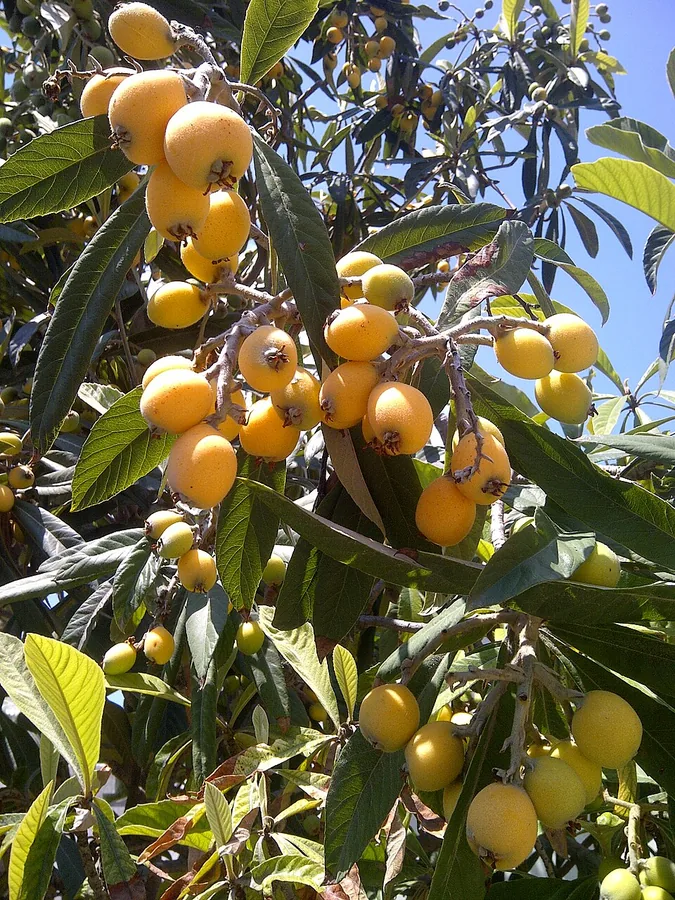
If you've never grown a fruit tree before, the loquat is a kind one to start with. It's an evergreen member of the rose family, native to China and long cherished across Japan and the warm parts of the globe, and it gives back in two ways at once: broad, leathery leaves that stay handsome all year, and clusters of small, sweet fruit that come ripe in late winter and spring. Very few trees fruit that early, which makes each harvest feel like a small gift.
The loquat simply keeps its own calendar, and that's part of its charm. It flowers in fall and early winter, then cradles its fruit through the cold months to ripen when most orchards still stand bare. That same habit is its one soft spot, since a hard freeze can undo a season of blooms, though the tree itself takes the cold in stride and will be right back next year.
Give a loquat full sun, soil that drains well, and a little shelter from late frost, and honestly it asks for very little after that. Once settled, it copes with drought and even poor, high-pH ground that would trouble fussier trees. Your two real jobs are guarding those early flowers from cold and keeping a casual eye out for fire blight, and both are well within reach.
Care
The short version: give it full sun and well-drained soil, water it faithfully while it's young and through flowering and fruiting, and relax once it matures, because an established tree shrugs off drought and your only real task is sheltering the early blooms from frost.
Light
Your loquat will fruit best in full sun, which builds up the sugars in the fruit and keeps the canopy full and healthy. It will happily accept partial shade too, so don't worry if your spot isn't perfect, though a shadier tree tends to make more leaf and a lighter crop.
Water
Water young trees faithfully and keep them nicely moist right through flowering and fruiting, when the crop is taking shape. Once your tree has settled in it becomes wonderfully drought tolerant and gets by on far less, so let the top half of the soil dry between waterings, and simply take care never to leave the roots sitting waterlogged.
Soil
This is a forgiving tree when it comes to soil, so you have room to relax. It's happiest in well-drained loam but takes sandy or clay ground in stride, and it handles a broad pH of 6.0 to 8.0, including chalky high-pH sites that stump pickier fruit trees. The one thing it truly needs from you is good drainage.
Temperature
The wood itself is tough, hardy from about 10°F to 95°F (-12°C to 35°C), so the tree will come through cold snaps just fine. The fruit is the tender part: a freeze below roughly 28°F (-2°C) claims open blooms and young fruit, which is exactly why a warm, sheltered site is worth choosing in cooler zones.
Humidity
Loquats sit comfortably across a wide 40% to 70% humidity range and rarely make a fuss about it outdoors, so this is one less thing to track. What helps most is good airflow through the canopy, since that quietly keeps fire blight at bay.
Feeding
Feed with a balanced complete fertilizer through spring and summer while the tree is actively growing, and it'll thank you. Just go gently with the nitrogen, because the soft, lush growth it pushes is the very tissue fire blight likes to move into.
Pruning
Happily, loquats need very little pruning. After harvest, simply take out any dead, crossing, or fire blight damaged wood and shape the tree with a light hand, always cutting well below any diseased tissue and wiping your blades clean as you work.
Repotting
These grow into large landscape trees and are seldom kept in pots, so repotting almost never enters the picture. Plant your loquat in its forever spot and leave it settled in the ground, and you can put this task out of mind.
Size & spacing
A loquat matures into a good-sized tree, reaching 15 to 30 feet (4.5 to 9 m) tall with a spread of 15 to 25 feet (4.5 to 7.5 m). Give it plenty of open elbow room so the wide canopy has space to fill out and fresh air can move freely through it.
When to plant
The loquat marches to its own schedule, and that's easy to work with once you know it. Set young trees out in spring, then look forward to flowers in fall and early winter and fruit that ripens from late winter into spring. Across zones 8 to 11 the tree is comfortably hardy, but since a freeze below about 28°F (-2°C) can claim the blooms, giving it a sheltered spot makes all the difference to your harvest.
Northern hemisphere
Southern hemisphere
Typical months for a temperate climate: start earlier in warm zones, later where spring frosts linger.
- Plant: spring
- Harvest: Blooms fall to early winter and ripens fruit late winter to spring; late freezes below about 28°F kill blooms and young fruit, limiting fruiting in colder zones even though the tree survives to about 10°F.
Hardiness
USDA hardiness zones: 8–11
Temperature: down to -12°C
Troubleshooting
Loquats are sturdy, good-natured trees, and nearly all their trouble comes from just two directions: a bacterial disease and a poorly timed frost. Learn the look of each and you'll be able to step in early, well before either one costs you the crop.
Young shoots that turn black and hook over as if burned
Don't panic if you spot this, because fire blight is manageable once you catch it. The bacteria wake up in warm, damp spring weather and go straight for the tender new growth, so cut back into clean, healthy wood well past the blackened part, and give your blades a quick wipe with disinfectant between snips so you don't carry it onward. Ease off the nitrogen too, since the soft flush it feeds gives the disease exactly the tissue it prefers.
Fix:
- Prune out blackened, dead shoots and branches well below symptoms, disinfect tools between cuts, and avoid excessive nitrogen.
Flowers and little fruit gone dark after a cold night
This one is nobody's fault, and it helps to know it going in. Because the loquat opens its flowers in fall and early winter and holds its fruit into spring, the crop sits right where a late freeze can reach it, and a dip below about 28°F (-2°C) takes the open blooms and tiny fruit while the tree itself comes through cold down to roughly 10°F (-12°C) just fine. Tuck it into a sheltered corner or a warm pocket of the yard, and in colder zones simply enjoy the handsome tree and treat any fruit as a happy bonus.
Fix:
- Plant in a protected site or warmer microclimate; in colder zones grow primarily as an ornamental and expect little to no fruit.
Toxicity
The ripe flesh is a sweet treat that's completely safe for you to enjoy, but the seeds and leaves hold cyanogenic glycosides that turn to cyanide when chewed. That makes the tree a genuine caution around cats, dogs, horses, and grazing animals, so keep fallen seeds, prunings, and wilted leaves somewhere pets and livestock can't reach, and you'll have peace of mind.
Toxic to
Cats · Dogs · Horses · Rabbits · Livestock · Birds
Safe for
People
Cats Mild
Should a cat gnaw a leaf or a dropped seed, you might see drooling, some vomiting, and harder breathing, so it's worth tidying those up. Take comfort that the soft fruit itself is harmless, and it's only the rest of the plant to mind.
Dogs Mild
A curious dog that mouths a fallen seed or chews a leaf may drool and get an unsettled tummy, which usually passes. Keep a gentle eye out for heavy or labored breathing, the clue that more cyanide has been let loose.
Horses Moderate
Horses feel the cyanide in chewed seeds and wilted leaves more sharply, and can turn weak, gasp for air, or even go down. Make it easy on yourself and keep every pruning and clipping well away from the paddock.
Rabbits Moderate
A rabbit that nibbles the foliage takes in those same cyanogenic compounds, so it's kindest to keep the leaves off the menu entirely. If you share anything, let it be a small taste of ripe flesh and nothing more.
Livestock Toxic
Cattle, goats, and sheep face a genuine danger from wilted leaves and prunings, where the cyanide gathers and can fell an animal quickly. Fence the tree away from grazing and never toss trimmings into a pasture, and you have this handled.
Birds Caution
Birds can happily share the soft, ripe flesh, though the seeds and leaves hold that same toxin and belong out of reach. A good rule is to treat anything but the pulp as off limits.
People Fruit flesh safe
Good news for you: the ripe flesh is a sweet, much loved fruit and perfectly safe to eat. Just spit out the big seeds rather than swallowing them, and leave the leaves alone, since both carry cyanogenic glycosides.
Keep fallen seeds, prunings, and wilted leaves away from pets and grazing animals.
Helpline numbers

United States
ASPCA Animal Poison Control: (888) 426-4435 (fee applies)
Poison Control: (800) 222-1222



Canada
Poison Centres: 1-844-764-7669
Varieties
Loquat cultivars are plentiful, bred over the years for size, color, and flavor. The handful below are the ones you'll most often meet in home gardens.
Gold Nugget
A later ripener you'll love for its big, round, orange fruit that comes in sweet.
Champagne
A yellow-fleshed sweetheart cherished for a juicy bite that balances sweet and tart.
Big Jim
A strong, generous tree that keeps handing you large, rounded fruit with lovely flavor.
Mrs. Cooke
A trusty yellow-fleshed choice that rewards home gardeners with steady, reliable crops.
How to propagate
You can absolutely grow a loquat from a seed lifted straight out of the fruit, though a seedling won't match its parent. When you want to copy a known cultivar exactly, grafting or air-layering is the way to go, and both are gentler than they sound.
SeedEasy
Starting from seed is the beginner-friendly path, and a fresh loquat pip pulled from the fruit sprouts with almost no fuss. Just know that seedlings grow up variable and seldom match their parent, so think of them as a cheerful experiment or future rootstock rather than a promise of the same fruit.
GraftingModerate
When you want a named cultivar to stay true to type, the answer is to graft or bud it onto a seedling rootstock. It calls for a slightly surer hand than sowing seed, and with a little practice it becomes the one dependable way to copy a tree's exact fruit.
Air layeringModerate
Air-layering gives you another gentle way to clone a tree you already adore, coaxing roots from a branch while it stays fed by the parent. It rewards a bit of patience, and in return it skips all the guesswork that comes with seed.
Myths
Every part of a loquat is poisonous.
Rest easy, because the ripe flesh is eaten happily the world over with no trouble at all. Only the seeds and leaves carry cyanogenic glycosides, and even those mostly matter when chewed in real quantity, so spit out the big seeds and you and yours are just fine.
A loquat won't fruit unless you plant two of them.
Take heart, because most loquats set fruit all on their own. Having a second cultivar close by can nudge the harvest higher through cross-pollination, yet one tree alone will still fruit for you without any partner.