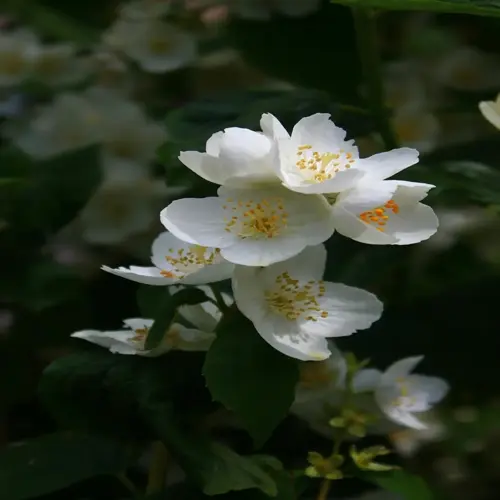

The German version of jasmine is called Jasmin (said as YAH-smeen). The Jasmin German name shows up on plant labels at every nursery in the country. Germans use this word for all true jasmine types in the Jasminum family.
When I first walked through a garden center in Bavaria, I found at least two jasmine types on display near the front door. Staff knew the plants well and helped shoppers pick the right one. Jasmine in German gardens is more popular than most people outside Europe would guess. You can find it on balconies, patios, and in yard beds across the country.
The word Jasmin comes from the Persian word "yasmin." It means gift of God in the old language. This root word spread across Europe as the plant moved along trade routes. French uses jasmin. Spanish uses jazmin. The German spelling stays close to the source and drops just the final "e" from the English form.
Two types lead the German jasmine market. Winterjasmin is the top seller because it handles cold German winters with ease. It blooms bright yellow from January to March. Echter Jasmin means "true jasmine" and gives you the classic sweet white flowers all summer. It grows well in the milder zones 7 and above across western Germany.
Watch out for the Bauernjasmin, which Germans call "false jasmine." It has white flowers that look and smell like real jasmine. But it belongs to a different plant family. Always check the tag for the name Jasminum to make sure you buy a true jasmine species.
In my experience, the best time to buy jasmine in Germany is from March through June. Your local Gartencenter or Baumarkt will carry fresh stock in spring. You can also order online from nurseries that ship across all of Germany. Pick a spot with full sun and wind cover for the best results in your yard.
German gardeners protect their jasmine in winter with a few easy steps. They spread 8 to 10 cm (3 to 4 inches) of bark mulch around the roots before frost hits. Many wrap the plant with garden fleece when temps drop below -10°C (14°F). They move potted jasmine into a cool bright room that stays between 5°C and 10°C (41°F and 50°F).
You don't need to be a master gardener to grow jasmine in Germany. Start with Winterjasmin if you want the easiest option for your first try. It asks for very little care and gives you bright flowers during the coldest months. Your German garden will thank you for adding this tough and pretty plant to the mix.
Read the full article: Jasmine Flower Types, Care and Uses