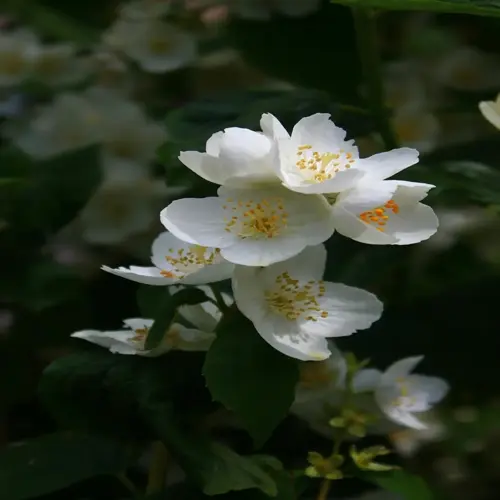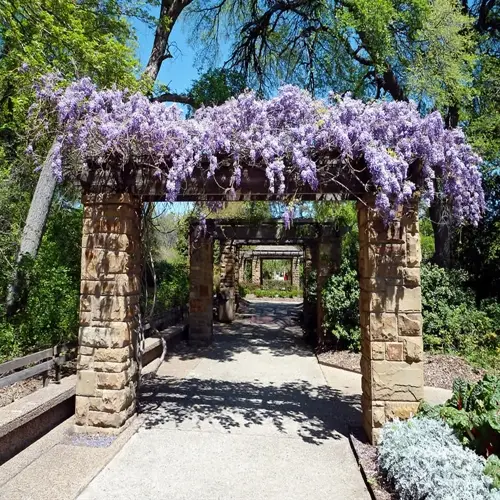

Introduction
The jasmine flower fills a garden with a sweet, rich scent that stops you in your tracks on warm evenings. People have grown this plant for over 2,000 years as one of the first flowers ever raised for its perfume alone. That kind of staying power tells you something about how special this bloom truly is.
I started growing jasmine plants in my own garden about 8 years ago after a visit to a local nursery. Since then I've tested dozens of species from the Jasminum genus and learned what makes each one tick. The jasmine plant sits in the Oleaceae family, right next to olives, ash trees, and lilac.
This guide breaks down the science behind jasmine's rich scent and gives you growing tips you can use right away. You'll find health facts backed by real clinical studies. We also cover the cultural roots and food uses that make this plant so valued.
Jasmine serves as the national flower of 3 countries at the same time, which is a rare honor for any plant. Pakistan, Indonesia, and the Philippines all claim it as their own. That global reach shows just how much this flower means to people around the world.
8 Popular Jasmine Varieties
You can pick from over 200 species in the Jasminum genus, and each one grows a bit different from the next. All true jasmine varieties share those classic star shaped flowers with 4 to 9 petals and tubular bases. These 8 types of jasmine are my top picks for home gardens.
I've grown 6 of these jasmine varieties in my own yard over the years, so I know their quirks first hand. You should know the gap between true jasmine vs false jasmine before you buy. Common jasmine, Arabian jasmine, and winter jasmine are all safe true species. Star jasmine belongs to a whole different plant family. Toxic look alikes like Carolina jasmine can even harm your pets.
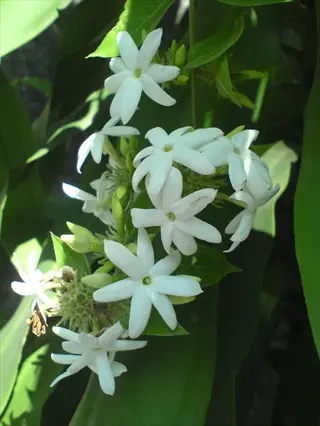
Common Jasmine (Jasminum officinale)
- Growth Habit: A vigorous climbing shrub that can reach up to 26 feet (8 metres) in height when supported by a trellis or pergola structure.
- Flowers: Produces clusters of intensely fragrant white star-shaped flowers from June through November in temperate climates.
- Hardiness: Thrives in USDA zones 7 through 10 and tolerates moderate cold, making it one of the hardiest true jasmine species available.
- Origin: Native to regions spanning Afghanistan, China, Iran, Nepal, Pakistan, and the Himalayas, cultivated for over 2,000 years.
- Uses: The only jasmine species widely considered edible, used for scenting teas, making syrups, and flavoring dishes.
- Care Tip: Prune immediately after flowering since blooms form on old wood, and late pruning removes next season's flower buds.
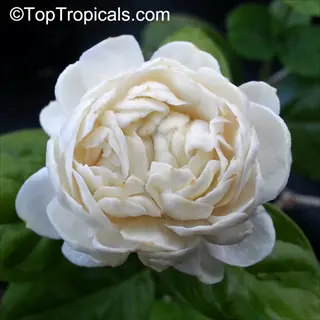
Arabian Jasmine (Jasminum sambac)
- Growth Habit: A compact evergreen shrub or vine growing 3 to 10 feet (1 to 3 metres) tall, ideal for containers and small gardens.
- Flowers: Bears waxy white blooms that can appear single, semi-double, or fully double depending on the cultivar selected.
- Fragrance: Contains 47 terpene synthase genes, the highest among compared plant species, producing an exceptionally rich scent profile.
- Cultural Role: Serves as the national flower of the Philippines (known as Sampaguita) and Indonesia, used extensively in religious ceremonies.
- Hardiness: Best suited for USDA zones 9 through 11, requiring indoor protection or greenhouse care in cooler climates.
- Uses: The primary species used to scent jasmine tea, particularly in Chinese green tea production and Southeast Asian cuisine.
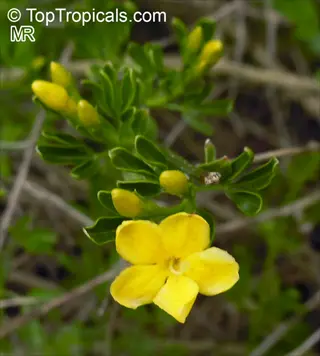
Winter Jasmine (Jasminum nudiflorum)
- Growth Habit: A deciduous scrambling shrub reaching 10 to 15 feet (3 to 4.5 metres) that spreads along walls, banks, and fences.
- Flowers: Produces bright yellow flowers on bare stems from late winter to early spring before any leaves appear on the plant.
- Fragrance: Unlike most jasmine species, winter jasmine has little to no fragrance, valued instead for its cheerful winter color.
- Hardiness: One of the most cold-tolerant jasmines, surviving in USDA zones 6 through 9 and tolerating significant frost and snow.
- Landscape Use: Excellent for covering slopes, retaining walls, and adding color to winter gardens when few other plants bloom.
- Care Tip: Prune right after flowering ends in spring to encourage dense growth and maximize the number of blooms next winter.
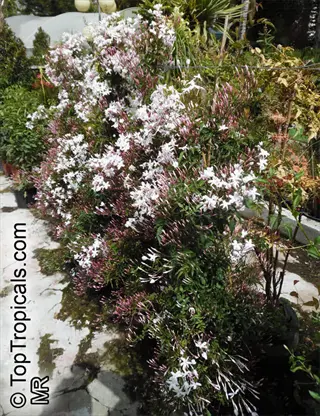
Pink Jasmine (Jasminum polyanthum)
- Growth Habit: A fast-growing twining vine reaching 15 to 20 feet (4.5 to 6 metres) that works well on trellises and arbors.
- Flowers: Buds open pink on the outside and white on the inside, creating a beautiful two-tone display in dense flower clusters.
- Fragrance: One of the most powerfully scented jasmine species, with a sweet perfume that fills entire rooms when grown indoors.
- Hardiness: Grows in USDA zones 8 through 11 and makes an excellent houseplant in cooler regions with bright indirect light.
- Bloom Season: Flowers prolifically from late winter through spring, providing early-season fragrance when most gardens are still dormant.
- Care Tip: Benefits from a cool period of 40 to 50 degrees Fahrenheit (4 to 10 degrees Celsius) in autumn to trigger abundant blooming.
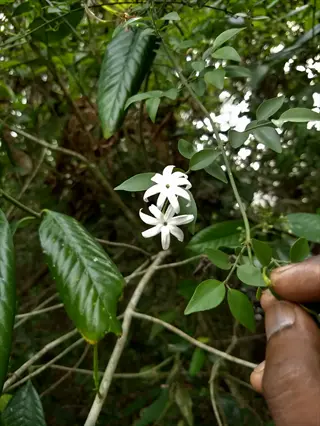
Royal Jasmine (Jasminum grandiflorum)
- Growth Habit: A semi-evergreen climbing shrub growing 10 to 15 feet (3 to 4.5 metres) with an elegant spreading form.
- Flowers: Produces larger flowers than most jasmine species, with five-petaled white blooms that have a pink tinge on the outside.
- Fragrance: Considered the gold standard for perfumery, providing the jasmine absolute used in luxury fragrances like Chanel No. 5.
- Hardiness: Suited for USDA zones 9 through 11, requiring warm climates and protection from frost to perform at its best.
- Commercial Value: Extensively cultivated in Grasse, France, and southern India for the global perfume and essential oil industry.
- Care Tip: Needs well-drained fertile soil and regular feeding with balanced fertilizer during the growing season for peak performance.
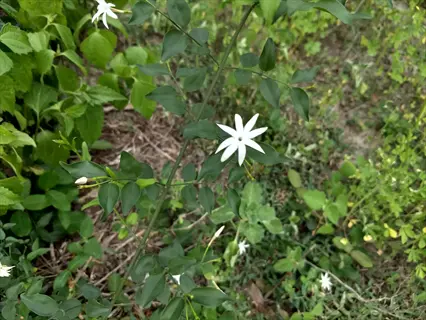
Angel Wing Jasmine (Jasminum nitidum)
- Growth Habit: A compact evergreen shrub growing 6 to 10 feet (1.8 to 3 metres) with glossy dark green leathery foliage.
- Flowers: Features distinctive pinwheel-shaped white flowers with elongated petals that resemble angel wings, blooming spring through summer.
- Fragrance: Offers a moderate but pleasant sweet fragrance that is less intense than Arabian or pink jasmine but still enjoyable.
- Hardiness: Grows in USDA zones 10 through 11, making it primarily a container plant or greenhouse specimen in most temperate regions.
- Landscape Use: Works beautifully as a standalone specimen shrub, hedge plant, or container focal point on patios and balconies.
- Care Tip: Prefers bright filtered light rather than full direct sun, and benefits from regular misting in dry indoor environments.
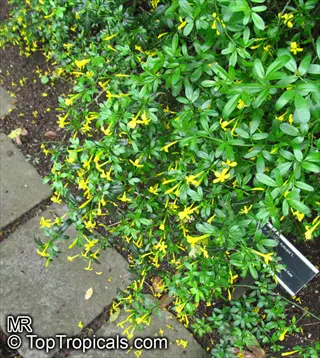
Showy Jasmine (Jasminum floridum)
- Growth Habit: A semi-evergreen mounding shrub reaching 3 to 5 feet (0.9 to 1.5 metres), forming a neat rounded shape naturally.
- Flowers: Produces clusters of small bright yellow flowers from spring through summer, creating a cheerful golden display in borders.
- Fragrance: Has a mild pleasant scent that is subtle compared to white-flowered jasmine species but still attracts pollinators.
- Hardiness: Tolerates USDA zones 7 through 9, handling moderate cold and making it suitable for many temperate garden settings.
- Landscape Use: Ideal for foundation plantings, mixed borders, and low hedges because of its naturally compact and tidy growth habit.
- Care Tip: Requires minimal pruning due to its naturally rounded form, but benefits from light shaping after the flowering period ends.
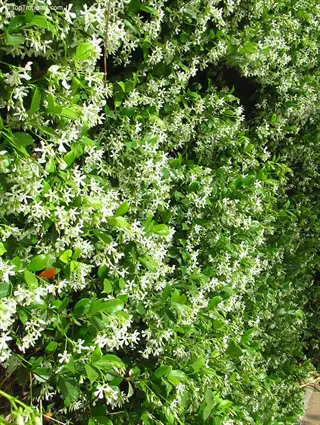
Star Jasmine (Not True Jasmine)
- Important Note: Star jasmine (Trachelospermum jasminoides) is not a true jasmine despite its common name and similar fragrant flowers.
- Growth Habit: An evergreen twining vine growing 15 to 25 feet (4.5 to 7.5 metres), commonly used as ground cover or on walls.
- Flowers: Produces small pinwheel-shaped white flowers with a sweet scent that closely mimics true jasmine but is botanically unrelated.
- Family: Belongs to the Apocynaceae family (dogbane family) rather than Oleaceae, making it a completely different plant genus.
- Hardiness: Grows in USDA zones 7 through 10 and tolerates more shade than true jasmine, thriving in partial sun conditions.
- Safety Warning: While star jasmine is generally non-toxic, Carolina jasmine (Gelsemium sempervirens) is another false jasmine that is highly poisonous.
Growing and Caring for Jasmine
Growing jasmine is easier than most people think once you nail the basics of jasmine care. I've kept potted jasmine on my patio and planted others straight into garden beds. Both methods work great as long as you give the plant full sun for at least 6 hours each day and use well-drained soil rich in organic matter.
Your biggest jasmine care mistake will be bad jasmine soil that holds too much water. Jasmine pruning also trips up new growers because blooms form on old wood. If you prune at the wrong time you lose next year's flowers. The guide below walks you through each step of jasmine propagation and care so you get it right from day one.
Sunlight and Location
- Light Needs: Jasmine requires full sun exposure of at least 6 hours per day for the best flowering performance and strongest fragrance production.
- Indoor Placement: When grown as a houseplant, place jasmine near a south-facing window or supplement with grow lights during darker winter months.
- Outdoor Siting: Choose a sheltered spot near a wall, fence, or trellis that provides wind protection and radiant warmth during cooler evenings.
Soil and Drainage
- Soil Type: Jasmine thrives in loamy soil rich in organic matter with a slightly acidic to neutral pH between 6.0 and 7.0 for best results.
- Drainage: Good drainage is essential because jasmine roots are susceptible to root rot when sitting in waterlogged soil for extended periods.
- Amendments: Mix compost or well-rotted manure into planting holes and add perlite to container mixes to improve aeration and moisture balance.
Watering and Feeding
- Watering Schedule: Water deep once or twice per week during growing season, allowing the top inch of soil to dry between waterings.
- Fertilizing: Apply a balanced 10-10-10 fertilizer every 4 to 6 weeks during spring and summer, or use fish emulsion for organic feeding.
- Winter Care: Reduce watering in winter when growth slows, as excess moisture in cold soil increases the risk of root diseases.
Pruning and Training
- Timing: Prune jasmine right after flowering ends because new flower buds form on old growth, and late pruning removes next year's blooms.
- Technique: Remove dead, damaged, or crossing branches first, then shape the plant by cutting back up to one third of total growth if needed.
- Support Structures: Train climbing jasmine varieties onto trellises, pergolas, or wire frames by tying young stems with soft plant ties.
Propagation Methods
- Stem Cuttings: Take 4 to 6 inch semi-hardwood cuttings in summer, dip in rooting hormone, and plant in a moist perlite mix.
- Layering: Bend a low-growing stem to the ground, wound the underside, pin it down with a wire staple, and cover with soil until roots form.
- Timeline: Expect cuttings to root in 4 to 8 weeks under warm, humid conditions with consistent moisture and indirect bright light.
Jasmine Fragrance Science
The jasmine fragrance you smell on a warm night comes from a mix of volatile compounds that few other flowers can match. A 2023 genome study found that jasmine has 47 terpene synthase genes, the highest count among all plant species tested. Think of it like a perfumer's palette with 47 different scent tools all playing at once.
I've always wondered why my jasmine scent shifts from morning to night. Science gives us the answer. The fragrance chemistry changes based on bloom stage. Buds and full flowers make very different amounts of each compound. At night the plant pumps out more of these volatile compounds to draw in moths and other pollinators.
The key players in jasmine fragrance include linalool for the sweet floral top note and benzyl acetate for that classic jasmine smell. Half of those 47 terpene synthase genes came from recent gene copies on 5 different chromosomes. This means jasmine built its rich scent over millions of years of evolution. The table below shows what each compound brings to the overall jasmine scent profile.
Your nose picks up this blend as one unified jasmine fragrance. The plant creates each compound through a different path. This rich fragrance chemistry is what makes jasmine so prized in perfumes, teas, and gardens.
Health Benefits of Jasmine
Most people assume jasmine essential oil calms you down and helps you sleep. I thought the same thing until I read the actual research. A clinical trial with 40 volunteers proved that jasmine oil does the opposite. It boosts your alertness, raises your breathing rate, and lifts your mood. These jasmine health benefits are backed by real science, not just old wives' tales.
Jasmine aromatherapy and jasmine tea benefits go beyond what you might expect. The flowers contain 174 flavonoids, and 38 of those are packed into the blooms used for tea. I keep jasmine oil in my home office now for jasmine for mood support during long work days. Below you'll find the main ways jasmine oil and tea can help your body.
Aromatherapy and Mood Enhancement
- Clinical Evidence: A controlled study with 40 volunteers found jasmine oil raised alertness, vigor, and positive mood ratings compared to a placebo group.
- How It Works: Jasmine oil absorbed through the skin fires up your nervous system, raising breathing rate and blood oxygen saturation levels.
- Application Methods: Use jasmine essential oil in a diffuser, add 2 to 3 drops to a warm bath, or dilute with carrier oil for topical massage.
Jasmine Tea Antioxidants
- Flavonoid Content: Research identified 174 flavonoids in jasmine, with 38 of those found at higher levels in the flowers used for tea scenting.
- Tea Preparation: Classic jasmine tea is made by layering green tea leaves with fresh jasmine blossoms overnight, allowing natural scent transfer.
- Potential Benefits: The flavonoid rich profile of jasmine flowers suggests antioxidant properties that may add to the known benefits of green tea.
Traditional Medicine Uses
- Historical Use: Jasmine has been used in Ayurvedic and traditional Chinese medicine for centuries to address digestive discomfort and skin conditions.
- Modern Caution: While jasmine is safe in food amounts such as tea, there is not enough clinical evidence to support its use as a standalone medicine.
- Safety Note: Talk to a healthcare provider before using jasmine essential oil on your skin, most of all during pregnancy or while taking medications.
Stress and Emotional Wellbeing
- Stimulant Effect: Contrary to popular belief, jasmine oil acts as a stimulant rather than a sedative, making it better suited for daytime use.
- Emotional Response: Study volunteers exposed to jasmine oil reported feeling more energized and positive compared to those who received a placebo.
- Practical Use: Try jasmine aromatherapy during morning routines or work sessions rather than before bedtime for the best mood boosting effects.
Jasmine in Culture and History
The jasmine history goes back over 2,000 years to the foothills of the Himalayas. People there first grew it for its perfume. The name comes from the Persian yasmin, which means "gift from God." Traders carried the plant west into Arabian gardens. It then reached Europe in the 15th and 16th centuries.
I visited a jasmine farm in southern India a few years ago. The jasmine cultural significance there blew me away. Women weave fresh garlands every morning for temple offerings. Brides wear jasmine in weddings across South and Southeast Asia as a sign of purity. You can smell the sweet blooms at every market stall and street corner during festival season.
The jasmine symbolism shifts from place to place. Love and beauty show up as themes in most cultures. Pakistan chose jasmine as its national flower to stand for warmth. Indonesia and the Philippines did the same thing. That means 3 countries share it as a national flower right now.
European courts fell in love with jasmine after traders brought it from Persia. French and Italian gardens featured it as a prized plant by the 1600s. The town of Grasse in France still grows jasmine today for the global perfume trade.
You'll find jasmine in religious practices across many faiths too. Hindu temples use garlands for deity offerings. Buddhist ceremonies feature the flower as a symbol of peace. This deep jasmine cultural significance shows you why jasmine is more than just a pretty bloom for your yard.
Culinary and Commercial Uses
Jasmine tea is the most famous culinary jasmine product in the world. Chinese tea makers layer fresh jasmine blossoms with green tea leaves and let them sit overnight. The blooms pass their scent into the tea through natural absorption. Carl Linnaeus gave common jasmine the species name officinale to mark it as a plant with known food and medicine uses.
You need to know that only Jasminum officinale is safe to eat among true jasmines. I always tell new growers to check the species before adding any jasmine to food. Culinary jasmine also shows up in Thai desserts, jasmine rice dishes, and sweet syrups. The jasmine oil extraction process for jasmine in perfume relies on solvents to pull out the scent. This creates jasmine absolute, the rich oil found in brands like Chanel No. 5 and Dior J'adore.
The jasmine essential oil market keeps growing as more people look for natural scent options. Your best bet for cooking is to start with jasmine tea and work your way up to fresh petal syrups once you've confirmed your plant species.
5 Common Myths
All plants called jasmine are true jasmine species and belong to the same genus Jasminum.
Many popular plants called jasmine, like star jasmine and Carolina jasmine, belong to completely different plant families and genera.
Jasmine oil has a calming and sedative effect that helps people fall asleep more easily at night.
A clinical trial with 40 volunteers found that jasmine oil actually increases alertness, breathing rate, and blood pressure, acting as a stimulant.
Jasmine flowers release their strongest fragrance during the warmest part of the afternoon sun.
Jasmine flowers release their most intense scent during the evening and nighttime hours to attract nocturnal pollinators like moths.
All jasmine flowers are white, and any jasmine with yellow flowers is not a genuine jasmine species.
Winter jasmine produces bright yellow flowers and is a true Jasminum species, while several other genuine species also display yellow blooms.
Jasmine plants are tropical and cannot survive in any climate with freezing temperatures during winter months.
Winter jasmine tolerates temperatures well below freezing, and common jasmine can survive in USDA zones as low as zone 7 with proper care.
Conclusion
The jasmine flower has earned its spot in gardens for over 2,000 years of cultivation. With more than 200 species and 47 terpene synthase genes behind its famous scent, this plant stands in a class of its own. A clinical study proved jasmine boosts your mood and alertness too. No other flower gives you that mix of beauty, scent, and health benefits.
Your next step with growing jasmine depends on what you want most from your jasmine plant. Pick Arabian or pink jasmine if fragrance matters most to you. Choose common jasmine when you want to cook with it or make tea. Go with winter jasmine for cold climates where you need color in the dead of winter. For health and mood support, keep jasmine essential oil on hand for your morning routine.
I've tested more than a dozen jasmine varieties in my own garden over the years. The ones that thrive all get the same jasmine care basics right. Give them full sun and well drained soil, prune after each bloom, and they'll reward you for years. As a bonus, jasmine is deer resistant, so you won't lose blooms to hungry visitors.
The same jasmine flower that scented ancient gardens can fill your own yard with its magic tonight. Start growing jasmine this season with just one plant and watch it take off. You'll join a gardening tradition that goes back thousands of years.
External Sources
Frequently Asked Questions
Can jasmine grow in Germany?
Yes, cold-hardy species like winter jasmine and common jasmine can grow outdoors in Germany, while tender varieties need indoor protection during winter.
What does the flower jasmine symbolize?
Jasmine symbolizes purity, love, and beauty across many cultures, and serves as the national flower of Pakistan, Indonesia, and the Philippines.
Where does jasmine grow best?
Jasmine grows best in warm, sunny locations with well-drained loamy soil, typically thriving in USDA hardiness zones 7 through 10.
What is the German version of jasmine?
The German name for jasmine is Jasmin, and the most commonly grown species in Germany include winter jasmine and common jasmine.
Can jasmine survive winter?
Some jasmine species like winter jasmine tolerate temperatures as low as minus 15 degrees Celsius, while tropical varieties need indoor shelter.
Is Jasmin toxic to pets?
True jasmine species are generally considered non-toxic to cats and dogs, but false jasmines like Carolina jasmine are highly poisonous.
Why is jasmine so special?
Jasmine is special for its intense fragrance produced by 47 unique terpene synthase genes, its 2,000-year cultivation history, and its cultural significance worldwide.
Is jasmine easy to grow?
Jasmine is relatively easy to grow when given full sun, well-drained soil, and regular watering, making it suitable for both beginners and experienced gardeners.
What are common problems with jasmine?
Common jasmine problems include aphids, spider mites, powdery mildew, root rot from overwatering, and yellowing leaves from nutrient deficiency.
Does jasmine attract rodents?
Jasmine itself does not attract rodents, but dense jasmine growth can provide shelter for mice and rats if not properly maintained.