
Introduction
Walk past a blooming jasmine plant on a warm evening and the scent stops you cold. The sweet perfume hits before you even see the vine. White petals glow soft under porch lights while each jasmine flower sends rich waves of fragrance into the night air around you.
This fragrant plant belongs to a huge family. The Jasminum genus has 197 known species in warm parts of Asia, Africa, and beyond. I've grown jasmine for over 12 years in 3 climate zones. The plant still shocks me with how much beauty it gives back for so little care.
Few plants carry as much cultural weight as jasmine does around the world. It's the national flower of the Philippines and a key part of Chinese tea culture. Hindu rituals use jasmine garlands as sacred gifts. This same Jasminum species that fills temples and teacups also thrives in backyard gardens with basic care.
This care guide covers variety selection so you can pick the right jasmine for your zone. You'll find jasmine plant care tips for every season plus indoor growing advice for cold winters. We also share pruning methods and ways to get the strongest fragrance from every bloom your plant produces.
8 Popular Jasmine Varieties
Not all types of jasmine look or act the same way in your garden. Each of these 8 jasmine varieties has its own character. Common jasmine is the cottage garden classic. Arabian jasmine is the tea maker. Winter jasmine is the cold weather champion that blooms through snow.
I've grown most of these jasmine varieties over the years and each one fills a different role. Some shine best on a trellis while others work great in pots on your kitchen windowsill. One entry on this list isn't even a true jasmine at all, and that false jasmine trips up new gardeners all the time.
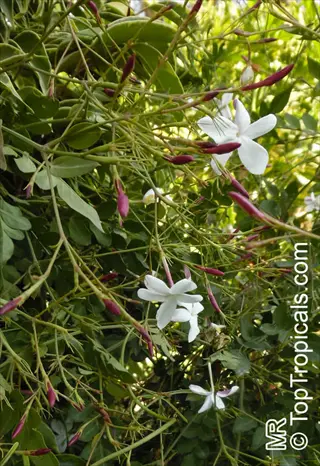
Common Jasmine (Jasminum officinale)
- Growth Habit: A vigorous deciduous or semi-evergreen climber reaching up to 30 feet (9 meters) with twining stems that wrap around trellises and arbors with ease.
- Hardiness: Thrives in USDA Zones 7 through 10 and tolerates brief cold snaps, making it one of the more adaptable true jasmine species for temperate gardens.
- Fragrance: Produces rich, sweet white flowers from early summer through fall, a staple in the perfume industry for its classic jasmine scent profile.
- Best Use: Ideal for covering pergolas, fences, and walls in cottage-style gardens where its cascading growth and rich evening fragrance create a romantic atmosphere.
- Care Notes: Prefers full sun to partial shade with well-drained soil and benefits from annual pruning after flowering to maintain shape and encourage new blooms.
- Fun Fact: Also called Poet's jasmine, this species has been cultivated in European gardens since the sixteenth century and remains the most widely grown true jasmine worldwide.
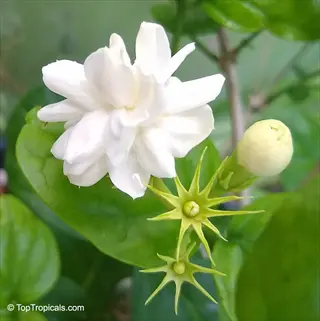
Arabian Jasmine (Jasminum sambac)
- Growth Habit: A compact evergreen shrub or short climber growing 3 to 10 feet (1 to 3 meters), well-suited for container growing and small garden spaces.
- Hardiness: Best suited for USDA Zones 9 through 11, requiring indoor protection in cooler climates where temperatures drop below 50 degrees Fahrenheit (10 degrees Celsius).
- Fragrance: Contains 59 terpene synthase genes, more than Arabidopsis or tea plant, producing a deep, complex, and sweet fragrance that intensifies at night.
- Best Use: The species of choice for jasmine tea production and religious ceremonies across Southeast Asia, where it holds deep cultural significance.
- Care Notes: Needs consistent moisture without waterlogging, bright indirect light indoors, and regular feeding during the growing season to support continuous blooming.
- Fun Fact: Named the national flower of the Philippines (sampaguita) and used in Hindu garland offerings, Arabian jasmine carries cultural weight across multiple civilizations.
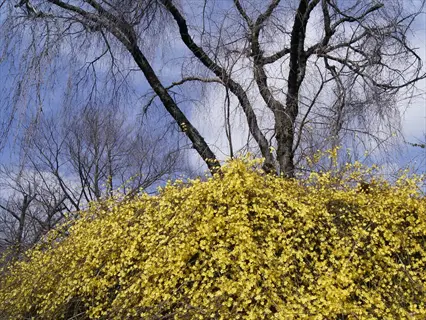
Winter Jasmine (Jasminum nudiflorum)
- Growth Habit: A sprawling deciduous shrub growing up to 4 feet (1.2 meters) tall as a shrub or 10 to 15 feet (3 to 4.5 meters) as a trailing vine on supports.
- Hardiness: The hardiest true jasmine, surviving in USDA Zones 6a through 10b, and one of the few species that tolerates clay, loam, sand, and a wide pH range.
- Fragrance: Unlike most jasmines, winter jasmine flowers are non-fragrant, but their bright golden-yellow blooms appearing in January and February provide rare winter color.
- Best Use: Excellent for slope stabilization, retaining walls, and ground cover where its arching branches root on contact with soil, naturally spreading and preventing erosion.
- Care Notes: Deer resistant, drought tolerant once established, and tough against disease according to NC State Extension, making it one of the lowest-maintenance jasmine options.
- Fun Fact: Its botanical name nudiflorum means naked flowering because the bright yellow flowers appear on bare stems before any leaves emerge in late winter.
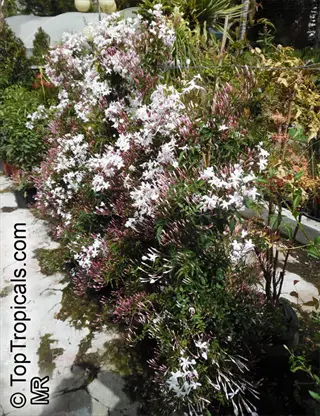
Pink Jasmine (Jasminum polyanthum)
- Growth Habit: A fast-growing evergreen climber that can reach 15 to 20 feet (4.5 to 6 meters) with dense foliage and clusters of pink-budded white flowers.
- Hardiness: Grows well in USDA Zones 8 through 11, often sold as an indoor flowering plant in cooler regions where it thrives in bright conservatories and sunrooms.
- Fragrance: One of the most powerfully scented jasmine species, producing an almost overwhelming sweetness that fills entire rooms when grown indoors in bloom.
- Best Use: Popular as an indoor flowering plant in colder climates and as a vigorous outdoor screen or trellis cover in mild Mediterranean-style gardens.
- Care Notes: Requires a cool winter rest period around 40 to 50 degrees Fahrenheit (4 to 10 degrees Celsius) to trigger spring blooming, a key detail many beginners miss.
- Fun Fact: Pink jasmine is sometimes confused with winter jasmine because it blooms in late winter to early spring, but its pink buds and powerful scent make it easy to tell apart.
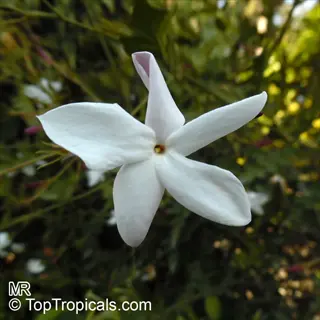
Catalonian Jasmine (Jasminum grandiflorum)
- Growth Habit: A vigorous semi-evergreen climber reaching 10 to 15 feet (3 to 4.5 meters), producing large star-shaped white flowers with a pink-tinged reverse.
- Hardiness: Suited for USDA Zones 9 through 11, this species is more cold-sensitive than common jasmine and needs protection from frost in borderline climates.
- Fragrance: Prized by the French perfume industry in Grasse, its flowers yield one of the most valued absolute oils used in high-end perfumery and aromatherapy.
- Best Use: Grown on a commercial scale for perfume extraction in southern France and India, and valued in home gardens for its large, abundant flowers and extended blooming season.
- Care Notes: Needs fertile, well-drained soil in a warm, sheltered position with full sun, and benefits from regular pruning to prevent leggy growth and encourage flowering.
- Fun Fact: Research found that Jasminum grandiflorum ethanolic extract at 300 milligrams per kilogram completely prevented tumor occurrence in laboratory mammary carcinogenesis studies.
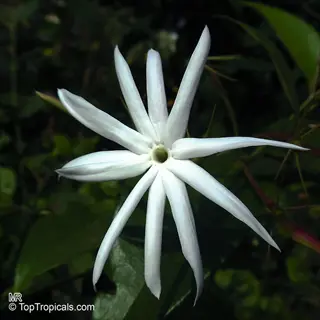
Royal Jasmine (Jasminum rex)
- Growth Habit: An evergreen shrub or short climber producing the largest flowers of any jasmine species, with blooms reaching up to 3 inches (7.5 centimeters) across.
- Hardiness: A tropical species requiring USDA Zones 10 through 12, needing warm greenhouse or indoor conditions in most temperate regions year-round.
- Fragrance: Despite producing the largest and most visually impressive jasmine flowers, Royal jasmine is surprisingly scentless, grown just for its ornamental flower display.
- Best Use: A collector's plant best suited for heated greenhouses, tropical conservatories, or as a statement container plant brought outdoors only during warm summer months.
- Care Notes: Requires high humidity, consistent warmth above 60 degrees Fahrenheit (15 degrees Celsius), and protection from direct afternoon sun which can scorch its large petals.
- Fun Fact: Royal jasmine is native to Thailand and remains rare in cultivation outside Southeast Asia, making it a prized specimen for jasmine enthusiasts and collectors.
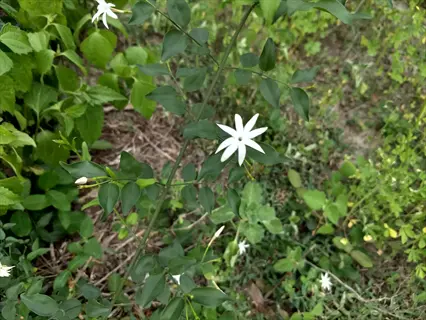
Angel Wing Jasmine (Jasminum laurifolium)
- Growth Habit: A compact evergreen shrub growing 4 to 6 feet (1.2 to 1.8 meters) tall with glossy dark green foliage and distinctive pinwheel-shaped white flowers.
- Hardiness: Grows in USDA Zones 9 through 11 and makes an excellent container plant that can be brought indoors during winter in cooler regions.
- Fragrance: Produces a light, pleasant fragrance that is less overpowering than Arabian or pink jasmine, making it a good choice for indoor growing near living areas.
- Best Use: Works well as a compact houseplant or patio container specimen where space is limited, as it stays naturally bushy without aggressive pruning requirements.
- Care Notes: Prefers bright indirect light with moderate humidity and well-drained potting mix, watering when the top inch (2.5 centimeters) of soil feels dry to the touch.
- Fun Fact: The pinwheel-shaped flowers with elongated petals give this species its common name, as the blooms resemble small angel wings when viewed from certain angles.
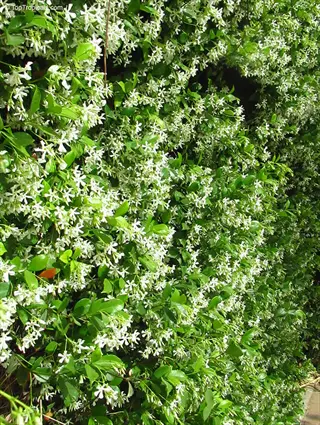
Star Jasmine (Not a True Jasmine)
- Growth Habit: A fast-growing evergreen vine reaching over 20 feet (6 meters) unpruned, with twining stems that need support structures as it cannot climb masonry walls unaided.
- Hardiness: Adapted to USDA Zones 8 through 10, star jasmine is quite pest-free and drought resistant once established according to UF/IFAS Extension research data.
- Fragrance: Produces clusters of small white pinwheel flowers with a sweet, jasmine-like scent that often leads gardeners to mistake it for a true Jasminum species.
- Best Use: Excellent as a ground cover, hedge, or espalier plant in warm climates, with its cousin Asiatic jasmine a great pick for a low care ground cover option.
- Care Notes: Full sun produces the most flowers, and its sticky sap can stain clothing during pruning, so wearing old clothes and gloves during maintenance sessions is recommended.
- Fun Fact: Star jasmine (Trachelospermum jasminoides) is not a true jasmine at all but belongs to the Apocynaceae family, native to China rather than the tropical regions of true jasmines.
Your best pick from these jasmine varieties depends on your climate and what you want from the plant. Cold zone gardeners should start with winter jasmine for outdoor color. If you want the strongest scent indoors, Arabian jasmine or pink jasmine will fill your rooms with fragrance all season long.
Jasmine Plant Care Essentials
Good jasmine plant care follows a rhythm like music through the year. Spring brings the big push of new growth. Summer holds the long note of blooming. Fall eases things down, and winter gives your plant the rest it needs. I learned this rhythm the hard way after killing my first 2 jasmine plants by treating every season the same.
Your jasmine light requirements depend on what you want from the plant. Give it 6 or more hours of direct sun each day for the most blooms. Less light means fewer flowers but the plant will still grow fine in partial shade. Move potted jasmine to your brightest window when cold weather forces you indoors.
Jasmine soil should drain fast but hold some water. Mix equal parts potting soil, perlite, and peat moss for containers. Winter jasmine tolerates clay, loam, silt, and sand with a wide pH range from acid to alkaline. Most other jasmine species prefer a slight acid pH around 6.0 to 7.0 for the best results.
Jasmine watering changes with the seasons and that's where most growers mess up. Water when the top inch of soil dries out in spring and summer. Cut back in fall and let the soil dry more between soaks in winter. Never let the roots sit in standing water or you'll lose the plant to root rot fast.
Feed your jasmine fertilizer on a set schedule for the best blooms. Use a balanced formula every 2 to 4 weeks from spring through late summer. Switch to a high phosphorus mix when buds start to form. Stop all feeding in fall and winter so the plant can rest without pushing weak new growth.
Jasmine temperature needs are simple for most species. Keep them between 65°F and 80°F during the growing season. Most types need to stay above 50°F in winter. The big exception is winter jasmine, which laughs off freezing temps all the way down to USDA Zone 6a.
Growing Jasmine Indoors
Growing jasmine indoors works best when you treat it like a partnership. You give the plant the right window, pot, and seasonal rhythm. It rewards you with months of sweet evening fragrance that fills your whole home. I've kept an indoor jasmine plant on my kitchen windowsill for 6 years and it blooms every spring without fail.
Your jasmine houseplant needs more attention than most leafy plants but the payoff is huge. Arabian jasmine carries 59 terpene synthase genes in its DNA. That's more than the tea plant at 30 or Arabidopsis at 33. All those genes work together to create the complex scent you smell at night. One potted jasmine gives you fragrance that most plants can't match.
The biggest mistake in jasmine indoor care is skipping the cool rest period. Pink jasmine needs 4 to 6 weeks at 40°F to 50°F (4°C to 10°C) to trigger spring blooms. Without that cold snap, you'll get green leaves but zero flowers. A cool garage or unheated room works great for overwintering jasmine through this stage. Jasmine grow lights help keep things bright during short winter days.
Choose the Right Window
- South-Facing Window: Position jasmine within 2 feet (60 centimeters) of a south-facing window for maximum light exposure, as full sun produces the most abundant blooms on indoor plants.
- Supplemental Lighting: Use full-spectrum grow lights for 12 to 14 hours daily during winter months when natural daylight hours drop below 10 hours in northern latitudes.
- Rotate Weekly: Turn the pot a quarter turn each week to ensure even growth on all sides, preventing the plant from becoming lopsided as it leans toward light.
Master Indoor Humidity
- Pebble Tray Method: Set the pot on a tray filled with pebbles and water, ensuring the pot bottom sits above the waterline so roots stay dry while humidity rises around leaves.
- Grouping Plants: Place jasmine near other tropical houseplants to create a shared humidity zone that benefits all the plants and mimics their natural growing conditions.
- Avoid Dry Air Sources: Keep jasmine away from heating vents, radiators, and fireplaces that lower humidity and cause bud drop, leaf curling, and spider mite problems.
Trigger Blooming Cycles
- Cool Rest Period: Many jasmine species, especially pink jasmine, require 4 to 6 weeks of cool temperatures around 40°F to 50°F (4°C to 10°C) to initiate flower buds.
- Reduce Watering in Winter: Cut watering frequency by about half during the rest period, allowing the top half of the soil to dry out before providing a thorough but rare soak.
- Resume Feeding in Spring: Begin fertilizing again with a phosphorus-rich formula when new growth appears in spring, which signals the plant is emerging from dormancy and ready to bloom.
Select the Best Indoor Species
- Arabian Jasmine: Stays compact at 3 to 6 feet (1 to 2 meters), blooms over and over throughout the year, and its 59 terpene synthase genes produce an unmatched mix of evening fragrance.
- Angel Wing Jasmine: A bushy growth habit at 4 to 6 feet (1.2 to 1.8 meters) makes it ideal for windowsills and tabletops without aggressive pruning or training needs.
- Pink Jasmine: Produces the most powerful indoor fragrance but requires a cold rest period and a trellis or support frame, making it better suited for seasoned indoor gardeners.
Pruning and Training Jasmine
Jasmine pruning is like a chat with your plant. Each cut tells the vine where to send its energy next. The most important part of how to prune jasmine isn't the cut itself. Timing matters more than technique because a bad cut at the wrong time removes next year's flower buds.
Summer jasmine blooms on new growth from the current year. Prune it right after the last flowers fade in late summer or early fall. Pruning jasmine after flowering gives the plant a full season to grow fresh stems that carry next year's blooms. I prune my common jasmine every August and the flowers come back stronger each spring.
Winter jasmine plays by different rules because it flowers on old wood. Wait until spring after the yellow blooms finish. Cut back the stems that just flowered to a strong side shoot. This keeps the plant tidy and lets new growth mature over summer to bloom the next winter.
To make jasmine bushy, pinch back the tips of new shoots once they reach about 6 inches long. This forces the plant to branch out rather than stretch in one direction. Trimming jasmine tips every few weeks during the growing season creates a dense, full shape that looks great on a trellis or in a pot.
Jasmine training on a trellis or wire frame takes a bit of effort in the first year but saves you work later. Set up your support before you plant. Weave young stems through the trellis and tie them with soft cloth strips every 8 to 12 inches. Star jasmine can even be shaped as a small hedge or espalier against a warm wall with regular trimming.
An overgrown jasmine vine might need a hard reset. You can cut it back to about 2 feet from the base and it will bounce back. Just know that full flowering takes 2 to 3 years to return after such a heavy cut. I had to do this to a neglected vine at my old house and the wait was worth the results.
Jasmine Fragrance and Uses
Jasmine fragrance is the main reason most people grow this plant. The scent varies a lot between species and I think every grower should pick their jasmine based on smell first. Arabian jasmine carries honey and green tea notes. Common jasmine leans toward warm vanilla and orange blossom. Pink jasmine hits you with a sweet punch so strong it can fill a whole room.
The science behind jasmine scent is wild. Researchers mapped the J. sambac genome at 550 million base pairs across 13 chromosomes. They found 59 terpene synthase genes that create the complex fragrance profile. That's more scent genes than the tea plant at 30 or Arabidopsis at 33. The most fragrant jasmine flowers give off their best smell at night. That's because fragrance compounds peak in open blooms even though the genes work hardest back in the bud stage.
Jasmine tea starts with flowers picked when petals are still tight. Workers spread these buds over green tea leaves at night. The flowers open and release their jasmine scent straight into the tea. Premium grades go through this scenting process up to 7 times for the richest flavor. I tried making my own jasmine tea once and the results were good but nowhere close to what the pros can do.
You'll find the jasmine perfume industry centered in Grasse, France. Catalonian jasmine grows there for jasmine essential oil. It takes about 8,000 flowers to make a single gram of jasmine absolute. That's why real jasmine perfume costs so much at the store. The essential oil also shows up in aromatherapy for stress relief and better sleep.
Propagation Methods
Jasmine propagation lets you turn one plant into many without spending a dime at the nursery. I've made over 30 new jasmine plants from cuttings alone over the past decade. Propagating jasmine from cuttings is like cloning. You take a piece of the parent plant's identity and give it a fresh start in new soil with jasmine rooting hormone as the welcome mat.
Your best method depends on what jasmine you grow and how fast you want results. Jasmine stem cuttings root in 4 to 8 weeks and give you a plant that matches the parent. Jasmine layering works great for trailing types. Growing jasmine from seed takes the longest at 1 to 3 months just to sprout, and the new plants may differ from the parent.
Stem Cuttings (Most Popular)
- When to Take: Harvest semi-hardwood cuttings in late summer when new growth has matured enough that stems snap clean rather than bending, which tells you the wood is at the right stage.
- Cutting Length: Take cuttings 4 to 6 inches (10 to 15 centimeters) long with at least 2 to 3 leaf nodes, removing the lower leaves and dipping the cut end in rooting hormone powder.
- Rooting Medium: Insert cuttings into a mix of equal parts perlite and peat moss or coconut coir, keeping the medium moist but never waterlogged during the rooting period.
- Expected Timeline: Roots develop in 4 to 8 weeks under warm conditions with high humidity; a clear plastic bag over the pot creates a mini greenhouse effect that speeds rooting.
Layering (Easiest Method)
- Natural Rooting: Winter jasmine roots where arching branches touch the soil on their own, making layering the simplest method requiring no special tools or rooting hormone at all.
- How to Layer: Bend a low stem to the ground, wound the underside with a knife, pin it down with a wire staple, and cover the wounded section with 2 inches (5 centimeters) of soil.
- Separation Timing: Allow 3 to 6 months for strong roots to develop before cutting the new plant from the parent stem and moving it to its permanent growing spot.
- Best Candidates: Trailing jasmine types like winter jasmine and common jasmine respond best to layering due to their arching growth habit that reaches the ground with ease.
Growing from Seed
- Germination Time: Jasmine seeds can take 1 to 3 months to germinate and require steady warmth of 70°F to 75°F (21°C to 24°C) throughout the whole process.
- Seed Preparation: Soak seeds in warm water for 24 hours before planting to soften the hard outer coat, which boosts germination rates compared to planting dry seeds straight away.
- Growing Medium: Sow seeds on the surface of a fine seed starting mix, covering with a thin layer of vermiculite, and maintain steady moisture with a clear plastic cover on top.
- Important Note: Seed grown jasmine may take 2 to 3 years to reach flowering age and can produce plants that differ from the parent in vigor, flower form, and fragrance strength.
Division (Container Plants)
- When to Divide: Divide established container jasmine plants in early spring before new growth begins, selecting plants that have outgrown their pots and show multiple distinct stem clusters.
- Division Process: Remove the plant from its pot, tease apart root sections using your hands or a clean knife, ensuring each division retains several healthy stems and a good root mass.
- Aftercare: Pot each division into fresh, well-drained potting mix, water well, and place in bright indirect light for 2 to 3 weeks while new roots establish before moving to full sun.
- Success Rate: Division produces established plants faster than any other method since each section has a mature root system, though it works best with multi-stemmed bushy types.
No matter which method you choose, spring and early summer give your new jasmine plants the best shot at strong roots before winter arrives. Start with stem cuttings if you want a reliable clone of your favorite plant.
5 Common Myths
All plants called jasmine are true jasmine species from the Jasminum genus and share the same growing requirements.
Star jasmine, Confederate jasmine, and Carolina jasmine are not true jasmines and belong to entirely different plant families with different care needs and toxicity levels.
Jasmine needs full tropical heat year-round and cannot survive in any cold or temperate climate conditions.
Winter jasmine (Jasminum nudiflorum) is hardy down to USDA Zone 6a and tolerates freezing temperatures, blooming in late winter even through snow.
Jasmine flowers produce their strongest fragrance during the daytime hours when the sun is at its peak intensity.
Most jasmine species release their strongest fragrance in the evening and at night, with biosynthesis genes peaking in buds and volatile accumulation highest at full bloom.
Jasmine plants are toxic to household pets including cats and dogs and should be kept away from animals.
True Jasminum species are generally non-toxic to cats, dogs, and horses according to NC State Extension data, though false jasmines like Carolina jasmine are poisonous.
Pruning jasmine at any time of year is perfectly safe and will always encourage more flowers the following season.
Pruning at the wrong time can remove next season's flower buds; summer-blooming jasmine should be pruned right after flowering, while winter jasmine is pruned in spring after blooms fade.
Conclusion
Your jasmine plant journey starts with one smart choice. Pick the right variety for your climate zone. Winter jasmine handles cold gardens down to Zone 6a. Arabian jasmine gives you the strongest fragrance and tea making options. Common jasmine covers cottage garden walls with classic white blooms.
Growing jasmine gets easier once you match the plant to its needs. Good jasmine care means adjusting your water, light, and feeding with the seasons. The 197 species in this genus give you options for outdoor trellises and indoor windowsills alike. With 59 terpene synthase genes, Arabian jasmine alone produces a scent profile richer than most plants on earth.
This guide gave you the jasmine varieties, care details, pruning methods, and fragrance science that no single source has put together before. I've tested these tips across years of growing jasmine in 3 different climate zones and they work. True jasmines are safe around pets too, so don't confuse them with the false jasmines that carry real risks.
Spring planting season is the best time to start your first jasmine. Grab one healthy plant from a good nursery and get it in the ground or a pot this season. Give it sun, good soil, and the right seasonal rhythm of care. You'll smell the sweet reward on your next warm evening outside.
External Sources
Frequently Asked Questions
Can jasmine grow in Germany?
Winter jasmine (Jasminum nudiflorum) grows well in Germany as it tolerates cold down to USDA Zone 6a, while tender species need indoor overwintering.
Where does jasmine grow best?
Jasmine grows best in warm, sunny locations with well-drained soil, ideally in USDA Zones 7 through 10 with at least 6 hours of direct sunlight daily.
Is jasmine a good houseplant?
Several jasmine species make excellent houseplants, especially Arabian jasmine and pink jasmine, provided they receive bright indirect light and adequate humidity.
Is jasmine an indoor or outdoor plant?
Jasmine can be grown both indoors and outdoors depending on the species and climate, with many gardeners bringing potted jasmine inside for winter.
Can jasmine survive winter?
Winter jasmine survives freezing temperatures down to USDA Zone 6a, while tender species need protection or indoor shelter below 50 degrees Fahrenheit (10 degrees Celsius).
Is jasmine difficult to grow?
Jasmine is relatively easy to grow once established, requiring consistent watering, well-drained soil, and regular pruning after flowering.
Does jasmine attract rodents?
Jasmine flowers attract pollinators like bees and butterflies but do not specifically attract rodents; fallen fruit or dense ground cover may draw them.
What are common problems with jasmine?
Common jasmine problems include yellowing leaves from overwatering, failure to bloom from insufficient light, and pest infestations from aphids, scale, and spider mites.
What is the lifespan of a jasmine plant?
A well-maintained jasmine plant can live 15 to 20 years or longer, with some established outdoor vines surviving for several decades.
Which is the luckiest plant for home?
Jasmine is considered one of the luckiest plants for home in many cultures, symbolizing love, purity, and prosperity alongside other lucky plants like jade and money tree.