Tree · Rutaceae
Yuzu
Citrus junos
The toughest of the true citrus, yuzu asks only for patience and a warm, sheltered corner to call its own.
Full sun
Every 7–14 days
USDA 8–11
6–18 ft · 1.8–5.5 m
Overview
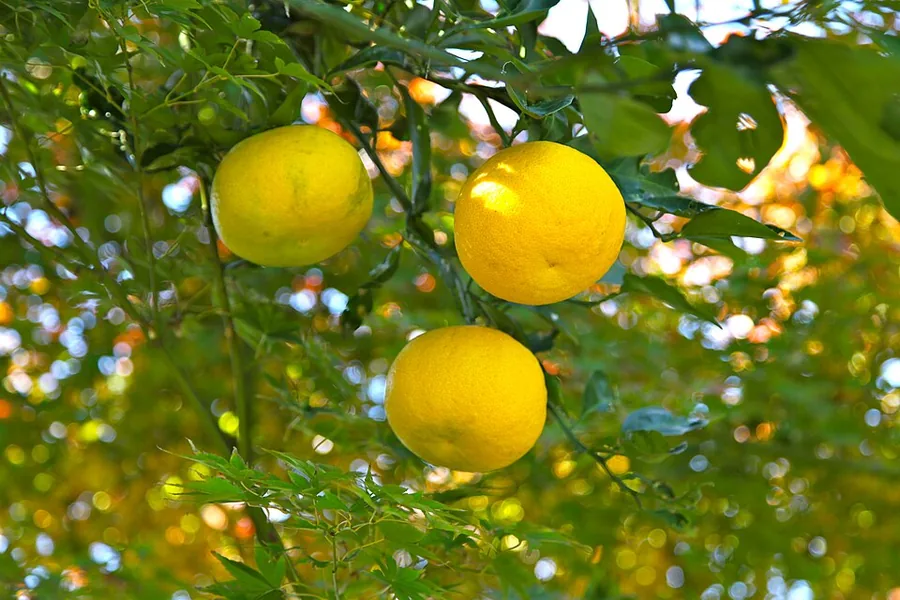
If you have always wanted to grow your own citrus but assumed the cold ruled it out, yuzu is the tree that gently proves otherwise. It comes from East Asia, where the bumpy yellow fruit flavors everything from ponzu sauce to warming winter baths, and its aromatic peel and tart juice are the real reward for growing it. The tree is a thorny evergreen too, so it holds onto its leaves right through the year.
The one thing yuzu asks of you is a little patience, and that is nothing to worry about. It grows at a steady, moderate pace, and a grafted tree will usually fruit within a year or two, while a tree raised from seed simply takes a few years longer. In return you get remarkable toughness, since a settled yuzu shrugs off temperatures down toward 14°F (-10°C), far colder than almost any other citrus would ever tolerate.
You can plant yuzu straight into the ground in zone 8 and warmer, or keep it in a big pot that comes under cover when a hard freeze threatens, and either way it responds kindly to steady care. Give it plenty of sun, soil that drains freely, and a little shelter from the worst of the cold. Watch out for those long thorns at pruning time, and your tree will thank you with fragrant fruit each autumn.
Care
The short version: give yuzu full sun and slightly acidic, well-drained soil, and water once the surface has dried out. Feed it monthly while it is growing, tuck young trees away from hard frost, and slip on thick gloves before you go near the thorns.
Light
Yuzu is happiest in full sun, around six hours a day or more, which is what helps it ripen sweet, fragrant fruit. It will put up with partial shade if that is what you can offer, though the tree tends to stretch and the fruit comes lighter where the sun is thin.
Water
Wait until the top inch or so (3 cm) of soil feels dry, then give the tree a good deep drink, usually about every 7 to 14 days. Trees in pots dry out sooner, so check them a little more often, and in winter you can relax and let the tree take its rest.
Soil
Set yuzu into well-drained, slightly acidic sandy loam with a good helping of organic matter mixed through. Aiming for a pH of 6.0 to 7.0 keeps the roots able to draw up the iron and other micronutrients that citrus quietly relies on.
Temperature
This tree copes with a wide span, roughly 14°F to 95°F (-10°C to 35°C), the finest cold tolerance you will find in any true citrus. Even so, be gentle with young trees and give them frost cover, because that toughness only grows in as the tree matures.
Humidity
Ordinary humidity in the 40% to 60% range suits yuzu just fine, so there is nothing to fuss over outdoors. A tree kept inside through dry winter air may enjoy a little extra moisture misted around its leaves now and then.
Feeding
Feed monthly through spring and summer with a citrus fertilizer that leans a little higher in nitrogen and includes iron, zinc, and manganese. Ease off as the season winds down, since a late push of nitrogen coaxes out tender shoots that the frost will only nip.
Pruning
Prune in late winter to early spring to shape the tree and take out any dead, crossing, or frost-bitten wood. Do slip on thick gloves first, because the branches carry long, sharp thorns that snag skin and clothing all too easily.
Repotting
Shift a potted yuzu into a roomier container every 2 to 3 years, ideally before the roots start circling the inside or poking out of the drainage holes. If water begins running straight through without soaking in, that is the tree gently letting you know it has outgrown its home.
Size & spacing
Given room, yuzu settles at around 6 to 18 feet (1.8 to 5.5 m) tall and spreads 5 to 13 feet (1.5 to 4 m) across, so leave it plenty of open space. Just how big it gets depends on its rootstock and whether you plant it out or keep it comfortably contained in a pot.
When to plant
Yuzu keeps to the familiar citrus rhythm, just with a hardy streak. It blooms in spring, colors up its fragrant fruit through late autumn as the skin turns from green to yellow, and settles into the ground once the last frost has passed in zone 8 and warmer. Most new trees get their start from grafting, so there is no rush to raise one from seed.
Northern hemisphere
Southern hemisphere
Typical months for a temperate climate: start earlier in warm zones, later where spring frosts linger.
- Sow: Seed late winter to early spring; yuzu is usually propagated by grafting rather than seed
- Plant: After the last frost in spring in zone 8 and warmer
- Harvest: Flowers in spring; aromatic fruit harvested in late autumn as it turns yellow
Hardiness
USDA hardiness zones: 8–11
Temperature: down to -12°C
Troubleshooting
Almost every yuzu worry comes down to one of two things: a spell of cold, or soil that does not quite suit citrus. The good news is that the tree tells you early, right there on its twigs and newest leaves, so you have time to help. Find the picture below that matches yours and step in while it still makes a difference.
Twig tips dying back and leaves dropping once winter has passed
Do not lose heart if you see this; it is simply cold or frost damage, and it shows up most on young trees that met a chill beyond what they could take. Scratch a doubtful twig and look closely: a tip that is brown and dry above green, living wood lower down confirms the cause. Let the spring flush appear first, then trim back to that live wood, and drape young trees in frost cloth through the sharpest freezes to keep them safe.
Fix:
- Wait until new growth resumes in spring, then prune back to live wood
- Protect with frost cloth or move containers under cover during hard freezes
Newest leaves turning yellow while their veins stay green
This gentle yellowing is interveinal chlorosis, a sign the tree is short on iron, zinc, or manganese, usually because the soil has turned too alkaline or is staying too wet. You will notice the newest leaves going yellow between their still-green veins while the older leaves keep their color. Offer a citrus fertilizer carrying chelated micronutrients and put the drainage right, and the roots will soon be able to draw up the iron they need.
Fix:
- Apply a citrus fertilizer containing chelated micronutrients
- Correct drainage and avoid overwatering
Toxicity
Here is the reassuring part: the fruit itself is the whole point and is completely safe for people to enjoy. The rest of the plant is a different story for animals, since the peel, leaves, and stems carry essential oils and psoralens that can give cats, dogs, horses, and other animals a sore stomach. Just tuck clippings and any fallen peel somewhere your pets and livestock cannot reach, and everyone stays happy.
Toxic to
Cats · Dogs · Horses · Rabbits · Livestock · Birds
Safe for
People
Cats Mild
The essential oils and psoralens held in the peel, leaves, and stems can leave a cat dribbling, being sick, or turning away from food, often with loose stools alongside. Brushing against the peel may leave the skin a little irritated too.
Dogs Mild
A dog that nibbles the leaves or peel will usually end up with an upset tummy, bringing vomiting, diarrhea, and a rather low, sluggish mood. Those same oils can redden the skin wherever they touch it.
Horses Mild
Because the peel, leaves, and stems hold the same citrus oils, a horse that samples them may drool and come down with diarrhea or a generally unsettled gut. Thankfully the strong scent puts most horses off before they eat very much.
Rabbits Caution
A rabbit's delicate gut does not get on well with the oily peel and leaves, which can lead to soft stools or a dip in appetite. It is kindest to keep trimmings well out of the hutch rather than sharing them as a treat.
Livestock Caution
Goats, sheep, and cattle sometimes pick at fallen leaves or prunings, and a big mouthful of the oily material can loosen the stomach. Happily, the bitter taste tends to stop them before they take too much.
Birds Caution
The essential oils in the peel and leaves can unsettle a bird's digestion, so it is best to keep pet birds clear of any clippings. A little taste of the flesh is much less of a concern than the peel itself.
People Fruit safe
The fruit, juice, and zest are treasured in the kitchen and completely safe to eat, which is really the whole joy of growing the tree. Handling a lot of peel out in the sun can make sensitive skin react, so give your hands a rinse after juicing.
The branches also bear long, sharp thorns that can scratch curious pets and people.
Helpline numbers

United States
ASPCA Animal Poison Control: (888) 426-4435 (fee applies)
Poison Control: (800) 222-1222



Canada
Poison Centres: 1-844-764-7669
Varieties
Only a handful of named yuzu ever make it beyond Japan, and they tend to fall into two camps: one for the kitchen and one purely for show. Here are the two that are well worth getting to know.
Yuzu Ichandrin
A popular seedling-grown yuzu that gardeners love for its extra cold hardiness and its reliable crops even where the climate stays cool.
Shishi Yuzu
This one is kept more as a charming ornamental than for its juice, standing out with unusually large, bumpy fruit.
How to propagate
Most yuzu trees are grafted, which is the quickest route and hands the tree extra cold hardiness into the bargain. If you are happy to wait, though, you can absolutely raise one from seed, so long as patience is on your side.
GraftingModerate
Late spring through summer when bark slips easily · 1 to 2 years before reliable fruiting
Grafting is the route most growers take, carried out from late spring through summer while the bark lifts away easily. Joined onto trifoliate rootstock, the young tree picks up extra cold hardiness and vigor and begins fruiting dependably within 1 to 2 years.
SeedEasy
Late winter to early spring, sown fresh · Several years to fruit
Sowing fresh seed in late winter or early spring is the gentlest, easiest way to begin, as long as you are ready to wait. Seedlings take their time and can be several years off fruiting, so seed is the simplest path rather than the quickest to a harvest.
Myths
Since yuzu is toxic to pets, its fruit must be dangerous for people as well.
Happily, that worry is misplaced. The caution for pets is all about the essential oils and psoralens that unsettle cats and dogs, not about the flesh you cook with. Yuzu zest, peel, and juice are safe, everyday ingredients for people, turning up in everything from ponzu sauce to marmalade.
Yuzu is completely winter-proof and laughs off any freeze.
It is true that yuzu ranks among the most cold-hardy of the true citrus, holding up to about 10°F to 15°F (-12°C to -9°C) once it has settled in. Young trees, though, are a softer story, still wanting frost protection and still liable to lose their twig tips after a really hard freeze.