Tree · Rutaceae
Grapefruit
Citrus × paradisi
Give it full sun, deep watering, and frost-free warmth, and your grapefruit tree will reward you with fruit right through winter.
Full sun
Every 7–14 days
55–100°F · 13–38°C
USDA 9–11
Overview
Grapefruit is a big, glossy-leaved citrus, and it's a wonderfully rewarding tree to grow because the fruit hangs on through the cool months when little else is ripening. It began as a hybrid of the pomelo and the sweet orange, first spotted in the Caribbean before it grew into a major crop. A happy tree can climb to 15 to 20 feet (4.5 to 6 m), so give it real room to stretch rather than a cramped corner.
Warmth is the one thing it truly needs from you. Grapefruit is happiest in USDA zones 9 to 11, where mild winters and long, hot summers give the fruit time to build its sugar. If your winters bite, don't count yourself out, because a dwarf tree in a big pot can spend the cold months tucked safely under cover.
Once it feels at home, this tree asks for very little, and small mistakes are easy to recover from. Full sun, deep but well-spaced watering, and a steady citrus feed cover nearly everything it wants. Get those in place and one tree can hand you more grapefruit than a household can eat, ripening slowly from fall into spring.
Care
The short version: give it full sun and frost-free warmth, water deeply once the top few inches dry, plant it in well-drained sandy loam, and feed a citrus fertilizer with micronutrients through the growing season.
Light
Grapefruit loves full sun, and the more it gets the happier it is. A tree stuck in shade grows leggy and sets little fruit, and what it does set struggles to sweeten. Pick the brightest, most open spot you have and it'll thank you.
Water
Water deeply, then let the top few inches of soil dry before you water again, which usually lands around every 7 to 14 days. Lean toward the wetter end in real heat and for any tree in a pot. That steady, even moisture is what keeps the fruit from splitting.
Soil
Above all, plant in well-drained sandy loam, because citrus roots really don't like sitting in soggy ground. A pH somewhere between 6.0 and 7.5 suits the tree nicely, and good drainage matters far more than rich soil.
Temperature
Grapefruit copes with a wide range, roughly 55°F to 100°F (13°C to 38°C), but it simply can't take a hard frost. A freeze can spoil the fruit and, if it's deep enough, harm the tree itself, so watch the forecast.
Humidity
Ordinary air, around 40% to 60% humidity, is all a grapefruit tree needs. There's no number to fuss over outdoors, and good airflow through the canopy does far more for its health than any humidity reading.
Feeding
Feed with a citrus fertilizer carrying nitrogen plus micronutrients like iron, zinc, and manganese. Apply it through the growing season, from spring into late summer, then ease off as the weather cools so you don't push soft, pest-prone growth.
Pruning
Happily, grapefruit needs little pruning. In late winter to early spring, snip out dead, damaged, or crossing branches and pull any suckers rising from below the graft. After that, just let the tree fill out its own generous canopy.
Repotting
A container-grown dwarf tree likes a roomier pot every 2 to 3 years. Roots peeking out the drainage holes, growth that seems to stall, or water that races straight through are all gentle hints it's ready to move up.
Size & spacing
A full-size grapefruit reaches 15 to 20 feet (4.5 to 6 m) tall and spreads nearly as wide, about 12 to 15 feet (3.6 to 4.5 m). Give it that open room and the canopy fills out beautifully while air moves freely through it.
When to plant
Grapefruit lives by a long, warm calendar and has no patience for frost, so let the seasons guide you. Set young trees out in spring once the cold has truly gone, enjoy the spring bloom around March and April, and gather fruit from late fall into spring as it slowly ripens.
Northern hemisphere
Southern hemisphere
Typical months for a temperate climate: start earlier in warm zones, later where spring frosts linger.
- Plant: Spring, after all danger of frost has passed.
- Harvest: Blooms in spring (mainly March to April); fruit matures over fall to spring and is harvested roughly November to May depending on variety.
Hardiness
USDA hardiness zones: 9–11
Temperature: down to -7°C
Troubleshooting
Most grapefruit troubles turn up first in the leaves or the fruit, and once you know the signs they're easy to read. Match what you're seeing below and act early, and small hiccups rarely turn into real problems.
When the leaves start to yellow
Yellow leaves are the tree's way of asking for help, and the good news is that the fix is usually simple. If the whole leaf fades evenly, your tree is just hungry for nitrogen, while yellow leaves that keep their green veins are looking for iron or magnesium. Before you feed, gently check that the roots aren't sitting in wet soil, since soggy ground can cause the very same look.
Fix:
- Apply a balanced citrus fertilizer with micronutrients
- Correct drainage and avoid waterlogging
When fruit drops early or splits open
Don't worry, this one is common and easy to head off. Both the dropping and the splitting come from uneven soil moisture, because when a thirsty tree suddenly gets a lot of water the fruit swells faster than its skin can keep up and the rind cracks. Water deeply on a steady rhythm and tuck some mulch around the base, and the soil will hold that gentle, even dampness the fruit loves.
Fix:
- Provide consistent, deep irrigation
- Mulch to buffer soil moisture
Silvery squiggles on the newest leaves
Those winding silver trails look alarming, but take a breath, because they rarely hurt an established tree. They come from the citrus leafminer, a tiny larva that tunnels through soft young growth, and on a mature grapefruit you can simply leave the marked leaves alone. Go a little easy on nitrogen too, since all that tender new growth is exactly what invites the pest in.
Fix:
- Tolerate light damage on mature trees
- Avoid excess nitrogen that triggers vulnerable new flushes
Toxicity
The flesh is a healthy food for you and your family, but the rest of the tree deserves a bit more care. The peel and leaves hold essential oils and psoralens that mildly upset cats, dogs, and horses and can leave skin sensitive to sunlight. Keep peels, leaves, and fallen fruit away from animals, and do remember that for people the thing to watch is grapefruit's strong interaction with many medications.
Toxic to
Cats · Dogs · Horses · Rabbits · Livestock · Birds
Safe for
People
Cats Mild
If a cat nibbles the peel or leaves, the essential oils and psoralens inside can bring on a bit of vomiting, some loose stools, and a quiet, flat mood. Skin contact can leave your cat more sensitive to sunshine, so it's kindest to keep those parts out of paw's reach.
Dogs Mild
A dog that chews on rind or leaves may end up vomiting, with a touch of diarrhea and a sluggish afternoon. The soft flesh is much gentler, so it's really the oily skin you'll want to tuck away safely.
Horses Mild
The citrus oils and psoralens can unsettle a horse's stomach and leave it a little low on energy. Horses seldom go looking for grapefruit, so a quick tidy-up of any fallen fruit or peel usually keeps them safe.
Rabbits Caution
Citrus was never part of a rabbit's natural menu, and the oils in the rind can trouble a delicate gut. It's safest to skip the peel and leaves altogether, and to treat even the flesh as a treat best left off the plate.
Livestock Caution
Cattle, goats, and sheep might sample windfall fruit, but the peel oils can sour the rumen and dull their appetite. A simple clear-up of fallen grapefruit from their pasture keeps everyone happy.
Birds Caution
Many pet birds can enjoy a little ripe flesh, yet the peel and its strong oils are not for them. Offer only small, peeled pieces, and always leave the rind and leaves out of the cage.
People Flesh safe
For you, the flesh is a wholesome everyday food to enjoy without a second thought. The one thing to watch is the drug interaction, since furanocoumarins can lift the blood levels of many medications too high, so a quick word with your pharmacist is wise if you take prescriptions.
Grapefruit furanocoumarins (such as bergamottin) inhibit intestinal CYP3A4, producing the well-known grapefruit drug interaction that can raise blood levels of many medications including some statins, blood pressure drugs, and anti-anxiety drugs; consult a pharmacist if you take affected medicines (FDA, NIH).
Helpline numbers

United States
ASPCA Animal Poison Control: (888) 426-4435 (fee applies)
Poison Control: (800) 222-1222



Canada
Poison Centres: 1-844-764-7669
Varieties
Grapefruit varieties mostly differ in flesh color and how many seeds they carry. Here are the ones you're most likely to meet, from the trusty old white to the deep, glowing reds.
Ruby Red (Redblush)
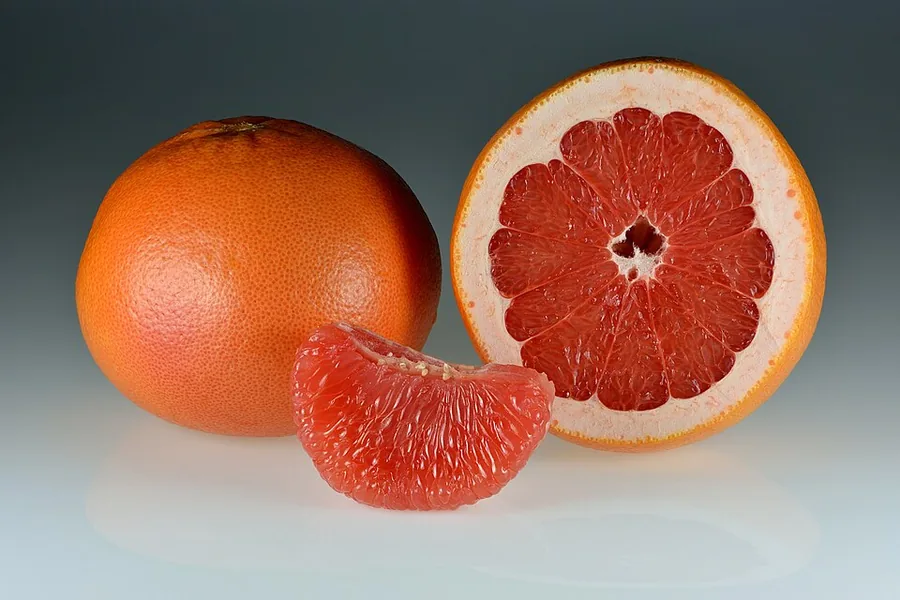
As the first red-fleshed grapefruit ever patented, it stays a favorite for its warm pink-red flesh and its almost seed-free fruit.
Marsh
This is the old, dependable white seedless grapefruit, its pale yellow flesh the commercial standard for many years.
Star Ruby
You get gorgeous deep red, nearly seedless fruit from this one, though it does ask for extra care because it dislikes cold and herbicides more than most.
Rio Red
A well-loved Texas commercial pick, it holds its deep red color beautifully all the way through the season.
How to propagate
There are two ways to grow grapefruit, and your choice decides how soon you'll get to taste the fruit. Grafting hands you a reliable tree fairly quickly, while seed is a slower, more playful gamble.
GraftingModerate
Spring to summer when bark slips easily · 1 to 2 years to a transplantable tree
Grafting is how the nurseries do it, and it's a friendlier path than it sounds. Work in spring or summer while the bark slips easily, and the young tree grows up true to its parent while borrowing hardiness and disease resistance from the rootstock. Give it a patient 1 to 2 years and you'll have a tree ready to settle into the ground.
SeedEasy
Spring · Several years; fruiting may take 5 or more years
Growing from seed is the simplest place to start, just a slow one, so enjoy it for the fun of it. Sow the pips in spring and they sprout with hardly any coaxing, though the seedlings may not taste like their parent and can take 5 or more years to fruit. Think of it as a happy little experiment rather than your route to a dependable crop.
Myths
Grapefruit juice is a harmless, natural way to wash down medication.
It feels natural, but grapefruit carries furanocoumarins that block the CYP3A4 enzyme in your gut, and that can push the blood levels of many drugs far too high. The effect lingers for most of a day, so simply waiting a while between the juice and the pill won't spare you. Please check with a pharmacist or doctor before pairing grapefruit with any prescription.
Citrus fruit is completely safe for dogs and cats.
It's an easy thing to assume, yet the ASPCA lists grapefruit as toxic to cats and dogs, mainly for the essential oils and psoralens packed into the peel. A pet that chews the rind or leaves can end up vomiting, with diarrhea and a flat, quiet mood. Keeping the peels and trimmings well out of reach is all it really takes.