Herb · Caprifoliaceae
Valerian
Valeriana officinalis
Give valerian a sunny spot and damp soil, and it answers with sweet summer flowers and a calming root cats can hardly leave alone.
Full sun
Every 3–7 days
USDA 4–9
3–5 ft · 0.9–1.5 m
Overview
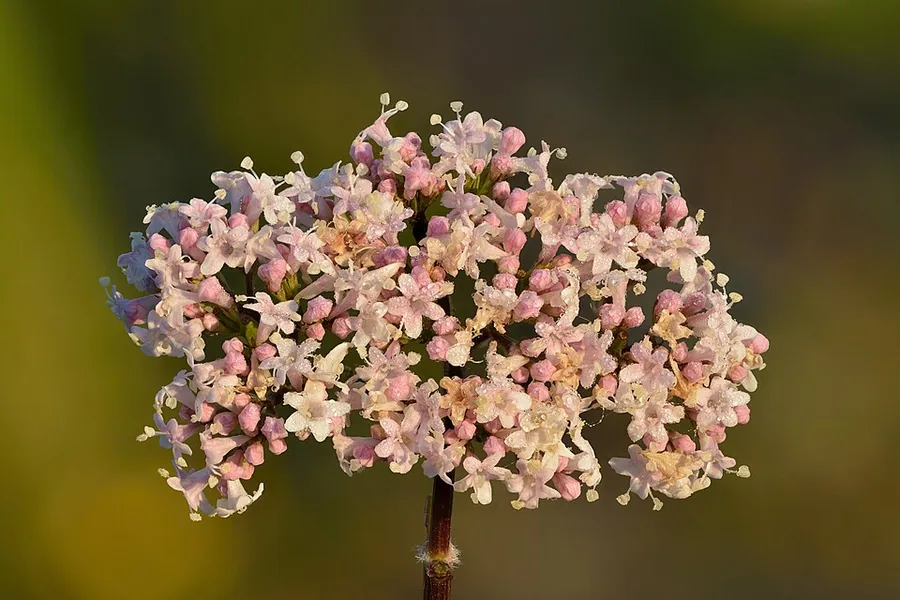
If you are just starting out, valerian is a kind plant to learn on. This old cottage favorite has been cherished for generations, grown both for its sweetly scented summer flowers and for the useful root tucked below. Slim stems rise and open into soft, domed heads washed pale pink and white right through early and midsummer, pulling in pollinators and lifting a gentle fragrance over the border. It is a hardy, easygoing plant that settles into cool, damp ground and wants little from you once it has taken hold.
The root is the part with the real history. Dried and brewed into a tea, people have reached for it over many centuries as a soothing herbal sedative, one that helps with restless sleep and frayed nerves, and that long comfort is why it once earned the name all-heal. That same root carries scents that thrill cats in the way catnip does, so do not worry if your bed becomes a happy feline hangout, since none of it harms them.
Here is the one thing to keep in mind, and it is nothing to fear. Valerian grows quickly and is very generous with its seed, and it also travels a little by underground rhizome, so in certain regions it has slipped beyond the garden and into the wild, enough to land on some invasive lists. None of that is hard to manage: keep it in a bright, moist corner, snip the flowers off before they ripen into seed, and you will have a tidy, giving plant that stays right where you put it.
Care
The short version: give valerian full sun and steady water in rich, fertile soil, and snip off the faded flowers before they seed so it does not wander. It is forgiving about soil type and laughs off the cold, so really your only regular jobs are watering and a little tidying.
Light
Valerian is happiest and flowers most freely in full sun, which also helps its tall stems stand up straight and strong. It will put up with partial shade if that is what you have, though shadier plants tend to stretch out and lean, so an open, bright spot is the kind thing to offer it.
Water
Try to keep the ground evenly damp, because valerian loves moist, rich soil and is unhappy when it dries right out. A soak every 3 to 7 days works well, a little more often in hot weather, and it will thank you with fuller growth. It can forgive the odd dry patch, so a missed watering is not the end of the world, but it never does its best when left thirsty.
Soil
Set it into rich, moist, well-drained loam wherever you can, since the more fertile the ground, the happier it grows. It is easygoing enough to settle into clay, loam, or sand, and it likes a soil pH somewhere between 6.0 and 7.5, which covers most ordinary garden soil, so there is no need to fuss.
Temperature
Cold really does not bother this plant, which sails through winters as low as -31°F (-35°C) and copes with summer heat up to around 86°F (30°C). It shines in cool, mild conditions, so do not be surprised if it finds long, baking summers a little harder going.
Humidity
Ordinary outdoor humidity, roughly 40% to 70%, is all valerian asks for. As a hardy garden perennial it simply takes the air as it comes, so this is one thing you can happily forget about.
Feeding
A light feed in spring, just as new growth wakes up, is all it needs, whether you use a balanced fertilizer or a little compost dug into the soil. One feeding a year is plenty, and piling on more only gives you soft, floppy stems instead of extra flowers, so a gentle hand wins here.
Pruning
Snip off the faded flower heads as soon as they go over, and you will spare yourself the heavy crop of seedlings valerian likes to scatter. Trim the stems down once blooming is done, then tidy away the spent leaves as the whole plant sinks back to the ground for winter.
Repotting
This is not really a plant for life in a pot, but settled clumps do love being divided every 2 to 3 years, which keeps them strong and blooming. When you notice a crowded crown, fewer flowers, or roots winding round a container, gently lift it and split the crown into pieces.
Size & spacing
Grown well, valerian stands about 3 to 5 feet (90 to 150 cm) tall, so it earns a place toward the back of the border. Leave each plant 2 to 4 feet (60 to 120 cm) of elbow room so air and light can move around those tall, airy flower heads.
When to plant
Valerian likes the cooler stretches of the year, and its calendar is easy to follow. Sow seed indoors from late winter into early spring, move the young plants outdoors once the danger of hard frost is behind you, and look forward to fragrant flowers across early and midsummer. Should you want the root for its calming tea, dig it in the fall of the second year, when it holds the most goodness.
Northern hemisphere
Southern hemisphere
Typical months for a temperate climate: start earlier in warm zones, later where spring frosts linger.
- Sow: Late winter to early spring, 6-8 weeks before last frost
- Plant: Spring after danger of hard frost
- Harvest: Fragrant pinkish-white flower clusters in early-to-mid summer (June-July); harvest roots in fall of the second year for medicinal use
Hardiness
USDA hardiness zones: 4–9
Temperature: down to -34°C
Troubleshooting
You will not run into much trouble with valerian, and the couple of issues that do show up have more to do with how it stands and how far it roams than with any bug or blight. Find your plant's symptom below, and a small, early nudge will keep things from getting away from you.
Seedlings springing up right across the garden
Valerian is a very keen self-seeder, and it also inches outward on underground rhizomes, so a single plant can become a small crowd before long. Keep an eye out for little seedlings near the parent and in the beds, ditches, and rough edges close by. The fix is gentle: take off the flowers before they seed, lift the young volunteers while they come up easily, and dig away any rhizomes that have strayed too far.
Fix:
- Deadhead before seed set
- Remove volunteer seedlings while young
- Dig and discard escaped rhizomes
Tall stems that lean and flop over
If the stems are sprawling and leaning, the usual reason is simply not enough sun. In shade, or in ground that is a little too rich, valerian grows soft and lax and cannot quite carry its own height, but this is easy to put right. Move it somewhere sunnier, go easy on nitrogen feeds, and pop in a stake or two for the tallest stems if they still want a bit of support.
Fix:
- Site in full sun
- Provide staking or grow-through support for tall stems
- Avoid excess nitrogen
Toxicity
If you share your home with animals, you can relax here, because valerian is gentle and non-toxic company for them. Its root does get cats worked up much as catnip would, though that is only playful fun and never poisoning, and that same root is trusted as a soft, calming herb for people and pets alike.
Safe for
People · Cats · Dogs · Horses · Rabbits · Livestock · Birds
Cats None
Plenty of cats fall for the root just as they do for catnip, rolling, rubbing, and going delightfully silly beside it. It is a harmless bit of fun rather than any kind of poisoning, so let them enjoy themselves and simply tidy up once the excitement fades.
Dogs None
Dogs are perfectly safe around it. There is nothing in the plant that will upset them, and the root is actually offered as a soothing herb to help ease nervous, anxious pets.
Horses Safe
Horses have nothing to worry about here, since a mouthful of the leaves will not poison them.
Rabbits Safe
Rabbits can chew on the leaves quite safely, though like any unfamiliar green it is kindest to start with just a little.
Livestock Safe
Livestock that graze on valerian come to no harm, as it behaves like a mild, ordinary forage plant and not a poisonous weed.
Birds Safe
Birds are fine near it too, since no part of the plant is toxic should they peck at the leaves or the ripening seed heads.
People Safe
People have leaned on valerian as a herbal sedative for a very long time, taking the dried root as a gentle aid for sleep and calm. The plant itself is non-toxic, though anyone using it as a remedy should stick to sensible amounts.
The root acts as a catnip-like attractant: many cats become excited, playful or euphoric around it. This is a benign behavioral response, not toxicity. Store dried root away from cats if you do not want them disturbing it.
Varieties
You will not need to puzzle over a long list of named types here, since valerian is almost always grown as the plain wild species, leaving just one form to get to know.
Valeriana officinalis (species)
This is the everyday medicinal garden valerian, lifting soft domed heads of fragrant flowers in pale pink and white on tall stems, with the aromatic, calming roots below that gave the plant its name.
How to propagate
Making more valerian is a friendly, low-stakes job, and you can either raise a fresh crop from seed or gently divide a clump you already have to double a plant you love.
SeedEasy
Sow indoors late winter to early spring or direct sow in spring; self-sows readily · Germinates in roughly 2-3 weeks; establishes and flowers within the first to second season
Seed is the gentle, beginner-friendly way in. Sow it indoors from late winter into early spring, or drop it straight onto the soil once spring has come, and rest the seed right on the surface because a little light helps it wake up. You can expect sprouts in around 2 to 3 weeks, and the young plants will find their feet and bloom in that first or second season. Let a few flowers ripen and valerian will happily reseed itself, often more happily than you had in mind.
DivisionEasy
Spring or early fall · Divisions re-establish within a few weeks to a single growing season
If you already have a valerian you are fond of, dividing it is the fastest way to make more. Wait for spring or early fall, ease a settled clump out of the ground, break the crown into a few pieces, and tuck them back into moist, fertile soil. Each new piece should root in and get going within a few weeks to a single growing season.
Myths
Because valerian gets cats as giddy as catnip does, it must be doing them harm.
That giddy display can look a bit alarming, yet it is simply the same innocent draw cats feel for catnip, set off by the plant's aromatic compounds and not by anything poisonous. Valerian counts as non-toxic, and it is even given as a soft, calming remedy to anxious pets. The catnip-like excitement is happy play, never poisoning.