Ornamental · Caprifoliaceae
Macedonian Scabious
Knautia macedonica
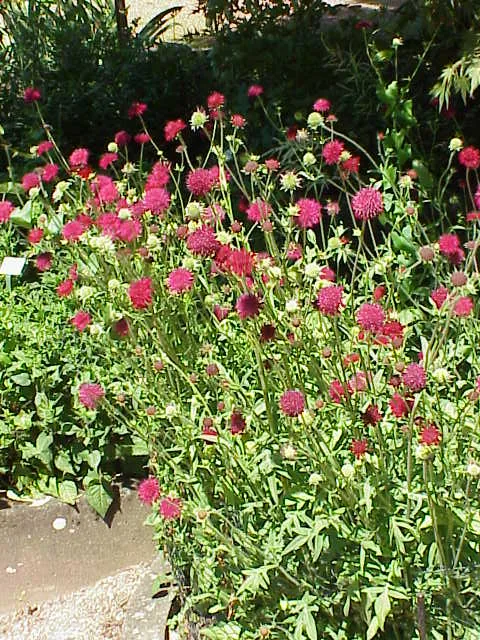
Offer it full sun and lean, well-drained soil, and you will watch crimson pincushions drift over the border all summer.
Full sun
Every 5–10 days
USDA 5–9
18–24 in · 45–60 cm
Overview
If you are just starting out, Knautia macedonica is a forgiving friend to have in the border. It carries small, deep crimson pincushion flowers on slender stems from early summer into fall, and you really cannot go far wrong with it. Sharing a family with the scabious it looks so much like, it comes from the meadows of southeastern Europe and brings a gentle wildflower look that feels right at home in cottage borders and prairie-style plantings.
The best news is how little it asks of you. Full sun and lean, well-drained soil are truly the whole recipe, and once it has settled in the plant takes dry spells in its stride. Try not to spoil it with rich ground or heavy feeding, since that only pushes out soft growth that flops by midsummer, and warm nights make that worse.
Think of it as a short-lived perennial that renews itself, and any clump that fades after a few years is nothing to fret over. The plant sows itself freely, dropping seedlings that step in for the old ones. Leave a few of those volunteers in place and the patch happily keeps itself going for you.
Care
The short version: give it full sun and average, well-drained soil kept on the lean side, water while it is finding its feet and then ease right off once it has settled, and snip the faded flowers through the season to keep more coming.
Light
Give Knautia full sun and it will thank you with sturdier stems and more of those flowers. A little light shade is fine, but anywhere too dim leaves the growth soft and inclined to flop, so brighter is always the kinder choice.
Water
Water young plants to help them settle, then let the top half of the soil dry between drinks, which usually falls around every 5 to 10 days. Once established, the clumps are wonderfully drought tolerant and far happier kept on the dry side than left sitting in soggy ground.
Soil
Average, well-drained soil is all it asks for, ideally leaning neutral to alkaline at a pH of 6.5 to 7.5. Good drainage matters far more than richness, and lean ground actually rewards you with a sturdier, happier plant.
Temperature
This is a tough plant that copes with a wide range, hardy down to about -20°F (-29°C) and taking summer heat up to around 95°F (35°C). It is at its best where the nights stay cool, so if your stems go lax it is usually those warm, muggy nights at work.
Humidity
You do not need to fuss over outdoor humidity, so there is no number to chase. Good air movement is what really counts, since still, humid air in hot regions is what brings on the midsummer flop.
Feeding
This is a light feeder that is quite content in moderately fertile ground. A single spring feed of balanced fertilizer or a scoop of compost is plenty, and doing more than that only encourages weak, floppy growth, so easy does it.
Pruning
Deadhead the spent flowers as they fade and you will keep the bloom rolling from early summer well into fall. In hot climates, cut declining stems back in late summer to tidy things up, then clear away the old foliage in late fall or early spring.
Repotting
Knautia is a garden perennial rather than a container plant, so there is no real repotting to worry about. When a clump grows crowded or begins to decline, simply divide it to keep the plant fresh and vigorous.
Size & spacing
Plants reach about 18 to 24 inches (45 to 60 cm) tall and spread to a similar width. Give each clump roughly that much room so the airy stems have space to breathe and the air can move freely around them.
When to plant
Knautia is hardy from zones 5 to 9 and stays outdoors all year, so you have nothing to bring in. Start your seed indoors in late winter, move the young plants out after the last frost, and the crimson flowers will carry you from July into September before the plant rests for winter.
Northern hemisphere
Southern hemisphere
Typical months for a temperate climate: start earlier in warm zones, later where spring frosts linger.
- Sow: Late winter to early spring, about 6-8 weeks before last frost
- Plant: After last spring frost
- Harvest: July to September (early summer into fall)
Hardiness
USDA hardiness zones: 5–9
Temperature: down to -29°C
Troubleshooting
Knautia is a relaxed, good-natured plant with no serious pests, so the handful of hiccups it has really come down to summer heat and its own eagerness to self-seed. Spot the early signs below and a small, easy fix keeps your patch looking its best.
When summer heat sets in and the stems start to lean
Try not to worry if you see this, because it is simply heat and humidity stress and it happens most in warm southern gardens. Knautia loves nights that cool down, so a spot with full sun and moving air makes a real difference, and a lighter hand with feeding helps too. Rich soil and extra water only soften the growth, so trim the leggy stems and give the plant a chance to come back tidier for you.
Fix:
- Provide full sun and well-drained, only moderately fertile soil
- Avoid overfeeding and overwatering
- Cut back leggy stems to encourage tidier regrowth
- Site in a location with good air movement
Little newcomers popping up all around the parent plant
Here is a happy sign rather than a problem, since Knautia is a cheerful self-seeder and a content plant will drop seedlings around its feet come spring. That is exactly how it keeps itself going year after year, though it can get busy in a neat border. Snip the flowers before they set seed, tuck some mulch over the bed to slow stray seed, and gently pull any extras you would rather not keep.
Fix:
- Deadhead spent flowers before seed sets to limit self-sowing
- Remove unwanted seedlings by hand
- Maintain a layer of mulch to suppress germination
Toxicity
Good news if you share your home with animals: Knautia macedonica is not toxic. It never turns up on the ASPCA list of poisonous plants, and it earns its place as a pollinator favorite rather than something to keep fenced away. You can grow it happily with cats, dogs, grazing animals, and children all around.
Safe for
People · Cats · Dogs · Horses · Rabbits · Livestock · Birds
Cats None
You can relax with cats around this one. A curious mouthful might give a mild tummy upset, the way any plant can if a cat overdoes it, but nothing in the leaves or flowers is actually toxic.
Dogs None
Dogs are welcome near it too. There are no poisonous compounds here, so a pup that grabs a stem or a flowerhead has nothing to fear beyond a passing rumble in the belly.
Horses Safe
Rest easy with horses, since no part of the plant carries any reported toxins.
Rabbits Safe
Rabbits are free to nibble the foliage without any harm, because none of it is poisonous to them.
Livestock Safe
Grazing cattle, goats, and sheep are perfectly fine near it, as it holds no toxins that would affect them.
Birds Safe
Birds are safe here and tend to enjoy the seedheads rather than come to any harm. The plant welcomes pollinators instead of posing any threat.
People Safe
It is gentle to handle and lovely to grow with children close by. A quick hand-wash after gardening is all the caution you ever need.
No special handling precautions reported; routine garden hygiene such as washing hands after handling is sufficient.
Varieties
Most gardeners simply grow the species itself, and it is a lovely choice, but a couple of named selections give you different heights and a broader range of colors to play with.
Melton Pastels
If you would like more height and softer colors, this taller selection climbs to 3 to 4 feet and swaps the deep purple-red of the species for gentle mauve, pink, rose, salmon, and crimson, and it will even flower in its first year from seed.
Mars Midget
For a smaller spot, this compact dwarf keeps its deep crimson-red pincushions low and settles happily at the front of a modest border.
Companions
Knautia's open, see-through habit lets it thread between firmer plants, so it pairs well with upright perennials and grasses that give it something to lean through.
Plant near
Iris pallida: Wisconsin Horticulture Extension recommends interplanting Iris pallida with taller ramblers such as Knautia macedonica.
Ornamental grasses: Airy crimson pincushion flowers weave attractively through grasses and other open perennials in borders and meadow plantings.
How to propagate
You have three gentle, beginner-friendly ways to make more Knautia, whether you let it sow itself, split a tired clump, or root a cutting from a named form.
SeedEasy
Sow indoors late winter to early spring, or allow self-sowing in the garden · One growing season; some selections flower the first year from seed
Seed is the easiest and most natural path, and it is a kind way to keep this short-lived perennial around. Sow indoors in late winter to early spring, or just let the plant sprinkle its own seed where it grows, and you should have flowering plants within a single growing season. A few selections will even reward you with blooms in their first year from seed.
DivisionModerate
Spring or early summer · One season
When a clump gets crowded, lift and split it in spring or early summer to make fresh plants and give an aging one a new lease of life. The divisions settle in over a single season and carry on right where the parent left off, so do not be shy about trying it.
Stem cuttingsModerate
Spring to summer · Several weeks to root
If you have a named selection you adore and want to keep it exactly true, take basal cuttings from new growth in spring or summer instead of trusting seed. The cuttings need several weeks to root, and they grow into faithful copies of the plant you took them from.
Myths
Knautia macedonica is a true long-lived perennial that comes back reliably for many years.
In truth it is a short-lived perennial by nature, so any single plant tends to bow out after a handful of seasons, and that is nothing you did wrong. Its self-seeding is what carries it on, with young volunteers quietly taking over from the plants that fade.
Knautia macedonica is poisonous to pets.
You can set that worry aside, because no toxicity is on record and it never appears on the ASPCA toxic plant list. It is grown simply as a pollinator-friendly ornamental, and it stays safe around cats, dogs, and other animals.