Shrub · Caprifoliaceae
Old Fashioned Weigela
Weigela florida
Give it full sun and one well-timed trim, and this easygoing shrub rewards you with a soft rush of tubular spring flowers.
Full sun
Every 7–14 days
USDA 4–8
6–10 ft · 1.8–3 m
Overview
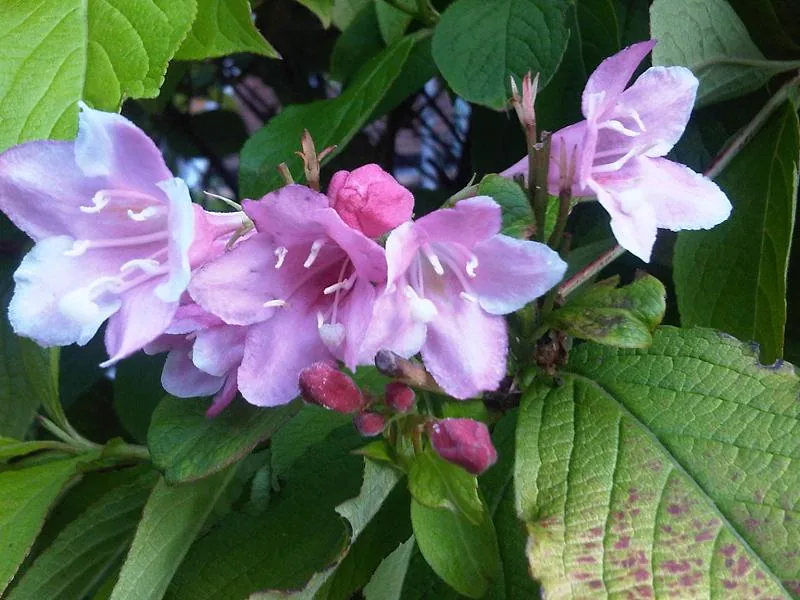
If you are just starting out with shrubs, weigela is a kind place to begin. This deciduous member of the honeysuckle family pours out tubular, rose-pink to red flowers in late spring, right when you want the garden to feel full. Left alone it settles into a soft, arching mound, and the blooms bring in hummingbirds and butterflies without any effort on your part.
You do not need a green thumb to keep it happy. Weigela takes full sun to light shade, forgives almost any soil, and stands up to hard winters down to zone 4. The one thing worth remembering is that it flowers on old wood, so the timing of your pruning is what decides whether next spring is full of bloom, and that is an easy habit to get right.
Do not worry if a large shrub sounds like too much. Breeders have given you plenty of dwarf and reblooming cultivars that suit small beds and containers, many with purple or variegated leaves that stay pretty long after the flowers have gone. There is a weigela to fit almost any spot you have in mind.
Care
The short version: plant weigela somewhere sunny in average, well-drained soil, keep it watered through dry spells while it is young, and save your shaping cuts for just after it blooms. Get that last part right and the rest is forgiving.
Light
Weigela flowers best in full sun, though it copes happily with partial sun or light shade. Try to give it 6 or more hours of direct sun each day. Too much shade is the most common reason the blooms thin out, and it is an easy thing to fix by choosing a brighter spot.
Water
While your shrub is young, water it steadily through that first season so the roots can settle. After that you can ease right off and only water during a drought. Let the top inch or so of soil dry between drinks, which usually works out to every 7 to 14 days when rain is scarce, and know that an established plant handles dry spells well.
Soil
Weigela is not fussy about ground and takes clay, loam, or sandy soil, as long as it drains well and holds average, medium moisture. It is comfortable across a wide pH of 5.5 to 7.5, so you will rarely need to bother amending the bed before planting.
Temperature
This is a tough, reassuring shrub that shrugs off a range from -29°F to 90°F (-34°C to 32°C) across zones 4 through 8. In the coldest gardens the branch tips may die back over winter, but do not lose heart, the plant reliably pushes fresh growth from below once spring returns.
Humidity
Everyday outdoor humidity suits weigela just fine, so there is no reading to track. What helps more is good airflow around the branches, which keeps the leaves dry and the few pests that bother it from settling in.
Feeding
Weigela is a light feeder and easy to please. One helping of slow-release shrub fertilizer in spring carries it through the whole season, and there is no need to feed again unless the growth starts to look weak.
Pruning
This is the part to get right, and it really is simple. Shape the shrub right after the late-spring bloom, because the buds sit on old wood and a later cut would take next year's flowers with it. Then in late winter, thin out a few of the oldest stems along with any dead or winter-damaged wood to keep it fresh and vigorous.
Repotting
Weigela is rarely kept in a pot, and once it is in the ground it never needs repotting, which is one less thing to worry about. If you are growing a dwarf cultivar in a container, simply move it up a size when the roots start circling or peeking out of the drainage holes.
Size & spacing
The full species grows into a generous shrub, 6 to 10 feet (1.8 to 3 m) tall and wider still at 9 to 12 feet (2.7 to 3.7 m) across. Give it room to arch out and be itself, or choose a dwarf cultivar if you are working with a tight spot or a container.
When to plant
Weigela is a woody shrub, so relax, there is no seed calendar to fuss over. Set it out in spring or fall, enjoy the flowers from April into June, and make any shaping cut in the short window just after the bloom fades.
Northern hemisphere
Southern hemisphere
Typical months for a temperate climate: start earlier in warm zones, later where spring frosts linger.
- Plant: Spring or fall
- Harvest: April to June, with sparse repeat bloom in mid to late summer on modern cultivars
Hardiness
USDA hardiness zones: 4–8
Temperature: down to -34°C
Troubleshooting
Most weigela troubles come down to pruning at the wrong moment, a rough winter, or soil that stays too wet or too dry. The good news is that the early signs are easy to read, and a well-timed cut or a small change in watering usually puts things right. Find your symptom below and act before it costs you a season of flowers.
A spring with few or no flowers
If the blooms never showed, the usual reason is pruning at the wrong time, since weigela carries its flower buds on old wood and a cut made in late summer, fall, or winter quietly takes next spring's show with it. Not enough sun, or winter killing off the flowering wood, can leave it bare too. The fix is gentle: prune only right after the late-spring bloom, find it a spot with 6 or more hours of direct sun, and let the healthy old stems be.
Fix:
- Prune only immediately after the late-spring bloom since flowers form on old wood
- Relocate or limb up surrounding plants so the shrub gets 6 or more hours of direct sun
- Remove only dead, winter-damaged wood and leave healthy old stems intact
Brown, lifeless branch tips in spring
This is almost always winter dieback, and it turns up most in colder zones or on a cultivar living near the edge of its hardiness. You can check with ease: scratch the bark and dead wood shows brown and dry with no green underneath. Cut those dead stems back to living growth in late winter and let the shrub fill back in from the healthy lower wood, which it will happily do.
Fix:
- Prune out dead wood back to live, green growth in late winter or early spring
- Let the shrub regrow from healthy lower stems
Wilting, browning leaves and sluggish growth
When the whole shrub looks unhappy, water is usually behind it, whether from a drought or from roots sitting in soggy, poorly drained ground. A shortage of nutrients or salty soil can wear the same tired look. Feel the soil to see which way it leans, water through dry spells, ease the drainage where it stays wet, and offer a slow-release shrub fertilizer if the growth still lags.
Fix:
- Provide regular water during dry spells and improve drainage in soggy sites
- Apply a slow-release shrub fertilizer if a deficiency is suspected
Sticky, speckled, or twisted leaves and shoots
The likely visitor here is mealybugs, which leave little white cottony clusters where the stems meet, though flea beetles will chew at the leaves as well. Have a look under the leaves and at the stem joints to be sure. A firm jet of water sees off the light cases, and insecticidal soap or horticultural oil takes care of the stubborn ones, so this is nothing to fret over.
Fix:
- Wash off light infestations with a strong stream of water
- Treat persistent mealybug infestations with insecticidal soap or horticultural oil per label
- Remove and dispose of heavily infested shoots
Toxicity
You can breathe easy with weigela around the house. It is not on the ASPCA toxic-plant lists and counts as non-toxic to pets, livestock, and people, with nothing in the sap to irritate. The most a hungry pet might feel is a brief, passing stomach upset after a big helping of leaves.
Safe for
People · Cats · Dogs · Horses · Rabbits · Livestock · Birds
Cats None
Cats are safe around weigela, and it is nowhere on the ASPCA toxic list. A curious nibble does no harm at all, though a big mouthful of any leaf might bring on a short spell of stomach upset.
Dogs None
Dogs can chew the leaves without any worry. The most a greedy eater might get is some passing tummy trouble, no different from most greenery in the garden.
Horses Safe
Nothing in weigela can hurt a horse, so you can plant the shrub near a paddock or pasture with an easy mind.
Rabbits Safe
Rabbits are welcome to browse the leaves safely. No part of the plant holds a toxin, so a stray bite is nothing to fret about.
Livestock Safe
Cattle, goats, and sheep are not poisoned by weigela. The shrub is no threat to grazing stock at all.
Birds Safe
Weigela does birds no harm, and its tubular spring flowers even invite hummingbirds in for the nectar.
People Safe
The plant is non-toxic to people, with no known irritant in the sap. It is not grown for eating, so there is no edible part to go looking for.
No special handling precautions; sap is not a known irritant.
Varieties
The plain species is lovely on its own, but the named cultivars are what most gardeners reach for now, and any of them is a friendly choice. These are the ones worth knowing by name.
'Alexandra' WINE AND ROSES
A friendly, compact pick at 4 to 5 foot, loved for its dark purple leaves and a generous flush of reddish-pink flowers each spring.
'Verweig' MY MONET
A little dwarf at just 12 to 18 inches, charming for its variegated pink, cream, and green leaves set under soft pink flowers.
'Tango'
One of the tiniest weigelas, a neat 2 to 2.5 foot mound of purplish leaves that blooms freely come spring.
SONIC BLOOM
An upright rebloomer that opens lipstick-red flowers in May and keeps sending fresh waves right up to frost.
How to propagate
Making more weigela is genuinely easy, and it is a nice confidence builder. There is a quick summer method and a slower dormant-season one, both giving you free plants from a shrub you already own.
Stem cuttingsEasy
Late spring to early summer (late May through early July) · Several weeks to root; a full season to establish
The gentlest way in is a softwood cutting, taken from late May into early July off this season's growth. Choose a shoot that bends freely yet is firm enough to snap when you bend it hard. It roots in just a few weeks and then wants a full growing season to settle in, so a little patience pays off.
Stem cuttingsModerate
Dormant season (late fall to winter) · One growing season
You can also take hardwood cuttings from the dormant stems through late fall and winter. This route is a touch slower and asks for a full growing season before the young plant is truly established, but it is just as forgiving.
Myths
Weigela will poison your cat or dog.
Weigela has never appeared on the ASPCA toxic-plant lists and is treated as non-toxic to both dogs and cats. A pet that gobbles a lot of leaves might get a mild, passing stomach upset, and that is the worst of it, so there is no real cause for alarm.
Weigela can be pruned whenever you like with no loss of bloom.
Because weigela forms its buds on old wood, a cut in late summer, fall, or winter carries off next spring's flowers. Shape it right after it finishes blooming and you will keep that yearly show coming without fail.