Herb · Lamiaceae
Thyme
Thymus vulgaris
Give thyme a sunny spot and lean, dry soil, and this easygoing herb will thank you with fragrant sprigs for years.
Full sun
Every 7–14 days
USDA 5–9
6–12 in · 15–30 cm
Overview
If thyme is one of the first herbs you try, you have chosen a forgiving teacher. This little shrub comes from the Mediterranean and sits in the mint family, growing as a hardy perennial that returns on its own each spring. Ask it for sun and soil that drains freely, and it will overlook most beginner slip-ups.
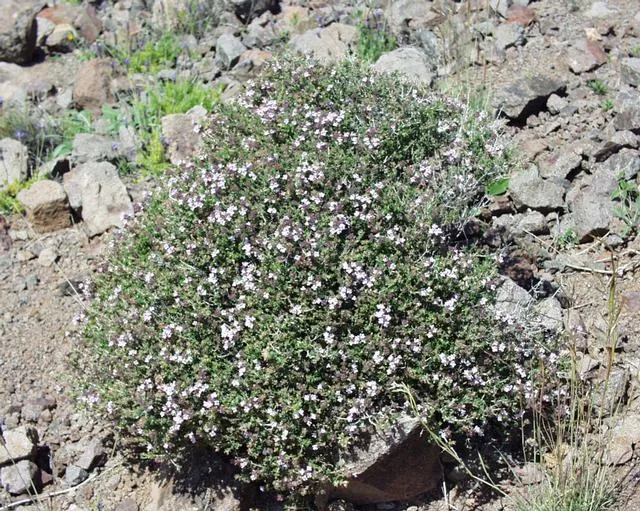
It never gets big or demanding. Thyme tops out at just 6 to 12 inches (15 to 30 cm) and spreads into a soft, fragrant cushion over time. Come early summer it lifts up tiny pink to lilac flowers that bees flock to, and you are welcome to snip a few sprigs whenever a recipe calls, though they taste their fullest just before those flowers open.
The one place new growers stumble is how thyme likes to be treated, since it runs opposite to most herbs. It prefers lean, gritty ground and a dry stretch between waterings, not the rich beds and steady moisture other herbs enjoy. Keep it on the hungry side and it stays fragrant and full of flavor, and even if you overwater once in a while, easing back usually brings it around.
Care
The short version: thyme wants full sun and lean, sharp-draining soil, and it only needs water after the top half of the soil dries down. It shrugs off drought, feeds lightly, and a gentle trim each year keeps it bushy rather than woody.
Light
Thyme loves full sun, ideally at least six hours of direct light each day, and all that brightness is what builds up the oils behind its flavor. A little partial sun is fine, but too much shade leaves it thin and short on taste, so pick your sunniest spot and it will thank you.
Water
Let the top half of the soil dry out before you water again, which usually lands somewhere around every 7 to 14 days. Once it is settled in, thyme is truly drought-tolerant, and the one thing it cannot forgive is soggy ground, which leads straight to root rot, so err on the drier side.
Soil
Plant thyme in light, sandy or gravelly loam, and do not worry about making it rich, because leaner really is better here. It stays easygoing about pH across a wide 6.0 to 8.0 range, so the thing to get right is sharp drainage rather than feeding the soil.
Temperature
This is a genuinely tough little herb, comfortable anywhere from 0°F to 95°F (-18°C to 35°C). It takes winter cold within that range in stride and handles summer heat too, though a long hot, dry spell can tempt spider mites, so keep an eye out then.
Humidity
Coming from dry Mediterranean hillsides, thyme is happiest in low humidity of around 30% to 50%. Damp, stagnant air can still bring on disease, so give the plant a little elbow room and let the breeze move through it.
Feeding
Go easy at the table, because thyme is a light feeder and overfeeding actually dulls its flavor. One gentle spring helping of balanced fertilizer or a scattering of compost is really all it asks for the whole year.
Pruning
A light shear after flowering and again in early spring keeps thyme soft, bushy, and slow to turn woody. Just steer clear of cutting back into the old bare wood, since the plant is slow to sprout again from there, so keep your trims to the leafy growth.
Repotting
Refresh potted thyme with new soil every 2 to 3 years, or a bit sooner if roots start circling the pot, poke out the drainage holes, or growth quietly stalls. A cozy pot suits it fine, but a truly rootbound one leaves the plant hungry, so give it more room when that day comes.
Size & spacing
Thyme stays neat and small, about 6 to 12 inches (15 to 30 cm) tall and 8 to 16 inches (20 to 40 cm) across. Leave a little space between plants so air can drift between the mounds, which keeps the leaves dry and the plant in good health.
When to plant
Thyme is tough in the cold, hardy all the way down to 0°F (-18°C), so across zones 5 to 9 it happily stays outside all year. If you like starting your own, sow seeds indoors 6 to 10 weeks before your last frost, move the young plants out in spring once the chill is gone, and look forward to those little flowers in early summer.
Northern hemisphere
Southern hemisphere
Typical months for a temperate climate: start earlier in warm zones, later where spring frosts linger.
- Sow: 6-10 weeks before last frost
- Plant: spring after danger of frost has passed
- Harvest: Tiny pink to lilac flowers in early summer, attractive to bees; harvest sprigs anytime, best just before flowering for peak flavor.
Hardiness
USDA hardiness zones: 5–9
Temperature: down to -29°C
Troubleshooting
Thyme rarely gives you real trouble, and when it does the cause is almost always too much water or a skipped trim. Catch the early signs below and you can usually put things right long before the plant suffers.
Sudden wilting with dark, soft stems
When thyme wilts and its stems turn black and mushy, the culprit is almost always root rot from staying too wet, not something catching in the air. Waterlogged soil smothers the roots until they go soft and brown. Do not panic though, since easing off the watering, moving it into gritty, fast-draining soil, and trimming away anything already gone to mush will often pull a plant caught early back around.
Fix:
- Reduce watering
- Improve drainage or repot into gritty, well-draining soil
- Remove affected growth
Pale, speckled leaves with fine webbing
Hot, dry air is what tempts spider mites, tiny pests that sip at the little leaves until they look dusty and washed out. The telltale sign is a thin webbing strung under the foliage. A firm rinse with water knocks most of them loose, and a follow-up with insecticidal soap takes care of any that linger, so this one is very fixable.
Fix:
- Rinse foliage with water
- Apply insecticidal soap if needed
Woody base with leaves only at the tips
Every thyme plant grows woody and leggy as it ages, and it happens faster when the yearly trim gets skipped. The base hardens and browns while the fresh leaves retreat to the very tips. A light shear each spring and again after flowering keeps it full and young, and once the wood is truly bare you can simply start a fresh plant from a cutting, which feels less like a loss and more like a new beginning.
Fix:
- Trim lightly each spring and after flowering
- Replace or propagate new plants every 3-4 years
Toxicity
Here is a relief if you share your home with pets or little ones: thyme is completely non-toxic. The ASPCA lists common thyme as safe for cats and dogs, and the leaves you cook with do no harm to people or animals. The only bottle to tuck away is concentrated thyme essential oil, a much stronger product that can mildly upset a pet's stomach.
Safe for
People · Cats · Dogs · Horses · Rabbits · Livestock · Birds
Cats Safe
The ASPCA lists thyme as non-toxic, so a curious cat that nibbles a sprig will be perfectly fine. The only thing to keep up high is concentrated thyme essential oil, which can mildly unsettle a cat's stomach.
Dogs Safe
Dogs can chew or graze on the leaves without any harm at all. A big swallow of the essential oil is another story and might leave a dog briefly queasy, so keep that little bottle somewhere safe.
Horses Safe
Thyme is safe for horses to browse, and the leafy herb causes no trouble in the amounts a horse would ever actually eat.
Rabbits Safe
Rabbits do well with fresh thyme, and a few sprigs make a welcome, wholesome addition to their greens.
Livestock Safe
Grazing animals like goats and sheep can eat thyme with no ill effect, since it is a fragrant kitchen herb rather than anything poisonous.
Birds Safe
The plant is no danger to pet or backyard birds that peck at its foliage.
People Safe
Thyme is a kitchen staple, safe to cook with and enjoy in any normal amount. Only the concentrated essential oil needs care, and it should never be swallowed undiluted.
Concentrated thyme essential oil is a different product and can be irritating; the plant and its leaves are non-toxic.
Varieties
A handful of culinary thymes turn up again and again, and any of them is a friendly place to start. Here are the ones worth knowing by name.
'English' thyme
This broad-leaved kind is the dependable one most cooks reach for first, carrying the classic, full thyme flavor you picture.
'French' thyme
Its leaves come narrower and grayer, and the taste is a little sweeter and more refined than English thyme, a lovely one to grow into next.
Lemon thyme (Thymus × citriodorus)
A close hybrid cousin counted among the cooking thymes, this one carries a bright, cheerful lemon scent in its leaves.
How to propagate
Making more thyme is easier than most beginners expect, and there are gentler, quicker routes than fussing with seed.
Stem cuttingsEasy
Late spring to early summer · 4-6 weeks to root
Cuttings are the surest way to make a copy of a thyme you already love. In late spring or early summer, snip a few soft, non-flowering shoots, settle them into a gritty, well-draining mix, and give them the next 4 to 6 weeks to grow roots.
DivisionEasy
Spring or early fall · A few weeks
If you already have an established clump, you can simply divide it. Lift it in spring or early fall, gently tease it into sections with roots kept on each piece, and replant them to settle in over a few weeks.
SeedModerate
Spring · Several weeks to germinate, slow to establish
Starting from seed in spring works too, though it does ask for patience. Germination can drag on for several weeks and the little seedlings are slow to fill in, which is why most gardeners lean on cuttings or division instead.
Myths
Thyme needs constant watering and rich soil to do well.
Quite the opposite is true. This Mediterranean herb is made for lean, dry ground and takes drought in stride once it has settled in. Shower it with water or set it in rich, fluffy soil and you tend to get root rot along with soft, watery growth that has little taste. Thyme is at its most fragrant when you keep it a touch hungry and a touch dry.