Ornamental · Brassicaceae
Stock
Matthiola incana
Start stock while the weather is still cool, give it full sun, and it rewards you with tall, sweetly scented flower spikes.
Full sun
Every 3–7 days
80–100 days
USDA 6–10
Overview
Stock is one of those cottage-garden flowers that quickly makes a beginner feel like a real gardener. It grows dense, fragrant spikes with a clove-like sweetness that travels on cool air, and it sits in the cabbage family, Brassicaceae. Treat it as a cool-season annual, happiest in the soft weather of spring or fall rather than high summer.
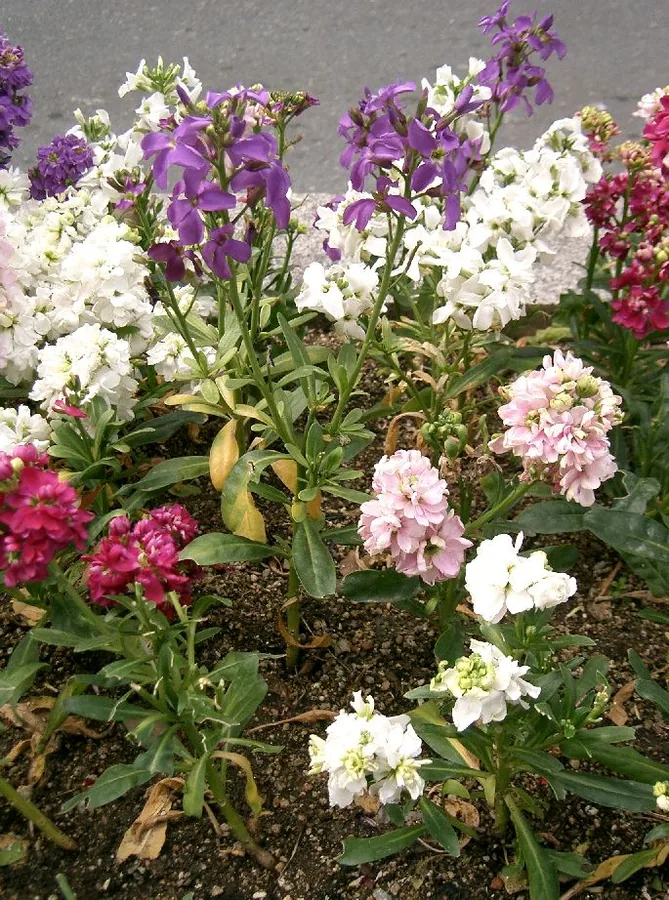
Expect flowers in pale pinks, soft purples, cream, and white, on plants that reach roughly 1 to 3 feet (30 to 91 cm) tall. Want blooms for the house? The taller kinds hand you long, sweet-smelling stems that hold up beautifully in a vase, while shorter strains look lovely edging a path or filling a pot.
Here is the single thing that truly matters, and it is easy to manage: stock needs cool conditions as it forms its buds. Set young plants out early enough to catch that chill, keep steady moisture at the roots, let them sit in full sun, and weeks of bloom follow. Miss that cool window and let heat come first, and the plant just stalls and fades, though timing is a gentle thing to correct the next time around.
Care
The short version: give stock full sun and cool weather, keep the ground evenly moist and fertile without being acidic, and plant early enough that it flowers before summer heat arrives. Do that and this forgiving annual rarely lets you down.
Light
Aim to give stock full sun, which builds the sturdiest stems and the most generous bloom. A touch of partial shade is fine, especially where spring warms up quickly, but heavy shade tends to leave plants soft, leggy, and shy on flowers.
Water
Try to keep the ground evenly moist, and do not let stock go dry during its cool-season push. Watering about every 3 to 7 days works for most gardens, a little more in dry stretches, and pouring at the base instead of over the leaves helps keep mold away.
Soil
Set stock into fertile, well-drained soil, be it loam, sand, or clay, improved with some organic matter. It is happy at a pH of 6.0 to 8.0, so lean a little alkaline rather than acidic, since sour ground is one thing it truly dislikes.
Temperature
Stock is a cool-weather flower at heart. It shrugs off light frost and does its best in the cool of spring or fall, coping across roughly 28°F to 81°F (-2°C to 27°C), then slipping quickly once the heat climbs past the top of that range.
Humidity
Everyday outdoor humidity gives stock no trouble, so there is no target to chase. What really counts is good airflow, since plants crowded together in damp weather are just how white mold gets its start.
Feeding
Mix a balanced, general-purpose fertilizer into the bed as you plant, then top it up about once a month while growth is strong. That gentle, steady feeding keeps new spikes coming along without forcing soft, floppy stems.
Pruning
There is very little pruning to worry about here. Pinch or trim away faded spikes to keep things neat, and if you are cutting for a vase, gather the stems while they are still fresh. Grown as a short-lived annual, stock asks for nothing else.
Size & spacing
Grown out, plants reach 1 to 3 feet (30 to 91 cm) tall and fill about 9 to 18 inches (23 to 46 cm) across. Leave each one that much elbow room so air can move between them and mold never gets comfortable.
When to plant
Because stock lives and dies by cool weather, its calendar matters more than most flowers, yet the rhythm is easy to keep. Sow seed indoors during late winter, move seedlings outdoors once early spring arrives while the air is still cool, and you get flowers through late spring and into the start of summer, before heat calls time.
Northern hemisphere
Southern hemisphere
Typical months for a temperate climate: start earlier in warm zones, later where spring frosts linger.
- Sow: 6 to 8 weeks before the last spring frost; seed germinates in 7 to 14 days at 65 to 75°F (18 to 24°C)
- Plant: Transplant in early spring while weather is still cool; plants tolerate light frost. In mild-winter regions plant in fall or late winter.
- Harvest: Blooms May through July under cool conditions; cool exposure near 50 to 55°F (10 to 13°C) is needed to trigger flowering
Hardiness
USDA hardiness zones: 6–10
Temperature: down to -23°C
Troubleshooting
Nearly every problem with stock traces back to one of two causes: soggy, crowded plantings that welcome rot, or weather that does not suit a cool-season flower. The good news is that the early clues are easy to spot, and adjusting spacing, support, or timing usually turns things around before a planting is lost.
White mold with soft, collapsing stems
What you are seeing is white mold, caused by a fungus named Sclerotinia that moves in during the mild, rainy, humid stretches stock lives through. Do not feel bad about it, and just pull and bin any plant wearing that cottony growth and soft, water-soaked rot. Give the survivors room, water low at the base, and keep air moving so the spores find nowhere damp to settle.
Fix:
- Remove and discard affected plants
- Improve air circulation by proper spacing
- Avoid overhead watering and excess moisture
Plants fading as the weather warms
Remember that stock is a cool-season flower, so heat is what ends its run. Once the thermometer climbs past 80°F (27°C), blooming stops and the plants slide downhill quickly. A heat-struck planting cannot be rescued, so lean on timing instead, growing through spring or fall and cutting your flowers before the hot weather truly settles in.
Fix:
- Grow as a cool-season crop and harvest before summer heat
- Time plantings for spring or fall cool periods
Lush leaves but no flower spikes
If stock is all lush green growth with no flower spikes in sight, it likely missed the cool spell that flips it into bloom. Young plants want a stretch near 50°F to 55°F (10°C to 13°C) while they are still small. Give them that gentle chill at the right leaf stage, or reach for early varieties that flower after a shorter cool window.
Fix:
- Expose young plants to cool temperatures near 50 to 55°F (10 to 13°C)
- Choose early varieties for short cool windows
Floppy stems soon after planting out
No need to worry about disease here, because this is simply lodging. Those tall, top-heavy spikes tip or lie flat once a gust of wind or a heavy watering leans on them. Lay a sheet of horizontal netting when you plant and give each one enough space, and the stems will climb up straight through the mesh.
Fix:
- Install a layer of horizontal support netting
- Provide even moisture and avoid overcrowding
Toxicity
You can relax with this one. Stock sits on the ASPCA list of non-toxic flowers, so it holds no danger for cats, dogs, or the other creatures that wander a garden, and its fragrant blooms are even edible. Grow it wherever pets and children play.
Safe for
People · Cats · Dogs · Horses · Rabbits · Livestock · Birds
Cats None
Kind to cats. Stock sits on the ASPCA list of non-toxic flowers, so a curious nibble will not harm your cat.
Dogs None
Easy around dogs. Stock holds no known toxin, though a dog that gulps a big mouthful of any plant might get a brief upset stomach.
Horses Safe
Horses are safe grazing beside stock, as the plant carries nothing that would harm them.
Rabbits Safe
Rabbits do just fine with stock, and its leaves and flowers cause no harm if one stops to browse.
Livestock Safe
Cattle, goats, and sheep are in no danger from stock growing nearby.
Birds Safe
Birds may peck at the plant or its seeds with no ill effect.
People Safe
Stock is gentle for people too, and its sweetly scented flowers can even be used as an edible garnish.
Varieties
There are a handful of stock strains to choose from, grouped mainly by how quickly they flower and how much chill they will shrug off. A few are especially worth getting to know.
Harmony Series
This series, which includes Harmony Cherry Blossom and Harmony Purple, was bred to cope with warmer climates such as Florida.
Brompton Stock
A biennial-type strain many gardeners carry through winter to enjoy a wave of flowers the next spring.
Ten Weeks Stock
A quick annual that lives up to its name, opening flowers about ten weeks from sowing.
How to propagate
Stock starts easily from seed, and the real knack is not in getting it to sprout but in timing the cool spell that coaxes a leafy plant into flower.
SeedModerate
Sow indoors 6 to 8 weeks before the last frost, or in seedling trays for transplanting; germinates in 7 to 14 days at 65 to 75°F (18 to 24°C) · 30 to 50 days to reach transplant size
Stock grows from seed, and it is a friendly place to begin. Start it indoors 6 to 8 weeks before your last frost, and the seed wakes up in 7 to 14 days at 65°F to 75°F (18°C to 24°C), then needs another 30 to 50 days to reach transplant size. Sow a fresh pinch every couple of weeks to spread the bloom across the season, and remember to give the young plants their cool spell so they flower.
Myths
Stock blooms are poisonous and risky to have near cats and dogs.
Good news for pet lovers, since the ASPCA includes stock (Matthiola incana) on its roster of non-toxic flowers, the sort that shows up safely in bouquets. It is not poisonous to cats or dogs, so you can grow it, cut it, and bring it indoors without a second thought.
As long as it gets plenty of sun, stock will flower in any season.
Sunshine on its own is not enough. Stock is a cool-season plant that needs a cool spell to set buds, and it comes apart once summer heat rises past about 80°F (27°C). Plant it for spring or fall, and leave the hottest months out of the plan.