Vegetable · Cucurbitaceae
Pumpkin
Cucurbita pepo
Give a pumpkin full sun, rich soil, and space to wander, and even a first try can fill the garden with fruit.
Full sun
Every 3–7 days
64–95°F · 18–35°C
90–120 days
Overview
A big, sprawling pumpkin patch can look intimidating, but the plant behind it is gentle with beginners. It belongs to the squash family, grows as a frost-tender annual across most of the country, and asks for warm weather above all else. Those long runners creep out over the soil and, come the end of the season, carry big fruit wrapped in a hard rind. Offer full sun, ground that is rich and drains well, and enough room to roam, and a vine will forgive most early mistakes.
Picking a type is the fun part, and there is no wrong choice. Carving pumpkins are the medium, round, strong-handled ones for the porch, the sweeter pie types stay small and dense for baking, and the giants can swallow hundreds of square feet to raise a single huge fruit. Whatever you choose, they all love warmth and drink plenty of water, so once you learn one you can grow them all. That makes pumpkins a kind plant to start with.
The day-to-day care stays light, so the main thing to get right is timing. A pumpkin wants a long, warm stretch of 90 to 120 days to go from seed to a hard, fully colored fruit, which means planting once the last frost has passed and harvesting before the next one arrives. Keep the soil steadily moist and let the bees do their work, and most of the crop will make it home. There is real room for error here, so relax and enjoy the growing.
Care
The short version: give pumpkins full sun, deep and fertile soil, and plenty of space for the vines to wander. Keep the ground evenly moist as the fruit fills out, feed once at planting, and let the bees or a gentle touch of your own hand set the fruit. None of it is hard, and small slips rarely spoil the harvest.
Light
Pumpkins want as much sun as they can get, and shade is not something they put up with. A wide, bright, open spot fuels the leafy growth and steady flowers that eventually become your crop, so hand them the sunniest corner you have.
Water
Try to keep the soil evenly moist, especially while the flowers are setting and the fruit is swelling. Water deeply enough to soak the top 6 inches (15 cm), and aim at the ground rather than the leaves and fruit, which helps keep disease from taking hold. If you miss a day during a short hot spell, do not fret, since an established vine handles a little dryness just fine.
Soil
Give pumpkins a home of deep, rich loam that is packed with organic matter and drains freely. They are happiest when the pH sits between 6.0 and 6.5, and because they eat heavily, the more you can enrich the bed beforehand, the more the plant will reward you.
Temperature
Warmth is where pumpkins feel at home, somewhere around 64°F to 95°F (18°C to 35°C), and frost at either end of the season is the one thing they cannot forgive. Cold soil will simply hold a seed back, so there is no rush; wait for real warmth and the plant will thank you with a quicker, stronger start.
Humidity
Whatever humidity your garden happens to have is perfectly fine, and there is no number to chase here. What matters more is good airflow, since leaves that stay crowded and damp are the ones powdery mildew likes to settle on, so a little breathing room goes a long way.
Feeding
Mix a balanced fertilizer such as 5-10-10 into the bed before you plant, then follow with a side-dressing of calcium nitrate once the first blooms show. That gentle head start carries the plant through the long, hungry run of vine and fruit still to come, and it is really all the feeding a pumpkin needs.
Pruning
Good news for anyone nervous with the shears: everyday pumpkins ask for no pruning at all, though you are free to steer a wandering vine gently back where you want it. Only growers chasing a giant bother to thin each plant to one or two fruit and pinch off the vine tips, sending every bit of energy into the pumpkin they keep.
Size & spacing
The plants themselves stay low, only about 12 to 18 inches (30 to 45 cm) tall, but do not let that fool you, because the vines can run anywhere from 6 to 20 feet (1.8 to 6 m) wide. Give each one all the open ground you can spare, since packing them in cuts the airflow and hands disease an easy opening.
When to plant
Getting the timing right is the kindest thing you can do for a pumpkin, and it is not complicated. Where summers run short, you can start seed indoors in late April for a head start. Move plants outdoors from late May into early July, once the soil has warmed past 60°F (16°C) and frost is behind you, then gather your fruit from late summer into fall as the rind hardens and the stem begins to dry.
Northern hemisphere
Southern hemisphere
Typical months for a temperate climate: start earlier in warm zones, later where spring frosts linger.
- Sow: Late April (about 2-3 weeks before transplanting), where the season is short
- Plant: Late May to early July, after all danger of frost has passed and soil at 4-inch depth is above 60°F
- Harvest: Harvest in late summer to fall when rind is hard, fully colored, and the stem begins to dry
Hardiness
USDA hardiness zones: 3–9
Temperature: down to -40°C
Troubleshooting
Most pumpkin worries show up on the vines, the leaves, or the flowers, and behind almost all of them sits a pest, a fungus, or a simple pollination hiccup. The good news is that catching a problem early usually makes it easy to fix. Find the symptom that matches yours below, then step in gently before a vine gives out.
A vine suddenly wilts and leaves sawdust-like frass at its base
Do not panic, because this is almost always the squash vine borer, a plump white caterpillar tunneling inside the stem right above the soil line. You can often save the vine: slit the stem lengthwise beside the hole, lift the borer out, and mound moist soil over that spot so the stem can root again. If instead a cut stem stretches sticky strands when you press and pull it apart, the trouble is bacterial wilt carried by cucumber beetles, and that vine is best removed.
Fix:
- Slit the stem and remove the borer, then bury that node in moist soil to encourage new roots
- Remove and destroy severely infested vines
White powdery patches creeping across the leaves
Those dusty patches are powdery mildew, a fungus that thrives on warm days, cool nights, and crowded leaves, and it tends to hit late-planted crops the hardest. A quick test settles any doubt, since the talc-like coating wipes off where a harmless mineral film would not. Pull the worst-hit leaves, open the patch up so air can move through, and only reach for a labeled fungicide if it keeps spreading.
Fix:
- Improve air circulation and apply a labeled fungicide if needed
- Remove heavily infected leaves
Flowers fall or tiny fruit shrivels before it sets
Take a breath, because some dropped flowers are normal and not a sign of failure. The male flowers open first on plain stems and fall away once their pollen is spent, while only the female flowers, each with a tiny pumpkin already tucked at the base, go on to fruit. When those little fruits shrivel instead, weak pollination is usually to blame, so shift pollen from a male bloom to a female one by hand in the early morning and keep insecticides off the plant while it flowers so the bees keep visiting.
Fix:
- Wait for female flowers to open and ensure pollinators are active
- Hand-pollinate by transferring pollen from male to female flowers in early morning
Wilting, scorched leaves with bugs gathered on the stems
Two familiar pests cause most of this, and both are manageable once you spot them. Squash bugs are flat and shield-shaped and tuck bronze egg clusters under the leaves, while cucumber beetles wear yellow-and-black stripes or spots and spread disease as they nibble. Pick the adults off by hand, squash any egg clusters you find, and hold a labeled insecticide in reserve for a heavy outbreak, keeping it off the plant while it is in bloom.
Fix:
- Handpick adults and crush egg masses
- Apply a labeled insecticide for heavy infestations, avoiding bloom periods
Toxicity
Here is one less thing to worry about: pumpkin is completely safe. Every part you would come across, the flesh, the seeds, the flowers, and the young leaves, is edible, and there is nothing on the plant to keep away from pets, livestock, or curious children. Plain cooked pumpkin is so harmless that it turns up as an ingredient in pet food.
Safe for
People · Cats · Dogs · Horses · Rabbits · Livestock · Birds
Cats None
Cats are safe around pumpkin. A little plain cooked flesh makes a gentle addition to the bowl, and you will even find it listed in some commercial cat foods.
Dogs None
Dogs can enjoy pumpkin with no worry at all. A spoonful of plain cooked pumpkin is a well-loved, gentle way to ease an upset tummy.
Horses Safe
Horses do just fine with a bit of pumpkin now and then, since there is nothing toxic in the flesh, seeds, or vines to trouble them.
Rabbits Safe
Rabbits can safely nibble a little pumpkin and even its leaves, though the sweet flesh is best offered only now and then as a treat.
Livestock Safe
Cattle, goats, and sheep tuck into pumpkins happily, and spare fruit is often tossed out whole for them to graze on.
Birds Safe
Backyard hens are delighted to peck at pumpkin flesh and seeds, and none of it will do them any harm.
People Safe
People have nothing to avoid here, since the flesh, seeds, flowers, and tender young leaves are all good to eat.
No special handling toxicity concerns; the flesh, seeds, flowers, and young leaves are edible to people.
Varieties
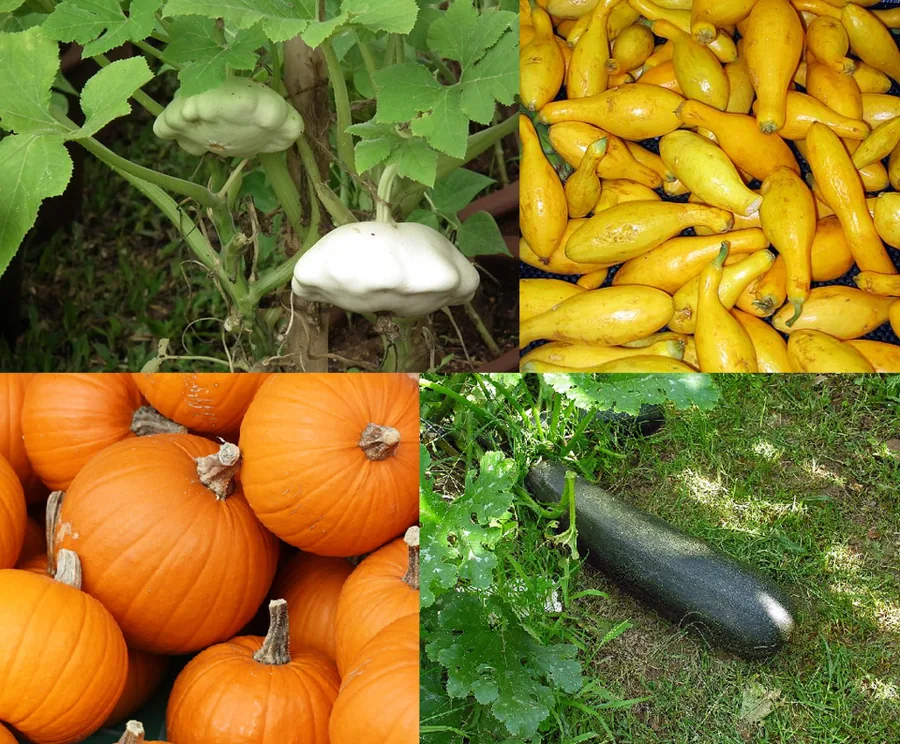
Pumpkins come in more shapes and sizes than you might expect, but almost all of them settle into a handful of familiar groups. Knowing these few makes choosing a seed packet feel a lot less daunting.
Jack-o'-Lantern types (Cucurbita pepo)
These are the friendly, medium-sized, round orange pumpkins with a strong handle, bred first and foremost for carving.
Pie/Sugar pumpkins (Cucurbita pepo)
Smaller, sweeter, and denser inside, these are the ones a cook reaches for when a pie or a batch of baking is on the way.
Miniature/ornamental pumpkins (Cucurbita pepo)
These little fruits grow on tidy, compact plants set about 2 feet apart, and they are raised mostly to decorate the porch.
Giant pumpkins (Cucurbita maxima)
The giants are a project of their own, needing 400 or more square feet of room per plant and reaching record size only when the grower trims each vine down to one fruit.
Companions
Pumpkins do well beside the tall crops and pest-pulling flowers of the old Three Sisters tradition, and poorly beside plants that fight them for the same food and water.
Plant near
Corn: Classic Three Sisters partner; cornstalks provide vertical structure while sprawling pumpkin vines shade the soil and suppress weeds.
Beans: Three Sisters partner; beans fix nitrogen that benefits the heavy-feeding pumpkin.
Nasturtium: Used as a companion to help draw and divert squash pests away from the vines.
Keep apart
Potato: Competes heavily for nutrients and water and shares pest/disease pressure, making it a poor neighbor for sprawling pumpkins.
How to propagate
Pumpkins grow from seed and little else, which keeps starting them refreshingly simple. The one thing to be tender about is their roots, so a gentle hand at transplanting is all the extra care they ask.
SeedEasy
Direct sow after the last frost when soil is above 60°F, or start indoors 2-3 weeks before transplanting · Seeds germinate in about 7-10 days; vines establish over several weeks
Starting pumpkins is about as easy as gardening gets: tuck the seeds roughly an inch deep into warm soil and wait. You can sow straight into the garden once the ground has climbed past 60°F (16°C), or, where the season is short, start them indoors 2 to 3 weeks before you mean to transplant. Seedlings usually appear in about 7 to 10 days and the vines take a few weeks to spread out. Their roots dislike being disturbed, so handle young plants gently and keep the rootball as intact as you can.
Myths
Pumpkin will poison your dog or cat.
There is nothing to fear here. Pumpkin is a plain, edible vegetable that never appears on the ASPCA list of toxic plants, and a little plain cooked pumpkin is perfectly safe to share with both dogs and cats. In fact it already shows up in plenty of commercial pet foods.
If flowers keep dropping, the plant must be failing.
Watching blooms fall can feel discouraging, but it is exactly how the plant is meant to work. The male flowers open first and drop away on purpose, having done their one job of supplying pollen, while only the female flowers, the ones already carrying a small pumpkin at the base, ripen into fruit. So early flower drop is a healthy sign, not a warning.