Tree · Juglandaceae
Pecan
Carya illinoinensis
Give it room, full sun, and a pollination partner, and a pecan will shade your yard for generations to come.
Full sun
Every 7–14 days
USDA 6–9
66–131 ft · 20–40 m
Overview
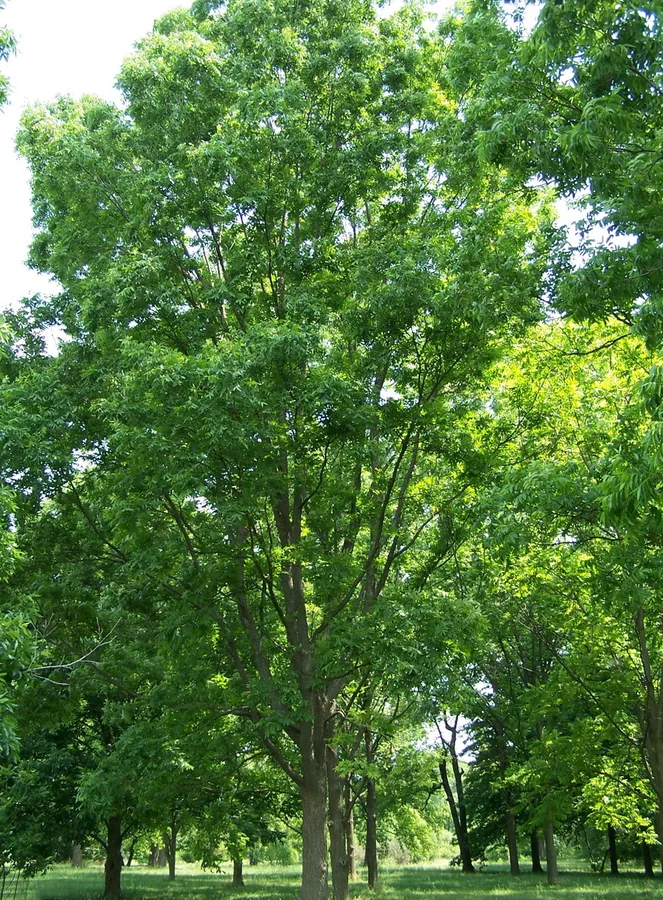
A pecan is a long-lived shade tree that quietly hands you a nut crop as a bonus, and it asks less of you than its size might suggest. It belongs to the walnut family and comes from the river valleys of the south-central United States, where it grows into a broad, towering canopy. When you plant one you are planting for the decades ahead, since a healthy tree can stand for a hundred years or more.
The first thing to plan around is simply how big it gets, and that part is easy to get right. A grown pecan reaches 66 to 131 feet (20 to 40 m) tall with a spread to match, so it wants open ground set well back from houses, walks, and power lines. Its wood is brittle and can drop limbs in ice and wind, which is one more kind reason to give it plenty of room.
Nuts take a little patience and a partner, and that is nothing to be anxious about. Pecans are wind-pollinated and stagger their pollen and flowers, so a lone tree pollinates itself poorly, which is why two compatible cultivars crop far better together. Add the tree's fondness for zinc and its unhurried path to a first harvest, and you will find a pecan rewards the gardener who is happy to think in years rather than seasons.
Care
The short version: give it full sun and deep, well-drained soil, with plenty of room for a huge tree. Water deeply but not often, feed with nitrogen and zinc through the growing season, and plant a second cultivar nearby so it can pollinate.
Light
Pecans want full sun to crop well, ideally 8 or more hours a day, and giving them that is the single kindest thing you can do. A young tree will put up with a little partial sun, but heavy shade leaves you with a thin canopy and few nuts.
Water
Water deeply but not often, letting the top half of the root zone dry out between good soakings. Young trees settle in best with regular deep watering, and even a mature tree welcomes a long drink during nut fill and a late-summer dry spell. Shallow, frequent sprinkling ends up doing more harm than good, so there is no need to fuss over it daily.
Soil
Give a pecan deep, fertile, well-drained sandy loam to loam and it will be content. It takes the odd flood in stride but rots in standing water, and it likes a pH between 6.0 and 7.0, which happily keeps zinc within reach of the roots.
Temperature
Pecans handle a wide swing, from about -4°F to 104°F (-20°C to 40°C), which suits the long, hot summers they lean on to ripen their nuts. That deep tolerance for cold lets them ride out winter safely once they are dormant.
Humidity
These trees do just fine across 40% to 70% humidity, so there is truly no number to chase outdoors. Warm, humid air does invite scab, which is why airflow and resistant cultivars matter far more than the reading itself.
Feeding
Feed from early spring through early summer with a balanced nitrogen fertilizer, then add zinc by soil or foliar spray. A zinc shortage is common in pecans and shows up as rosetted, crinkled new leaves, so making it part of the routine spares you that headache.
Pruning
Prune in late winter while the tree is dormant, and keep it simple. Train a young tree to one central leader and take out crossing, dead, or weak limbs; a mature tree needs little more than a bit of deadwood cleared away.
Repotting
Field-grown pecans are not repotted, and a deep taproot makes them tricky to move, so plan the spot with care. Shift young nursery stock just once while dormant, and keep an eye on container trees for circling roots, stalled top growth, or soil that dries too fast.
Size & spacing
Plan for a giant, and it will thank you for the elbow room. A pecan climbs to 66 to 131 feet (20 to 40 m) tall with a spread of 39 to 75 feet (12 to 23 m), so set it well back from buildings and lines and comfortably apart from other trees.
When to plant
Pecans go into the ground while they are still sleeping, and the timing is forgiving. Set young dormant trees out in late winter to early spring once the hardest freezes are behind you, and the catkins will follow in spring. The nuts come along late, ripening on the tree from October into November.
Northern hemisphere
Southern hemisphere
Typical months for a temperate climate: start earlier in warm zones, later where spring frosts linger.
- Plant: late winter to early spring while dormant, after the worst freezes
- Harvest: wind-pollinated catkins and flowers in spring; nuts ripen and are harvested October through November
Hardiness
USDA hardiness zones: 6–9
Temperature: down to -23°C
Troubleshooting
Most pecan troubles come down to a wet-weather disease, a hungry tree, or a few sap-feeding insects, and none of them need to rattle you. Spot the signs early on the leaves and the swelling nuts and you have every chance to step in before a season's crop is at risk. Match what you are seeing below, then act while your effort still counts.
Dark sunken patches on leaves and shucks while young nuts fall
Take heart, because this common trouble has a clear name and a clear answer: it is pecan scab, a fungus that thrives in warm, damp air and troubles growers most across the wet Southeast. You can stay ahead of it by keeping to a protective fungicide schedule, opening the canopy with sensible spacing and pruning, and leaning on scab-resistant cultivars where the summers turn muggy.
Fix:
- Apply recommended fungicides on a protective schedule during the growing season
- Improve air movement by proper spacing and pruning
- Plant scab-resistant cultivars in humid regions
Puckered, yellow-flecked new leaves crowded into little rosettes
Don't worry, because this simply means your tree is hungry for zinc, a shortage that shows up readily on sandy or high-pH ground and puckers the fresh growth into crowded, bronzed clusters at the tips. A foliar zinc spray on the new leaves in spring gets you back on track, and correcting the soil to match a test helps for the long haul. Holding the soil near pH 6 to 6.5 gently lets the roots gather zinc on their own.
Fix:
- Apply foliar zinc sprays to new growth in spring
- Correct soil zinc per soil test recommendations
Tacky leaves, a black sooty film, and leaves letting go too soon
This one looks alarming but rarely ruins a tree: pecan aphids gather on the leaf undersides and shower everything beneath with sticky honeydew that darkens into sooty mold. In most seasons the lady beetles and lacewings clean it up for you, so save a targeted insecticide for the rare times numbers rise high enough to strip the leaves. Easing back on nitrogen keeps the soft new growth that aphids love from getting away from you.
Fix:
- Encourage natural predators such as lady beetles and lacewings
- Use targeted insecticides only when populations are damaging
Toxicity
Pecan kernels are a safe, well-loved food for people, and the tree itself carries fairly little risk, so you can relax about it. The one thing to mind is moldy fallen nuts, which can hold tremor-causing mycotoxins, along with the rich fat of whole nuts that unsettles a pet's stomach. Rake up the drops and keep pets from scavenging, and that worry mostly fades away.
Toxic to
Cats · Dogs · Horses · Rabbits · Livestock · Birds
Safe for
People
Cats Mild
Should a curious cat nibble a fallen nut, the rich fat may leave its stomach a little unsettled. What truly deserves your attention is a moldy nut, since the mycotoxins inside can bring on tremors or something worse.
Dogs Mild
Of all the household, a dog is the one most tempted to hunt down windfall nuts, and that heavy fat can lead to vomiting or diarrhea. Keep a gentle eye out for trembling or wobbliness, because those signs point to a moldy nut and a call to the vet.
Horses Mild
Fresh nuts and leaves seldom cause a horse any real bother, yet moldy fallen nuts that slip into feed or pasture can carry the same tremor-inducing mycotoxins. Clearing the ground beneath the tree where horses graze keeps that small worry at bay.
Rabbits Mild
A rabbit's gut is made for leafy greens rather than fatty nuts, so even one fresh kernel can throw its digestion off. It is kindest to skip pecans as a treat and to keep fallen, moldy nuts well out of reach.
Livestock Mild
Cattle, goats, and sheep grazing under the canopy may pick up moldy windfall nuts, and it is the mold toxins rather than the tree itself that give reason for care. Raking the drops from grazed ground settles the matter.
Birds Mild
Backyard hens can peck at split nuts on the ground with no harm done, though moldy ones carry that same mycotoxin risk. A quick rake of the drops means nothing rotten ends up eaten.
People Safe
Ripe pecan kernels are a beloved food and perfectly safe for you to enjoy. Just steer clear of any nuts that have gone moldy on the ground, and keep those away from your pets.
Keep fallen nuts raked up so pets cannot scavenge moldy ones; the fresh kernels are not considered highly toxic but the high fat content and obstruction risk make them unsuitable as pet treats.
Helpline numbers

United States
ASPCA Animal Poison Control: (888) 426-4435 (fee applies)

United Kingdom
Animal PoisonLine: 01202 509000 (fee applies)

Australia
Animal Poisons Helpline: 1300 869 738
Varieties
Pecan cultivars are sorted by when they release their pollen and how well they hold off scab, and getting to know a couple of them is half the fun. These are the names you will run into most, and pairing two of them is what truly fills out the crop.
Pawnee
A Type I cultivar that comes in early, which makes it a comforting choice for growers up at the cool northern edge of pecan country.
Desirable
A Type II cultivar loved for its big, top-grade nuts, though in humid regions it does catch scab rather easily.
Elliott
A Type II cultivar that gardeners across the humid Southeast rely on for its dependable resistance to scab.
Stuart
An old and widely planted Type II cultivar that has earned trust for steady crops and reasonable scab tolerance.
Companions
Plant near
Crimson clover or other legume cover crops: Cover crops between rows add nitrogen, reduce erosion, and support beneficial insects in orchards.
Keep apart
Tomato: Pecan produces juglone (milder than black walnut), which can stress juglone-sensitive plants like tomato grown directly beneath the canopy.
How to propagate
You will not grow a named pecan from a nut you plant, and that is worth knowing before you start. Cultivars are grafted onto seedling rootstock, while seed itself is grown mainly to raise that rootstock.
GraftingDemanding
Late winter to spring for whip and tongue or patch budding in summer · Named cultivars graft onto seedling rootstock and begin bearing in roughly 4 to 8 years
Named pecans will not come true from a planted nut, so growers join or bud them onto sturdy seedling rootstock instead. Take the whip and tongue grafts from late winter into spring, or try patch budding in summer, and a grafted tree rewards your patience with its first nuts in roughly 4 to 8 years.
SeedModerate
Stratify nuts over winter and sow in spring · Seedlings used mainly as rootstock; seedling-grown trees are variable and bear after many years
Starting from seed is how you raise rootstock rather than how you copy a named cultivar, so keep your expectations gentle. Chill the nuts through winter and sow them in spring, knowing that seedling trees turn out variable and will keep you waiting many years for nuts.
Myths
A single pecan tree will reliably crop on its own.
It is an easy thing to believe, but pecans are wind-pollinated and stagger their timing, so a Type I tree lets its pollen go before its own flowers are ready while a Type II tree does just the opposite. Plant both types close together and the cross-pollination lifts your harvest far beyond what one solitary tree can give.
All pecans are dangerously poisonous to dogs.
You can set that fear aside, since fresh kernels are not highly toxic, even if a whole nut may upset a stomach or cause a blockage and carries plenty of fat. The real hazard is moldy nuts, which can hold tremor-causing mycotoxins, so the gentle answer is simply raking up the drops rather than fearing the tree.