
Introduction
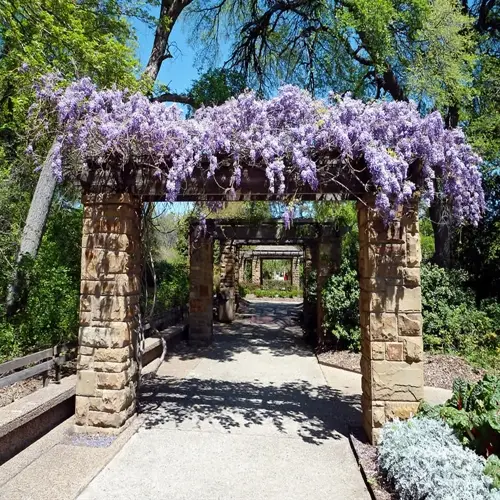
A wisteria tree is one of the most stunning sights in any spring garden with its cascading purple blooms and sweet fragrance. Most people don't realize that this gorgeous flowering vine isn't a true tree at all. It's a wisteria vine that someone trained into a single trunk form through years of careful pruning.
I grew my first wisteria over 12 years ago and made every mistake you can think of along the way. The vine grew wild across my pergola, choked out a nearby maple, and didn't bloom for the first 4 years. That painful learning curve taught me what works and what fails when you try to shape this plant into something beautiful.
Think of a tree-form wisteria the same way you'd think of a bonsai compared to a full grown tree. The plant itself is the same species. The difference comes from deliberate pruning over 3 to 5 years. That process builds a strong trunk and a weeping canopy on top. USDA Forest Service data shows these vines can reach 65 ft in canopy height. Their stems can grow up to 15 inches across, so training matters a lot.
This guide covers everything from picking the right wisteria species to shaping your own tree form at home. You'll find the pruning schedule that gets blooms faster. You'll also learn which species won't take over your yard and how to keep your family and pets safe around this gorgeous but toxic plant.
5 Wisteria Species Compared
Five main wisteria species show up in garden centers across the country right now. Two of them are native wisteria from North America and safe to plant. The other three come from Asia and can cause serious problems if they escape your yard. Chinese wisteria is the most common of the Asian types you'll find at stores.
I've grown 3 of these 5 wisteria species in my own garden over the past decade. The differences between them go far beyond flower color. Bloom size, growth speed, and ecological impact all vary based on which species you bring home from the nursery.
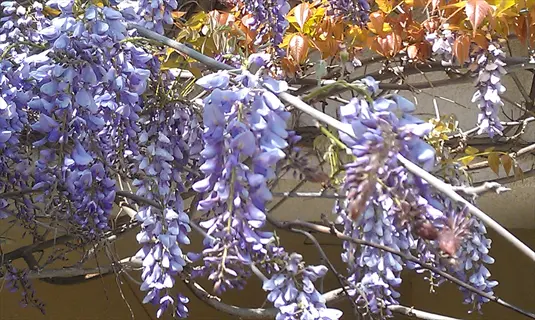
Chinese Wisteria (Wisteria sinensis)
- Bloom Period: Flowers appear in March through early April before the leaves emerge, producing dramatic cascading clusters up to 20 inches (50 cm) long in shades of purple, lavender, and white.
- Growth Habit: Twines counterclockwise around supports and can reach over 70 ft (21 m) in length with mature stems up to 15 inches (38 cm) in diameter over decades.
- Hardiness Range: Thrives in USDA zones 5 through 8, tolerating a wide range of soil types and even partial shade, though full sun produces the best flowering results.
- Invasiveness Status: Classified as invasive in multiple states and rated 'Invasive, No Uses' by UF/IFAS, with naturalized patches capable of covering 2-3 acres (about 1 hectare).
- Fragrance Profile: Produces a moderate sweet fragrance that is noticeable within a few feet of the blooms, less intense than Japanese wisteria but still pleasant in garden settings.
- Best Use Case: Suitable only for experienced gardeners willing to commit to aggressive pruning, and should never be planted near natural areas or forests where it could escape cultivation.
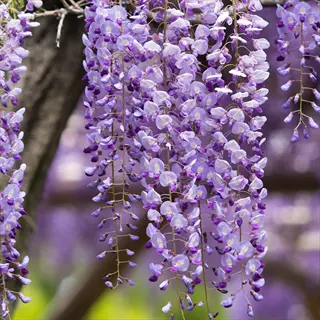
Japanese Wisteria (Wisteria floribunda)
- Bloom Period: Flowers open from base to tip in April through May, with racemes reaching 4-20 inches (10-50 cm) long in purple, pink, blue, and white varieties.
- Growth Habit: Twines clockwise around supports and produces the longest flower clusters of any wisteria species, making it a favorite for pergolas and arbors.
- Hardiness Range: Grows well in USDA zones 4 through 9, making it one of the most cold-hardy wisteria species available to gardeners in northern climates.
- Invasiveness Status: Also classified as invasive and prohibited in several states; USDA data shows 82-96% of naturalized wisteria in the southeastern United States are hybrids of this and Chinese species.
- Fragrance Profile: Known for producing the most intense and sweetest fragrance among all wisteria species, with a grape-like scent that carries well in warm air.
- Best Use Case: Popular for ornamental display on sturdy structures, but requires rigorous containment and should not be planted where it could spread into woodlands.
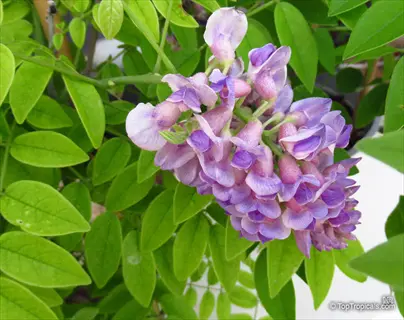
American Wisteria (Wisteria frutescens)
- Bloom Period: Blooms in April through June after leaves have emerged, with compact flower clusters of 5-10 cm that rebloom in summer under good conditions.
- Growth Habit: Grows 25-30 ft (7.5-9 m) in length, much more manageable than Asian species, with smooth seed pods that distinguish it from the fuzzy pods of Chinese and Japanese types.
- Hardiness Range: Performs well in USDA zones 5 through 9, native to the eastern United States from Virginia to Florida and west to Texas.
- Ecological Value: Serves as a larval host for 15 documented species of native butterflies and moths, making it an excellent choice for pollinator-friendly and wildlife-supporting gardens.
- Invasiveness Status: Not invasive and safe to plant near natural areas, recommended by multiple university extension programs as the preferred wisteria for home landscapes.
- Best Use Case: The top recommendation for gardeners who want wisteria beauty without invasiveness; the cultivar Amethyst Falls is compact and ideal for smaller gardens and containers.
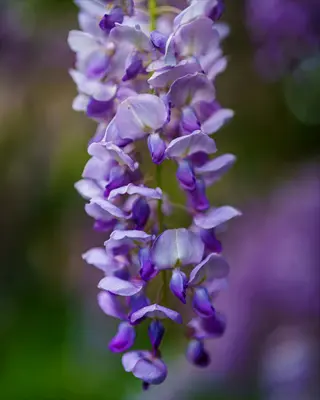
Kentucky Wisteria (Wisteria macrostachya)
- Bloom Period: Flowers in late spring to early summer, often producing a second lighter bloom in late summer, with clusters 8-12 inches (20-30 cm) long in lavender-blue tones.
- Growth Habit: Reaches 20-25 ft (6-7.5 m) and grows less aggressively than Asian species, making it easier to manage on garden structures and fences without constant cutting.
- Hardiness Range: The most cold-hardy wisteria species, thriving in USDA zones 3 through 9, and the cultivar Blue Moon survives winters as cold as minus 40°F (minus 40°C) with ease.
- Ecological Value: Native to the central and southeastern United States, this species supports local pollinators and fits well into native plant gardens alongside other woodland species.
- Invasiveness Status: Not invasive and recommended by extension services as a safe alternative to Chinese and Japanese wisteria for home gardens in all regions.
- Best Use Case: Ideal for cold-climate gardeners in zones 3 through 5 who want reliable wisteria blooms; Blue Moon is the most trusted and available cultivar of this species.
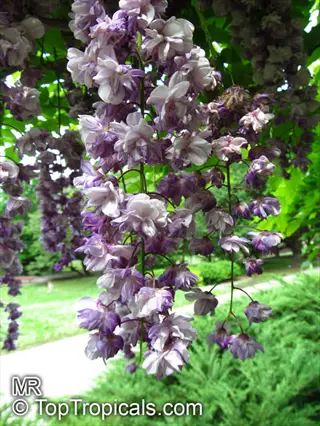
Silky Wisteria (Wisteria brachybotrys)
- Bloom Period: Flowers appear in mid to late spring with short, dense clusters 4-6 inches (10-15 cm) long in shades of violet-blue with a prominent yellow blotch on each petal.
- Growth Habit: A compact grower reaching about 20-30 ft (6-9 m), with soft, velvety foliage that gives this species its common name of Silky Wisteria.
- Hardiness Range: Grows in USDA zones 5 through 9, originating from Japan but less commonly cultivated than Chinese or Japanese species in North American gardens.
- Fragrance Profile: Produces a strong, sweet fragrance similar to Japanese wisteria, and the cultivar Showa Beni is prized for its pink-toned flowers and intense scent.
- Invasiveness Status: Less common in gardens and less studied for invasiveness than the major Asian species, but still an exotic non-native that needs careful management.
- Best Use Case: Best suited for collectors and niche gardens where a unique wisteria variety is desired, though native species remain the safer and more earth-friendly choice.
You should pick American wisteria or Kentucky wisteria for your yard. Both are safe and give you that classic look you want. I suggest Amethyst Falls and Blue Moon as the best 2 cultivars for new growers.
Planting Wisteria Right
Getting your wisteria planting right from day one saves you years of trouble down the road. I've moved a wisteria vine twice in my garden because I picked the wrong spot the first 2 times. Those mistakes cost me 3 full years of blooms that I'll never get back.
Before you dig that first hole, check these 5 conditions at your chosen site. You want full sun for at least 6 hours a day and well-drained soil that won't hold water. You also need shelter from harsh wind, room for roots to spread, and a strong support built before you plant. Miss any one of these and your wisteria will struggle to bloom.
Sunlight and Location
- Full Sun Required: Wisteria needs at least 6 hours of direct sunlight each day for strong blooms. South or west facing walls give the warmest and most steady light exposure.
- Wind Protection: Choose a spot sheltered from strong winds that can damage flower buds in early spring, since zones 5 and 6 often get late frosts.
- Distance from Structures: Plant at least 10 ft (3 m) away from house foundations, gutters, and roof lines to stop the stems from causing damage over time.
Soil Preparation
- Soil Type: Wisteria does best in well-drained soil with a pH between 6.0 and 7.0, though it tolerates clay and sandy soils once its roots take hold.
- Amendments to Add: Mix 2 to 3 inches of compost into the hole along with a handful of bone meal to give roots the phosphorus they need for flower growth.
- Drainage Test: Fill the hole with water and confirm it drains within 30 minutes before you plant, because wisteria gets root rot in soggy ground.
Planting Timing
- Spring Planting: The best time to plant wisteria is early to mid spring after the last frost. This gives roots a full season to settle before winter hits.
- Fall Planting: In hardiness zones 7 through 9, fall planting in September or October works great because mild winters let roots keep growing without summer heat stress.
- Avoid Summer Planting: Planting in midsummer puts new roots under heat stress and drought that can stunt growth and push back your first blooms by a full year.
Support Structures
- Build Before You Plant: Set up a sturdy pergola, arbor, or post system before planting because wisteria grows fast and needs guidance from the start.
- Material Strength: Use galvanized steel or heavy-duty timber posts that can hold a mature wisteria weighing several hundred pounds over the decades to come.
- Wire Training System: For wall wisteria, install galvanized wires spaced 18 inches (45 cm) apart using vine eyes to keep the plant off the wall for air flow.
I tell every new gardener to learn how to plant wisteria the right way from the start. Where to plant wisteria matters just as much as how you care for it later. A good wisteria planting job in the right hardiness zones sets you up for blooms that last decades.
Training a Wisteria Tree Form
When you train wisteria tree form from a vine, you turn a wild climber into a stunning garden feature. I spent 4 years shaping my first wisteria standard and the result now stops every person who walks past my front yard. The process takes patience but the steps are simple once you know them.
Start with a grafted plant if you want blooms in 2 to 3 years rather than the 10 to 20 years a seed grown plant can take. Grafted wisteria also tends to produce stronger single leaders that make tree-form wisteria much easier to shape from the start. Your wisteria pruning work gets easier each year as the trunk grows thicker.
Year One: Establish the Trunk
- Select a Leader: Choose the strongest, straightest shoot as your main trunk and tie it to a sturdy vertical stake at least 6 ft (1.8 m) tall using soft plant ties every 12 inches (30 cm).
- Remove Competition: Cut away all other shoots at the base through the growing season to force all energy into the single leader that will become your tree trunk.
- Stake Firmly: Use a metal or hardwood stake driven at least 18 inches (45 cm) into the ground because the leader needs rigid support for the entire first year to grow straight.
Year Two: Build the Canopy
- Pinch the Top: Once the leader reaches your desired canopy height of 4-6 ft (1.2-1.8 m), pinch or cut the growing tip to push side branching that forms the weeping head.
- Select Framework Branches: Allow 3 to 5 strong side shoots to grow at the top of the trunk and remove any shoots that emerge lower down on the stem through the season.
- Continue Staking: Keep the trunk tied tight because the new head will become top heavy with foliage and could snap the young trunk in wind or rain without support.
Year Three: Shape and Refine
- Summer Prune the Head: In July or August, cut all side shoots back to 5 or 6 leaves from the framework branches to push flower bud growth for next spring.
- Winter Prune for Structure: In January or February, shorten those same shoots to 2 or 3 buds to create the short flowering spurs that produce the best cascading bloom display.
- Remove Root Suckers: Cut any shoots that emerge from the base or roots at ground level through the year to maintain the clean single trunk tree look.
Year Four and Beyond: Maintain
- Repeat Two-Step Pruning: Continue the summer and winter pruning cycle every year for the life of the tree to keep the canopy compact and boost flower output on short spurs.
- Remove the Stake: By year 4 or 5, the trunk should be thick enough to stand on its own, so loosen ties and take the stake out once the trunk holds firm in the wind.
- Monitor Trunk Diameter: A healthy trained wisteria tree trunk should thicken each year and by year 10 it may reach 3-4 inches (7.5-10 cm) across with a stable base.
Mature wisteria stems can reach 15 inches across based on USDA Forest Service records. Your own tree won't grow that thick, but it shows how strong these trunks get over time. That strength is what makes the wisteria tree form so stable once you train it right.
Seasonal Wisteria Care
Good wisteria care follows a clear schedule that changes with each season. I keep a simple calendar on my shed wall that tells me what to do each month. That one habit turned my patchy bloomer into the best flowering plant on my street within 2 years of steady seasonal care.
The biggest mistake I see is using too much nitrogen wisteria fertilizer in spring. Nitrogen feeds leaves, not flowers. Stick with bone meal or a phosphorus rich blend to push bloom growth instead. Your wisteria watering needs also shift through the year, so don't treat it the same in August as you do in March.
Your wisteria pruning schedule is the single most important part of this whole plan. Summer pruning in July or August controls wild growth and sets up next year's flower buds. Winter pruning in January or February then refines those buds into short spurs that burst with blooms. I learned this the hard way when I skipped winter pruning one year and got nothing but leaves the next spring.
Invasiveness and Ecology
Invasive wisteria does far more harm than just growing out of control in your yard. It chokes out native plants and kills trees across whole forests. Research from Trusty et al. found that 82 to 96% of wild wisteria in the Southeast are hybrids of Chinese and Japanese species. These plants escaped from home gardens just like yours.
I've seen the ecological impact up close in my own area. A neighbor's wisteria invasive species sent runners over 30 ft across their yard in one season. It climbed a mature oak and started killing it within 2 years. USDA data shows these patches can cover 2 to 3 acres of forest when no one steps in.
These invasive types also change the ground beneath them. Wisteria has a nitrogen-fixing trait from bacteria called Rhizobium on its roots. When it takes over, extra nitrogen floods the soil. That shift hurts the native plants that once grew there. The Wisconsin DNR now bans both Chinese and Japanese wisteria.
Go with American wisteria as your native alternative for a safer pick. It feeds 15 types of local butterflies and moths while they grow. You get pretty blooms in your garden and you help wildlife at the same time. Native wisteria stays put and won't wreck the forest next door.
Toxicity and Safety
You need to know that every part of wisteria is wisteria poisonous to people and animals. The toxins lectin and wisterin hide in the flowers, leaves, bark, and seeds. Seeds and pods carry the highest levels, which makes them the most dangerous parts you'll find on the plant.
I keep a strict wisteria safety rule in my garden. Every fallen seed pod gets picked up the same day it drops. A PubMed study showed that 7 children who ate wisteria seeds all started vomiting within 4 hours. One child ate a single seed and became drowsy and weak. That data alone should make every parent take this risk serious.
Children and Toddlers
- Highest Risk Group: Young children face the most danger because wisteria seed pods look like edible beans, and a clinical study found 7 kids who ate seeds all got sick within 4 hours.
- Symptoms to Watch: Eating the seeds causes nausea, vomiting, belly pain, and fatigue, with one child becoming drowsy after eating just a single whole seed from a pod.
- Quick Action: If a child eats any part of wisteria, wipe out their mouth, rinse with water, and call poison control or 911 right away without waiting for symptoms.
Adults
- Real Case: A published study describes a 50 year old woman who ate 10 wisteria seeds thinking they were beans and got headaches, vomited blood, felt dizzy, and became confused.
- Toxic Compounds: The main toxins in wisteria are lectin and wisterin, with the highest levels found in seeds and pods but present in all parts of the plant.
- Handling Note: Touching wisteria bark, leaves, and flowers during garden work is wisteria toxic concerns aside safe, but wash your hands after and never eat any part.
Dogs and Cats
- All Parts Are Wisteria Toxic to Pets: Wisteria harms dogs, cats, and horses, with seeds and pods being the worst because pets may chew on fallen pods that look like toys.
- Pet Symptoms: Dogs and cats that eat wisteria may vomit, get loose stools, become tired, or seem down, and serious cases that involve many seeds may need a vet visit.
- How to Prevent It: Fence off wisteria at the base or pick up all fallen seed pods and flowers each day to keep your pets safe from this common garden danger.
Garden Safety Practices
- Seed Pod Removal: Pull off seed pods in late summer and fall before they dry out and split open, because dried seeds scatter on the ground and attract curious kids and animals.
- Disposal Method: Never put wisteria cuttings or pods in your compost pile since the plant can grow back from cut pieces; bag everything and throw it in the regular trash.
- Tell Your Neighbors: If wisteria grows in a shared or public garden space, let visitors and neighbors know about the poison risk so they can watch their children and pets.
5 Common Myths
Wisteria trees are a separate species from wisteria vines and grow naturally into tree shape without any pruning.
A wisteria tree is simply a wisteria vine that has been trained and pruned into a single-trunk standard form over several years of careful shaping.
All wisteria species are invasive and should never be planted anywhere in the garden or yard.
American wisteria and Kentucky wisteria are native to North America, are not invasive, and support 15 species of native butterflies and moths as larval hosts.
Wisteria grown from seed will bloom within the first year or two just like a store-bought grafted plant.
Seed-grown wisteria can take 10 to 20 years to produce its first flowers, while grafted plants typically bloom within two to three years of planting.
Wisteria only needs to be pruned once a year in winter to keep it healthy and encourage blooming.
Wisteria requires a two-step pruning schedule with a summer cut in July or August and a winter cut in January or February to promote strong flower buds.
Wisteria is perfectly safe around children and pets because the flowers look decorative and harmless.
All parts of wisteria are poisonous, containing the toxins lectin and wisterin, and ingesting just a few seeds can cause vomiting, abdominal pain, and confusion.
Conclusion
Growing a wisteria tree takes real work, but the reward is one of the most stunning flowering vine displays any garden can have. Your wisteria care routine comes down to 2 pruning sessions per year and a smart species choice from the start. Get those 2 things right and you'll enjoy blooms for decades.
The single best choice you can make is picking native wisteria over the invasive Asian types. American wisteria feeds 15 types of local butterflies and moths. Invasive types can swallow 2 to 3 acres of forest. That one decision shapes your garden and your local area at the same time.
Before you head to the nursery, ask yourself 3 quick questions. Is the plant native? Do I have a strong support built and ready? Am I set to do wisteria pruning twice a year? If you answer yes to all 3, you're ready to grow a wisteria tree that will be the star of your yard.
I've spent over a decade learning what works and what fails with this plant. The mistakes taught me more than the wins ever did. Trust the process, pick the right species, and your wisteria tree will thank you with a wall of purple every single spring.
External Sources
Frequently Asked Questions
Where do wisteria trees grow best?
Wisteria trees grow best in USDA hardiness zones 5 through 9, in full sun with well-drained, slightly acidic soil.
Can wisteria be grown as a tree?
Yes, wisteria vines can be trained into a tree-like standard form through careful pruning over several years.
How long does it take to grow a wisteria tree?
It takes three to five years of pruning to shape a wisteria into tree form, and grafted plants bloom in two to three years.
Is there a difference between a wisteria vine and a wisteria tree?
A wisteria tree is simply a wisteria vine pruned into a single-trunk, tree-like shape called a standard.
Can humans touch wisteria?
Touching wisteria flowers and leaves is generally safe, but ingesting any part of the plant is toxic.
What are the downsides of wisteria?
Wisteria can be highly invasive, toxic to people and pets, and capable of causing structural damage if left unchecked.
Is wisteria toxic to dogs?
Yes, all parts of wisteria are toxic to dogs, with seeds and pods posing the greatest danger.
What is the lifespan of a wisteria?
Wisteria plants can live more than 50 years, with some specimens documented at over 100 years old.
Should you grow wisteria up a house?
Growing wisteria directly on a house can cause structural damage, so a sturdy freestanding support is recommended.
Does wisteria smell good?
Most wisteria species produce a sweet, grape-like fragrance, with Japanese wisteria being the most intensely scented.