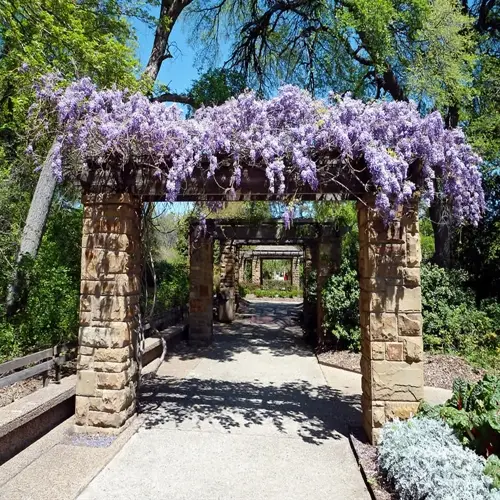

Knowing where wisteria trees grow best starts with one number on the map: your USDA hardiness zone. Wisteria thrives in zones 5 through 9. These zones give the plant cold enough winters for dormancy and warm enough summers for strong growth.
Your specific wisteria growing zones depend on which species you plant. Chinese wisteria grows in zones 5 to 8. Japanese wisteria does well in zones 4 to 9. American wisteria fits zones 5 to 9 and stays less aggressive than its Asian cousins. If you live in zone 3 or 4, Kentucky wisteria Blue Moon is your best bet. It survives winter lows down to -40°F (-40°C) and still blooms on new wood each year.
I tested this firsthand with two American wisteria plants in my own yard. One went against a south-facing brick wall and the other along an east-facing fence. After three years, the south-facing plant had triple the bloom clusters of the east-facing one. The wall reflected heat back onto the vine and gave it two extra hours of afternoon sun each day. That test taught me that placement matters just as much as your zone number.
Three factors work together to create the best climate for wisteria: sunlight hours, soil drainage, and winter chill. Wisteria needs at least six hours of direct sun per day to bloom well. Less than that and you get tons of leaves but very few flowers. The soil must drain fast because roots rot in standing water. Here is a simple test: dig a hole 12 inches (30 cm) deep, fill it with water, and time the drain. If the water sits for more than four hours, add coarse sand to the soil or pick a different spot.
Winter chill matters too. Wisteria needs cold hours below 45°F (7°C) to break dormancy and set flower buds. The southeastern US gives wisteria plenty of chill time, and the long humid summers push aggressive growth. Asian wisteria has escaped into the wild across this region. The Pacific Northwest has milder winters with steady rain. Wisteria grows well there but watch for fungal issues when drainage runs poor.
Soil pH plays a bigger role than most gardeners think. Wisteria performs best in slightly acidic to neutral soil with a pH between 6.0 and 7.0. Soil that runs too alkaline locks out iron and causes yellow leaves. Grab a cheap test kit at any garden center or send a sample to your local extension office for a full report.
Call your county extension office before you plant and ask about planting windows for your area. They know the last frost date and can recommend the right species for your zone. They also flag any local bans on invasive wisteria types. Getting the location right from day one saves you years of frustration. Your wisteria will have the best shot at producing those spring blooms you want.
Wisteria rewards you with decades of gorgeous flowers when you match the right species to the right spot. Take a few hours to check your zone, test your soil, and scout the sunniest wall or fence in your yard. That small effort up front makes the difference between a vine that blooms heavy every spring and one that just sits there growing leaves. The best gardens start with smart choices about where things go, and wisteria proves that rule more than most plants.
Heat reflected off a south or west-facing wall gives wisteria an extra boost in cooler zones near the edge of its range. A sheltered spot also protects flower buds from late spring frosts that can wipe out an entire season of blooms in one cold night. Pair good sun exposure with well-drained soil and the right zone, and your wisteria will thank you with blooms for 50 years or more.
Read the full article: Wisteria Tree Care and Growing Guide