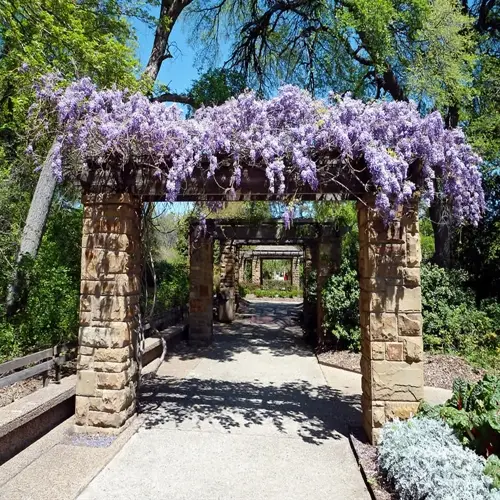

The difference between wisteria vine and tree comes down to pruning, not genetics. A wisteria tree is just a vine that someone trained into a single-trunk shape. No separate "wisteria tree" species exists. Every wisteria belongs to the same group of woody climbing vines. The tree look comes from years of careful cutting and shaping.
The wisteria vine vs tree gap becomes clear when you see both growing near each other. I have a Chinese wisteria vine on a 20-foot (6 m) pergola in my back yard. It sends shoots everywhere and drapes long flower clusters through the slats. Near my front door I keep a trained American wisteria in a large pot. It stands about 5 feet (1.5 m) tall with a neat round top. The vine looks wild and free. The tree looks tidy and controlled.
All wisteria are woody vines in the genus Wisteria. The "tree" tag refers to a pruning method called training to a wisteria standard form. You pick one strong stem, tie it to a stake, and cut off all other shoots. Over 3 to 5 years you build a trunk and shape a round canopy on top. Twice-yearly pruning keeps the tree shape tight after that.
Nurseries sell pre-trained wisteria standards for gardeners who want the look right away. These come with a set trunk and a shaped canopy ready to show off. You can expect to pay $75 to $200 or more for a good one. A young vine costs just $15 to $30. The price gap covers the three to five years of work that went into shaping it before it hit the shelf.
Building your own standard from a young vine costs less. You also get full control over the final height, canopy width, and overall shape. The tradeoff is time and steady effort. You need to prune and check on your plant all through each growing season for a few years. Missing even one pruning session can mess things up because wisteria sends out long whippy shoots fast.
I trained my front door wisteria from a $20 vine over four years. The process taught me patience but also gave me a tree that looks just how I wanted it. No nursery standard would have matched the exact shape and height I had in mind. Watching it go from a skinny stick to a blooming tree is one of my proudest garden wins.
My advice: buy a pre-trained standard if you want fast results for a special spot. Go the DIY route if you enjoy hands-on work and don't mind the wait. Go with American wisteria for your standard. It grows slower, stays compact, and won't send runners across your yard. You get the same beautiful blooms with far less fuss over the years.
You should also think about where you will put your wisteria tree. A large pot works great for a patio or front entrance. In-ground planting gives the roots more room and pushes faster growth. Either way, give your plant full sun and good drainage. These two things matter more than any other factor when you want strong blooms on your trained wisteria.
In my experience, the biggest mistake new gardeners make is buying a cheap seed-grown vine and expecting fast results. Grafted plants cost a bit more but they bloom in 2 to 3 years instead of 10 to 20. I wasted three years on a seed-grown vine before I learned this lesson. Start with a grafted cultivar like Amethyst Falls and you will see flowers much sooner on your new tree.
The choice between vine and tree also affects how much space you need. A vine on a pergola can spread 30 feet (9 m) or more in every direction. A trained tree stays within a 4 to 6 foot (1.2 to 1.8 m) footprint. Small yards and patios suit the tree form much better. You get the same gorgeous spring show in a fraction of the space.
Read the full article: Wisteria Tree Care and Growing Guide