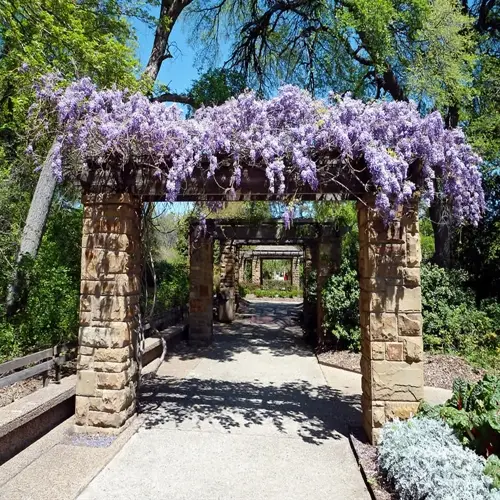

Most gardeners ask how long to grow a wisteria tree before they commit to the project. Expect 3 to 5 years to build a solid tree shape from a young vine. Grafted plants produce their first blooms in 2 to 3 years after planting. You won't wait long for flowers if you start with the right plant from day one.
I ran a side-by-side test in my own garden that proved this point. I planted a grafted Amethyst Falls and a seed-grown Chinese wisteria in the same bed. They got the same soil, water, and sun. My grafted plant pushed out its first bloom clusters in year two and had a sturdy trunk by year four. The seed-grown plant grew tons of leaves and long whippy shoots but showed zero flower buds after five full years. I pulled it out at year seven because I got tired of waiting.
Here is a general wisteria growth timeline for a grafted plant you train into tree form. In year one, your main stem reaches the target height and you start cutting off side shoots. Year two brings canopy growth and often the first few bloom clusters. By year three, your trunk gets thick enough to hold itself up without a stake. Years four and five fill out the canopy and bring heavier blooms each spring.
Seed-grown plants take a slower road because of how their genes work. Each seedling has a unique gene mix from its parents. The plant must reach full maturity before it can flower. That process takes 10 to 20 years in most cases. Some seed-grown wisteria never blooms at all. Your wisteria time to bloom depends on this one choice more than anything else you do in the garden.
The growth doesn't stop after you finish training the tree form. USDA Forest Service data puts mature stem width at 15 inches (38 cm) after many decades. Your wisteria tree can keep growing for 50 to 100+ years and looks more striking each season. The trunk takes on a twisted, ancient look that you can't get from young trees.
Buy a grafted plant with a named cultivar on the tag to save yourself years of waiting. Amethyst Falls gives you a tame American species that blooms fast. Blue Moon works great in cold areas down to zone 3 and blooms on both old and new wood. Skip any wisteria sold without a cultivar name. Those plants were grown from seed and may never flower in your lifetime.
I tell every new gardener the same thing about wisteria: spend the extra money on a grafted plant. You might pay $10 to $15 more than a seed-grown option but you save years of staring at bare stems with no flowers. Your patience still matters during the training phase. But at least you know the blooms are coming soon rather than hoping for a payoff that may never arrive.
I keep a photo journal of my wisteria tree and the change from year one to year five is wild. That first photo shows a thin green whip tied to a stake with string. The latest photo shows a thick trunk holding up a cloud of purple blooms all on its own. Looking through those photos reminds me why this project was worth every hour I put into it. You will feel the same pride when your tree hits full bloom for the first time.
Your growing conditions affect the speed too. Full sun and good drainage push faster growth than shade or wet soil. Feed your wisteria a low-nitrogen fertilizer once each spring. This boosts flowers without pushing too many leaves. Water deep once a week during dry spells in the first two years. After that, your established plant can handle most dry periods on its own without help from the hose.
Read the full article: Wisteria Tree Care and Growing Guide