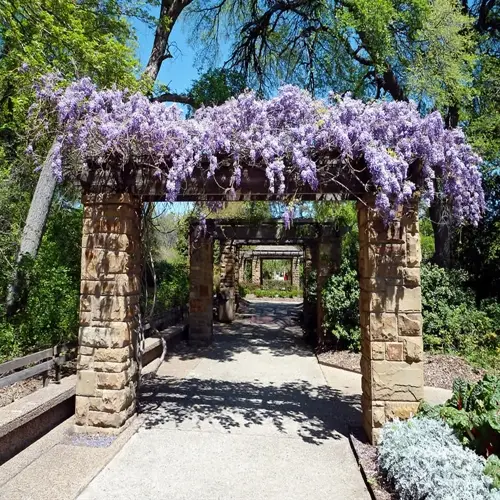

The biggest downsides of wisteria hit you in three ways. You face invasive growth, toxicity, and damage to your home. Many gardeners fall in love with the spring blooms. Then they spend years fighting the vine to keep it under control. You need to know what you are signing up for before you plant one.
I watched this play out with my neighbor's Chinese wisteria. It sent runners under our shared fence. Within two seasons those runners popped up in my yard 30 feet (9 m) from the parent plant. Shoots climbed into a mature oak and wrapped around the trunk. I spent a full weekend digging out the runners. New shoots kept popping up for months after that. That mess showed me how fast wisteria problems start once the vine gets going.
Your home can take a beating from this vine too. Mature stems grow up to 15 inches (38 cm) across. They twist with enough force to crush your gutters. They can shift roof tiles and crack mortar between bricks. The vine grows into any gap it finds. It pushes between siding boards and wraps around pipes. Getting thick stems out of tight spaces often means calling a pro.
Wisteria also strangles trees. The vine wraps around trunks in a tight spiral. It squeezes harder as both plants grow. Over time this cuts off water and nutrients to the tree. USDA data shows wild wisteria patches can cover 2 to 3 acres of forest. Wisconsin DNR lists Chinese and Japanese wisteria as Prohibited due to this threat.
The plant is toxic to people and pets too. All parts contain lectin and wisterin. Seeds carry the highest dose. Even two or three seeds can make a small child vomit. Dogs and cats face the same risk if they chew on fallen seed pods. You need to pick up pods from the ground all through late summer and fall.
The wisteria disadvantages don't stop at risk. You also face a heavy pruning schedule. You must cut your vine back at least twice per year. Skip one summer and the vine can throw out 10 feet (3 m) of new growth. Compared to clematis or trumpet vine, wisteria demands far more of your time and attention. Most wisteria problems come from owners who fall behind on this work.
In my experience, the best way to enjoy wisteria with fewer headaches is to pick a native species. American wisteria grows at a calmer pace. It stays smaller. It won't send runners under your fence the way Chinese wisteria does. You still get gorgeous purple blooms each spring with much less risk to your yard and your neighbor's property.
Weigh these downsides against the beauty before you plant. If you can commit to twice-yearly pruning and close watching, wisteria rewards you with one of the most stunning spring shows in the garden world. If that level of work sounds like too much, pick a less aggressive flowering vine instead. Your house, your trees, and your free time will thank you.
I now tell every gardener who asks me about wisteria to start with the downsides first. Know the worst case before you fall in love with the blooms. If you can handle the work and the risk, the rewards are worth it. If you can't, there are plenty of beautiful vines that won't try to eat your house.
Read the full article: Wisteria Tree Care and Growing Guide