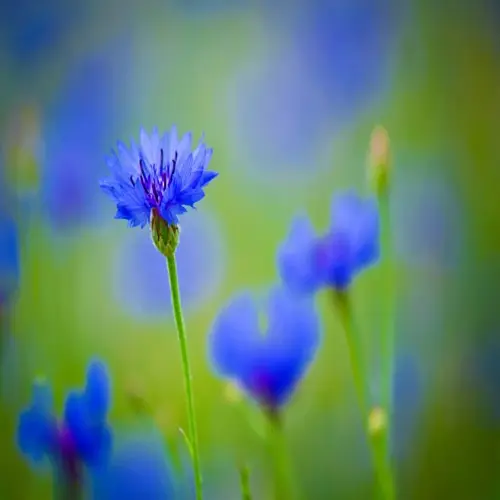

Purple coneflower is the one I would plant first. Among purple flowers for pollinators it carries more documented wildlife use than anything else on the usual lists, and that is a different claim from calling it the proven winner. Nobody has run the bake-off. What you get instead is a plant whose visitors have been written down, species by species, by people who count them for a living.
Late March, and the stubs left standing from last season are gray and dry and light as drinking straws. Snap one across and the middle is hollow. Native bees nest inside those stems, one female to a tunnel. The three coneflowers I planted seven years ago give them somewhere to do it, and I pruned the bed to the same height again this spring. From the path you see nothing at all. Up close you find a stem with a plugged, sealed end.
The paper trail is why it leads. NC State Extension lists purple coneflower as a larval host for Silvery Checkerspot and Wavy-lined Emerald, and it notes that American goldfinches eat the seed. Add the native bees in the dead stems and you have three groups of wildlife using three different parts of the plant. The rest of the purple crowd pulls in bees too, but the published detail about who uses them, and how, runs thinner.
There is a real study behind the claim that purple flowers attract bees, and it is narrower than the headline you have seen. Raine and Chittka tested bumblebee colonies near Wurzburg, Germany. The colony with the strongest built-in violet bias brought home 41% more nectar than the colony with the weakest one. That test set violet against blue, in one population. It never pitted purple against yellow or white, so take it as proof that a color bias pays, not as a ranking of the whole color wheel.
Purdue Extension names catmint, salvia, allium, blazing star, aster and the anise hyssops next to coneflower. Read that as a list of options, not a scoreboard. None of them come with a head to head number attached. If you want pollinator garden plants that keep a bed in bloom from May into October, spread your picks across four or five of them. One species massed in a block gives you a big show and a short one.
Bee traffic on a flower proves nothing about whether the plant belongs in your yard. The Minnesota Department of Agriculture is blunt on this point. Bees do work purple loosestrife for pollen, and it is still a listed noxious weed in the state. A flower head thick with insects is not a defense, and you should treat a heavy bee crowd on a spreader as a reason to look the plant up.
A plant that feeds bees can still be illegal to plant. Check your state noxious weed list before you buy anything purple that spreads on its own.
One habit change does more for your bees than any swap in the plant list. Stop deadheading in fall and leave the seed heads up for the goldfinches through winter. Come spring, cut the spent stems back to 12 to 24 inches (30 to 60 cm) and leave those stubs standing right where they are. The hollow ends are the nest sites. Shear your bed to the ground in October and you throw next year's bees out with the trimmings.
- Fall: Put the shears down. Leave the seed heads for goldfinches and let the stems dry standing.
- Spring: Cut the spent stems back to 12 to 24 inches (30 to 60 cm) instead of clearing them to the crown.
- Summer: Leave the cut stubs in place all season, even as new growth hides them.
- Skip any purple perennial your state lists as a noxious weed, however busy its flowers look.
Read the full article: 10 Purple Flowers Worth Planting