
Introduction
What are microgreens? Edible seedlings, cut 7 to 21 days after germination at 1 to 3 inches (3 to 8 cm) tall. You harvest once the cotyledons have filled out and the first true leaves show. Penn State Extension sets that window, and the species decides where you land inside it. Broccoli and radish finish in 7 to 8 days. Beet can hold out for three weeks. They are older than sprouts and younger than baby lettuce, and you eat the part above the soil line and nothing below it.
Do they hold 40 times the nutrients of the mature plant? No, and no primary source backs that figure. Six of the seven top pages on microgreens nutrition print it anyway. USDA researchers measured 25 varieties and found vitamins and carotenoids about five times greater than the same plants grown to full size. UF Health puts the edge at 4 to 6 times.
The catch with nutrient density is that it moves with the species, not with the label on the clamshell. Across those 25 varieties, vitamin C ran from 20 to 147 mg per 100 g of fresh weight, and that sevenfold spread sits inside one category. Red cabbage topped the list for vitamin C. Cilantro won on carotenoids, and garnet amaranth on vitamin K. Green daikon radish had the most vitamin E, so the tray you grab off the shelf decides which vitamin you get.
Which one you buy matters more than whether you buy microgreens at all. Pick the species for the nutrient or the flavor you want, and read any single multiplier as a rough average across a group that does not behave like one. One warning outranks all of that if you plan to grow your own. Never grow tomato, pepper, eggplant or potato as microgreens. Those seedlings carry toxic alkaloids.
Are Microgreens Really 40x?
Six of the seven top ranking pages on microgreens nutrition tell you these trays hold up to 40 times more nutrients than full grown vegetables. Not one names a study you can open and read. The figure with a real lab measurement behind it is about five times.
USDA Agricultural Research Service scientists tested 25 commercial varieties in one run. Vitamins and carotenoids came in about five times higher than in the mature plants you would have harvested months later. Total vitamin C ran from 20 to 147 mg per 100 g of fresh weight, so the species you cut matters far more than the category name does. Red cabbage led on vitamin C. Cilantro led on carotenoids.
- USDA ARS: about five times more vitamins and carotenoids than mature counterparts, across 25 varieties.
- UF Health: many microgreens are 4 to 6 times higher in vitamins and antioxidants than adult forms.
- Vitamin C measured from 20 to 147 mg per 100 g, depending entirely on the species.
- Balik and colleagues: mineral bioavailability is higher because the plants are eaten very early.
- Up to 40 times more nutrients, repeated by six of the seven top ranking pages.
- Nine times more nutrients, with no primary study attached to the number.
- Fifty times more sulforaphane and three times more beta-carotene, untraceable to any Tier 1 source.
- One flat multiplier for every microgreen, which ignores how far species differ.
UF Health puts many microgreens at 4 to 6 times higher in vitamins and antioxidants than their adult forms. That sits right beside the government figure, and it comes from a separate source. So carry 4 to 6 times when you weigh microgreens vs mature vegetables. You cannot check the 40 times version at all, because nobody who prints it also prints the mature plant number it was measured against.
In general, microgreens contained considerably higher levels of vitamins and carotenoids—about five times greater—than their mature plant counterparts, an indication that microgreens may be worth the trouble of delivering them fresh during their short lives.
Part of that nutrient density comes down to timing. You eat the plant very early, while epidermal growth is still low, and Balik and colleagues report that minerals reach you more readily at that stage. A smaller multiplier is not a weaker case. Five times the vitamins and carotenoids of the full grown plant, off a tray on your kitchen counter, holds up fine on its own.
Nutrition by Species
Which microgreen is the most nutritious? That depends on which nutrient you ask about. Vitamin C in microgreens shows it, since the six species in the table below run from 32.72 mg per 100 g in red beet up to 80.45 mg in bean. Same shelf, same week of growth, and more than double the vitamin C. There is no single microgreens nutrition profile to quote.
Microgreens minerals split along different lines again. Broccoli microgreens hold 2,610.42 micrograms of iron per 100 g, sunflower tops the group for calcium at up to 148.63 mg per 100 g, and red beet sits last on calcium at 67.18. Pea leads copper and bean leads potassium. The antioxidant lead moves too, because broccoli takes total phenolics at 825.53 mg GAE per 100 g while black radish microgreens take antioxidant capacity at 83.32% by the DPPH test.
USDA's wider survey of 25 varieties tells the same story with different names on it. Red cabbage led vitamin C, cilantro led carotenoids, garnet amaranth led vitamin K, and green daikon radish led vitamin E. So buy or sow for the nutrient you actually want. Or keep two or three species in rotation and stop hunting for one best tray.
Sprouts, Microgreens, Baby Greens
Take one broccoli seed and you can turn it into four different foods, and the stage you stop at is what names each one. Rinse it in a jar each morning and you eat a sprout by the end of the week. Sow it in a tray of soilless medium and cut it a week later, and you eat a microgreen. Let that same tray grow on and you get baby greens. Leave one plant in the garden all summer and you get a full head of broccoli.
The growing medium is the real split in microgreens vs sprouts. A sprout germinates in water over a few days and never sits in anything, so you eat the whole thing, root and softened seed coat included. Clemson Extension states that microgreens grow in a medium and that only the above-ground parts are eaten. Your scissors take the stem and the roots stay behind in the tray. That is a structural difference and not a safety guarantee, because both are raw produce you still have to wash and handle with care.
Age sorts out the rest. Microgreens sit above sprouts and below baby vegetables such as baby lettuce and baby spinach. All three are edible seedlings, cut long before the plant is anywhere near grown. You harvest a microgreen while the cotyledon leaves are still carrying it and the first true leaves are just starting to show. In microgreens vs baby greens, the baby green is the older one, its real leaves have opened out, and it often keeps producing after the first pick.
Sprouts
- Method: Germinated in water over just a few days, with no growing medium involved at any point.
- Eaten: The whole sprout goes into the bowl, including the root and the softened seed coat.
- Timing: UF Health places sprouts as the youngest of these stages, ready in a matter of days.
- Note: No growing medium is involved at all, which is the clearest structural break from a microgreen tray.
Microgreens
- Method: Sown into a soilless medium and grown to the cotyledon stage under light on a shelf or sill.
- Eaten: Only the above-ground parts are cut and eaten, and the roots stay in the tray.
- Timing: Penn State puts harvest at 7 to 21 days after germination, at 1 to 3 inches (3 to 8 cm) tall.
- Note: Clemson defines the crop by that harvest point, just as the true leaves begin to form.
Baby greens
- Method: Grown on well past the cotyledon stage until real leaves have expanded and thickened.
- Eaten: Leaves are picked or cut, and the plant often carries on producing after the first pick.
- Timing: UF Health places baby vegetables such as baby lettuce and baby spinach after microgreens.
- Note: The plant is already past the cotyledon stage, so the microgreen measurements no longer describe it.
Mature vegetables
- Method: Grown to full size in a bed, a field or a large container over weeks or months.
- Eaten: Heads, roots, fruit or leaves are harvested, depending entirely on which crop it is.
- Timing: This is the counterpart USDA compared against when it measured about five times more vitamins.
- Note: USDA's about five times figure is a comparison against exactly this stage, nothing else.
Stage decides which numbers apply to the food on your plate. That five times nutrient figure compares microgreens against the mature plant, not against a sprout and not against a baby green. So a claim that sounds huge often turns out to be one stage of a seed measured against a much later stage of the same seed.
Varieties Worth Growing
The broccoli tray smells like horseradish the second you cut it, sharp and green, and my first one had me reading the seed packet twice to check what I had sown. Penn State says the bite comes from glucosinolates in the seedling. Nothing on the front of the packet prepares you for it.
Timings are where the best microgreens to grow pull away from the rest. Clemson lists broccoli at 8 to 10 days to harvest, sunflower and basil at 8 to 12, pea and kale at 10 to 15, nasturtium at 14 to 16, and beet at a slow 11 to 21 days. Radish and red cabbage never appear on that crop list, so the figure to use for them is Penn State's family range, which caps the whole brassica group at 7 to 8 days. Those two numbers count different things and should never be averaged together.
Nutrition splits by species too, so pick for the nutrient you want. Broccoli microgreens led iron among six species in a 2025 study, at 2,610.42 micrograms per 100 g. USDA named red cabbage the vitamin C leader of the 25 varieties it tested. Black radish microgreens took the top antioxidant capacity and the strongest aroma of that six. Sunflower microgreens hold the calcium, and pea shoots showed no detectable nitrate.
Broccoli
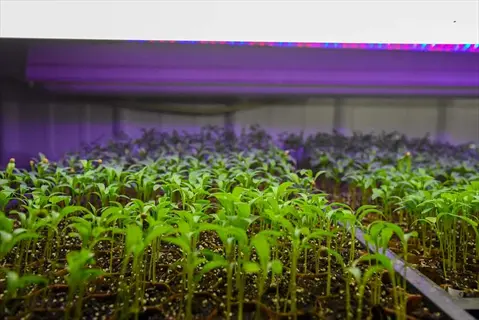
- Timing: Clemson lists broccoli at 8 to 10 days to harvest, one of the shortest windows on the crop list.
- Family: Penn State puts the whole brassica group at a 7 to 8 day cycle, shorter than Clemson's crop-specific figure.
- Minerals: Balik and colleagues measured the highest iron of six species here, at 2,610.42 micrograms per 100 g.
- Antioxidants: Broccoli also led total phenolics in that same study, ahead of black radish and sunflower among the six.
- Tasting note: Pungent, and Penn State attributes brassica pungency to glucosinolates in the seedling.
- Best for: A first tray for growers who want the shortest documented harvest window on Clemson's crop list.
Radish
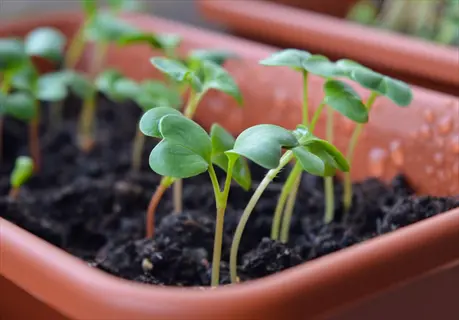
- Timing: Clemson does not time radish, but Penn State puts the whole brassica family at a 7 to 8 day cycle.
- Antioxidants: Black radish led DPPH antioxidant scavenging capacity at 83.32%, the highest of six species.
- Aroma: The same study ranked black radish the most aromatic microgreen it measured, ahead of pea.
- Vitamins: USDA named green daikon radish the vitamin E leader among 25 commercial varieties tested.
- Tasting note: Peppery and hot, which makes small amounts go a long way on eggs or in a sandwich.
- Best for: Growers who want flavor rather than a mild green to bulk out a salad bowl.
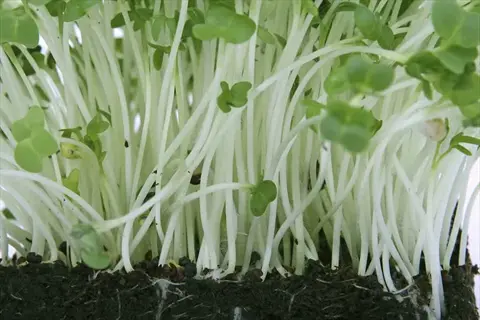
Pea shoots
- Timing: Clemson lists pea at 10 to 15 days to harvest, a little slower than the brassicas.
- Seeding: A large seed, so Penn State's rate drops to about 2 seeds per square inch for a tray.
- Nitrate: Balik and colleagues detected no nitrate at all in pea, the lowest of the six species measured.
- Vitamins: Ascorbic acid came in at 70.76 mg per 100 g, second only to bean among those six species.
- Tasting note: Sweet and green, closer to a fresh pea than to anything peppery.
- Best for: Anyone who finds brassicas too sharp and wants volume rather than a garnish.
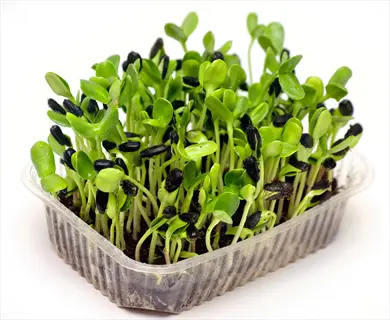
Sunflower
- Timing: Clemson lists sunflower at 8 to 12 days to harvest, close to the fastest brassicas.
- Minerals: Sunflower led calcium among six species, at up to 148.63 mg per 100 g fresh weight.
- Vitamins: Ascorbic acid measured 67.55 mg per 100 g, well above broccoli in the same study.
- Seeding: Another large seed, so it belongs at the low end of the 2 to 12 seeds per square inch range.
- Tasting note: Nutty and thick-stemmed, with enough crunch to hold its shape in a bowl.
- Best for: Salads that need body, where thin brassica stems would disappear.
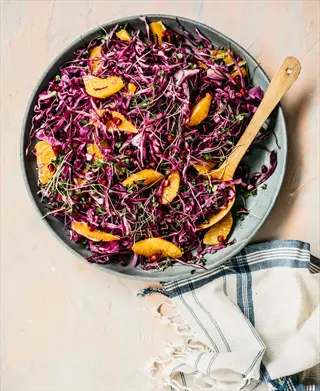
Red cabbage
- Vitamins: USDA named red cabbage the vitamin C leader among the 25 commercial varieties it measured.
- Seeding: A small brassica seed, so Penn State's density sits near the high end of 12 seeds per square inch.
- Research: This is the species USDA fed to mice, where microgreens lowered LDL more than mature cabbage.
- Family: Clemson does not time red cabbage either, though Penn State puts brassicas generally at 7 to 8 days.
- Tasting note: Mild and a little sweet, with the purple stem doing most of the work on the plate.
- Best for: Growers chasing vitamin C rather than heat, and anyone who wants color in a tray.
Start with two trays, not five. One fast brassica gives you a cut inside 10 days, and that is long enough to learn how much water a tray wants. One large seed like pea or sunflower fills a plate instead of just topping one. Add the slower crops once those two come off clean.
Growing Them at Home
Day five, and my first radish tray looked wrong. The stems had stretched into pale threads and flopped flat on the soil. I had clamped the clip-on shop light to the window frame, a full foot above the seedlings. Drop it to 4 inches (10 cm) and the stems come up short and thick. Grow light height does more for growing microgreens indoors than the bulb you pick, and a plain fluorescent tube is enough.
Seed density is the other number worth getting right. Penn State Extension puts large microgreen seeds such as pea and sunflower near 2 seeds per square inch, and small brassica seed as high as 12. For a 30 square inch tray of peas at 90% germinability, that comes out to about 10.1 g of seed. Sow thin and you waste tray space. Sow past 12 and you are over the rate Penn State gives for even the smallest seed. How to grow microgreens without buying a kit comes down to the seven steps below.
Buy untreated seed, and preferably USDA certified organic, because SDSU warns that dyes, fungicides and insecticides could remain in shoots you eat raw.
Use a shallow tray 1 to 2 inches (3 to 5 cm) deep with drainage holes, filled with a soilless mix that has been moistened before it goes in.
Penn State puts large seed such as pea and sunflower near 2 seeds per square inch and small brassica seed as high as 12, then press the seed into the media for contact.
SDSU slips the flat into a plastic bag at close to 100% humidity, then opens and removes it gradually over a couple of days once seedlings appear.
A simple fluorescent bulb is enough, kept about 4 inches (10 cm) above the seedlings so they stay short and sturdy rather than leggy.
SDSU uses a half-strength water-soluble fertilizer such as 20-20-20 once seedlings are established, kept off the stems and leaves.
Snip just above the growing medium with clean scissors at 1 to 3 inches (3 to 8 cm) tall, as the first true leaves begin to form.
Mix only as much fertilizer solution as you need and clean the container between uses. SDSU Extension warns that both plant and human pathogens multiply in rich nutrient solution left at room temperature.
Store-bought trays can cost more than regular salad greens, and the short shelf life is part of why. Cut microgreens hold 5 to 7 days in the fridge, so a grower has to move them fast and handle them by hand the whole way. At home you skip that. You pay for seed and a bag of soilless mix, then cut what you want the hour you eat it.
Run one variety before you run four. Broccoli is ready at 8 to 10 days and peas want up to 15, so start a fresh tray each week once the timing makes sense to you. Keep notes on the sowing rate you used and how tall the stems ran.
Safety, Storage and Serving
Microgreens food safety starts before the seed ever gets wet. You eat this crop raw, so the seed you buy and the mix you sow it into matter more than anything you do at the sink later. Buy untreated seed and pay the small premium for certified organic if you can, because seed treatments have no business in a shoot you eat whole. The growing medium is the other half of it. Garden soil, manure and compost can carry bacteria into a tray you will never cook.
- Seed: Buy untreated seed, ideally USDA certified organic, so seed treatments do not end up in shoots that are eaten raw.
- Medium: Use a clean soilless mix and never garden soil, manure or compost, which Clemson warns may harbor bacteria.
- Containers: Wash recycled trays with soap and water before sowing, and clean any fertilizer container between uses.
- Harvest: Cut with clean scissors just above the growing medium so no growing medium travels into the bowl with the greens.
- Storage: Keep cut microgreens in a bag or container in the refrigerator and expect 5 to 7 days of good quality.
- Washing: Clemson advises leaving them unwashed until you are ready to use them, then rinsing thoroughly as UF Health recommends.
Tomato, pepper, eggplant and potato must never be grown as microgreens. Penn State Extension excludes all four because their seedlings contain toxic alkaloids at this stage.
How to store microgreens comes down to two habits. Cut greens go into a bag or a lidded box in the fridge, and microgreens shelf life runs 5 to 7 days from there. Some types hold a little longer. Washing microgreens is the part people get backwards. Wet leaves in a sealed box turn to slime, so leave the greens dry until you plan to eat them, then rinse thoroughly. Packaging buys real time. In one trial, buckwheat microgreens held at 41°F (5°C) under low oxygen stayed in good shape past 14 days. The film was rated at 225 cc per square inch per day.
Half of my first tray went in the bin. Three years ago I had one flat of broccoli going on the kitchen windowsill all winter, and I cut the lot on a Sunday. I rinsed it and packed it away still damp. By Wednesday the box smelled like a pond. The next cut went in dry and sealed, and it was still crisp on day six.
One group has a caution on the record. If you take warfarin or another blood thinner, you may need to limit vitamin K foods. Of the 25 varieties USDA measured, garnet amaranth tested highest in vitamin K. Flavor tracks chemistry as well. Brassica pungency comes from glucosinolates, which is why radish and broccoli bite on the tongue. Aroma runs strongest in black radish, then pea and sunflower, and mildest in red beet and bean.
Common Myths
Microgreens contain up to 40 times more nutrients than the mature vegetables that the very same seeds would grow into.
USDA measured about five times more vitamins and carotenoids across 25 varieties, and UF Health independently puts the range at 4 to 6 times.
Almost any vegetable or herb seed can safely be sown thickly, cut young and eaten as a microgreen.
Tomato, pepper, eggplant and potato seedlings contain toxic alkaloids, so Penn State Extension excludes them from microgreen growing entirely.
Microgreens and sprouts are really the same product, just sold under two different marketing names at two different prices.
Sprouts germinate in water and are eaten whole, roots and seed coat included, while microgreens grow in a medium and only the above-ground parts are eaten.
Any soil works for a microgreen tray, including garden soil or compost scooped straight from the heap in the backyard.
Clemson Extension warns against garden soil, manure and compost because they may harbor bacteria, and this is a crop eaten raw.
Studies have proven that eating microgreens lowers human cholesterol and helps people manage their weight over time.
The strongest evidence is a USDA trial in 60 mice, where red cabbage microgreens lowered LDL cholesterol more than mature red cabbage did.
Conclusion
Your first microgreens tray starts with one bag of untreated seed, and broccoli is the crop to learn on. Sow it, keep the surface damp, and cut the tray at 8 to 10 days, the window Clemson Extension gives for broccoli. Then sow tray two the same afternoon you cut tray one. Harvests overlap that way, and you never stand at an empty shelf waiting another 10 days for something to eat.
Two numbers decide whether that tray works. Keep a plain fluorescent bulb about 4 inches (10 cm) above the seedlings. Sow 2 to 12 seeds per square inch. Big seed like pea and sunflower goes at the low end, and small brassica seed goes at the high end. The two mistakes that sink microgreens for beginners are the same ones every time. The light sits too high and the stems stretch pale and floppy, or the seed goes down well past the rate Penn State gives for small seed.
A store tray runs higher than a bag of regular greens, and the reason sits in how the crop moves. Microgreens cost more partly because the crop keeps only 5 to 7 days in the fridge after cutting, so every tray on the shelf is already on the clock. Getting a safe, high-quality tray to that shelf is complicated, labor-intensive work. Growing microgreens at home skips the shipping window, and one packet of seed sows tray after tray.
One rule never bends. Never sow tomato, pepper, eggplant, or potato seed for a tray. Those seedlings carry toxic alkaloids, and you eat this crop raw, so no cooking step is there to save you. Stick to the brassicas, peas, sunflower and beet, plus the soft herbs, and you still have hundreds of flavors to work through. The nutrient edge is real at about 4 to 6 times mature greens, and the species you choose matters far more than any multiplier printed on a package.
Glossary
- Cotyledon
- The first pair of leaves that emerges from a seed, formed inside the seed rather than grown by the plant afterwards.
- DPPH antioxidant scavenging capacity
- A laboratory test that scores how much of a standard reactive chemical a food can neutralize, reported as a percentage.
- Glucosinolates
- Sulfur compounds in cabbage-family plants that give broccoli, radish and mustard seedlings their peppery bite.
- Mineral bioavailability
- How much of a mineral in a food your body can actually absorb, rather than how much the food contains.
- Soilless growing medium
- A clean seed-starting mix made from materials such as peat, coir or perlite instead of garden soil.
- Total phenolic content
- A measure of the plant compounds behind much of a vegetable's antioxidant activity, reported in mg of gallic acid equivalent per 100 g.
- True leaves
- The leaves that appear after the cotyledons and look like the mature plant's leaves, marking the point where microgreens are usually cut.
- Untreated seed
- Seed sold without a coating of dye, fungicide or insecticide, which matters because microgreen shoots are eaten raw.
External Sources
Frequently Asked Questions
What does eating microgreens do for you?
They add a concentrated dose of vitamins, carotenoids and antioxidants to raw food. USDA measured about five times more vitamins and carotenoids than mature counterparts, and UF Health puts the range at 4 to 6 times.
Is it okay to eat microgreens every day?
No source in this research sets a daily limit for microgreens. What it does show is how far composition differs by species:
- Nitrate ran from 636.41 mg per kg in red beet down to none detected in pea
- Rinse them thoroughly before eating, as UF Health advises
- People on a blood thinner such as warfarin should ask a doctor about vitamin K first
How much microgreens should I eat per day?
No source found sets a human serving size. The closest anchor is the USDA mouse trial, which dosed red cabbage microgreens at the equivalent of one cup of vegetables per person per day.
Can I eat microgreens raw?
Yes. Raw is the standard way to eat them, and UF Health advises rinsing thoroughly first. Clemson Extension suggests not washing them until you are ready to use them.
What's the best way to eat microgreens?
Raw and rinsed, since only the above-ground parts are eaten and there is no cooking step in the usual method. Balik and colleagues ranked black radish the most aromatic of six species and bean the least.
Who should not consume microgreens?
UF Health flags one clear group: people taking a blood-thinning medicine such as warfarin, who may need to limit vitamin K foods. Garnet amaranth was the highest vitamin K variety USDA measured.
Which microgreens are not edible?
Penn State Extension excludes four common vegetables from microgreen growing:
- Tomato seedlings, which contain toxic alkaloids at this stage
- Pepper seedlings, excluded for the same reason
- Eggplant seedlings, also a nightshade
- Potato seedlings, which should never reach a plate as microgreens
- Wild plants, unless you are a plant expert who can identify them
What are the best microgreens for beginners?
If shortest documented harvest time is the criterion, Clemson's list puts broccoli first at 8 to 10 days, sunflower at 8 to 12, basil at 8 to 12, pea at 10 to 15 and kale at 10 to 15 days.
Do microgreens regrow after being cut?
Extension guidance treats a tray as a single harvest. Both Clemson and SDSU direct you to cut just above the growing medium, and neither describes a second cut, so plan on resowing rather than waiting.
Is microgreen a superfood?
Only in the loose sense that word carries. USDA measured about five times more vitamins and carotenoids than mature counterparts, and UF Health puts the range at 4 to 6 times, but no human trial in this research supports disease claims.