Ornamental · Asteraceae
Yarrow
Achillea millefolium
Give it full sun and poor, dry soil, then relax, because yarrow rewards a light touch all summer.
Full sun
USDA 3–9
1–3 ft · 0.3–0.9 m
Overview
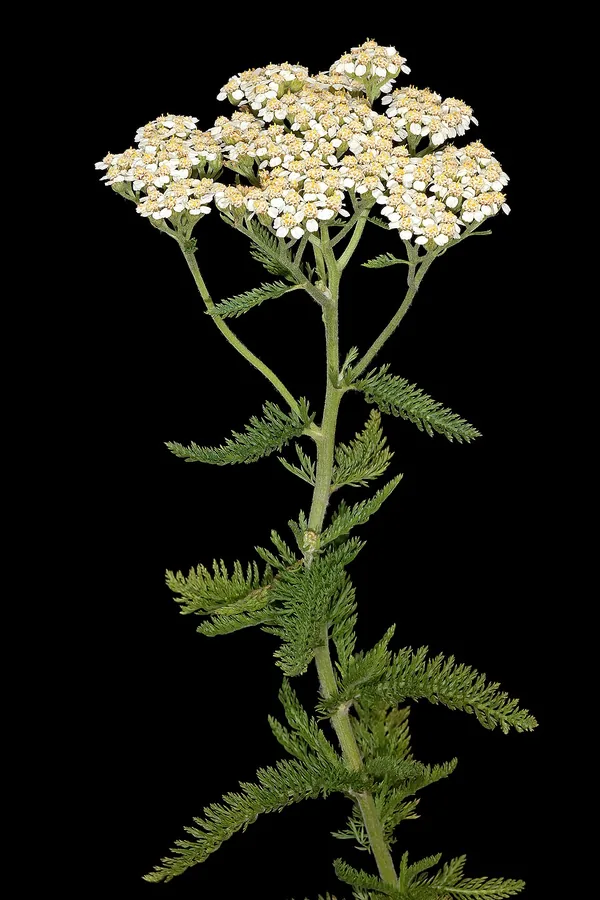
If you have ever worried about killing a plant, yarrow is a kind place to begin. It lifts flat clusters of bloom above soft, fern-like leaves that give off a sharp scent when brushed, and those flowers bring in pollinators like butterflies through summer and into autumn. Once the roots take hold, it forgives heat, dry spells, and thin soil that would defeat needier plants, so you can breathe easy.
This is a hardy perennial across zones 3 to 9, which is a comforting thing to know: it fades back each winter and comes home on its own every spring. The wild form runs cream to white, while named cultivars open the door to red, rose, gold, and salmon. Most settle between 1 to 3 feet (30 to 91 cm) tall and reach about as wide.
The one habit to keep in mind is that yarrow loves to wander. It travels on underground runners and seeds itself around, so a tidy clump can widen into a sprawling patch if left alone. Give it a little space, divide it every so often, and that eagerness becomes a gift rather than a chore.
Care
The short version: full sun and lean, dry, well-drained soil suit it best. Water it sparingly, leave the fertilizer in the shed, and divide the clump every few years to keep it healthy and in bounds.
Light
Give yarrow full sun, six hours a day or more, and it grows sturdy and flowers hard for you. It will take a little afternoon shade if it must, but the stems stretch and flop in anything dimmer, and the blooms thin out.
Water
This is a drought-tough friend that likes to dry out between drinks. Water young plants until they root, then ease right off, because soggy soil is the quickest way to rot the crown. Once settled, it usually gets by on rain alone.
Soil
Lean, well-drained ground is the whole happy secret. Loam, sand, even poor or alkaline soil all suit it, and a pH anywhere from 6.0 to 8.0 is just fine. Rich soil only grows weak, floppy stems, so resist the urge to spoil it.
Humidity
Outdoor humidity is nothing to worry over, so there is no level to fuss with. What truly counts is air moving through the plant, since still, damp air is what stirs up powdery mildew and rust.
Feeding
Feed it almost nothing, and feel free about it. Yarrow flowers best and lives longest in nutrient-poor soil, and a shot of fertilizer only gives you lush, weak growth that flops. Skip it unless your ground is truly bare.
Pruning
Deadhead the spent flowers as the season rolls on to stretch the bloom and cut down on self-seeding. Snip back sprawling stems when you see them, then shear the whole plant once flowering eases off, and it looks tidy again in no time.
Size & spacing
Plants reach 1 to 3 feet (30 to 91 cm) tall and spread about as wide. Set them 12 to 18 inches (30 to 45 cm) apart so air moves freely and the clumps have room to breathe.
When to plant
Yarrow keeps easy time with the seasons, so there is no need to fret over the calendar. Start seed indoors in late winter or sow it outdoors in spring, set young plants out once frost has passed, and the flat flower heads will carry you gently from June into September.
Northern hemisphere
Southern hemisphere
Typical months for a temperate climate: start earlier in warm zones, later where spring frosts linger.
- Sow: Start seed indoors 6 to 8 weeks before the last spring frost.
- Plant: Transplant after danger of frost has passed in spring, spacing plants 12 to 18 in apart.
- Harvest: Blooms June to September, with flat-topped flower clusters from early summer into fall.
Hardiness
USDA hardiness zones: 3–9
Temperature: down to -40°C
Troubleshooting
Take comfort in this: nearly every yarrow woe traces back to one honest mistake, treating it like a thirsty, hungry plant. Too much water, too much shade, or soil that is too rich invites the rot, mildew, and flopping described below. Catch the early signs and the cure is usually to do less, not more.
Soft, collapsing crowns where the ground stays wet
Try not to panic if a plant caves in at the base, because this is root and crown rot and it comes from soil that holds water, not from a bug you missed. Yarrow was made for lean, dry footing, so it struggles wherever puddles sit. Shift it to a bright, free-draining spot, ease off the watering once it has settled, and trim away the mushy centers before you gently split the firm outer growth to save it.
Fix:
- Move or replant in a well-drained, full-sun site
- Stop supplemental watering once established
- Remove rotted crowns and divide healthy outer growth
A pale, dusty film creeping over the leaves
That chalky coating is only powdery mildew, a fungus that moves in when the air sits damp and the plants crowd each other. It seldom does lasting harm, so take heart; it mostly just dulls the foliage. Open the clump up so air can pass through, aim your watering at the roots rather than the leaves, and let full sun and quick-draining soil do the rest.
Fix:
- Improve air circulation by thinning and proper spacing
- Avoid overhead watering
- Site in full sun with good drainage
Bloom stems leaning over into a soft tangle
When the stems buckle and lie down, that is lodging, and it happens because the soil is too generous or the corner too shady and damp. Grow yarrow a little tough, in full sun on lean, dry ground, and you will be delighted how upright it stands. Shear it back once the flowers fade and split any crowded clumps, and the new growth comes back sturdier and more compact.
Fix:
- Grow in full sun and lean, dry soil for sturdier, more compact growth
- Cut back or shear after flowering
- Divide crowded clumps
Little rusty specks scattered over leaves and stems
Those raised orange dots are rust, a fungus that settles in when foliage stays wet for long stretches, and it looks worse than it is. Pick off the marked leaves and bag them so the spores cannot travel on. Give the plant more breathing room, keep the leaves dry, and hold it in full sun with sharp drainage, and it will shrug this off.
Fix:
- Remove and dispose of infected foliage
- Improve air circulation and avoid wetting foliage
- Maintain full sun and good drainage
Toxicity
Around animals yarrow is a mild caution rather than a real poison, so there is no need for alarm. The leaves and flowers carry alkaloids and volatile oils that can unsettle a stomach and irritate skin, so keep grazing pets and curious nibblers away. People have long used it as a folk remedy, but it is not food, and the sap leaves some hands red and itchy.
Toxic to
Cats · Dogs · Horses · Rabbits · Livestock · Birds · People
Cats Mild
Should a cat nibble a leaf, expect a bit of drooling and a queasy stomach, perhaps some vomiting or loose stools. This is a mild caution and not a true emergency, though the skin may redden where the sap has touched.
Dogs Mild
A dog that chews the foliage often drools, brings it back up, or gets the runs, and a few go off their food and seem a little flat. Keep it filed as a mild caution, since most upsets clear on their own with time.
Horses Mild
A horse that grazes on yarrow might drool, loosen up, or show a touch of colic, more so after a big mouthful. The reaction stays at the mild end, though the volatile oils can leave the skin tender.
Rabbits Caution
The alkaloids and oils that unsettle other animals make yarrow a poor pick for rabbits too. Treat it as a caution and keep it clear of the hutch, since a rabbit's digestion copes badly with trouble.
Livestock Caution
Cattle, sheep, and goats usually pass yarrow by for its bitter taste, but a hungry animal that eats a lot can end up with the same stomach upset. Worth a gentle caution where the pasture runs thin.
Birds Caution
There is little cause to hand yarrow to pet or backyard birds, and the achilleine it holds makes it a caution instead of a treat. Keep cut stems and seed heads somewhere they cannot reach.
People Caution
Folks have leaned on yarrow as a folk remedy for ages, but it is no salad leaf, and handling it can leave tender skin red and itchy. Slip on gloves before you cut it, and treat any eating of the plant as a caution.
Sesquiterpene lactones and volatile oils can cause contact dermatitis in sensitive people; consider gloves when handling or cutting plants.
Helpline numbers

United States
ASPCA Animal Poison Control: (888) 426-4435 (fee applies)
Poison Control: (800) 222-1222



Canada
Poison Centres: 1-844-764-7669
Varieties
The wild species spreads hard and runs cream to white, so many gardeners happily reach for a named cultivar with warmer color or a tidier shape. Here are a few worth getting to know.
Paprika
A low, mat-forming yarrow whose dusty-red flowers with yellow eyes soften to pink and creamy yellow as they age, so long as you forgive its habit of sprawling and lodging more than most.
New Vintage Rose
A neat, compact rose-pink pick bred to hold itself upright and stay tidier than the wandering wild species.
Strawberry Seduction
This one opens deep strawberry-red with yellow centers that mellow into gentler shades as the season goes on.
How to propagate
Making more yarrow is refreshingly easy, whether you split a settled clump or coax it up from seed.
DivisionEasy
Divide established clumps in spring or fall, every 2 to 3 years. · Divisions root and re-establish within one growing season.
Dividing is the friendliest way to make more yarrow and the simplest way to keep it in bounds, and it is hard to get wrong. Lift a settled clump in spring or fall every 2 to 3 years, tease off the strong outer growth, and set the pieces 12 to 18 inches (30 to 45 cm) apart. They take hold and find their feet within a single growing season.
SeedEasy
Sow indoors 6 to 8 weeks before last frost or direct sow in spring. · Germinates readily; flowers the first or second season.
Seed is just as forgiving. Begin it indoors 6 to 8 weeks before your last frost, or simply scatter it outdoors in spring, and it sprouts fast and flowers in its first or second year. It also sows itself with great enthusiasm, so snip off the faded blooms if you would rather not gather up volunteers later.
Myths
Yarrow needs rich soil and frequent watering and feeding to thrive.
Happily for you, the truth runs the other way. Yarrow does its finest work in lean, dry, well-drained ground under full sun, and the more you fuss over it, the floppier and shorter-lived it grows. Kindness of the wrong kind is what harms yarrow, since wet, rich soil brings on the root rot that finishes the plant.
Yarrow is a tidy clump that stays where you plant it.
The wild kind likes to roam. It creeps outward on underground runners and sows itself freely from seed, so one plant can grow into a wide patch inside a season or two. A little dividing and deadhead now and then keeps it friendly, or pick a sterile named cultivar if you would rather it hold still.