Ornamental · Portulacaceae
Moss Rose
Portulaca grandiflora
Hand moss rose the hottest, driest corner you have, and it thanks you with color from summer's start to its close.
Full sun
Every 7–14 days
59–95°F · 15–35°C
USDA 2–11
Overview
If a hot, awkward patch has defeated everything else you have planted, moss rose may be the one that finally makes you feel like a gardener. This is a low, spreading succulent with slim, needle-like leaves and cheerful ruffled blooms, and it genuinely enjoys the heat, dry spells, and thin ground that leave choosier plants unhappy. Coming from South America, it settles in beautifully in rock gardens, along bed edges, and in containers that sit in the full afternoon glare.
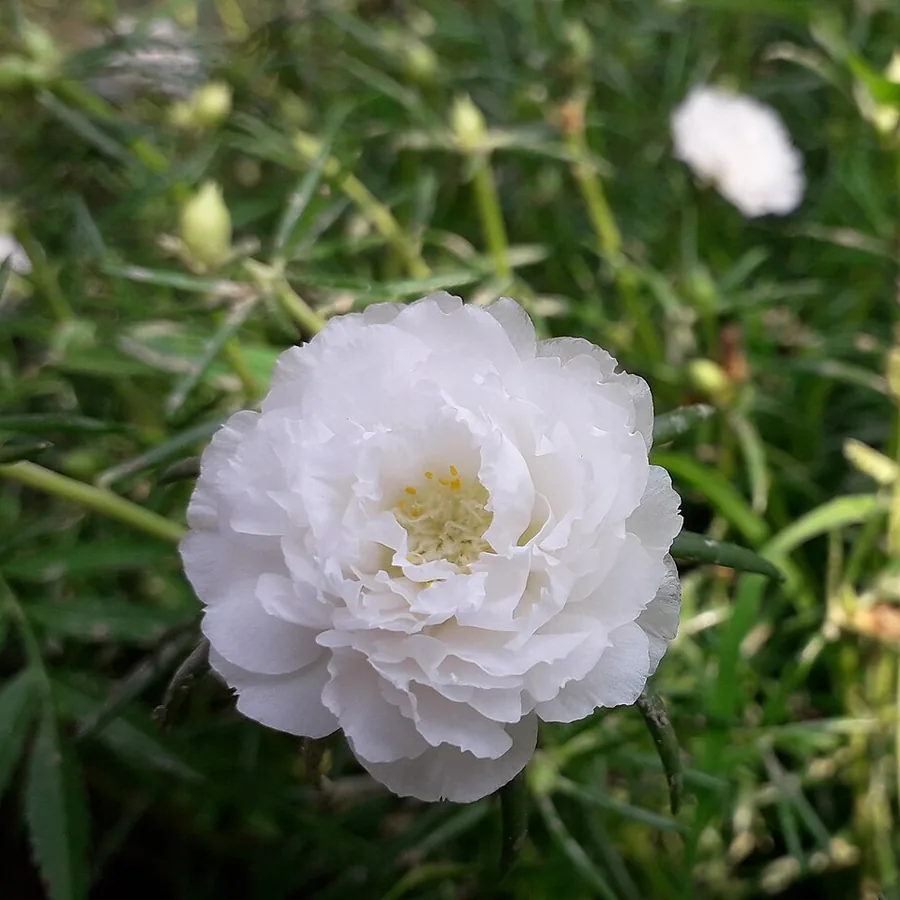
The flowers are what you will fall for. They open in warm pinks, oranges, reds, yellows, and clean whites, and many are doubled so fully they resemble miniature roses, which is exactly how the plant earned its common name. One gentle thing to know up front: each bloom only opens in strong sun and closes again on gray days and later in the afternoon, the habit that gave it the nickname eleven o'clock plant.
Here is the reassuring part: almost nothing else you grow will ask for so little. Set it into poor, sharp-draining ground, hand it every hour of sun the spot can offer, and water only once the soil has gone dry to the touch. The single misstep is kindness of the wrong kind, because rich soil, generous feeding, or watering too often will leave you with stems that turn soft and rot and noticeably fewer flowers. Ease back on all three and it recovers without drama.
Care
The short version: hand it blazing, direct sun and dry, sandy soil that drains fast. Wait until the ground is fully dry before watering, go easy on food, and let the heat carry it. Mistakes here are gentle and easy to undo.
Light
Give moss rose the brightest, most open spot you have, ideally 6 or more hours of direct sun each day. Those famous flowers only open when the light is strong, so a little extra sun turns straight into a little extra color, and there is almost no such thing as too much for this plant.
Water
Water it the way you would any succulent and let the soil go completely dry between drinks, which tends to land somewhere near every 7 to 14 days. Too much water is the single thing that will truly undo it, while heat and dry stretches hardly register, so leaning toward forgetful beats leaning toward fussy.
Soil
Plant moss rose in light, sandy soil that drains freely, even the lean, stony ground where other annuals would give up. It is easygoing about pH, happy anywhere from 5.5 to 7.5, and it cares far more about quick drainage than about how rich the soil is.
Temperature
Warmth is where moss rose is happiest, and it cruises along anywhere from 59°F to 95°F (15°C to 35°C). Frost, on the other hand, finishes it off completely, so wait to move it outdoors until the cold season is truly done.
Humidity
This is one plant that never asks you to fuss over humidity, since dry air suits it perfectly. Good airflow and a low-moisture setting are actually protective, keeping away the rot that damp, stagnant conditions tend to invite.
Feeding
Moss rose is a light eater and actually flowers best when kept a little on the hungry side. In lean soil you can skip feeding altogether, since too much nitrogen simply grows leaves in place of blooms, and even in poorer ground a single gentle feed across the summer is all it will ever want.
Pruning
If a few stems begin to stretch and look leggy, just pinch them back and the plant responds with fuller, bushier growth. Deadheading is a chore you can happily skip, since moss rose clears away its own spent flowers and reseeds itself for the following year.
Repotting
Because it lives as an annual, moss rose almost never needs repotting. For the most part you will simply settle nursery starts into place at planting time, and if one does live in a container, treat roots winding around the edge or a mix that empties of moisture the moment you water as a quiet sign it wants more room.
Size & spacing
Moss rose hugs the ground, standing only about 4 to 8 inches (10 to 20 cm) tall, and it fans out into a soft mat 6 to 12 inches (15 to 30 cm) wide. Set the plants so those mats can meet and knit without piling onto each other, letting air pass through freely so rot never gets a foothold.
When to plant
Moss rose likes to wait for true warmth and has no tolerance for frost, so there is never a reason to hurry it. Sow the seed indoors during the tail of winter, then move the young plants outdoors after the ground warms and the last frost has passed. From there the flowers keep arriving from summer into the first weeks of fall, and letting the weather lead is the only timing that really counts.
Northern hemisphere
Southern hemisphere
Typical months for a temperate climate: start earlier in warm zones, later where spring frosts linger.
- Sow: 6 to 8 weeks before the last spring frost
- Plant: After all danger of frost has passed and soil has warmed
- Harvest: Summer through early fall
Hardiness
USDA hardiness zones: 2–11
Temperature: down to -46°C
Troubleshooting
Nearly every worry with moss rose comes down to one of two causes: water it is getting too much of, or sun it is getting too little of. The reassuring part is that the plant shows its hand early, in the state of its stems and the mood of its flowers, which gives you time to correct course before anything turns serious. Find your symptom below and ease the conditions back into balance while there is still plenty of time.
Soft, dark stems folding over at soil level
When the base of the stems softens, darkens, and folds over, you are seeing root and stem rot, which nearly always follows overwatering or soil that refuses to drain. The lower stem feels mushy and looks off-color while the soil beside it holds water for days on end. Cut the watering right back, mix extra sand or grit through the soil to loosen it, and gently lift away whatever has already rotted right through, and what remains should pull through fine.
Fix:
- Reduce watering and allow soil to dry
- Improve drainage with sandy or gritty soil
- Remove and discard severely rotted plants
Lots of healthy leaves and hardly a bloom
If the leaves look full and green but the flowers refuse to appear, the plant is almost always running low on direct sun or sitting on too much nitrogen. Moss rose wants a good 6 hours of hard, direct sun before it will open its blooms, and a heavy feed nudges it toward foliage in place of color. Give it the most open, sunniest spot you have and go lighter on the fertilizer, and the flowers usually follow along.
Fix:
- Move to a full-sun location
- Stop or reduce fertilizing
Toxicity
There is no cause for alarm here, only a little awareness: moss rose is mildly toxic, so it helps to keep pets and grazing animals from making a meal of it. Its foliage and stems hold soluble calcium oxalates, which for the most part mean some drooling and a queasy stomach, though a real mouthful can leave an animal weak and put strain on the kidneys. Keep it out of reach of cats, dogs, horses, and the rest, and enjoy its edible relative purslane as a green in moderation rather than by the handful.
Toxic to
Cats · Dogs · Horses · Rabbits · Livestock · Birds · People
Cats Mild
A curious nibble usually ends in little more than some drooling and a sour, unsettled tummy. A cat that gets down a real mouthful may drool a lot and turn sluggish, and a genuinely large helping can put a real strain on the kidneys.
Dogs Mild
Most dogs that gnaw a stem or two come away with only a little drooling and a grumbly gut. Watch a bit more closely for weakness or vomiting that comes and goes should a dog have been grazing on a good amount of it.
Horses Mild
For a horse, one or two mouthfuls usually pass with nothing worse than some slobbering and a dull, off-feed stomach. A horse that grazes it heavily, though, may weaken as the oxalates pile up and bind its calcium.
Rabbits Caution
Rabbits are best kept away from moss rose, because it carries those very same soluble oxalates. It is safer to fence it off from where a rabbit lives and exercises than to gamble on a delicate gut.
Livestock Caution
Cattle, sheep, and goats seldom go out of their way to eat moss rose. Even so, an animal that is hungry on bare, picked-over ground might take in enough to drool and turn weak, so it is worth fencing the plant off anywhere stock graze.
Birds Caution
Birds kept as pets and those visiting the backyard can be sensitive to these oxalates too, so the gentlest choice is to keep moss rose clear of cages and aviaries.
People Caution
For people, the garden form of moss rose is best simply admired in the bed and left uneaten. Its close relative purslane does show up as a leafy green, yet it holds the very same oxalates, so even that belongs on the plate in modest amounts rather than by the bowlful.
Common purslane (Portulaca oleracea) is eaten by people but also contains oxalates and should be consumed in moderation.
Helpline numbers

United States
ASPCA Animal Poison Control: (888) 426-4435 (fee applies)
Poison Control: (800) 222-1222



Canada
Poison Centres: 1-844-764-7669
Varieties
Almost all the moss rose you will meet at the garden center traces back to a handful of breeding series, each chosen for something helpful: fuller petals, stronger color, or a willingness to stay open when the light is less than perfect. These are the names worth remembering when you shop.
Sundial Series
A tidy, compact hybrid whose double flowers wake up earlier in the morning and stay open longer in dim light than most others manage.
Margarita Series
A strong, sun-baking double bred to keep flowering in both beds and pots right through the harshest part of summer.
Happy Hour Series
A neatly mounding kind that produces big double blooms in a remarkably broad spread of colors.
How to propagate
Few annuals are as easy and forgiving to multiply as moss rose. You can raise a whole flat from its dust-fine seed, or snip a few cuttings from a plant already in your garden, and either route asks very little of you.
SeedEasy
Start indoors 6 to 8 weeks before last frost or direct sow after frost; self-sows readily · 2 to 4 weeks to germinate and establish
Few things sprout as willingly as moss rose, but the seed is dust-fine and needs light to wake up, so scatter it across the surface and resist the urge to bury it. You can start it under cover 6 to 8 weeks ahead of the last frost, or wait and sow straight into warm, settled ground once the cold has passed for good. Give the seedlings 2 to 4 weeks to appear and take hold, and after that first year the plant reseeds itself without any help from you.
Stem cuttingsEasy
During the active summer growing season · 1 to 2 weeks to root
Cuttings are every bit as forgiving, and the active push of summer growth is the time to take them. Break a healthy stem off the plant, give the cut end a few hours to dry and callus over so it will not rot once planted, then press it down into gritty soil. In roughly 1 to 2 weeks it will have taken root.
Myths
Portulaca must be safe around pets, since purslane is a vegetable people eat.
Yes, the two are cousins, but a shared family tree does not turn the garden flower into pet food. The ASPCA lists Portulaca species as toxic to cats, dogs, and horses thanks to soluble calcium oxalates, and even the edible purslane holds those very oxalates. Keep it comfortably out of your pets' reach.
Moss rose keeps its flowers open from morning to night.
In truth, each bloom opens only under bright, direct sun and folds shut again in shade, under clouds, and as the afternoon wears on. That very habit is what earned it the nickname eleven o'clock plant.