Tree · Moraceae
Common Fig
Ficus carica
Plant it in full sun with steady summer water, and a fig will reward you with sweet fruit for years to come.
Full sun
Every 7–14 days
50–95°F · 10–35°C
USDA 7–10
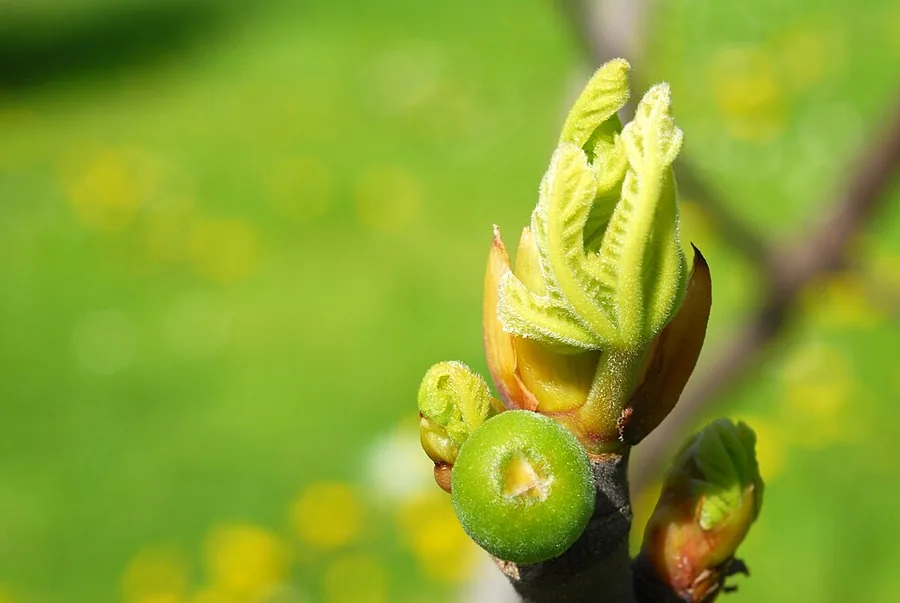
Overview
Not many backyard trees give back the way a fig does, and that makes it a wonderful first tree to try. It belongs to the mulberry family, drops its broad, lobed leaves each winter, and has been cherished around the Mediterranean for thousands of years. Best of all it is forgiving and fast, growing from a humble cutting into a fruiting tree in only a few seasons.
The harvest is where a fig truly puts you at ease. The kinds grown at home set their own fruit with no pollinator and no fuss, so even one young tree can fill a basket. They grow quickly and generously, stretching 10 to 30 feet across in open ground, though a pot will happily keep one small enough for a patio if space is tight.
The single thing to keep in mind is the sap. Break a leaf or stem and you will see a milky, irritant sap that can sting bare skin and upset pets. Take heart, though: the ripe fruit is completely safe to eat, so all it really asks is gloves at pruning time and a spot the dog cannot reach.
Care
The short version: settle your fig into full sun and rich, well-drained soil, water it deeply all season long while keeping the ground from going soggy, prune in late winter, and feed it from spring into early summer.
Light
Your fig will be happiest in full sun, and the more it gets the sweeter the fruit and the healthier the tree. A little partial shade is fine if that is all you have, though you can expect a somewhat smaller, later crop in trade.
Water
Give your fig a deep, regular drink all through the growing and fruiting season, since steady moisture is what plumps the fruit and keeps it on the branch. The one thing it cannot forgive is soggy, waterlogged soil, so let the top inch or so dry out between waterings. A comfy layer of mulch holds the moisture even and helps stop fruit from dropping.
Soil
Plant your fig in rich, well-drained loam that stays moist without ever turning to mud. Figs prefer a pH from 6.0 to 7.0 and are not fond of alkaline ground, so mix in plenty of organic matter before you plant and you will be off to a great start.
Temperature
Figs are warmth lovers, doing their best between 50°F and 95°F (10°C to 35°C). They are most content in mild zones, and if a cold snap nips the top in a chillier spot, do not worry too much, as the roots often pull through and regrow.
Humidity
Everyday outdoor air suits a fig just fine, roughly 40% to 60%. What matters far more than any humidity number is good airflow through the canopy, since crowded, damp leaves are what invite rust.
Feeding
Feed your fig from spring through midsummer, about April to July, using a balanced granular fertilizer such as 8-8-8 or 10-10-10. Ease off by late summer so the tree is not pushing soft new growth into winter, and lighten the rates in colder zones to help the wood firm up for the cold.
Pruning
Prune in late winter while the tree is resting. Take out any dead wood and thin to an open, bushy shape, trimming up to a third or half of last year's growth to coax fresh branching, and try not to leave stubs. Since fruit forms on new wood, go gently enough to keep the coming crop.
Repotting
A potted fig appreciates a fresh start every 2 to 3 years. Renew the soil and trim the roots when you notice them circling the pot or slipping out the drainage holes, or when the soil dries almost the moment you finish watering.
Size & spacing
Out in open ground a fig grows fast and gets big, reaching anywhere from 10 to 30 feet (3 to 9 m) tall and roughly as wide. Give it that kind of room away from buildings and other trees, or keep it cozy and smaller in a generous pot.
When to plant
Figs love a long, warm season to sweeten their fruit, and they make it easy on you. Tuck young plants outside in late winter or early spring once hard frost has passed, and you can look forward to the main crop arriving from late summer into fall.
Northern hemisphere
Southern hemisphere
Typical months for a temperate climate: start earlier in warm zones, later where spring frosts linger.
- Plant: Late winter to early spring once hard-frost danger passes, using dormant bare-root or container plants
- Harvest: Main crop ripens late summer into fall (about July to October); the tiny flowers are hidden inside the fruit and are not showy
Hardiness
USDA hardiness zones: 7–10
Temperature: down to -18°C
Troubleshooting
A fig asks very little of you, and most hiccups show up at the roots, on the leaves, or in the ripening fruit. The good news is that catching the signs below early usually means a simple cleanup is all it takes. Match what you spot, act with a little care, and the tree bounces right back.
Growth that stalls while the roots develop knotty swellings
If a struggling fig comes up with rounded swellings strung along its roots, the culprit is root-knot nematodes, which turn up most in sandy ground that has hosted the pest before. There is sadly no chemical cure once they settle in, but you still have good moves. Pull and destroy the worst plants, set in clean stock and fresh soil, then mulch heavily so the surviving roots stay strong.
Fix:
- Remove and destroy severely infected plants
- Replant with clean or container-grown stock in fresh, nematode-free soil
- Mulch heavily and water well to support remaining root vigor
Spotted leaves that yellow and fall too soon in late summer
Those yellow-brown spots paired with rusty pustules under each leaf point to fig rust, a fungus that rarely does lasting harm. A bad year may strip the canopy early, yet the tree usually shrugs it off. Rake up and burn the fallen leaves to clear the spores, thin the branches so air can move through, and reach for a labeled fungicide only if it comes back hard year after year.
Fix:
- Rake up and destroy fallen leaves to remove spores
- Thin the canopy to improve air circulation
- Apply a labeled fungicide only if damaging epidemics recur yearly
Figs oozing at ripeness with a sour, fermented smell
When ripening figs ferment and give off a sour, alcoholic smell, you are seeing souring, caused by yeasts that insects carry in through the open eye at the bottom of the fruit. Pick your figs the moment they ripen and tidy away anything that has already spoiled. Choosing a tight- or closed-eye cultivar like Celeste keeps most of the trouble out for good.
Fix:
- Harvest fruit promptly as it ripens
- Remove and dispose of spoiled fruit
- Grow closed- or tight-eye cultivars such as Celeste
Toxicity
The ripe figs are yours to enjoy, but the leafy parts of the tree need a bit of caution. Snap a leaf or stem and a milky sap of ficin and psoralens seeps out, and it can irritate the mouth, gut, and skin. Keep curious pets from nibbling the foliage, and slip on gloves and long sleeves before you prune, because that sap can blister skin in sunlight.
Toxic to
Cats · Dogs · Horses · Rabbits · Livestock · Birds
Safe for
People
Cats Mild
A cat that chews the leaves or stems tends to drool and may vomit, with a sore, irritated mouth. Sap landing on the skin can leave a red, itchy rash.
Dogs Mild
Watch for drooling, an upset stomach, and pawing at the mouth if a dog gnaws a leaf or stem. The sap can redden and inflame the skin wherever it touches.
Horses Mild
That same milky sap irritates a horse's mouth and gut, bringing on drooling and a touch of colic if leaves or stems are eaten.
Rabbits Caution
There is little reason to let a rabbit near the foliage, since the irritant sap is no kinder to its mouth and gut than to any other animal. Keep the leaves and stems well out of reach.
Livestock Caution
Take heart: most grazing animals show little interest in a fig tree. Even so, that milky sap can bother a grazer's mouth and stomach, so it's kindest to keep the foliage fenced away from pasture.
Birds Caution
Birds may peck at ripe fruit without any bother, yet the sappy leaves and stems are an irritant best avoided.
People Ripe fruit safe
Ripe figs are a treat and safe to eat. The catch is the sap from leaves and stems, which can burn the skin and turn into a blistering rash in sunlight, so wear gloves and long sleeves whenever you prune.
Wear gloves when pruning, as the sap can irritate skin and, combined with sunlight, cause photodermatitis.
Helpline numbers

United States
ASPCA Animal Poison Control: (888) 426-4435 (fee applies)
Poison Control: (800) 222-1222



Canada
Poison Centres: 1-844-764-7669
Varieties
There are hundreds of figs out there, which can feel like a lot, so here are a few gentle favorites that earn their spot in most gardens for sweetness, reliability, or pure hardiness. These are the names worth getting to know first.
Celeste
Celeste is a small, sweet fig whose closed eye keeps souring organisms out, and it handles cold better than most common types, which makes it a reassuring choice.
Brown Turkey
Brown Turkey is a vigorous, dependable producer of large fruit grown all across the Southeast, and you may also find it sold under the name Texas Everbearing.
Chicago Hardy
Chicago Hardy is about as tough as figs come, its roots riding out hard freezes and pushing fresh growth from the base even when the top dies back.
How to propagate
Few fruit trees are as generous as a fig when it comes to making more, and a single plant hands you several easy, no-cost ways to do it.
Stem cuttingsEasy
Late winter to early spring, using 8 to 10 inch dormant cuttings of one-year-old wood · About one growing season before transplanting in fall
This is the gentlest place to begin. Take 8 to 10 inch dormant cuttings of one-year-old wood in late winter or early spring and tuck them into soil so one or two buds peek above the surface. Figs root willingly from hardwood, and your young plants will be ready to move in fall after about a season's growth.
LayeringEasy
Spring to summer · About one growing season
Let the plant do the work for you. From spring through summer, pin a low branch down and mound soil over it, or simply lift one of the rooted suckers the tree sends up and replant it. Either way you will have a new fig in roughly a season.
Air layeringModerate
Late spring to summer on semi-hardwood shoots · Several weeks to root, then pot up
Try this when you would love a bigger, further-along plant right away. Wound a semi-hardwood shoot in late spring or summer, wrap the spot in damp moss, and roots will form over several weeks before you cut it free and pot it up.
Myths
A fig tree can't produce fruit unless a fig wasp pollinates it.
Rest easy, because the common figs grown in home gardens set fruit all on their own, with no pollination needed. Only Smyrna, San Pedro, and caprifig types lean on the fig wasp, and that insect cannot even survive across most of the US. Plant a common type and figs will come.
If the plant harms pets, its figs can't be safe to eat.
The ripe fruit is edible and perfectly safe for people. The hazard lives in the irritant milky sap of the leaves and stems, not in the figs you pick and enjoy.