Tree · Fagaceae
Bur Oak
Quercus macrocarpa
Plant a bur oak and you give the future a gentle giant that quietly endures cold, drought, and rough city ground.
Full sun
Every 7–14 days
USDA 3–8
60–80 ft · 18.3–24.4 m
Overview
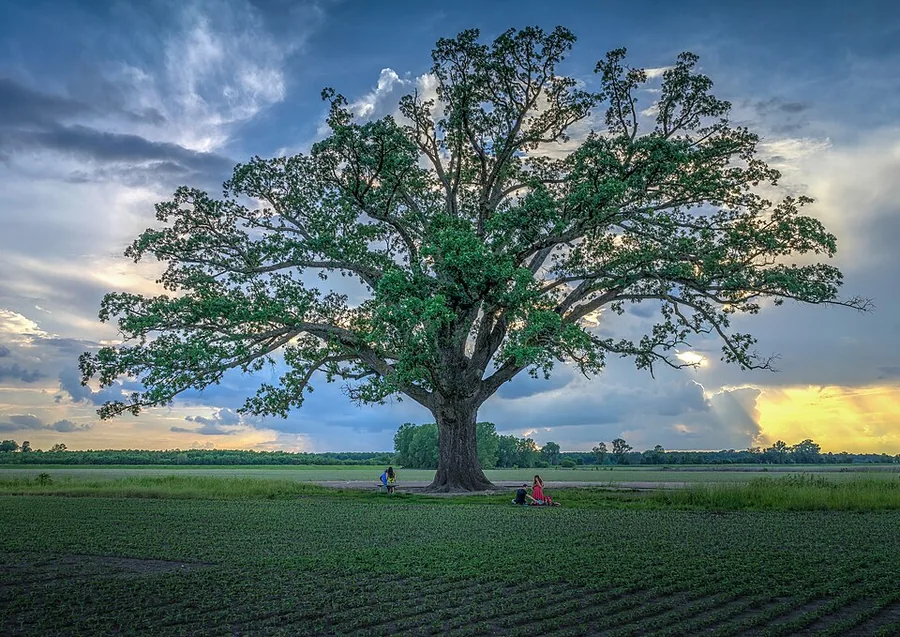
If you have ever worried you might not be up to growing a tree, the bur oak is a kind place to begin. It is among the most forgiving trees on the continent, a slow and patient giant that can stand for hundreds of years and grow 60 to 80 feet (18 to 24 m) tall and just as wide. Part of the white oak group, it carries on through hardships that defeat tenderer trees, from biting winters down to -40°F (-40°C) to parched uplands and packed city clay.
Its acorns are the largest of any native oak, now and then reaching 1.5 inches across, each one cradled in a deep fringed cup that looks soft and mossy and earns the tree its second name, mossycup oak. The catkins are easy to miss, hanging yellow-green for a short while in April, and the acorns swell and ripen in that very same autumn.
Think of this as a tree for the years ahead, one that simply needs full sun and elbow room set well back from houses, foundations, and power lines. Once its roots settle in, it asks almost nothing of you, so you can relax and watch it grow.
Care
The short version: give it full sun and plenty of space, soil of nearly any sort as long as it drains, faithful water for the first few years, and then very little worry from you at all.
Light
Bur oak is happiest in full sun, which means six or more hours each day, and that steady light is what fills out its wide, balanced crown. A young one will put up with a little shade, but a tree raised in deep shade grows thin and leans toward whatever light it can find, so give it the open spot.
Water
Water a young tree faithfully through its first few years while the roots reach down, and after that you can ease off without guilt. A grown bur oak is very drought tolerant and rides out long dry stretches on its own, needing a drink from you only when a drought turns severe.
Soil
There are few trees so easygoing about their ground. It thrives in moist, well-drained loam yet takes clay, dry spots, and even alkaline soil without complaint, which is just why it does so well in the hard places around town.
Temperature
This is a deeply cold-hardy tree, at ease across -40°F to 100°F (-40°C to 38°C) and sturdy through USDA zones 3 to 8. Almost nothing in the way of heat or cold within its range will bother it, so you can plant with confidence.
Humidity
You never have to fuss over humidity for a bur oak outdoors. It grows just as well on damp bottomlands as it does along dry prairie edges, so there is truly no level to manage here.
Feeding
A grown bur oak rarely needs feeding and draws what it wants from a generous spread of roots. Only if the soil is genuinely poor would a balanced slow-release fertilizer in spring be worth your while.
Pruning
Reach for the saw only in late winter while the tree is asleep, taking out branches that are dead, hurt, or rubbing. Hold off on all cutting from April through October, when sap-feeding beetles can carry oak wilt into any fresh wound.
Repotting
none
Size & spacing
Picture a tree that will rise 60 to 80 feet (18 to 24 m) tall and grow just as wide once mature. Give it a home well clear of buildings, foundations, and utility lines so that broad crown and its spreading roots have all the room they need.
When to plant
You do not sow a bur oak the way you would a row of vegetables. Set out a container or balled-and-burlapped young tree in spring, or simply press fresh acorns into the soil come fall. The catkins slip by quietly in April, and the acorns fill out and drop that same autumn, right on their own schedule.
Northern hemisphere
Southern hemisphere
Typical months for a temperate climate: start earlier in warm zones, later where spring frosts linger.
- Plant: Plant balled-and-burlapped or container stock in spring; sow acorns outdoors in fall
- Harvest: Yellowish-green inconspicuous catkins in April; acorns mature in fall of the same year
Hardiness
USDA hardiness zones: 3–8
Temperature: down to -40°C
Troubleshooting
A settled bur oak rarely causes you grief, and most of what you might notice is only skin deep. The single issue that truly deserves your attention is oak wilt, so it helps to know its look and the simple timing rules that keep it away. Take a calm look at the entries below and match what you see before doing anything.
Crown leaves browning at the edges and falling fast
What you are looking at is oak wilt, a fungus that clogs the tree's water channels and works its way down from the top. Because a bur oak sits in the white oak group, it tends to fade slowly rather than collapse in one season, though drought and root damage can wear the same face. Spare the tree any pruning or wounding between April and October, when the spore-spreading beetles are about, and let a certified arborist confirm it through a lab culture.
Fix:
- Avoid wounding or pruning oaks April through October
- Contact a certified arborist or extension diagnostic lab for confirmation
- Sever root grafts between adjacent oaks where feasible
- Remove and properly dispose of severely infected trees to limit spread
Strange bumps, balls, or growths on leaves and twigs
Those curiosities are galls, formed when gall wasps or mites lay eggs and the tree wraps a snug shell around each developing insect. They look odd but hardly ever trouble a healthy oak, so the kindest answer is usually to leave them be. If a few heavily galled twigs bother you, snip them off, and keep your tree watered and thriving instead of reaching for any spray.
Fix:
- Tolerate galls in most cases as they rarely harm tree health
- Prune out and dispose of heavily galled twigs if desired
- Maintain tree vigor with proper watering
Toxicity
This tree is a treasure for shade, yet its acorns, buds, and young leaves are not safe for anyone to eat. They hold tannins that unsettle the stomachs of cats and dogs, can choke or block the gut when a whole acorn is swallowed, and bring on serious kidney harm in horses and livestock that graze on a lot of them. Rake up the fall drop wherever pets and stock might reach it, and keep in mind that people should not eat raw acorns either.
Toxic to
Cats · Dogs · Horses · Rabbits · Livestock · Birds · People
Cats Mild
A cat that nibbles a leaf or a dropped acorn tends to throw up, lose interest in food, and run loose stools. A whole acorn can also be a genuine choking and gut-blockage hazard for a little animal, so it is worth tidying them up.
Dogs Mild
Dogs are the most likely to crunch acorns straight off the ground, which can bring on drooling, a queasy stomach, and diarrhea. The bigger worry is a swallowed acorn lodging in the gut, so keep an eye out for repeated vomiting or a sore, tender belly.
Horses Severe
Horses take this the hardest of all. A horse that eats a lot of acorns, buds, or young leaves can show colic, constipation that gives way to bloody diarrhea, a dull and listless mood, and dark urine, and the tannins can do real harm to the kidneys.
Rabbits Toxic
It is best to keep rabbits well away from oak. The tannins in leaves, buds, and acorns are simply too harsh for their delicate gut, and even a small nibble can leave one off its food and dragging.
Livestock Severe
Cattle, sheep, and goats can poison themselves on a heavy helping of buds, leaves, or acorns, most of all when other forage runs thin in fall. It can lead to kidney damage, weakness, and in the worst cases death, so fence your stock away from any dropping oaks.
Birds Caution
Plenty of wild birds shell and eat acorns without a care, yet those same tannins can trouble pet birds and poultry, and a whole acorn is far too big and hard for most to manage safely. Offer none at all to caged birds, and keep a gentle watch over backyard flocks resting under a tree.
People Caution
People do not eat raw acorns, and a mouthful is bitter and rough on the stomach thanks to the tannins. Traditional acorn foods are leached for hours before anyone touches them, so treat whatever falls from the tree as not for snacking and keep curious little ones from popping them in their mouths.
Rake up and dispose of fallen acorns and leaves where pets and livestock can access them.
Helpline numbers

United States
ASPCA Animal Poison Control: (888) 426-4435 (fee applies)
Poison Control: (800) 222-1222



Canada
Poison Centres: 1-844-764-7669
Varieties
Most often you will meet bur oak as the plain species, though it does mingle in the wild. These are the two forms worth getting to know.
Quercus macrocarpa (species)
The straight species bears the biggest acorns of any North American oak, some up to 1.5 inches across, and each one rests in a deep mossy cap that fringes the rim, the very feature that earns the tree both its names, bur oak and mossycup oak.
Quercus × schuettei
Where bur oak and swamp white oak happen to grow side by side, they sometimes blend into this natural cross, whose leaves and acorns settle comfortably partway between the two parents.
How to propagate
The easiest path to your own bur oak is simply to plant an acorn, and the white oak group makes that wonderfully simple, since the seed wakes up fast with hardly any coaxing.
SeedModerate
Collect ripe acorns in fall and sow promptly outdoors or stratify before spring sowing · Acorns germinate within a few weeks; seedlings rapidly develop a deep taproot, making later transplanting difficult
Starting a bur oak from seed is genuinely easy as long as you begin with fresh acorns. Gather the ripe nuts as they tumble down and tuck them straight into the ground that autumn, because white oak acorns hold almost no dormancy and germinate within a few weeks. Acorns from trees far to the north come along better after 30 to 60 days of cold, moist storage at 32°F to 41°F (0°C to 5°C) ahead of a spring sowing. Plant the acorn right where you want your tree to stand, since the seedling sends down a deep taproot almost at once and does not take kindly to being moved afterward.
Myths
Acorns must be safe for pets and livestock since wild animals eat them all the time.
Deer, squirrels, and jays are made to cope with the tannins in acorns, buds, and oak leaves, but cats and dogs end up with an upset stomach, and horses and livestock can suffer serious kidney damage after eating a lot. What nourishes wildlife can still poison your own animals, so gather up the drop and keep your stock off it.