Tree · Fagaceae
White Oak
Quercus alba
Give a white oak room to settle in and it rewards you with a century of shade and acorns the wildlife will love.
Full sun
Every 7–14 days
7300–9125 days
USDA 3–9
Overview
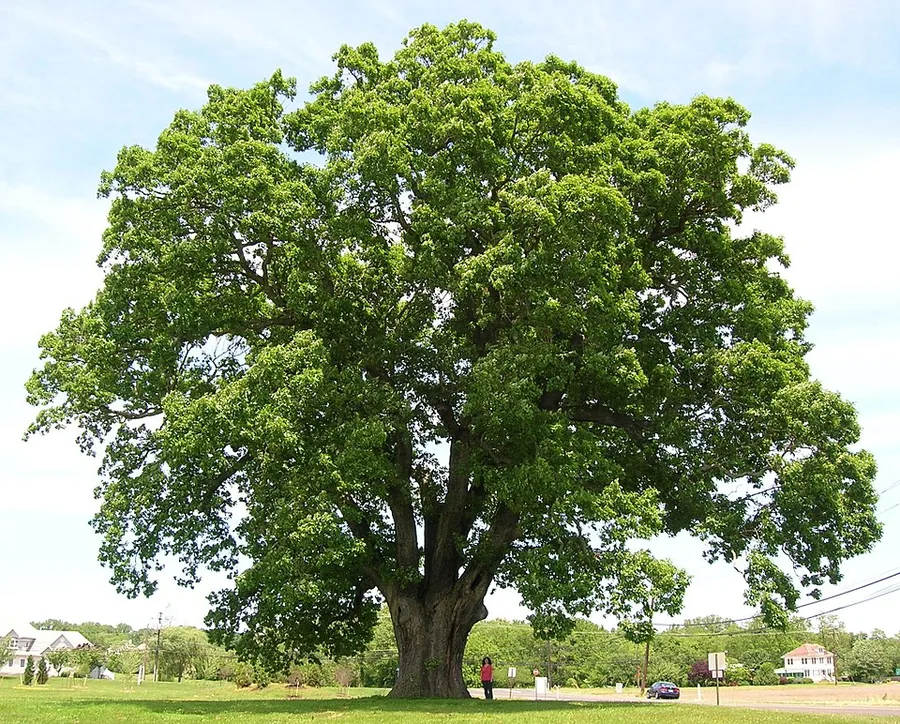
Do not let the size of a white oak scare you off, because this is one of North America's steadiest native shade trees and a forgiving one to grow. It rises slowly and lives for centuries, opening a broad, rounded crown overhead. Its leaves show deep, rounded lobes with no bristle tips, and the bark softens over the years to a pale, scaly gray that can look almost white from across a yard.
Think of this as a tree you plant for your grandchildren as much as yourself, and that long view takes the pressure right off. In time it reaches 50 to 100 feet (15 to 30 m) tall and close to that across, so pick an open spot away from the house, the foundation, and any power lines. The deep taproot means a settled tree really does not want to be moved, so choosing the right place now is the one big decision, and it is an easy one to get right.
Come fall it scatters sweet acorns that jays, squirrels, turkeys, and deer count on through winter. Those acorns and the spring buds do carry tannins that can upset pets and seriously harm grazing horses and cattle, so give a little thought to where it stands, and both your family and your animals will be just fine.
Care
The short version: give it full sun and deep, moist, slightly acidic soil that drains well, and you are most of the way there. Keep it watered through the first year or two while it finds its feet, then relax and let a grown tree fend for itself, saving any pruning for the depths of dormancy.
Light
Give a white oak full sun and it will build the strongest, fullest crown, though a young one happily takes a little partial shade. Out in the open is where it grows the broad, even canopy that makes the species so lovely to live with.
Water
For the first 1 to 2 years while the roots take hold, water deeply on a steady schedule, then you can ease off with a clear conscience. A grown white oak copes with drought just fine, but it does not enjoy wet feet, so keep it off soggy ground and offer it moist, well-drained soil.
Soil
This tree is happiest in deep, moist, well-drained loam on the acidic side, around a pH of 5.0 to 6.5. It will make do with clay, loam, or sand, so do not fret over perfect ground, though a rich acidic loam truly shows it at its best, and soil that turns too alkaline may yellow the leaves with iron chlorosis.
Temperature
White oak is wonderfully cold hardy right across USDA zones 3 to 9, shrugging off winters near -40°F (-40°C) and summer heat up around 95°F (35°C). That comfortable range covers most of the eastern half of the continent, so chances are it will feel at home where you are.
Humidity
Everyday outdoor humidity suits it perfectly, so there is nothing here to fuss over. What helps far more is a little air moving through the branches, since crowded, damp leaves are what tempt the leaf fungi in.
Feeding
A white oak in reasonable soil hardly ever asks to be fed, which is one less chore for you. If the ground is thin or the growth looks weak, offer a balanced slow-release tree fertilizer in early spring, and keep a friendly eye out for the leaf yellowing that overly alkaline soil can bring on.
Pruning
Save your pruning for late fall or winter while the tree sleeps, since fresh cuts in the growing season invite the beetles that carry oak wilt. Take out anything dead, damaged, or crossing, and gently guide a strong central leader while the tree is still young and easy to shape.
Repotting
There is no repotting a landscape oak, so you can let that worry go. A container sapling just needs to reach the ground while it is young, before the deep taproot winds around the pot or strangles itself, because an older tree really does dislike being uprooted.
Size & spacing
Do give this tree plenty of elbow room. It grows 50 to 100 feet (15 to 30 m) tall and spreads 50 to 80 feet (15 to 24 m) wide, so settle it well back from buildings and utilities with open sky for the crown to fill.
When to plant
A white oak keeps to the acorn's schedule rather than yours, and that is easy to work with once you know it. The acorns ripen and fall in autumn with barely any rest in them, so they are happiest going straight into the ground, while the modest catkins that made them appeared quietly back in April and May. Gather and sow in fall, and if you need to shift a young seedling, do it in early spring before that taproot settles deep.
Northern hemisphere
Southern hemisphere
Typical months for a temperate climate: start earlier in warm zones, later where spring frosts linger.
- Sow: Not typically; acorns are best sown outdoors. If started in deep containers, sow fresh acorns in fall before the radicle emerges.
- Plant: Sow fresh acorns outdoors in fall as soon as they drop; transplant young seedlings in early spring while the taproot is still small.
- Harvest: Inconspicuous yellowish-green catkins in April-May; acorns mature in one season and ripen in fall (September-October).
Hardiness
USDA hardiness zones: 3–9
Temperature: down to -40°C
Troubleshooting
Take heart, because a healthy white oak brushes off nearly everything that finds it, and most of the spotted leaves or nibbled edges you will notice do the tree no real harm. The single problem worth learning is oak wilt, so get comfortable telling a fast dieback in the crown from the harmless cosmetic stuff. Find your symptom below before you worry about any treatment.
Top of the crown browning and shedding leaves in a hurry
What you are seeing is oak wilt, a fungus that travels through sap beetles and along the roots that graft together between neighboring oaks. Take some comfort that white oaks resist it better than red oaks do, though they can still catch it, and the dieback is serious enough to take a tree in a single season. Reach out to a certified arborist or your extension office, ask them to confirm it by lab culture, and where you can, sever the root grafts running between nearby oaks.
Fix:
- Contact a certified arborist or extension office promptly
- Remove and properly dispose of severely infected trees
- Sever root grafts between adjacent oaks where feasible
- Avoid pruning during the growing season
Tan blotches following the veins after a cool, wet spring
A cool, damp spring is usually behind anthracnose, a leaf fungus that leaves tan dead patches and shakes a little early foliage loose. If instead you find raised yellow-green bumps, that points to oak leaf blister. The good news is neither one truly hurts an established tree, so simply rake up the fallen leaves, thin any crowded branches to let the air through, and you can leave the fungicide on the shelf.
Fix:
- Rake and dispose of fallen infected leaves
- Improve air circulation by thinning overcrowded branches
- Fungicides are rarely warranted on established shade trees
Nibbled leaves and curious bumps on the leaves and twigs
Most of the chewing comes from caterpillars, be it spongy moth, orangestriped oakworm, or the oak skeletonizer. Those firm bumps dotting the leaves and twigs are galls left by tiny wasps and mites, and honestly they look far worse than they are. A healthy oak takes light feeding in stride, so let the small stuff be, pick off or prune out little infestations, and only step in with controls during a heavy spongy moth year.
Fix:
- Tolerate minor feeding on otherwise healthy trees
- Hand-pick or prune out localized infestations and galls
- For heavy spongy moth outbreaks consult extension for recommended controls
Toxicity
Here is the one part to take seriously, gently but truly, if animals share the space. The leaves, buds, and above all the acorns hold tannins that turn toxic once eaten, and the effect ranges from a mild stomachache in pets to fatal kidney damage in horses and grazing livestock. Rake up fallen acorns where animals wander, keep stock off oak pasture while acorns are dropping, and know that even acorns meant for people need their tannins leached out first.
Toxic to
Cats · Dogs · Horses · Rabbits · Livestock · Birds · People
Cats Caution
A curious cat that chews on acorns or leaves might come away with some vomiting, loose stool, a picky appetite, and a sore tummy. The tannins are behind it, so keeping fallen acorns swept up wherever your cat likes to explore goes a long way.
Dogs Caution
Keep a gentle watch for vomiting, diarrhea, and a dog that turns up its nose at dinner after chewing acorns or leaves. Swallowing a whole acorn adds the worry of a gut blockage, which is really the bigger concern with a determined chewer.
Horses Severe
This is where to be most careful. Nibbling young spring leaves, buds, or green acorns can bring on colic and belly pain, constipation that shifts to bloody diarrhea, a dull and low mood, frequent urination with dark urine, jaundice, and kidney damage that is sometimes fatal.
Rabbits Caution
Oak simply is not safe forage for a rabbit. The tannins in the leaves and acorns can unsettle that delicate gut, so it is kindest to keep both well out of reach.
Livestock Severe
Cattle, sheep, and other grazers that eat a lot of oak leaves, buds, or acorns lose their appetite, grow listless, and pass dark or bloody manure. In the gut the tannins turn to gallic acid and do severe, often fatal kidney damage, and the danger climbs in a drought when other forage runs thin.
Birds Caution
Wild jays and turkeys lean on acorns as a staple, yet the same tannins can trouble pet and backyard birds in any quantity, so it is best not to hand oak parts to them as safe feed.
People Caution
Raw acorns taste bitter and sit hard on the stomach thanks to their tannins. They only become safe to eat once those tannins are leached or boiled out, so treat any raw acorn as a caution and keep little ones from tasting them off the ground.
Rake up and dispose of fallen acorns and leaf litter where pets, horses, or cattle have access, especially in fall and after storms; keep livestock off oak-heavy pasture during heavy acorn drop or in drought years when other forage is scarce.
Helpline numbers

United States
ASPCA Animal Poison Control: (888) 426-4435 (fee applies)
Poison Control: (800) 222-1222



Canada
Poison Centres: 1-844-764-7669
Varieties
You will almost always meet white oak as the plain wild species, with just one natural leaf-form variant that is nice to be able to recognize.
Quercus alba (species)
The wild species carries leaves 4 to 9 inches long with 5 to 9 deep, rounded lobes and no bristle tips, wears light ashy-gray scaly bark, and offers sweet edible acorns up to about 1 inch long that wildlife adore.
Forked-leaf white oak (forma)
This natural leaf-form differs in its slimmer lobes, which fork more deeply and unevenly than the leaves of an ordinary white oak.
How to propagate
A white oak begins life as an acorn, and the whole secret is not to dawdle. The seed hardly pauses before it sprouts, so fresh and prompt beats any clever way of storing it.
SeedModerate
Collect and sow fresh acorns in fall as soon as they drop · Acorns germinate within a few weeks of falling; a sturdy taproot forms the first autumn, with above-ground seedling growth the following spring
White oak sprouts willingly from seed, but it leaves you no time to dawdle. The acorns hold little or no dormancy and get going almost the moment they touch the soil, so collect them fresh in fall and sow them before the radicle slips out. That first autumn a strong taproot goes down while the top growth waits for spring, which is exactly why you should move a seedling only while it is still young. Tuck the acorns away from hungry rodents, or they may disappear before they ever sprout.
Myths
White oak acorns are fine to eat raw since squirrels and deer eat them.
Wildlife cope with the tannins far better than people ever could. Raw acorns taste bitter and irritate the digestive system, so those tannins need leaching or boiling out before anyone eats them. Large amounts of raw oak are toxic to pets and genuinely dangerous to horses and livestock.
You can prune an oak safely whenever you like.
Here timing matters more than it does for most trees. Prune oaks only while they are dormant, because cuts made in spring and summer draw in the sap beetles that carry oak wilt. If a wound cannot wait until the tree is bare, seal it straight away.