Tree · Fagaceae
Pin Oak
Quercus palustris
A fast-growing shade tree that rewards you with fiery fall color, as long as its feet stay in acidic soil.
Full sun
Every 7–14 days
USDA 4–8
50–70 ft · 15.2–21.3 m
Overview
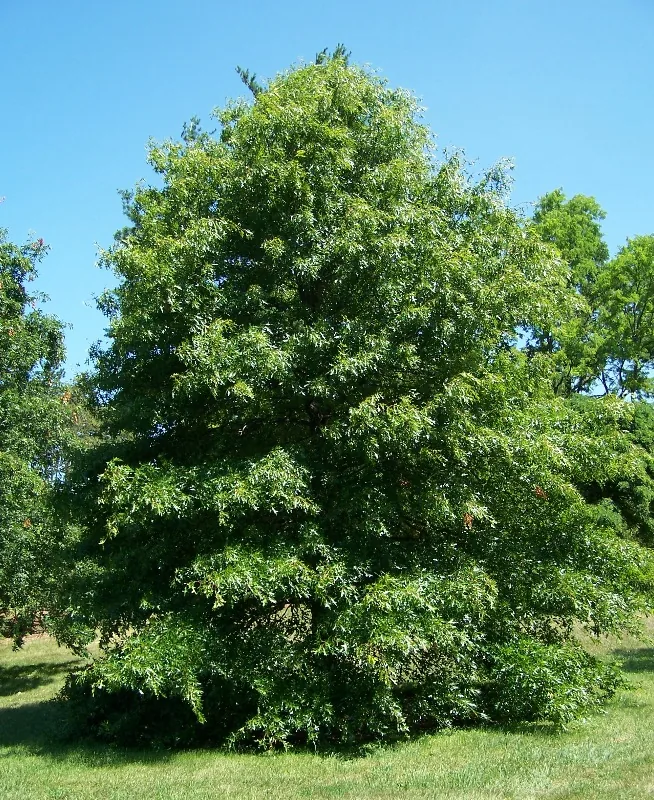
If you are planting your first tree, pin oak is a kind one to begin with, since it is among the easiest oaks to grow and one of the quickest to fill out. It belongs to the red oak group and settles in at 50 to 70 feet (15 to 21 m) tall, with a straight central trunk and a broad pyramid of branches. The lower limbs sweep down toward the ground, the middle ones reach out level, and the upper ones lift to the sky, a tidy layered shape that stays lovely even in bare winter.
The reason so many people fall for this tree is the autumn show. The deeply cut leaves turn a rich red to bronze and hold on well into the cold, and young trees often keep their dead leaves right through winter, a gentle habit called marcescence. Coming from wet bottomlands, the tree takes soggy ground and even brief flooding in its stride once it has settled, so do not fret about that low, damp corner of the yard.
The one thing to get right is the soil, and it is an easy thing to get right. Pin oak wants acidic ground and looks pale and sickly on alkaline sites, so a quick pH check before you dig saves a lot of worry later. Give it that soil, full sun, and space for its wide crown, and it grows fast and asks very little of you from there on.
Care
The short version: give it full sun, moist acidic soil that drains, and plenty of room for a wide crown, and you are most of the way there. Water young trees through their first few years, keep the pH on the acidic side, and prune only in the dormant season.
Light
Pin oak is happiest in full sun, a good six hours or more each day, which lets it grow fast and color up well in fall. It will get by in partial shade, but a crowded or shaded tree tends to grow thin and leggy and never quite gives you the show it could.
Water
Young trees appreciate steady watering through their first few seasons while the roots settle, and again during any real drought. Once established, the tree copes happily with consistently moist ground and even short spells of flooding, thanks to its wet-bottomland roots.
Soil
This is the part worth getting right, and it is simple enough. Pin oak needs moist, acidic soil with a pH between 4.5 and 6.5, and it takes clay or sand in stride as long as the ground isn't limy. Set it on alkaline soil and the leaves pale with iron chlorosis, so a quick test before you dig saves the day.
Temperature
This is a tough tree that holds up across a wide range, from about -29°F to 100°F (-34°C to 38°C), which covers USDA zones 4 through 8. Once it is established, you can rest easy through winter with no special care needed.
Humidity
Ordinary outdoor humidity suits it just fine, so there is no number here to fuss over. The tree cares far more about wet feet and soil pH than about the air around it.
Feeding
An established pin oak rarely asks to be fed. On alkaline soil the helpful move isn't a general fertilizer but iron chelate or elemental sulfur to lower the pH and clear the chlorosis, worked in during early spring.
Pruning
Prune in late winter to early spring while the tree is dormant, taking out anything dead, damaged, or crossing. The low limbs sweep toward the ground and can be limbed up for clearance, but do hold off from April through July in oak-wilt country so you don't invite the beetles in.
Repotting
Pin oak is a landscape tree, not a long-term pot plant. Pot up nursery seedlings each year until they go in the ground, where the tree happily spends the rest of its long life.
Size & spacing
Plan for a big tree, 50 to 70 feet (15 to 21 m) tall with a crown spreading 40 to 60 feet (12 to 18 m) wide. Give it that room and keep it comfortably clear of buildings, walks, and overhead lines.
When to plant
Pin oak is planted rather than sown to a strict schedule, and it settles in easily because the roots stay shallow, so you can relax about transplanting. Set new trees out in spring or fall, and keep an eye out for the small catkins in April as the leaves break, with acorns ripening over their second autumn.
Northern hemisphere
Southern hemisphere
Typical months for a temperate climate: start earlier in warm zones, later where spring frosts linger.
- Sow: Not typically; sow stratified acorns outdoors or in deep pots in fall.
- Plant: Spring or fall; pin oak is shallow-rooted and easily transplanted.
- Harvest: Inconspicuous yellow-green catkins in April as leaves emerge; acorns mature the second autumn.
Hardiness
USDA hardiness zones: 4–8
Temperature: down to -34°C
Troubleshooting
Most pin oak troubles turn up in the leaves, and happily the color and pattern usually point straight to the cause. Yellowing between the veins is a soil matter, while browning from the edges leans toward disease or stress. Match what you are seeing below before you reach for any treatment, and you will feel a lot calmer about it.
Scorched brown leaf edges getting worse each passing year
When the browning starts at the leaf edges, sits behind a soft yellow band, and returns a little worse each summer, the likely culprit is bacterial leaf scorch from Xylella fastidiosa. This one has no cure, so try not to panic and instead focus your care on keeping the tree comfortable with steady water and a good layer of mulch, then trim away the limbs that are clearly failing. A simple lab test will tell you whether it is the bacterium or just a thirsty tree.
Fix:
- No cure; manage by maintaining tree vigor with water and mulch
- Prune out severely affected limbs
- Remove and replace trees in steep decline
Fast wilting with bronzed leaves, deadly within one season
A crown that browns and drops fast in midsummer is the warning sign of oak wilt, a fungus that moves through joined roots and rides in on sap beetles, and it can take a red oak in a single season. Move quickly to cut the root grafts between neighboring oaks, take out any infected tree without delay, and set the pruning saw down the instant you notice it. Your best safeguard is simply keeping the saw away from April through July, when fresh cuts call the beetles in.
Fix:
- Do not prune during the growing season once detected
- Sever root grafts between adjacent oaks
- Remove infected trees promptly to limit spread
Newest leaves paling to yellow while their veins stay green
If the newest leaves go pale while their veins stay green, take heart, because this is iron chlorosis and not a dying tree. On pin oak it nearly always comes from soil that leans alkaline, not from a shortage of feeding, since a pH above 7 ties up the iron before the roots can reach it. You can put things right by working in elemental sulfur for the long term, or by reaching for iron chelate when you want the green back sooner.
Fix:
- Lower soil pH by applying elemental sulfur
- Apply iron chelate as a soil drench or foliar spray for a quicker but temporary response
- Trunk-inject iron for established trees where soil treatment is impractical
Knobby, horned woody bumps studding the twigs
Those hard bumps on the twigs are oak galls, little wooden nurseries that horned and gouty gall wasps build for their young. They can look worrying, but they seldom bother a healthy tree, so the kindest thing you can do is usually leave them be. If a few really nag at you, snip out the galled twigs, and you can skip the spray, because it does little good here anyway.
Fix:
- Prune out and destroy galled twigs where practical
- Tolerate galls on otherwise healthy trees
Toxicity
Pin oak is a generous shade tree, but the acorns, buds, and young leaves do carry tannins that are toxic when eaten. Horses and livestock have the most to fear, with kidney damage possible after a big feed of acorns, while dogs that crunch them risk an upset gut or a blockage. A simple rake-up of fallen acorns where animals graze, plus keeping curious pets clear of the drop, goes a long way.
Toxic to
Cats · Dogs · Horses · Rabbits · Livestock · Birds · People
Cats Mild
A curious cat that nibbles an acorn or a fallen leaf might drool, be sick, or lose interest in dinner for a day. The good news is that cats seldom eat enough to come to harm, though the tannins do unsettle the tummy.
Dogs Mild
Dogs are the pets most tempted to crunch up fallen acorns, which can bring on vomiting, loose stools, and a droopy appetite. A whole acorn can occasionally lodge in the gut too, so just keep a gentle watch if a small dog has been busy on the lawn.
Horses Severe
Horses that graze acorns or young leaves in any quantity are truly at risk, and it can begin with belly pain and constipation that turns to bloody diarrhea. The tannins may go on to harm the kidneys, so please fence horses well away from a dropping oak in autumn.
Rabbits Caution
The tannins that trouble other grazers make oak a risky and unappealing nibble for rabbits as well, so it is safest to keep leaves and acorns out of the hutch and the run.
Livestock Severe
Cattle, sheep, and goats can be poisoned if they fill up on acorns or buds, and a heavy feed can lead to kidney failure that turns fatal. Hungry animals on bare pasture are the most vulnerable, so move them off the oaks while a big acorn drop is underway.
Birds Caution
Plenty of wild birds shell and eat acorns without any bother, but the raw tannins are still rough on the gut, so this is not a treat to offer a pet or backyard bird.
People Caution
No one enjoys raw acorns, which taste bitter and drying from the tannins, and swallowing them can churn the stomach. Traditional acorn flour becomes safe only once the tannins are leached out with patient, repeated rinsing.
Acorns and leaves can cause stomach upset if chewed; rake up fallen acorns where pets graze. Livestock and horses eating large amounts can suffer serious kidney damage.
Helpline numbers

United States
ASPCA Animal Poison Control: (888) 426-4435 (fee applies)
Poison Control: (800) 222-1222



Canada
Poison Centres: 1-844-764-7669
Varieties
Most pin oaks you will find for sale are the straight species, but a couple of named forms exist for those spots where the spreading, drooping habit would cause trouble.
Green Pillar ('Pringreen')
A slim, columnar form that slots neatly into tight corners and street-side beds where a full crown could never fit.
Crownright ('Crownright')
Selected to lift its lower branches upward rather than let them droop the way the ordinary species tends to.
How to propagate
With a little patience you can raise pin oak from its own acorns, while the named forms need to be grafted by a nursery to come true.
SeedModerate
Collect ripe acorns in fall; sow outdoors immediately or cold-stratify before spring sowing. · Germinates the following spring; several years to a transplant-size sapling.
Most pin oaks start life from acorns, and it is a forgiving project if you give the seed the cold, damp rest of about 30 to 45 days it needs to wake up. Gather ripe acorns in fall and either tuck them into the ground right away or chill them before sowing in spring. Float-test the batch first and set aside any that bob up or show weevil holes, then look for sprouts the following spring and expect several years of growth before you have a sapling ready to move.
GraftingDemanding
Late winter under glass. · One growing season to unite.
The named cultivars won't come true from seed, so growers join them onto seedling rootstock by grafting or budding. The work happens under glass in late winter, and the union knits together over a single growing season. It does take an experienced hand, which is why these forms cost a bit more than a plain seedling oak.
Myths
The name pin oak is said to come from its persistent, pin-like lower branches.
The name more likely comes from the many small, slender dead twigs and stubs left over when shaded lower branches die back. The tree really does hold its drooping lower limbs, and young ones cling to dead leaves all winter, a trait called marcescence. The pins are the spur-like dead twigs, not the living branches.
Yellowing leaves on a pin oak signal a need for more feeding or watering.
Leaves that fade between green veins are nearly always iron chlorosis, caused by high soil pH that keeps iron away from the roots. Piling on general fertilizer or extra water simply will not touch it. The real fix is lowering the pH or adding iron, not feeding the tree any harder.