Ornamental · Lamiaceae
Hummingbird Mint
Agastache foeniculum
Offer it full sun and soil that drains, and anise hyssop will buzz with bees and hummingbirds all season long.
Full sun
Every 7–14 days
USDA 4–8
2–5 ft · 0.6–1.5 m
Overview
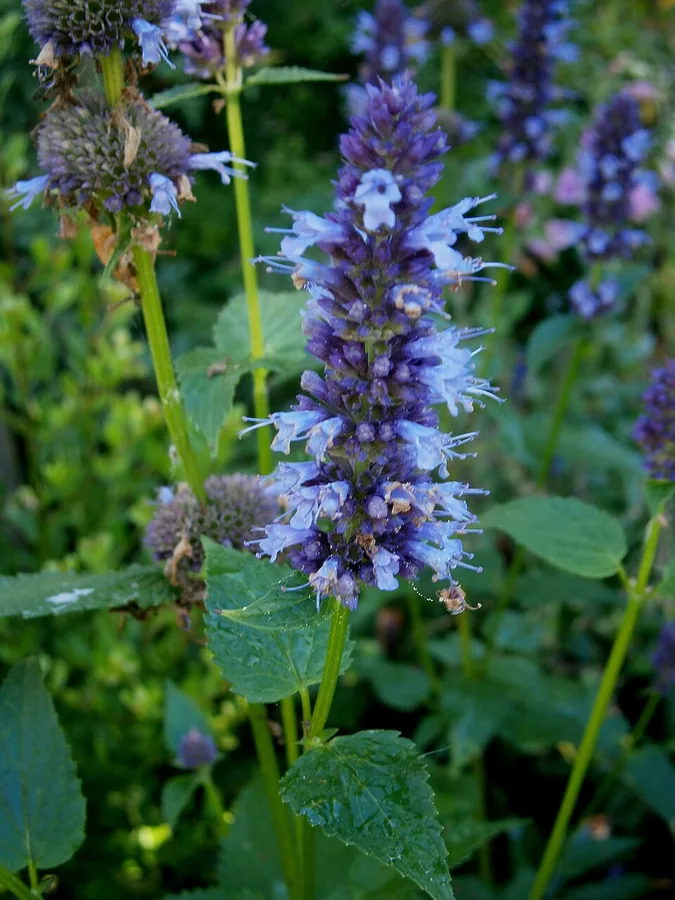
Anise hyssop lives up to its hummingbird mint nickname by welcoming bees, butterflies, and hummingbirds from June all the way through September. Even though it sits in the mint family, you can trust it to behave, lifting tall spikes of gentle blue-lavender bloom above leaves that release a soft anise and licorice smell whenever you brush against them.
This is a kind, easy perennial for any sunny corner, hardy from zone 4 to zone 8 and brushing off cold as deep as -29°F (-34°C). Once it has found its feet it needs very little from you, weathering dry spells without complaint and standing firm against deer and rabbits that pick at the gentler plants nearby.
Give it some elbow room and soil that drains, and one little clump will rise into a 2 to 5 foot (60 to 150 cm) tower of flowers. The blooms nourish pollinators through summer while the seed heads left standing carry finches into winter, so you get value from the plant long after the main show has faded.
Care
The short version: full sun and well-drained soil are really all it asks, because this plant dreads soggy roots far more than a thirsty stretch. Water it well but let the top half of the soil dry between drinks, feed lightly if at all, and snip off spent flowers through summer to keep fresh ones arriving.
Light
Settle anise hyssop into full sun and you will be rewarded with sturdy stems and the fullest bloom. It does accept a little afternoon shade, but skimp on light and it grows floppy and shy on flowers, and the shade can also let in the mildew it would otherwise shake off.
Water
The trick is to soak it well, then hold back. Wait until the top half of the soil has dried before you water again, which tends to land around every 7 to 14 days. After it settles in it copes with drought just fine, yet wet, heavy ground is the one thing likely to do it in.
Soil
It will not fuss over rich earth and grows happily in loam, sand, or even stony ground, provided that ground lets water drain through. Shoot for a pH somewhere between 6.0 and 7.5, and steer clear of any low spot where puddles linger after rain.
Temperature
Hardy from zone 4 to zone 8, anise hyssop weathers cold all the way to -29°F (-34°C) and heat up to roughly 95°F (35°C). That generous range is exactly why it pulls through in places where plenty of other perennials simply quit.
Humidity
Plain outdoor moisture suits it perfectly, so there is no number for you to chase. What really counts is air on the move, since crowded, stagnant, humid plantings are just the kind of place powdery mildew likes to take hold.
Feeding
Think of this as a plant that thrives on a light diet. Feed it only now and then, never more than a thin sprinkle of balanced fertilizer or compost during the growing season. Pile on more and you only get soft, leaning stems instead of flowers.
Pruning
Snip off the faded spikes through August and fresh flowers keep coming. Leave the stalks standing through winter as a gift to the birds, then cut back to the new growth in spring; taking it down to around 12 inches that spring brings on a fuller, bushier shape.
Size & spacing
Look for a clump that reaches 2 to 5 feet (60 to 150 cm) tall and 1.5 to 3 feet (45 to 90 cm) wide. Allow it that whole spread so air drifts freely through the planting and mildew keeps its distance.
When to plant
Anise hyssop keeps a steady perennial rhythm once it is in the ground. Sow seed indoors in the late winter, move the plants outside after the last frost once the soil feels warm, and enjoy the display from June through September. Let the faded stalks stand through winter, then trim back to the fresh new growth in spring.
Northern hemisphere
Southern hemisphere
Typical months for a temperate climate: start earlier in warm zones, later where spring frosts linger.
- Sow: 8 to 10 weeks before the last spring frost
- Plant: after the last spring frost once soil has warmed
- Harvest: Blooms June to September
Hardiness
USDA hardiness zones: 4–8
Temperature: down to -34°C
Troubleshooting
Almost every hiccup with anise hyssop comes back to a single cause: soil that holds too much water. Sort out the drainage and the airflow and the plant will mostly look after itself. Find the symptom that matches yours below, then step in early while it still does some good.
A drooping plant with a dark, soft base
Take heart, because this is crown or root rot and it traces back to ground that stays soggy, not to some illness you have to chase with a spray. You will notice the crown going soft and off-color while the base sits waterlogged, and a badly hit plant may flop over. Open up the drainage, ease off the watering, and lift out anything past saving so you can replant strong divisions into ground that lets water through.
Fix:
- Improve drainage and reduce watering
- Remove and discard severely affected plants
- Replant healthy divisions in well-drained soil
A pale, dusty film over the foliage
No need to panic over that chalky layer, since it is just powdery mildew and it settles in where the air hangs still and the plants grow too close or damp. It troubles the looks of your plant far more than its wellbeing. Give the stems some breathing room by thinning and spacing them, snip away the most coated leaves, and try to keep the foliage dry.
Fix:
- Improve air circulation by spacing and thinning
- Remove affected foliage
- Avoid overhead watering
Rusty or brown freckles dotting the leaves
Bumpy rust-toned pustules or darker blotches are a sign of rust and fungal leaf spots, which travel on leaves that stay wet. Rest easy, because in most seasons the harm is only skin deep. Pick off the marked leaves and get rid of them, loosen the plant up so air can pass through, and water down at the base to keep the foliage from staying damp.
Fix:
- Remove and destroy infected leaves
- Improve air circulation
- Avoid wetting foliage
Toxicity
Here is the reassuring part. Anise hyssop holds no toxins, so it is safe to grow around cats, dogs, horses, livestock, and children all the same. The leaves even double as a kitchen herb, turning up in teas and baked goods for their anise flavor, and the strong scent does the work of keeping most browsing animals at a distance.
Safe for
People · Cats · Dogs · Horses · Rabbits · Livestock · Birds
Cats None
You can breathe easy with a curious cat around, since there are no toxic compounds in this plant and a nibbled leaf will do no harm. A big mouthful of almost any plant might bring a little drool or a brief upset tummy, but nothing here puts a cat in real trouble.
Dogs None
Dogs are perfectly fine alongside it. The worst a foliage-loving pup might face is a short-lived stomach grumble, just as with any safe plant, and the bold anise smell usually sends most of them off after a single taste.
Horses Safe
Horses can graze right beside it with nothing to fear, as no part of the plant is poisonous to them. They tend to leave it be anyway, since the fragrant leaves simply do not appeal to their palate.
Rabbits Safe
Rabbits face no danger from it at all. In fact the plant has a reputation for being rabbit-resistant, so they generally hop past it toward tastier greens instead of nibbling the scented leaves.
Livestock Safe
Cattle, goats, and sheep are safe around it, with no toxin in the mix to cause worry. The minty, licorice aroma means most animals graze somewhere else and leave the patch untouched.
Birds Safe
Birds come to no harm near anise hyssop, and the planting truly rewards them. Finches happily feed on the seed heads you leave standing into winter, while hummingbirds and pollinators visit the summer blooms.
People Safe
The leaves are safe and even welcome in the kitchen, offering an anise or licorice flavor that finds its way into teas, salads, and baked treats. Children are in no danger spending time near the plant.
Varieties
A few standout cultivars of anise hyssop are well worth knowing by name. These are the friendly faces you are most likely to find waiting at the nursery.
Blue Fortune
A much-loved hybrid treasured for the way its packed spikes of blue-lavender bloom keep going for weeks.
Golden Jubilee
Loved as much for the cheerful golden-yellow leaves it wears as for the lavender flower spikes rising above them.
Blue Blazes
A tall pick that earns attention with bright, eye-catching spikes of violet-blue flowers.
How to propagate
Making more anise hyssop takes hardly any effort, whether you divide an aging clump or simply let it scatter its own seedlings around the beds.
DivisionEasy
Spring or fall · One growing season
Dividing is wonderfully forgiving. Dig up a settled clump in spring or fall, gently pull it into sound pieces, and tuck the divisions back into well-drained soil. Allow each new piece a full growing season to root in comfortably and bulk up before you expect much from it.
SeedEasy
Spring; self-seeds readily in the garden · First season from transplanted seedlings
Anise hyssop is a generous self-seeder, so the simplest path is to gather up the volunteer seedlings and move them where you would like them in spring. To grow those volunteers, just hold off on deadheading toward the end of summer and let the spikes ripen their seed; the little transplants put on a respectable size within their first season.
Myths
Anise hyssop is a true mint that will take over the garden.
It really does belong to the mint family, yet it stays far better behaved than the true mints ever do. The plant creeps along gently by rhizome and a bit of self-seeding, and more often than not it proves to be a short-lived perennial instead of a garden bully you cannot stop.
Anise hyssop is related to true hyssop and tastes like it.
The name is shared, but this plant sits in the genus Agastache rather than the true Hyssopus. Bruise a leaf between your fingers and a bright anise or licorice scent comes through, which is exactly why the leaves end up in teas, salads, and baked goods.