Ornamental · Lamiaceae
Spotted Dead Nettle
Lamium maculatum
Tuck it into cool, dry shade where almost nothing else will thrive, and the silver foliage brightens the ground all season long.
Partial shade
Every 5–10 days
USDA 3–8
6–9 in · 15–23 cm
Overview
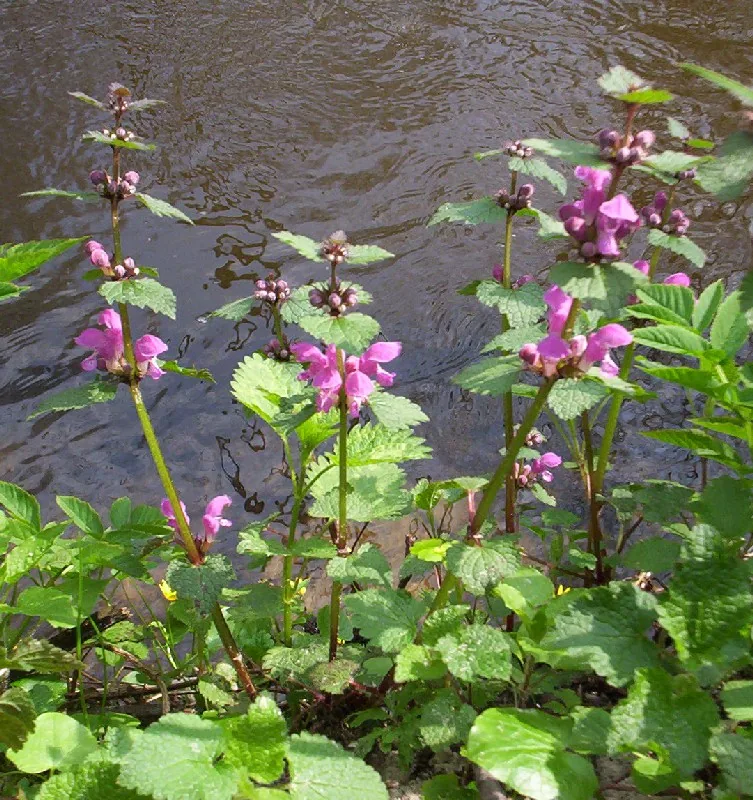
Spotted dead nettle is a low, spreading groundcover made for the shade, loved as much for its silver-marked leaves as for the pink, mauve, or white flowers that lift above them in late spring. It is a member of the mint family, and it carries that family's quick, mat-forming way of growing. People are often surprised by the name, because it resembles a stinging nettle yet has no sting whatsoever.
If you are nervous, this is one of the kindest plants you can hand a difficult corner. Standing 6 to 9 inches (15 to 23 cm) tall, it weaves itself into a dense carpet, filling in beneath shrubs and along the gloomy north side of a house where lawn simply gives up. Because the stems root as they wander, a handful of plants soon look like one unbroken sweep of leaves.
All it really wants is cool, moist, shaded ground, and in return it gives you months of color with hardly any effort on your part. Force it into hot, dry, sunny ground and the leaves will scorch and thin, but that is fixable. Offer the shade it loves, and your only real job is gently keeping its enthusiastic spread within the bed you had in mind.
Care
The short version: part to full shade, cool and evenly moist soil that drains well, one shearing once the flowers fade, and a tidy edge to keep the spreading mat right where you want it.
Light
Aim for part to full shade. It accepts a little morning or dappled sun, but a hot, sunny site will scorch and thin the leaves, so the deeper shade where grass struggles is precisely where this plant is happiest.
Water
Keep the soil cool and evenly moist, watering about every 5 to 10 days and a bit more often through a dry stretch. Once settled in it copes with dry shade, yet the leaves brown and thin if it bakes, so try not to let it dry out completely in the heat.
Soil
Set it into humusy, well-drained loam full of organic matter, with a pH anywhere between 6.0 to 7.5. The single thing it will not put up with is wet or compacted ground, which can lead to crown rot.
Temperature
It is wonderfully tough, shrugging off anything from -40°F to 84°F (-40°C to 29°C). Cold holds no fear for it, though a long run of summer heat and humidity may make the mat melt out in patches.
Humidity
Everyday outdoor humidity is just fine, so there is no number you need to chase. What counts far more is air movement, because still, muggy air around crowded leaves is what stirs up leaf spot and blight.
Feeding
This is a gentle feeder that seldom needs a hand. One helping of balanced general-purpose fertilizer in spring is plenty, and overdoing it only encourages soft, floppy growth.
Pruning
Give the plants a hard shear or cut back after they bloom. That single trim clears away tired leaves, fills in any thin patches, and often invites a fresh round of flowers.
Repotting
It rarely asks for repotting, but a potted one lets you know it is ready when the center goes bare and dead or the roots pack the pot and dry out quickly. When that day comes, divide it and tuck it back into fresh soil.
Size & spacing
Plants stay low at 6 to 9 inches (15 to 23 cm) tall, while each one reaches 12 to 24 inches (30 to 61 cm) across, so space them far enough apart to knit into a carpet without bunching up.
When to plant
Spotted dead nettle is a tough little perennial that returns on its own from zone 3 all the way to zone 8. Set it out in spring as soon as the ground is workable, watch for flowers from late spring into summer, and give it a shear afterward to freshen up the leaves for the rest of the season.
Northern hemisphere
Southern hemisphere
Typical months for a temperate climate: start earlier in warm zones, later where spring frosts linger.
- Plant: spring
- Harvest: Late spring into summer
Hardiness
USDA hardiness zones: 3–8
Temperature: down to -40°C
Troubleshooting
Nearly every hiccup with dead nettle traces back to the wrong spot or a bit too much damp, and both are easy to put right. Browning leaves usually say it is too hot and dry, while holes and spots point toward slugs or a wet-weather fungus. Find what matches below and adjust the conditions first, before reaching for anything harsher.
Crisp, browning leaves and bald spots opening up across the carpet
What you are seeing is leaf scorch, and it is the plant's way of telling you the spot is warmer, drier, or sunnier than it would like, when really it craves cool, moist shade. A muggy heat wave can also bring on melt-out, where patches of a wide planting brown and go thin. Take heart, because this recovers easily: cut the plants back hard so fresh leaves push through, water so the soil stays evenly moist, and shift any clumps stuck in a sun-baked spot.
Fix:
- Cut or shear plants back to stimulate fresh new foliage growth
- Increase watering to keep soil evenly moist
- Relocate or shade plants sited in hot, dry, sunny areas
Easy to confuse with the invasive yellow archangel
It is common to mix spotted dead nettle up with yellow archangel (Lamium galeobdolon), a cousin that genuinely is invasive and carries that listing in the western US. The good news is they are simple to tell apart once you know the cues: yellow archangel blooms yellow and dashes outward on rooting runners, while spotted dead nettle flowers in pink, mauve, or white and behaves itself. Stick with Lamium maculatum cultivars, and lift out any yellow archangel that turns up.
Fix:
- Identify and remove yellow archangel where present
- Choose Lamium maculatum cultivars rather than L. galeobdolon
A friendly carpet that strays beyond where you planted it
The way dead nettle travels is simple: its sprawling stems put down roots anywhere they touch soil, so the mat keeps growing wider without any help. Do not let that worry you, because it is energetic rather than a real bully and it stays easy to manage. Snip or tug out the stems wandering over the edge, tuck a strip of edging in to hold the boundary, and lift and split a clump that has spread further than you planned.
Fix:
- Pull or cut back encroaching stems at bed edges
- Install edging to contain the planting
- Divide and thin overgrown stands
Chewed holes and spotted leaves in cool, damp shade
Most of this comes down to slugs, which nibble ragged holes through the tender leaves wherever the shade holds onto moisture. That same damp, humid air can also bring leaf spot and leaf blight, with the odd visit from aphids. None of it is hard to turn around: put out slug traps or bait, pick off any spotted or blighted leaves, and thin the planting a little so air flows through and the foliage dries sooner.
Fix:
- Control slugs with traps or baits
- Remove and dispose of spotted or blighted foliage
- Improve air circulation and avoid overhead watering
Toxicity
Here is some reassurance if you share your home with animals: spotted dead nettle is not toxic. It does not appear on the ASPCA's poison lists, and whatever the name hints at, it has no stinging hairs, so people and pets are safe near it. The most a curious cat or dog is likely to get from a big mouthful of leaves is a fleeting upset stomach.
Safe for
People · Cats · Dogs · Horses · Rabbits · Livestock · Birds
Cats None
Perfectly fine to keep around cats. If one grazes a large mouthful of leaves it may have a brief tummy ache, and that is the extent of it.
Dogs None
Nothing here threatens dogs. A determined chewer who eats a big helping of foliage might feel a little queasy for a short while, and no worse.
Horses Safe
Harmless to horses, with no cases of poisoning on record from grazing it.
Rabbits Safe
Your rabbits can browse the soft leaves safely, as long as it does not edge out their hay and greens.
Livestock Safe
Cattle, goats, and sheep handle it without issue, and it holds none of the toxins that bother pasture animals.
Birds Safe
Birds have nothing to fear from it. Backyard hens and wild callers can peck at the leaves with no concern.
People Safe
Safe for people too, and the young leaves are actually edible. Whatever the name suggests, it has no stinging hairs, so you can handle it bare-handed.
Despite the name it is a dead nettle with soft, non-stinging foliage and no stinging hairs, so handling is safe; pets nibbling foliage may have mild GI upset.
Varieties
Most named dead nettles are chosen for their silver leaves and vary mainly in flower color, so you really cannot go wrong. These are the ones you are most likely to meet, along with one look-alike to keep your distance from.
White Nancy
A lovely pick for deep shade, showing silvery-white leaves rimmed with green beneath crisp white flowers.
Beacon Silver
Lifts pink flowers above wide silver leaves that brighten a shadowy corner.
Pink Pewter
Joins that same silver foliage to gentler, more delicate pink blooms.
Purple Dragon
The most dramatic of the group, lifting large purple flowers over silver-marked leaves.
Orchid Frost
Pairs frosted silver leaves with warm orchid-pink flowers.
Yellow archangel (Lamium galeobdolon)
Steer clear of this one, because it is a separate, genuinely invasive Lamium relative with yellow flowers and aggressive rooting runners that is listed invasive in the western US, not a true spotted dead nettle cultivar.
How to propagate
Growing more dead nettle asks almost nothing of you, since the plant is already spreading and rooting by itself as it grows.
DivisionEasy
Spring · 4-8 weeks
If you would like more of it, division is the simple, dependable route, and spring is the time to do it. Dig up an established mat, tease or slice it into clumps, tuck them in wherever you want more cover, and they take hold in roughly 4 to 8 weeks. Better still, the plant shares the load with you, because its sprawling stems root all on their own at any node resting on soil.
Myths
The name says dead nettle, so surely it stings like a nettle.
Its leaves really do resemble a true stinging nettle, and that resemblance is exactly where the name came from, but the similarity stops right there. Spotted dead nettle sits in the mint family, with soft leaves and no stinging hairs at all, and it is not even a relation of true stinging nettle (Urtica dioica). Go ahead and pick it up bare-handed with complete confidence.