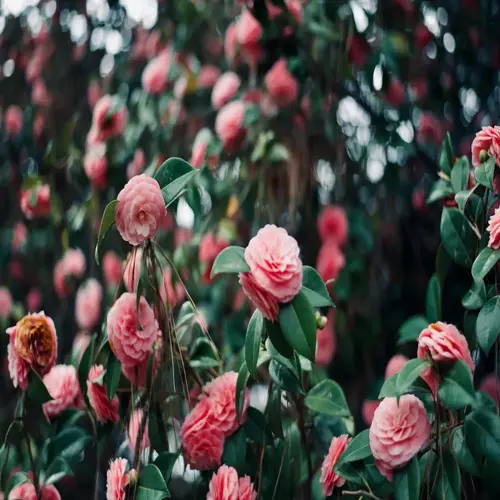

Camellias grow best in USDA Zones 7 through 9. These regions offer mild winters and enough humidity to keep the shrubs healthy and green year-round. They need acidic, well-drained soil and protection from the harsh afternoon sun to bloom at their peak.
Picking the best location for camellias takes some testing and patience on your part. I planted two japonica camellias in different spots one spring to see what would happen. The one I tucked against a sheltered east-facing wall grew thick and lush within two seasons. It pushed out dark green leaves and fat flower buds by the second fall. The other plant sat in an exposed western spot with full afternoon sun. It suffered leaf scorch every summer and never caught up in size or vigor. That simple test showed me how much the planting site matters for these shrubs.
Soil pH plays a bigger role than most people realize for growing healthy camellias. They need a pH between 5.5 and 6.5 to pull iron and other nutrients through their fine surface roots. When your soil runs too alkaline, iron gets locked up in the dirt. Your camellia's leaves turn yellow even though iron is right there in the ground. The American Camellia Society puts the sweet spot at 6.0 to 6.5 for the strongest growth and bloom output.
Clemson Extension confirms that camellias thrive in well-drained acidic soil with partial shade. Heavy clay that traps water around roots will cause rot fast. If your soil drains poorly, build a raised bed or mound your planting area 6 to 8 inches above grade. Mix pine bark fines and compost into the bed to create the loose, acidic mix these plants love. Good drainage alone prevents about 80% of root health problems in camellias.
Grab a $15 soil test kit from your local extension office before you put a single plant in the ground. This simple step saves you years of trouble with yellow leaves and weak stems. If the pH reads above 6.5, work sulfur into the soil at the rate listed on the bag. Peat moss and pine needle mulch also bring pH down over time. Test once a year to make sure you stay in the right range.
In my experience, looking for clues in your own yard works great for finding good planting spots. Check for azaleas, rhododendrons, or blueberry bushes that grow well on their own. These plants share the same acid soil needs as camellias. If they look healthy in a given area, your camellia will do fine there too. This method costs nothing and gives you a good read on your soil without waiting weeks for lab results.
Mulch is your best friend once you get your camellia in the ground. Spread a 3-inch layer of pine bark or pine straw around the base but keep it a few inches away from the trunk. This mulch holds moisture, keeps roots cool in summer, and breaks down into acidic organic matter over time. I refresh my mulch every spring and my camellias have never looked better since I started doing this.
Knowing the right camellia growing zones helps you pick the best species for your climate. Zone 7 gardeners should stick to cold-hardy types like 'Winter's Snowman' that handle dips to 0°F (-18°C). Zones 8 and 9 give you the widest selection since most camellias feel at home in those mild areas. Even Zone 6 growers can succeed with Ackerman hybrids placed near a warm south-facing wall. Pick the right spot and the right variety and your camellia will reward you with blooms for decades to come.
Read the full article: Camellia Plant Care and Growing Guide