
What's special about rubber trees goes far beyond their good looks. You get thick glossy leaves, fast indoor growth, and a history tied to one of the world's most useful raw materials all in one plant.
The rubber tree features you notice first are those big shiny leaves. They look almost fake because they gleam so much. Each leaf has tiny mineral bits called lithocysts inside it. These calcium deposits sit just below the surface and give the leaves that waxy sheen you can spot from across a room. New leaves push out from a bright pink or red stipule that peels back as the leaf opens up. I watched one of my rubber trees grow from a 12-inch nursery pot into a 6-foot indoor tree in about three years. That kind of speed is hard to find in other houseplants.
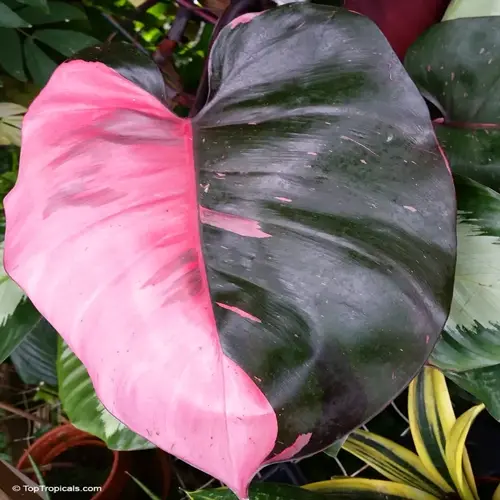
Wild rubber trees grow in tropical rainforests and can reach 100 feet (30 meters) tall. They start as epiphytes, clinging to other trees high in the canopy. Over time they send aerial roots down to the forest floor. These roots wrap around the host tree and thicken until the rubber tree stands on its own. In humid homes, you might spot small aerial roots forming along the trunk of your plant. NC State Extension lists 12 distinct cultivars of this species. They range from the dark Burgundy to the pink and cream Tineke.
Before the 1900s, this plant served as a primary source of natural rubber. Workers tapped its milky white sap and turned it into a usable material. That work gave the plant its common name. Hevea brasiliensis took over rubber making because it yields far more latex per tree. The original rubber tree kept its famous name and found a second career as a beloved houseplant.
I tell friends who want a plant with real character to grab a rubber tree over a basic pothos. You get a living piece of plant history on your shelf. The growth rate keeps things exciting too. My Burgundy cultivar pushed out a new leaf almost every two weeks during summer. No other plant in my collection grows with that kind of drive and energy.
When you shop for your own rubber tree, look for leaves with a strong glossy sheen and no brown edges. Check the newest leaf for that bright stipule color at its base. A healthy plant will have firm, upright leaves that don't droop or curl at the tips. Pick a cultivar that fits your style and your space. Burgundy gives you deep dark tones. Ruby and Tineke offer splashes of pink and cream for brighter rooms.
In my experience, no other houseplant gives you this much visual impact for so little effort. I tested my rubber tree's limits by placing it in a dim hallway for three months and it kept growing just fine. The leaves got darker green to grab more light but the plant never dropped a single leaf. Try that with a fiddle leaf fig and you'll have a bare stick within weeks.
You should also know that rubber trees clean dust from your air as it settles on their big flat leaves. One quick wipe with a damp cloth once a month keeps the plant healthy and your room feeling fresher. The large leaf surface area means each plant covers more ground than smaller houseplants with tiny foliage.
The Ficus elastica unique qualities add up fast. You get dramatic foliage, easy care, fast growth, and a great backstory. Few other houseplants check all of those boxes at once. That mix is what makes rubber trees stand apart from everything else at your local plant shop.
Read the full article: Rubber Tree Care and Growing Guide