
Introduction
The rubber tree has real historical significance as a crop plant. Workers once harvested this industrial giant for its sap across Southeast Asia. Then Hevea brasiliensis replaced it and now makes 99% of all natural rubber. Today this plant reigns as a living sculpture in modern homes.
I brought my first rubber tree home about 7 years ago after a friend said it was one of the best indoor plants for beginners. That turned out to be true. My original Burgundy now stands over 6 feet tall in my office corner. I've grown 4 more from cuttings off that same plant.
NC State Extension data shows Ficus elastica reaches 100 feet tall in the wild. Indoors it stays between 2 and 10 feet based on pot size and care. You can find over 12 cultivars with striking foliage. Leaf colors range from deep burgundy to soft pink.
Houseplant popularity surged after 2020 and rubber plant care questions top the search charts. This guide combines the production history with modern growing tips. You'll get variety picks, watering advice, and the truth about air cleaning claims.
8 Popular Rubber Tree Varieties
NC State Extension documents 12 Ficus elastica cultivars with heights from 4 to 13 feet indoors. I've grown 6 of these rubber plant varieties over the years. Each one brings something different to the table. The Burgundy rubber tree is a great pick for beginners. The Tineke rubber plant draws more attention with its cream and pink leaves.
Variegated rubber plant types now sell for premium prices at nurseries. Pink and cream toned cultivars sell out fast because they look so different from standard green plants. I sorted this list from the most beginner friendly options to the collector favorites. This way you can match a pick to your skill level and budget right away.
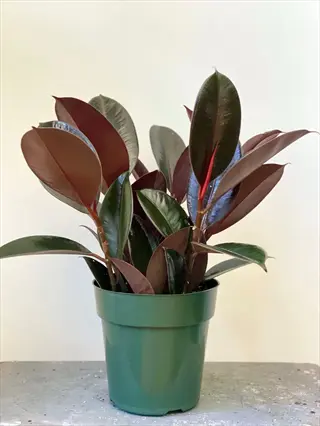
Ficus Elastica Burgundy
- Leaf Color: Deep burgundy to near-black leaves that darken with age, producing rich red-toned new growth from bright pink sheaths.
- Light Needs: Performs well in medium to bright indirect light, though lower light causes leaves to appear more green than burgundy over time.
- Growth Habit: Reaches 6 to 10 feet (1.8 to 3 meters) indoors with a strong central stem and upright form that fits narrow spaces.
- Best For: Beginners looking for a dramatic, low-maintenance variety that tolerates a wide range of indoor conditions without fading.
- Care Tip: Wipe leaves monthly with a damp cloth to remove dust and reveal the full depth of the burgundy coloring underneath.
- Availability: One of the most widely available cultivars, found at most garden centers and big-box retailers year-round at affordable prices.
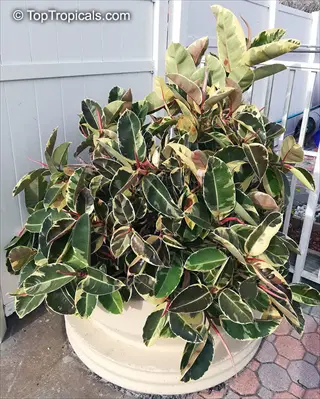
Ficus Elastica Tineke
- Leaf Color: Cream, green, and soft pink variegation creates a watercolor-like pattern on each leaf, with no two leaves looking exactly alike.
- Light Needs: Requires bright indirect light to maintain vivid variegation patterns, as low light causes leaves to revert to solid green coloring.
- Growth Habit: Grows slightly slower than solid-colored varieties, reaching 4 to 8 feet (1.2 to 2.4 meters) indoors over several years.
- Best For: Plant collectors and interior designers seeking a statement plant with pastel tones that complement neutral or minimalist decor.
- Care Tip: Rotate the pot a quarter turn every two weeks so all sides receive even light exposure, preventing lopsided growth and color loss.
- Availability: Widely available at specialty plant shops and online nurseries, with prices slightly higher than solid-colored rubber tree varieties.
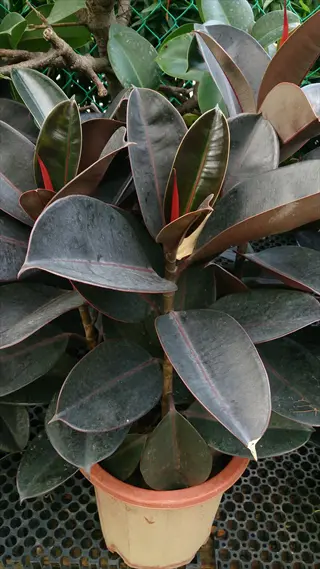
Ficus Elastica Robusta
- Leaf Color: Bold, glossy dark green leaves that are broader and thicker than the standard species, with prominent midribs and leathery texture.
- Light Needs: Tolerates low to bright indirect light, making it one of the most adaptable cultivars for offices and dimmer interior rooms.
- Growth Habit: Produces the largest leaves of any cultivar, with Clemson Extension noting leaves can reach up to 18 inches (46 centimeters) long.
- Best For: Growers who want maximum visual impact from large foliage in spacious rooms, hallways, or entryways with tall ceilings.
- Care Tip: Support the main stem with a moss pole or bamboo stake once the plant exceeds 4 feet (1.2 meters) to prevent leaning.
- Availability: Common at nurseries and garden centers, often labeled simply as 'rubber plant' due to its resemblance to the original species form.
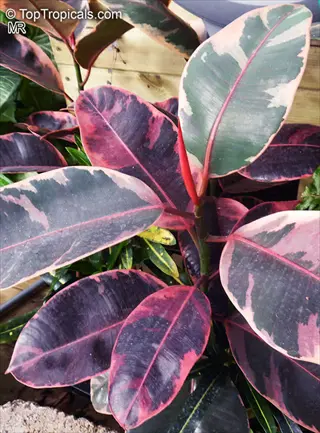
Ficus Elastica Ruby
- Leaf Color: Striking tricolor variegation of deep red, cream, and green, with vivid pink to ruby-toned new growth that fades as leaves mature.
- Light Needs: Needs bright indirect light for at least six hours daily to maintain the intense red and pink coloring in new and existing leaves.
- Growth Habit: Moderate growth rate, typically reaching 4 to 6 feet (1.2 to 1.8 meters) indoors, with a compact branching habit when pruned.
- Best For: Collectors wanting vibrant color without flowers, as the foliage itself provides red and pink tones throughout the entire year.
- Care Tip: Avoid placing near cold drafts or heating vents, as temperature swings can cause the colorful new leaves to drop prematurely.
- Availability: Increasingly popular and now available at many specialty retailers, though pricing tends to be higher than single-color cultivars.
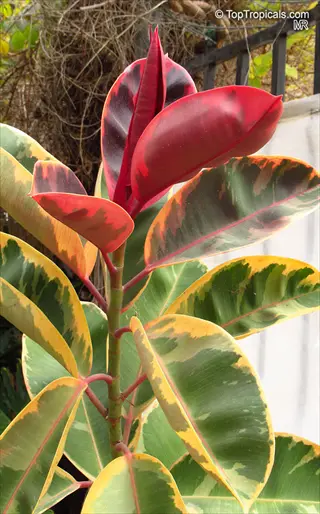
Ficus Elastica Belize
- Leaf Color: Similar to Ruby but with more pronounced cream and green sections, offset by pink-red edges and coral-toned new growth sheaths.
- Light Needs: Demands bright indirect light to prevent variegation loss, and benefits from a few hours of gentle morning sun from an east window.
- Growth Habit: Grows 4 to 8 feet (1.2 to 2.4 meters) indoors with a slightly more open branching pattern than the Ruby cultivar offers.
- Best For: Interior decorators looking for a tropical accent plant with warm-toned variegation that pairs well with earthy or bohemian color schemes.
- Care Tip: Prune above a leaf node in spring to encourage bushier growth and prevent the plant from becoming leggy or top-heavy over time.
- Availability: Found at specialty nurseries and online plant shops, with moderate availability depending on your region and the current growing season.
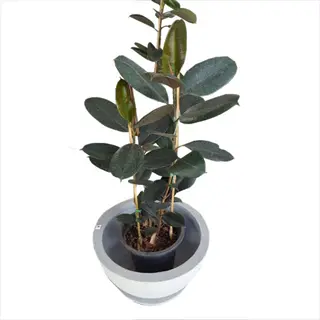
Ficus Elastica Abidjan
- Leaf Color: Very dark green to almost black leaves with a high-gloss finish, and new growth emerges from striking deep red protective sheaths.
- Light Needs: Thrives in medium to bright indirect light, and the dark pigmentation allows it to tolerate lower light better than variegated types.
- Growth Habit: Vigorous grower reaching 6 to 10 feet (1.8 to 3 meters) indoors, with thick upright stems and a bold architectural silhouette.
- Best For: Modern and minimalist interiors where a single dramatic plant can serve as a living focal point against light-colored walls and furnishings.
- Care Tip: Clean leaves with a neem oil solution every few weeks to maintain the glossy finish while preventing spider mites and scale insects.
- Availability: Commonly available at garden centers and online, often at similar prices to the Burgundy cultivar due to comparable growing requirements.

Ficus Elastica Melany
- Leaf Color: Compact dark green leaves with a subtle reddish undertone, smaller and more rounded than standard rubber tree foliage for a tidy look.
- Light Needs: Adapts to medium indirect light conditions, though brighter spots bring out the reddish tones that distinguish it from plain green varieties.
- Growth Habit: One of the most compact cultivars, staying under 4 feet (1.2 meters) tall for years, making it ideal for tabletops and shelves.
- Best For: Small apartments, offices, or anyone wanting the rubber tree look in a compact form that does not require frequent pruning or staking.
- Care Tip: Allow the top two inches (5 centimeters) of soil to dry before watering, as the smaller root system is more prone to overwatering damage.
- Availability: Becoming more available at chain stores and online retailers, gaining popularity as a space-friendly alternative to larger rubber tree cultivars.
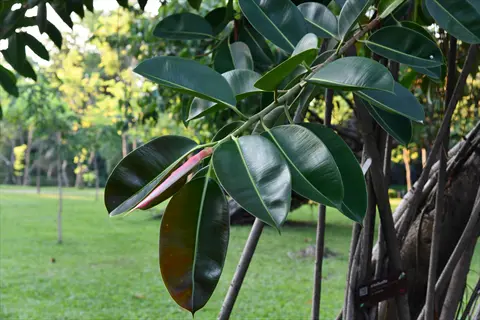
Ficus Elastica Decora
- Leaf Color: Classic deep green with a thick leathery texture and prominent cream-colored midrib, representing the most traditional rubber tree appearance.
- Light Needs: Versatile light tolerance from low to bright indirect, making it one of the most forgiving cultivars for beginners learning plant placement.
- Growth Habit: Grows steadily to 6 to 10 feet (1.8 to 3 meters) indoors with a single straight trunk and symmetrical oval canopy of foliage.
- Best For: Traditional plant lovers and beginners who want a reliable, classic-looking houseplant that performs well without specialized attention or conditions.
- Care Tip: Fertilize with a balanced liquid fertilizer diluted to half strength every two weeks during spring and summer for the strongest new growth.
- Availability: Very widely available and often the most affordable cultivar, found at nearly every garden center, hardware store, and grocery store plant section.
Rubber Tree Care Essentials
Rubber plant care comes down to getting a few basics right. I've killed 2 plants from overwatering and cold drafts. Those mistakes taught me the seasonal patterns that keep them alive. Watering rubber plant soil the wrong way is the top killer for new growers.
Rubber plant light should be bright but indirect for the best growth. The ideal rubber plant temperature sits between 60 and 80 degrees Fahrenheit. Keep nighttime temps above 55°F or you'll see leaves drop fast. Your plant also needs well-draining soil to stop water from sitting around the roots.
I water my plants about once a week in summer and cut that in half during winter. Stick your finger 2 inches deep and water when it feels dry. Fertilizing rubber plant growth works best with a liquid feed every 2 weeks in spring and summer. Stop feeding in fall and winter when growth slows down.
Propagation and Repotting
If you want to know how to propagate rubber plant cuttings, it's easier than you think. I've used all 3 methods from Clemson Extension. Stem cuttings Ficus elastica growers use most often work great for beginners. Tip cuttings and air layering also give solid results at different skill levels.
Air layering rubber plant stems takes more patience but gives you a near 90% success rate in spring. I air layered my first plant 4 years ago and got a rooted section in about 7 weeks. Rubber plant propagation works best in spring. Repotting rubber plant growth into the right soil mix matters just as much as the method you pick.
Stem Cutting Method
- Difficulty: Beginner-friendly method that requires only a sharp knife, a small pot with moist soil, and a clear plastic bag for humidity retention.
- Process: Cut a 6-inch (15-centimeter) section below a leaf node, remove lower leaves, let the sap dry for an hour, then plant in moist perlite-soil mix.
- Timeline: Roots typically develop within four to six weeks when kept warm at 70-75 degrees Fahrenheit (21-24 degrees Celsius) with consistent moisture.
- Success Rate: High success rate of about 70% to 80% when cuttings are taken during spring or early summer when the plant is actively growing.
Tip Cutting Method
- Difficulty: Easy variation of stem cutting that uses the growing tip of the plant, producing a new plant that is already oriented to grow upward.
- Process: Cut the top 4 to 6 inches (10 to 15 centimeters) of a healthy stem tip, remove all but the top two leaves, and root in water or soil.
- Timeline: Roots appear in three to five weeks in water, or four to six weeks in soil, with water rooting allowing you to monitor progress visually.
- Success Rate: Very high when taken from healthy, actively growing stems in spring, though tip cuttings from dormant winter growth root more slowly.
Air Layering Method
- Difficulty: Intermediate technique best for larger plants where you want to create a new plant without removing a section from the parent first.
- Process: Make a small upward cut on the stem, wedge it open with a toothpick, wrap with damp sphagnum moss, and cover tightly with plastic wrap.
- Timeline: Roots grow into the moss in six to eight weeks, at which point you cut below the new root ball and pot the rooted section independently.
- Success Rate: Close to 90% when performed in spring on healthy stems, as the plant continues feeding the cutting through its vascular system until roots form.
Repotting Guidelines
- When to Repot: Move to a pot one size larger (2 inches or 5 centimeters wider) when roots circle the bottom or emerge from drainage holes, typically every one to two years.
- Best Timing: Repot in early spring just before the growing season begins, giving roots time to establish in fresh soil before the summer growth surge.
- Soil Choice: Use a well-draining mix of standard potting soil, perlite, and orchid bark in a 2:1:1 ratio to prevent waterlogging while retaining some moisture.
- After Care: Water thoroughly after repotting and place in medium indirect light for one to two weeks, avoiding direct sun and fertilizer while roots adjust.
Troubleshooting Common Issues
Rubber plant problems tend to show up on the leaves first. I've seen rubber plant yellow leaves on 3 of my own plants over the years. Each time the cause was different. Overwatering caused 2 of those cases while the third came from a cold draft near a window.
Rubber plant leaf drop is another common scare for new owners. Your plant might also face rubber plant pests like spider mites rubber plant growers deal with in dry winter air. The good news is that most rubber plant root rot cases are easy to fix if you catch them fast. Below you'll find the top issues I've treated along with the exact steps that worked.
Yellowing Leaves
- Primary Cause: Overwatering is the most common reason for yellow leaves, as waterlogged soil suffocates roots and prevents nutrient uptake throughout the plant.
- Secondary Cause: Insufficient light can also cause lower leaves to yellow and drop, especially during winter when natural daylight hours are significantly shorter.
- Quick Fix: Check soil moisture by inserting your finger two inches (5 centimeters) deep, and only water when the soil feels dry at that depth level.
- Prevention: Use a pot with drainage holes and a well-draining soil mix to ensure excess water never sits around the root zone for extended periods.
Dropping Leaves
- Primary Cause: Sudden temperature changes or cold drafts below 55 degrees Fahrenheit (13 degrees Celsius) trigger stress responses that cause rapid leaf shedding.
- Secondary Cause: Moving the plant to a new location forces it to adjust to different light and humidity levels, often resulting in temporary leaf loss.
- Quick Fix: Place the plant in a stable environment away from exterior doors, heating vents, and air conditioning units that create temperature fluctuations.
- Prevention: Acclimate rubber trees gradually when moving them by shifting location in stages over one to two weeks rather than making a sudden move.
Brown Leaf Edges
- Primary Cause: Low humidity below 30% causes leaf edges to dry out and turn brown, particularly common in heated homes during cold winter months.
- Secondary Cause: Fertilizer salt buildup in the soil can burn root tips and cause brown margins, especially if feeding with full-strength or undiluted fertilizer.
- Quick Fix: Group plants together or place the pot on a tray of pebbles and water to raise the local humidity around the rubber tree foliage.
- Prevention: Flush the soil with clean water every three months to wash out accumulated mineral salts, and always dilute fertilizer to half the recommended strength.
Scale Insects and Spider Mites
- Identification: Scale insects appear as small brown bumps on stems and leaf undersides, while spider mites create fine webbing between leaves and along stems.
- Treatment: Apply neem oil solution (2 tablespoons or 30 milliliters per gallon or 3.8 liters of water) to all leaf surfaces every seven days for three weeks.
- Quarantine: Isolate the affected plant immediately from other houseplants to prevent pests from spreading, and inspect neighboring plants for early signs of infestation.
- Prevention: Wipe leaves with a damp cloth monthly and maintain humidity above 40%, as spider mites thrive in dry conditions common in indoor environments.
Air Purification and Benefits
You've seen the claim that a rubber plant air purifier can clean your home. The NASA air purifying plants study did test Ficus species in sealed chambers. Results showed real formaldehyde removal plants can make. But here's what most guides won't tell you about indoor air quality plants and real homes.
NASA found that Ficus species pulled 47.4% of formaldehyde out of sealed test chambers. That sounds amazing until you learn the catch. Those tests ran in tiny sealed rooms with no air flow at all. Modern research shows you'd need 10 to 1,000 plants per square meter to match basic window ventilation in a real room.
I noticed rubber plant benefits go far beyond air cleaning after I grew my first Ficus. These plants reduce stress, add life to a room, and look stunning on a shelf. A rubber tree makes your space feel alive and that matters more than any air test result.
Pet Safety and Toxicity
I found out a rubber plant toxic to cats is no joke when my kitten chewed a leaf 3 years ago. She drooled for about an hour but was fine after that. The ASPCA lists Ficus elastica toxicity as mild for dogs and cats. Still, you need to know what you're dealing with to keep your pets safe.
The rubber plant sap contains 2 toxic compounds called ficin and ficusin. These cause rubber plant sap irritation on skin and mild stomach upset if a pet eats the leaves. Rubber plant pet safety starts with smart placement. I keep all my plants on high shelves or in rooms my cats don't visit.
A rubber plant toxic to dogs won't cause severe harm in most cases. The taste is bitter enough that most pets spit the leaves out fast. But if your pet shows vomiting or drooling, call the ASPCA Poison Control line right away.
5 Common Myths
Rubber trees need direct sunlight all day to grow properly and produce healthy green leaves indoors.
Rubber trees actually prefer bright indirect light and can adapt well to lower light conditions, though variegated types need more brightness.
A single rubber tree plant can purify all the air in your living room according to the NASA study.
The NASA study used sealed chambers, and modern research shows you would need 10 to 1,000 plants per square meter to match natural ventilation in a real home.
Rubber trees and the trees that produce commercial rubber for tires and products are the same species.
Ficus elastica was once used for rubber, but today Hevea brasiliensis produces about 99 percent of the world's natural rubber, making them entirely different species.
Rubber trees should be watered frequently to keep the soil moist at all times for the best growth.
Rubber trees prefer their soil to dry out fairly well between waterings, and overwatering is one of the most common causes of root rot and leaf drop.
All rubber tree varieties look the same with plain dark green leaves and identical growth patterns.
There are over twelve distinct cultivars of Ficus elastica, ranging from the dark Burgundy to the pink-variegated Ruby, Tineke, and the compact Melany.
Conclusion
Your rubber tree will thrive when you give it bright indirect light and let the soil dry between waterings. Keep temps above 55°F and you'll avoid the leaf drop that kills most indoor plants of this type. The ASPCA rates Ficus elastica toxicity as mild for pets. Smart shelf placement lets pet owners enjoy these plants too.
I've found that the best rubber plant care starts with picking the right cultivar for your space. If you want something easy, go with a Burgundy or Decora from your local garden center. If you want color and don't mind extra light needs, a Tineke or Ruby will turn heads in any room. With 12 cultivars to choose from, there's a match for every home.
This plant made its journey from industrial rubber source to one of the most popular indoor plants on shelves today. That shift says a lot about how we value plants now. They're not just tools for sap or air cleaning claims. They bring life and beauty to the spaces where we spend our days.
Pick up your first Ficus elastica and give it a good spot near a window. You'll see why so many growers call the rubber tree their favorite houseplant after just a few months of watching it grow.
External Sources
Frequently Asked Questions
What is special about rubber trees?
Rubber trees are prized for their large glossy leaves, fast growth rate, and historical role as one of the first commercial rubber sources before Hevea brasiliensis replaced them.
Is a rubber tree a good indoor plant?
Rubber trees make excellent indoor plants because they tolerate low light, require infrequent watering, and can grow from 2 to 10 feet (0.6 to 3 meters) tall indoors.
How do you take care of a rubber tree?
Care for a rubber tree by providing bright indirect light, watering when soil is dry, maintaining temperatures of 60 to 80 degrees Fahrenheit (16 to 27 degrees Celsius), and fertilizing every two weeks in spring and summer.
Do rubber trees grow in the rainforest?
Ficus elastica is native to the tropical rainforests of Southeast Asia, spanning from Nepal to China and Western Malesia, where it can reach 100 feet (30 meters) tall.
Is the rubber tree toxic to humans?
The sticky white sap of the rubber tree can irritate skin and cause stomach discomfort if ingested, but it is not considered seriously toxic to humans.
Are rubber trees still used to make rubber?
Ficus elastica was once a major rubber source, but today Hevea brasiliensis produces about 99 percent of the world's natural rubber supply.
What are the disadvantages of rubber trees?
Rubber trees can drop leaves from sudden environmental changes, their sap irritates skin and is toxic to pets, and large specimens may outgrow indoor spaces quickly.
What is the lifespan of a rubber tree?
A well-cared-for rubber tree can live for decades indoors, while outdoor specimens in tropical climates can survive for over a hundred years.
Can I keep a rubber plant in my bedroom?
A rubber plant can thrive in a bedroom as long as it receives some natural light and temperatures stay above 55 degrees Fahrenheit (13 degrees Celsius).
Where to put a rubber tree in the house?
Place a rubber tree near an east-facing window for ideal morning light, or in any bright room with indirect sunlight and consistent temperatures.