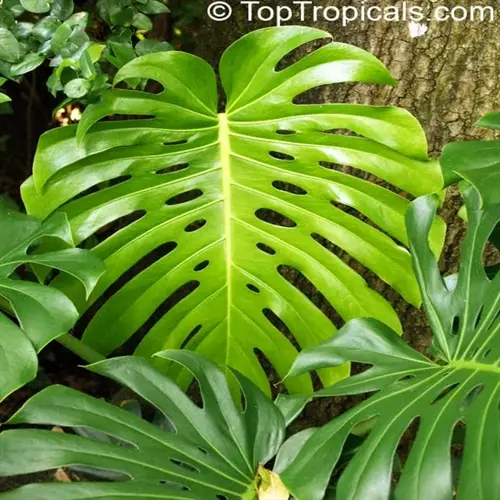

Introduction
The thai constellation monstera is one of the best variegated monstera plants you can grow at home. Each leaf looks like a living star map with cream spots on green. Certain cells in the leaf lost the power to make green chlorophyll. That's what creates those cream colored patches you see on every new leaf.
I picked up my first Thai Constellation about 4 years ago. In my experience, they cost a fortune back then. Finding one meant long waitlists at shops. Every plant comes from a single tissue culture lab in Thailand. That lab uses somatic embryogenesis to lock the pattern into the cells. Your plant won't lose its variegation over time because of this process.
The monstera deliciosa plant got its name in 1763. The National Garden Bureau called 2025 the Year of the Monstera for good reason. The global houseplant market hit about $20.41 billion in 2024. Rare houseplants with variegation drive a big share of that spending.
This guide covers everything you need to keep your Thai Constellation strong and growing well. You'll learn the science behind the variegation and the best soil mixes to stop root rot. It also walks you through proven ways to propagate your plant and fix common problems fast.
Thai Constellation Care Essentials
Good monstera care starts with knowing what your plant needs most. Thai constellation light requirements are higher than a green Monstera. The white sections on each leaf can't make energy from light. A variegated leaf works like a solar panel with some cells covered in tape. The green cells must work harder to feed the whole plant.
I tested my Thai Constellation in 3 spots around my home over 6 months. The plant near an east window with bright indirect light for 4 to 6 hours grew the best. Too much direct sun burned the white patches, and low light made new leaves come out with less fenestration. An east or north window works great in most homes.
The monstera temperature range sits between 60 to 85°F (15.5 to 29.4°C) based on Penn State data. Your plant stops growing below 50°F (10°C), so keep it away from cold drafts in winter. I move mine back from windows on cold nights to keep it safe.
Monstera humidity matters more than most growers think. Aim for 60% or higher to keep your leaves flat and happy. Brown edges and curling tips tell you the air is too dry. A small humidifier near your plant does the job better than misting, which only helps for a few seconds at a time.
Science Behind the Variegation
Most plant blogs skip the variegation science behind Thai Constellation. That's a mistake because knowing how it works helps you care for your plant better. I spent months reading studies on this topic, and the basics are simple once you break them down.
Picture each plant cell with a recipe for making chlorophyll. In Thai Constellation, some cells carry a misprinted recipe that skips the green pigment step. This creates the cream patches on every leaf. The science term for this is chimeral variegation. It happens through changes in genes tied to chloroplast biogenesis.
Green leaf sections hold working chloroplasts that turn light into food. White sections lack these pigments and can't make energy at all. Research by Yu and others in 2007 showed that these white zones get stuck at early stages of chloroplast growth. That's why your Thai Constellation grows slower than a green Monstera.
This is a tissue culture monstera with stable variegation at its core. The lab copies each plant so the mutation stays locked in place. Cortes and others found in 2025 that all white tissue only had a 10.71% success rate in culture. Mixed green and cream tissue worked over 60% of the time. That's why balanced variegation matters so much for growers.
Chimeral Variegation
- How it works: Two or more cell types live in the same plant tissue. Some cells make chlorophyll while others carry mutations that block pigment production.
- Stability level: Thai Constellation has very stable chimeral variegation because tissue culture locked in the mutation. New leaves will show the cream and green pattern for the plant's whole life.
- Visual pattern: Creates the speckled constellation look with cream, yellow, and green sectors spread across each leaf in a unique pattern.
Unstable Sectoral Variegation
- How it works: Random cell mutations create large blocks of white or cream on some leaves. The pattern can vanish when cells divide during new growth.
- Stability level: Monstera Albo shows this type. Some leaves may come out all green or all white with no sure way to predict the pattern.
- Visual pattern: Creates bold half moon patterns with sharp lines between green and white. The contrast is strong but the look changes from leaf to leaf.
Natural Pattern Variegation
- How it works: Certain genes tell the plant to make different pigments in set zones of each leaf. This creates a pattern built into the plant's normal DNA.
- Stability level: Very stable because the pattern is part of the species' standard genes. Every new leaf will match the same look without any risk of change.
- Visual pattern: Makes set patterns like the silver marks on Scindapsus pictus or the stripes on Calathea leaves. Each leaf follows the same design.
Viral Variegation
- How it works: A virus stops normal chlorophyll output in affected cells. This creates blotchy or streaked patterns that can spread to other plants through dirty tools or bugs.
- Stability level: Hard to predict and can harm the plant over time. The virus may spread to other plants in your collection if you don't keep tools clean.
- Visual pattern: Creates odd yellow or light green mosaic patterns. These often look different from gene based variegation and may come with twisted leaf shapes.
Soil, Water, and Feeding
Root rot monstera problems kill more Thai Constellations than any other issue I've seen. The best soil mix for thai constellation drains fast but holds just enough water for the roots. You want a well-draining soil monstera blend with an aroid soil mix as your base. Penn State notes the ideal soil pH sits between 6.0 and 8.0 for this species.
I water my Thai Constellation when the top 2 inches of soil feel dry to the touch. Bottom watering monstera methods work great here too. Just set the pot in a tray of water for 20 to 30 minutes and let the roots drink from below. This keeps the leaves dry and cuts down on fungal issues.
For monstera fertilizer, use a balanced liquid feed at half strength once a month during spring and summer. Stop feeding in fall and winter when the plant rests. I burned the white leaf edges on my first plant by using full strength feed, so don't make that same mistake.
Beginner-Friendly Standard Mix
- Base ratio: Mix 40% indoor potting soil, 30% perlite, 20% orchid bark, and 10% charcoal for good drainage with enough moisture to forgive a missed watering day.
- Best for: New Thai Constellation owners who want a simple mix that drains well but doesn't dry out too fast between watering days.
- Key benefit: The potting soil holds moisture to buffer dry spells. Perlite and bark create air pockets that keep roots from sitting in water.
Advanced Chunky Aroid Blend
- Base ratio: Combine 30% orchid bark, 30% perlite, 20% coco coir, 10% charcoal, and 10% worm castings for fast drainage with slow release nutrients.
- Best for: Growers who water often and want a quick draining mix that copies the airy roots Monstera grows in the wild.
- Key benefit: Big bark and perlite chunks make large air gaps near roots. This cuts root rot risk while worm castings add gentle nutrition.
Soil-Free Sphagnum Method
- Base ratio: Use 50% long fiber sphagnum moss and 50% perlite. Soak and wring out the moss before potting for the best results.
- Best for: Growers who want to check root health with ease. Sphagnum lets you see roots and fights bacteria on its own.
- Key benefit: Sphagnum holds up to 20 times its weight in water while keeping air pockets open. Roots stay moist but never drown.
Semi-Hydroponic LECA Setup
- Base ratio: Fill the pot with pre soaked LECA balls. Keep a low water level in the bottom quarter of the pot at all times.
- Best for: Growers who travel a lot. The water pool feeds roots through wicking action and only needs a refill every 1 to 2 weeks.
- Key benefit: LECA stops soil pests and fungal issues for good. It gives roots great air flow but you need to add liquid nutrients.
Propagation Methods
Knowing how to propagate thai constellation saves you money and lets you share this plant with friends. The best part is that every stem cutting monstera method keeps the cream and green pattern intact. Thai Constellation won't revert to green like an Albo can because the variegation is stable at the cell level.
I've tried all 4 methods in the table below on my own plants. For most growers, a node cutting in moss gives the best results with the least risk. Air layering monstera works great too, and Penn State recommends it for pricey plants since you grow roots before you cut. You can also try water propagation monstera style if you want to watch roots form in real time.
No matter what rooting medium you pick, cut just below a node with a clean, sharp blade. Let the cut dry for a full day before you plant it. Most cuttings push out roots in 2 to 4 weeks with the right warmth and moisture levels.
Troubleshooting Common Issues
In my experience, I've dealt with every problem on the list below. The trick is to spot issues fast before they spread to more leaves. Thai constellation brown spots scare new owners the most. Yellowing leaves monstera growers dread and leaves curling monstera fans spot both have quick fixes.
White leaf sections are the first to show damage since they lack chlorophyll to shield them. Sunburn variegated monstera tissue turns crispy and brown in direct light within hours as I learned the hard way. Watch for overwatering signs monstera growers miss. Soft stems and root rot signs like a bad smell from the soil mean trouble.
Brown Crispy Patches on White Sections
- Likely cause: Sunburn from direct light on the white tissue. White cells can't absorb and release light energy the way green cells do.
- Quick fix: Move the plant 2 to 3 feet away from the light source. Add a sheer curtain to filter harsh rays while keeping the room bright.
- Prevention tip: Give your plant morning light from an east window. Avoid strong afternoon sun from south or west windows.
Yellowing Leaves With Soft Stems
- Likely cause: Too much water has soaked the root zone and started root rot. The roots can't take in food or water once they turn mushy.
- Quick fix: Pull the plant from its pot and trim any brown or soft roots with clean scissors. Let roots dry for a few hours, then repot in fresh aroid mix.
- Prevention tip: Use a moisture meter or push your finger 2 inches into the soil. Only water when that top layer feels dry.
Curling or Drooping Leaves
- Likely cause: Low humidity below 50% or not enough water makes cells lose pressure. Leaves curl inward to save moisture.
- Quick fix: Water well until liquid drains from the bottom holes. Boost humidity with a humidifier or a pebble tray filled with water.
- Prevention tip: Group your tropical plants together to raise the local humidity. Keep plants away from heating vents and AC drafts.
Tiny Webs or Speckled Damage
- Likely cause: Spider mites or thrips feed on leaf cells and leave behind fine webs or tiny dots on the bottom of leaves.
- Quick fix: Rinse the plant under warm water. Apply neem oil or soap spray to all leaf sides every 5 to 7 days for 3 rounds.
- Prevention tip: Check new plants before adding them to your group. Wipe leaves with a damp cloth each week to catch bugs early.
Brown Tips on Leaf Edges
- Likely cause: Salt buildup from fertilizer or low humidity pulls moisture out of leaf edges faster than roots can replace it.
- Quick fix: Flush the soil with clean water 3 to 4 times to wash out extra minerals. Cut fertilizer to quarter strength for the next feed.
- Prevention tip: Use filtered or rain water to avoid mineral buildup. Always dilute fertilizer to half the label dose for variegated plants.
One more safety note: all parts of this plant contain calcium oxalate crystals that can irritate skin and harm pets. Wear gloves when you handle or prune your Thai Constellation. Keep the plant out of reach of cats, dogs, and small children.
Variegated Monstera Comparison
The monstera albo vs thai constellation debate comes up all the time in plant groups online. I've grown both, and they need very different care plans. There are over 50 monstera varieties in the genus, and new record breaking species popped up as recent as 2021. But for variegated monstera types you can grow at home, 5 main options stand out.
The biggest factor to know is stable vs unstable variegation. Thai Constellation keeps its pattern for life because of tissue culture. Albo and other types can lose their cream or revert to all green without warning. The most expensive monstera plants tend to be the rare ones with the best color balance. Here's how each type stacks up.
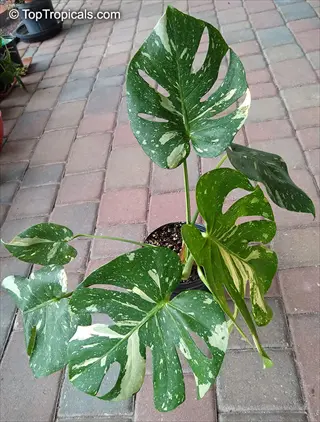
Monstera Thai Constellation
- Variegation type: Stable chimeral variegation created through tissue culture in a Thai laboratory, producing consistent cream and green speckled patterns across every new leaf the plant produces.
- Pattern description: Cream, butter-yellow, and white speckles scattered across dark green leaves in a constellation-like pattern, with each leaf displaying a unique but reliably variegated arrangement.
- Growth characteristics: Grows slower than standard Monstera deliciosa because white sections cannot photosynthesize, typically reaching 6 to 8 feet (1.8 to 2.4 meters) indoors over several years.
- Price range: Moderate to high compared to other variegated types, with established plants typically costing between $100 and $400 depending on size and variegation quality.
- Care difficulty: Moderately easy for anyone with basic tropical houseplant experience, requiring bright indirect light and careful watering but tolerating normal household conditions.
- Best suited for: Collectors who want guaranteed variegation stability without the risk of reversion, and growers who prefer a speckled pattern over bold half-moon markings.
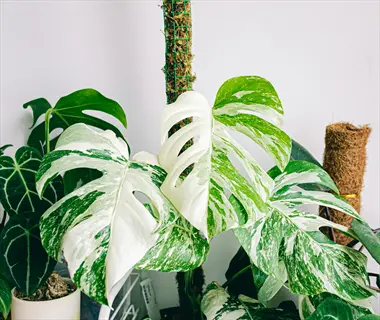
Monstera Deliciosa Albo
- Variegation type: Unstable sectoral variegation caused by a spontaneous genetic mutation, meaning each new leaf may display dramatically different amounts of white versus green tissue.
- Pattern description: Bold white and green sections with sharp boundaries, often producing striking half-moon leaves where one side is entirely white and the other entirely green.
- Growth characteristics: Slower than standard Monstera due to reduced photosynthetic capacity, with fully white leaves unable to sustain themselves and requiring pruning to maintain plant health.
- Price range: High to very high, with healthy specimens ranging from $150 to over $1,000 depending on variegation quality, leaf count, and whether the plant shows stable patterning.
- Care difficulty: Moderate to challenging because the unstable variegation requires monitoring and selective pruning to prevent the plant from reverting entirely to green or producing all-white leaves.
- Best suited for: Experienced collectors who appreciate bold contrast patterns and are comfortable managing unstable variegation through selective pruning and optimal growing conditions.
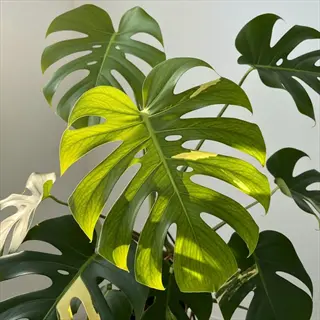
Monstera Deliciosa Aurea
- Variegation type: Unstable sectoral variegation similar to Albo but producing yellow to golden sectors instead of white, caused by partial chlorophyll production in mutated cells.
- Pattern description: Golden yellow and green sections create a warm, sun-kissed appearance that stands apart from the cooler white tones of Albo and the cream tones of Thai Constellation.
- Growth characteristics: Slightly faster than Albo because yellow sectors retain some chlorophyll and can still photosynthesize at reduced efficiency compared to fully green tissue.
- Price range: High, with established specimens typically ranging from $200 to $800 depending on the intensity of the golden variegation and overall plant size and health.
- Care difficulty: Moderate, similar to Albo in that variegation can be unpredictable, but the yellow sections are less prone to browning than pure white tissue since they contain some pigment.
- Best suited for: Collectors who want a unique warm-toned variegated Monstera that differs from the more common white and cream varieties seen in most plant collections.
Monstera Deliciosa Sport
- Variegation type: Spontaneous mutation occurring on a single branch or growth point of an otherwise normal green Monstera deliciosa, making each sport plant genetically unique.
- Pattern description: Highly variable patterns that may include white, cream, or yellow markings in any configuration since each sport mutation produces a one-of-a-kind variegation arrangement.
- Growth characteristics: Growth rate depends entirely on the percentage of green tissue remaining, with heavily variegated sports growing much slower and occasionally producing all-green reversions.
- Price range: Extremely variable, ranging from $50 for a minor sport with small variegated sections to several thousand dollars for dramatically variegated specimens with stable patterns.
- Care difficulty: Challenging because the variegation is completely unpredictable, requiring constant monitoring and pruning decisions to maintain the desired balance of green and variegated growth.
- Best suited for: Adventurous collectors who enjoy the surprise factor of unpredictable variegation and are willing to accept that the pattern may change dramatically over time.
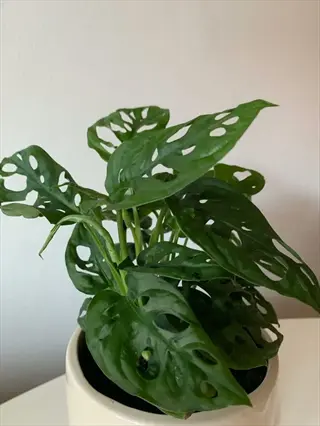
Monstera Deliciosa Mint
- Variegation type: Unstable sectoral variegation producing soft mint-green and white patches on a darker green base, creating a subtle and cool-toned appearance prized by collectors.
- Pattern description: Pale mint green, white, and dark green sectors blend together in soft transitions rather than the sharp boundaries seen in Albo, giving leaves a watercolor-like quality.
- Growth characteristics: Grows at a rate similar to Albo since the light-colored sections have minimal photosynthetic capability, and the plant requires careful light management to maintain color intensity.
- Price range: Very high and among the most expensive variegated Monstera types, with specimens regularly selling for $300 to over $1,500 due to extreme rarity and collector demand.
- Care difficulty: Challenging because the mint coloring is delicate and can fade in too much or too little light, requiring precise environmental control to preserve the distinctive pale green tones.
- Best suited for: Serious collectors seeking one of the rarest variegated Monstera forms who can provide precise environmental conditions and appreciate subtle color variations over bold contrast.
5 Common Myths
Thai Constellation Monstera needs direct sunlight to maintain its cream-colored variegation pattern on leaves
Direct sunlight burns the white leaf sections because they lack protective chlorophyll, so bright indirect light is the safest option for healthy variegation
You can increase the amount of variegation on your Thai Constellation by giving it more light exposure
Variegation in Thai Constellation is genetically fixed through chimeral cell mutation and cannot be increased or decreased by changing light levels
Thai Constellation and Monstera Albo are the same plant with different names used by sellers interchangeably
Thai Constellation has stable tissue-cultured variegation with cream speckles, while Albo has unstable naturally occurring white variegation that can revert to green
Misting your Thai Constellation daily is the best way to provide the humidity it needs to thrive indoors
Misting provides only seconds of increased humidity and can promote fungal growth on leaves, so a humidifier or pebble tray works far better for consistent moisture
Thai Constellation Monstera grows at the same speed as a regular all-green Monstera deliciosa plant
Thai Constellation grows noticeably slower because its white and cream leaf sections cannot photosynthesize, reducing the total energy the plant can produce for growth
Conclusion
Your thai constellation monstera can thrive for 10 to 20 years when you give it the right care. Keep temps between 60 to 85°F, humidity above 50%, and bright light for 4 to 6 hours each day. These simple steps protect the cream and green pattern that makes this monstera deliciosa so special.
I've found that knowing the science behind chimeral variegation makes you a better plant parent. When you know that white cells can't make energy, you understand why your plant needs more light than a green Monstera. That same knowledge helps you spot problems before they get worse and keeps your plant looking its best.
Good variegated monstera care doesn't have to be hard. The right soil mix stops root rot. The right light keeps new leaves full of cream and green. And the stable variegation means you won't wake up one day to find your rare houseplants have turned green on you.
Tissue culture labs are making more Thai Constellations every year, so prices keep dropping. This is a great time to start growing one of the most loved rare houseplants in the world. What started as a single lab mutation in Thailand now sits on windowsills in millions of homes across the globe.
External Sources
Frequently Asked Questions
Why is Thai Constellation Monstera so expensive?
Thai Constellation Monstera commands high prices because it originates from a single tissue culture laboratory in Thailand, creating limited supply against enormous global demand.
What Monstera plant sold for a record price?
Extremely rare variegated Monstera specimens, particularly large and heavily variegated Monstera Albo and Thai Constellation plants, have sold for record prices at auction.
How do you care for a Thai constellation Monstera?
Provide bright indirect light for 4 to 6 hours daily, water when the top two inches of soil dry out, maintain humidity above 60 percent, and use a chunky aroid soil mix.
How rare is Thai constellation Monstera?
Thai Constellation Monstera remains relatively rare because production is limited to tissue culture from a single laboratory in Thailand, though availability has increased in recent years.
Is Thai constellation easy to grow?
Thai Constellation is moderately easy to grow for anyone with basic houseplant experience, though it needs more light and careful watering than a standard Monstera deliciosa.
What is a billionaire plant?
A billionaire plant refers to extremely rare and expensive houseplants, often variegated varieties like Thai Constellation Monstera, that command thousands of dollars per specimen.
What is the most expensive houseplant?
The most expensive houseplant ever sold was a variegated Monstera Adansonii that fetched over $38,000 at auction in New Zealand.
Can I grow a Thai constellation in water?
You can root Thai Constellation cuttings in water temporarily, but long-term water culture limits nutrient access and increases the risk of root rot.
Do monsteras prefer deep or wide pots?
Monsteras prefer pots that are slightly wider than deep, with drainage holes, sized about 2 inches (5 centimeters) larger than the root ball.
What are common problems with Monstera Thai Constellation?
Common problems include brown spots from sunburn on white leaf sections, root rot from overwatering, yellowing leaves from nutrient deficiency, and pest infestations from thrips or spider mites.