
Introduction
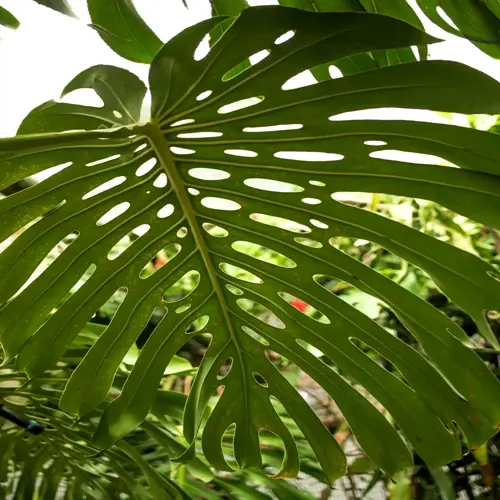
The swiss cheese plant gets its name from the bold holes that punch through its wide green leaves. Monstera deliciosa grows wild in warm forests. It climbs tall trees to reach scattered bits of sunlight far above the ground. A 2013 study found that these fenestrated leaves boost the plant's fitness by helping it catch more light on the dim forest floor.
Think of each hole as a tiny skylight. Light passes down to the lower leaves instead of getting blocked by solid green above. I've grown Monstera for over 8 years now as my favorite tropical houseplant. Young leaves come out solid and smooth every time. As the plant gets enough bright indirect light, new leaves start showing those iconic splits and holes.
Most care guides tell you the basics but skip the science that makes this plant so special. The genus Monstera holds over 60 species and new ones keep getting found each year. This guide gives you practical care advice along with the real science behind how your plant grows.
You'll find variety breakdowns and seasonal care schedules below. We also cover propagation methods and pest fixes. Whether you just brought home your first Monstera or you've had one for years, this guide has something fresh for you.
6 Popular Monstera Varieties
You can choose from many swiss cheese plant types. The genus holds over 60 species, and a handful have become staples in homes just like yours. I've owned 4 of the 6 monstera varieties listed below and I can tell you each one has its own look and care needs.
Your 2 best options at most stores are monstera deliciosa vs adansonii. Genetic studies confirm they share a common ancestor. Yet their leaves look quite different from each other. Deliciosa grows big leaves with deep splits while monstera adansonii stays smaller with round holes. Here's a full breakdown of the 6 best types you can grow in your home.
Monstera Deliciosa
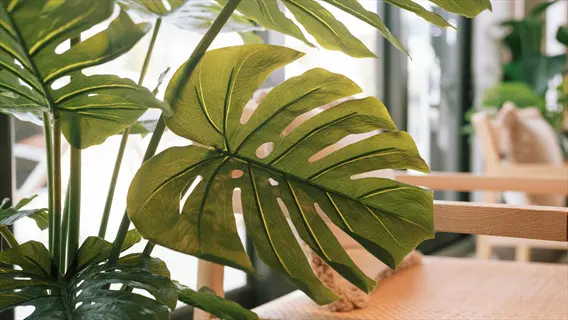
- Native Range: Originates from southern Mexico and Central America, where it grows as a climbing vine reaching up to 66 feet (20 meters) tall in tropical rainforests.
- Leaf Shape: Produces large heart-shaped leaves measuring 10 to 35 inches (25 to 89 centimeters) long with deep splits and oval fenestrations that develop as the plant matures.
- Growth Habit: Climbs using thick aerial roots that anchor to trees and absorb moisture, and can exceed 10 feet (3 meters) tall when grown indoors with a moss pole.
- Care Level: Considered beginner-friendly with moderate water needs and tolerance for a range of indoor light conditions from medium to bright indirect.
- Unique Feature: Produces an edible fruit called Mexican Breadfruit when grown outdoors in tropical climates, though the unripe fruit contains toxic calcium oxalate crystals.
- Best For: You want a dramatic statement piece with large fenestrated foliage and steady growth throughout the year in your home.
Monstera Adansonii
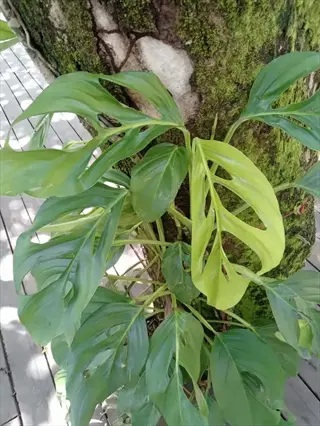
- Native Range: Found across Central and South America in humid tropical forests, growing as an epiphyte on larger trees with a more compact habit than its larger cousin.
- Leaf Shape: Features smaller leaves around 8 to 15 inches (20 to 38 centimeters) long with numerous oval holes scattered across the leaf surface rather than deep splits.
- Growth Habit: Grows as a trailing or climbing vine that looks great in hanging baskets or trained up a support structure with a faster growth rate than M. deliciosa.
- Care Level: Needs higher humidity around 65% to 80% and more consistent moisture than M. deliciosa, making it a moderate care plant.
- Unique Feature: Often sold under the common name Swiss cheese vine, and its leaves develop fenestrations at a younger age compared to M. deliciosa.
- Best For: You have limited floor space and want cascading tropical foliage from a shelf or hanging planter in your room.
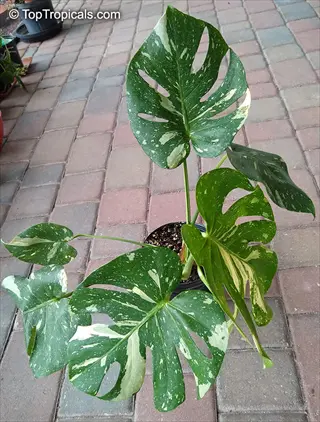
Monstera Thai Constellation
- Origin: A tissue-cultured cultivar developed in Thailand from Monstera deliciosa, featuring stable variegation that appears as cream and white splashes across green leaves.
- Leaf Shape: Produces large fenestrated leaves similar to standard M. deliciosa but with irregular patterns of cream, yellow, and white marbling that make each leaf unique.
- Growth Habit: Grows at a slower pace than non-variegated forms because the white portions of leaves contain less chlorophyll and produce less energy through photosynthesis.
- Care Level: Requires brighter indirect light than standard Monstera to compensate for reduced chlorophyll, and overwatering must be avoided as variegated plants are more susceptible to root rot.
- Unique Feature: Unlike unstable variegation in some plants, Thai Constellation maintains its patterning through propagation because the variegation is encoded in the plant's tissue culture.
- Best For: You're willing to invest more for a striking ornamental specimen with reliable variegated foliage that holds its pattern over time.
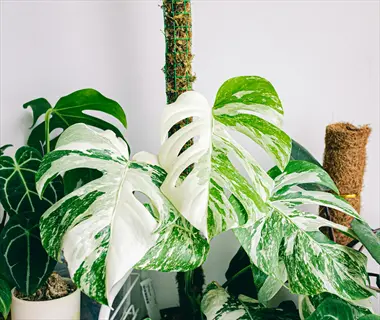
Monstera Deliciosa Albo Borsigiana
- Origin: A naturally occurring mutation of Monstera deliciosa that produces dramatic white and green variegation, with each leaf displaying a different ratio of color.
- Leaf Shape: Slightly smaller leaves than standard M. deliciosa with bold patches of pure white, half-moon patterns, or full white leaves known as full-moon leaves.
- Growth Habit: Grows much slower than green Monstera because full white sections cannot photosynthesize, and the plant must rely on its green portions alone for energy.
- Care Level: Demands careful attention to light levels and watering since the white tissue is more prone to browning and sunburn than green tissue.
- Unique Feature: Variegation is unstable and chimeric, meaning cuttings do not always maintain the same variegation pattern, which contributes to its rarity and high price.
- Best For: You enjoy the challenge of maintaining delicate variegation and you appreciate each leaf as a one-of-a-kind creation.
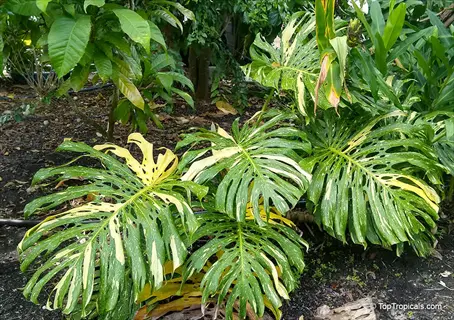
Monstera Obliqua
- Native Range: Very rare in the wild, found in isolated pockets of Central and South American rainforests, and often misidentified by sellers who offer M. adansonii instead.
- Leaf Shape: Leaves are paper-thin with fenestrations so large that more hole exists than leaf tissue, giving them a delicate lace-like appearance unlike any other Monstera species.
- Growth Habit: Grows at a very slow pace as a small climbing vine and needs humidity above 80% at all times, making it a poor fit for typical household conditions.
- Care Level: One of the hardest Monstera species to keep alive indoors due to extreme humidity needs and high sensitivity to changes in its environment.
- Unique Feature: Often called the unicorn of the plant world because true M. obliqua is very rare in cultivation, and most plants sold under this name are just M. adansonii.
- Best For: Advanced collectors with greenhouse setups or enclosed terrariums who can keep humidity high enough for this species to survive.
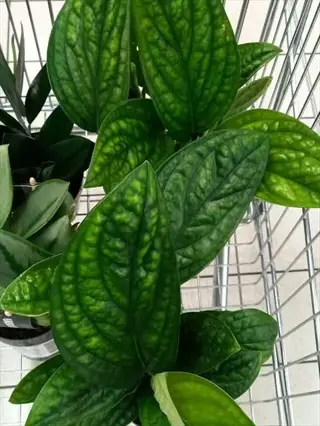
Monstera Peru (Karstenianum)
- Native Range: Native to Peru and surrounding tropical regions, this species stands apart from other Monstera because its thick, textured leaves lack the signature fenestrations.
- Leaf Shape: Produces stiff, dark green leaves with a ridged and puckered texture that feels almost like leather, measuring 3 to 6 inches (8 to 15 centimeters) long.
- Growth Habit: Grows as a compact climbing vine that stays more manageable in size than M. deliciosa, reaching about 6 to 8 feet (1.8 to 2.4 meters) with support.
- Care Level: One of the easier Monstera species to grow because it tolerates lower humidity and less frequent watering thanks to its thick succulent-like leaves.
- Unique Feature: The textured, hole-free leaves make this species a conversation starter and offer a different aesthetic from the classic fenestrated Monstera look.
- Best For: You want an unusual Monstera variety that is easier to care for and adds interesting textural contrast to your plant collection.
Light, Water, and Humidity
Getting your monstera light requirements right is the single biggest factor in growing those famous holes. Bright indirect light triggers the plant to produce fenestrated leaves. This happens because the plant evolved to catch scattered sunflecks on the forest floor. Place your hand between the plant and your window. If you see a soft shadow with blurred edges, you've found the sweet spot.
Watering monstera is simple once you learn the finger test. Push your finger 2 inches into the soil before you add water. If the soil feels dry at that depth, go ahead and give it a good soak. Make sure you use a pot with drainage holes and well-draining soil. Roots that sit in soggy soil will rot fast. I lost my first Monstera to root rot because I skipped this step.
Monstera humidity should stay between 60% and 70% for the best growth results. You can check this with a cheap hygrometer from any garden store. A pebble tray or a small humidifier near the plant does the job well. Monstera temperature works best in the 65°F to 85°F range during the growing season from March through September.
Your plant needs a winter rest from December through February. Drop the temperature to 55°F to 65°F and cut back on watering during these months. This rest period mimics the natural dormancy cycle the plant goes through in the wild. You'll notice slower growth and that's normal. The table below breaks down what your plant needs each season.
How to Propagate Monstera
Learning how to propagate monstera is one of the most fun parts of owning this plant. You can turn a single stem into a brand new plant with just a clean cut and some patience. The key to monstera propagation is the node. That's the bumpy spot on the stem where aerial roots and new leaves grow from. Without a node on your stem cuttings, roots won't form at all.
I tried node cutting on dozens of Monstera plants over the years and found a method that works every time. Cut at a 45 degree angle about an inch below the node. This gives you more surface area for roots to form. Use clean scissors or a sharp blade to make the cut. My top pick for beginners is water propagation. It works great because you can watch roots grow through a clear glass jar.
Water Propagation
- How It Works: Cut a stem section with at least one node and one healthy leaf, place it in a clear glass jar filled with room-temperature water, and change the water every 3 to 5 days.
- Timeline: White root nubs typically appear within 7 to 10 days, with roots reaching 2 to 3 inches (5 to 8 centimeters) long and ready for potting in 2 to 4 weeks.
- Best For: Beginners who want to monitor root development visually and enjoy watching the process through a clear container on a bright windowsill.
Soil Propagation
- How It Works: Dip the cut end of a stem section in rooting hormone powder, then plant it into moist well-draining potting mix with the node buried about 1 inch (2.5 centimeters) deep.
- Timeline: Roots establish within 2 to 4 weeks underground. Tug the cutting after 3 weeks and if you feel resistance, roots have formed with success.
- Best For: Experienced growers who want to skip the transition shock that sometimes occurs when moving water-rooted cuttings into soil.
Air Layering
- How It Works: Wrap damp sphagnum moss around a node on an intact stem, cover the moss with plastic wrap to hold in moisture, and secure both ends with twist ties or string.
- Timeline: Roots grow into the moss over 4 to 6 weeks. Once roots fill the moss bundle through the plastic, cut the stem below the new root ball and pot it.
- Best For: Growers who propagate from a mature plant and want a larger, stronger cutting with an established root system before separating it from the mother plant.
Division at Repotting
- How It Works: When you repot a large Monstera with multiple stems, separate the root ball into 2 or more sections, each with its own stem, leaves, and healthy root system.
- Timeline: Divided plants recover and resume active growth within 2 to 3 weeks since they have established root systems and do not need to grow new roots from scratch.
- Best For: Owners of large, mature Monstera plants that have outgrown their space and want to create multiple full plants right away rather than starting from small cuttings.
Variegated types like the Albo root slower than the standard green form. If you have a variegated cutting, try sphagnum moss instead of water. This lowers your risk of rot while the new roots take shape over those first few weeks.
Repotting and Feeding
You should repot monstera every 1 to 2 years to keep it growing strong. I noticed my plants grow faster after a fresh pot upgrade in early spring. That's when the growing season starts in March and your plant has the most energy to settle into its new home. Watch for signs of a root bound monstera like roots poking out of pot drainage holes or water that runs straight through the soil.
My favorite monstera soil mix uses a simple formula you can make at home. Combine 2 parts coco coir, 1 part perlite, and 1 part orchid bark for the perfect blend. This gives you well-draining soil that still holds enough water for the roots to drink between watering days. You can find all 3 items at any garden store for about $15 total.
Feed your plant with monstera fertilizer at half strength every 2 weeks from March through September. I used full strength once and burned the roots on a plant I'd had for 3 years. That mistake taught me to dilute the mix every single time. Stop feeding in winter when your plant goes dormant and doesn't need the extra food.
Terracotta pots wick moisture away faster and suit you if you tend to overwater your plants. Plastic pots hold water longer for those of you who forget to water on time. Either way, make sure your pot has pot drainage holes. Water needs a way to escape so your roots stay healthy and don't sit in moisture. The chart below helps you pick the right pot for your watering style.
Troubleshooting Leaf Problems
Even the best plant owners run into common monstera problems from time to time. I found that most issues come down to water, light, or pests. The trick is catching the problem early before it spreads to the whole plant. Below you'll find the 5 most common issues I see with Monstera and how to fix each one fast.
One thing to keep in mind as you handle stressed leaves is that the plant contains calcium oxalate crystals. These tiny needle shaped crystals can irritate your skin and mouth if you touch sap from damaged stems. Wear gloves when you prune sick leaves and wash your hands after working with your plant. Curling leaves and monstera brown spots both signal that something needs your attention right away.
Yellow Leaves
- Symptom You See: Monstera yellow leaves show up on the lower part of your plant first, often turning soft and pale before dropping off the stem on their own.
- Cause Behind It: Overwatering is the top reason for yellowing leaves. Soggy soil chokes your roots and leads to root rot that spreads through the whole system.
- Fix to Apply: Let the soil dry out before your next watering, check that your pot has drainage holes, and switch to a chunkier soil mix with more perlite.
Brown Leaf Tips
- Symptom You See: Leaf edges and tips dry out and turn crispy brown, often starting at the very tip and spreading inward along the margins of the leaf.
- Cause Behind It: Low humidity below 50% or gaps in your watering routine cause this issue, and it gets worse in winter when your home heating dries the air.
- Fix to Apply: Use a humidifier or pebble tray near your plant, aim for 60% to 70% humidity, and set a consistent watering schedule based on soil checks.
No New Fenestrations
- Symptom You See: Your mature plant keeps pushing out solid leaves without any of those iconic holes or splits that make Monstera so popular among growers.
- Cause Behind It: Not enough light is the main reason mature plants skip fenestrations, since the holes form as a response to the plant's need for scattered light.
- Fix to Apply: Move your plant to a brighter spot with 8 to 10 hours of bright indirect light and add a moss pole so it can climb and grow larger leaves.
Root Rot
- Symptom You See: Stems feel mushy at the base, leaves droop even though the soil is wet, and you notice a foul smell when you pull the plant from its pot.
- Cause Behind It: Root rot starts when roots sit in soggy soil too long and fungal pathogens attack the weakened tissue, turning healthy white roots brown and soft.
- Fix to Apply: Remove the plant from its pot, trim all brown mushy roots with clean scissors, let the root ball air dry for a few hours, and repot in fresh soil.
Spider Mites and Thrips
- Symptom You See: Tiny dots or fine webbing appear on leaf undersides for spider mites, while thrips leave small silver streaks and black dots of waste on your leaves.
- Cause Behind It: Dry indoor air draws in spider mites and thrips can arrive on new plants you bring home without checking them first for pest management.
- Fix to Apply: Isolate your plant, wipe leaves with a damp cloth, then spray all surfaces with neem oil or insecticidal soap every 5 to 7 days for 3 weeks.
Most of these problems trace back to overwatering or bad light. I learned to always check soil moisture before every single watering. This one habit prevents most issues before they start. Get a cheap moisture meter and you'll save yourself a lot of stress.
Pet Safety and Toxicity
The ASPCA lists Monstera as ASPCA toxic to both dogs and cats, so this matters if you have pets at home. The swiss cheese plant poisonous effects come from calcium oxalate crystals inside every part of the plant. These tiny needle shaped crystals work by poking through the soft tissue in your pet's mouth. They don't use chemicals to cause harm. The physical contact alone triggers pain and swelling.
If your cat or dog bites a leaf, you'll likely see drooling, pawing at the mouth, and signs of oral pain right away. Vomiting and trouble swallowing can follow in more serious cases. The good news is that the intense burning from that first bite usually stops pets from eating more. Severe poisoning is rare for this reason but you should still call your vet or ASPCA Poison Control right away.
I learned this risk the hard way when my cat nibbled a low hanging leaf years ago. Now I keep all my Monstera on high shelves or in rooms my pets can't reach. You should think about elevated stands, wall mounted shelves, or a room with a closed door. If you want a similar look without the risk, try pet-safe houseplants like calathea and spider plants.
You also need to think about child safety. Kids can react to the crystals in the leaves and stems just like pets do. Keep your Monstera out of reach of small children who might grab or chew on the foliage. The table below gives you a quick reference for everything you need to know about monstera toxic cats dogs risks.
5 Common Myths
Swiss cheese plants purify indoor air and remove harmful toxins from your home effectively.
The American Lung Association confirms that you would need roughly 680 plants in a 1,500 square foot (139 square meter) home for any measurable air-cleaning effect.
Monstera leaves develop holes because the plant is unhealthy or receiving too much direct sunlight.
Leaf fenestrations are a genetically encoded adaptation. Holes form through programmed cell death and help the plant capture scattered light in its native rainforest understory.
Swiss cheese plants and split-leaf philodendrons are the same species with interchangeable names.
Monstera deliciosa belongs to genus Monstera while true philodendrons belong to genus Philodendron. They are separate genera within the Araceae family.
You should cut off aerial roots because they look messy and serve no real purpose for the plant.
Aerial roots are essential for climbing, anchoring, and absorbing moisture and nutrients. Removing them weakens the plant and limits its natural growth pattern.
Misting your Monstera daily is the best way to provide the tropical humidity it needs to thrive.
Misting raises humidity for only a few minutes and can promote fungal issues on leaves. A humidifier or pebble tray provides consistent humidity much more effectively.
Conclusion
Swiss cheese plant care comes down to 3 simple things that make all the difference. Give your monstera plant bright indirect light for 8 to 10 hours a day to help those holes develop. Check the top 2 inches of soil before you water every time. Keep humidity above 60% and your plant will reward you with bigger, more stunning leaves each year.
Those famous holes aren't random damage or a sign that something went wrong. They're a smart move by nature backed by real research. The plant evolved these fenestrations to catch scattered light in dark forests. I noticed the same process plays out on your windowsill at home. Watch your new leaves and you'll see the splits get larger and bolder as your monstera deliciosa grows.
It is a great and easy tropical houseplant. It won't ask for much from you at all. Stick to the basics in this guide and your plant will thrive for years. I grew the same Monstera for over 8 years now and it just keeps getting better. Each new leaf comes out bigger than the last.
Over 60 species exist and new varieties hit stores each year. Indoor plants like Monstera keep growing in appeal for good reason. Whether you own one plant or a whole group, the best part is watching your green friend grow right along with you.
External Sources
Frequently Asked Questions
How do you take care of a Swiss Cheese Plant?
Provide bright indirect light, water when the top two inches of soil are dry, maintain 60 to 70 percent humidity, and feed biweekly during the growing season with half-strength fertilizer.
Is a Swiss Cheese Plant a good indoor plant?
Yes, Swiss cheese plants are excellent indoor plants because they tolerate a range of light conditions, grow well in typical household temperatures of 65 to 85 degrees Fahrenheit (18 to 29 degrees Celsius), and require relatively low maintenance.
What are the benefits of a Swiss Cheese Plant?
Benefits of a Swiss cheese plant include:
- Striking fenestrated foliage that adds visual interest to any room
- Low-maintenance care requirements suitable for beginners
- Natural climbing habit that creates vertical greenery
- Long lifespan with proper care, growing for decades indoors
Are Swiss cheese plants the same as Monstera?
Swiss cheese plant is a common name often used for Monstera deliciosa, but it can also refer to Monstera adansonii. Both belong to the genus Monstera but are distinct species with different leaf shapes and growth habits.
How do I make my Monstera happy?
Keep your Monstera happy by providing bright indirect light for 8 to 10 hours daily, watering consistently, maintaining humidity above 60 percent, offering a moss pole for climbing support, and fertilizing during the growing season from March through September.
How often should I water my Swiss cheese plant?
Water your Swiss cheese plant when the top two inches of soil feel dry, which is typically once a week during summer and every 10 to 14 days in winter. Always check soil moisture before watering to prevent root rot.
Why is Monstera so expensive?
Monstera prices vary based on several factors:
- Rare variegated varieties like Thai Constellation are slow to propagate
- High demand driven by social media popularity
- Mature specimens take years to develop large fenestrated leaves
- Import restrictions on certain cultivars limit supply
What should you not do with Monstera?
Common mistakes to avoid with Monstera include overwatering which causes root rot, placing in direct sunlight which burns leaves, using pots without drainage holes, ignoring pest infestations, and cutting aerial roots which the plant needs for stability and nutrient absorption.
Is Swiss cheese plant good for bedroom?
Swiss cheese plants can grow well in bedrooms as long as the room receives bright indirect light. They tolerate lower light but may produce fewer fenestrations. Keep in mind they are toxic to pets, so place them out of reach if animals share the bedroom.
Do monsteras prefer deep or wide pots?
Monsteras prefer deep pots because their root systems grow downward and need vertical space. Choose a pot that is 2 inches (5 centimeters) wider than the current one when repotting, and ensure it has drainage holes to prevent waterlogging.