
Introduction
The monstera deliciosa won 2025 Houseplant of the Year from the National Garden Bureau. I have grown one for over 6 years, and no other plant changes a room quite like this tropical houseplant. It comes from the Araceae family and grows wild in Central American jungles. Out there, it can climb 30 to 70 feet up the trees.
I bought my first Swiss cheese plant at a garden center that labeled it a split leaf philodendron. That tag was flat out wrong. Monstera deliciosa sits in a genus with over 50 species. It has zero relation to true philodendrons. Getting the name right matters because philodendron care guides can lead you astray.
Think of Monstera as a jungle hitchhiker that climbs trees toward light. That explains why it thrives in bright corners but burns in full sun. Indoors, this vine tops out at 6 to 8 feet tall. It rewards you with those iconic fenestrated leaves that make every plant lover stop and stare.
This guide covers soil mix, watering, and propagation methods. You will also learn about toxicity warnings and the edible fruit most owners miss. Whether you just got your first monstera or want to fix an older plant, the answers sit below. All facts come from real university research.
Essential Care Requirements
Good monstera care boils down to copying what the plant gets in the jungle. That means bright indirect light, steady moisture, and soil that drains fast. I killed my first monstera by keeping it in a dark corner with heavy potting soil. Once I moved it near a window and fixed the monstera soil mix, new leaves started popping out every 2 weeks.
The chart below breaks down each factor so you can scan straight to your concern. Watch out for monstera humidity and monstera watering since those trip up most new owners. I also added the monstera fertilizer schedule that gave my plant the best growth over 3 full growing seasons.
Light and Placement
- Ideal Light: Bright indirect light or dappled sunlight with 2-6 hours of filtered sun per day, which mimics the forest canopy conditions where Monstera grows naturally in the wild.
- Window Choice: East-facing or north-facing windows work well for consistent gentle light, while south and west windows need sheer curtains to filter intense afternoon sun rays.
- Low Light Warning: Monstera tolerates lower light but will grow slowly, produce smaller leaves, and develop fewer or no fenestrations if kept too far from a light source.
- Variegated Needs: Albo Variegata and Thai Constellation need brighter light than the standard green form because their white leaf sections cannot produce energy through photosynthesis.
Watering Schedule
- Frequency Check: Let the top 1-2 inches (2.5-5 cm) of soil dry out between waterings, then soak thoroughly until water drains from the bottom holes of the pot.
- Seasonal Adjustment: Water more frequently during spring and summer active growth, and reduce watering in fall and winter when the plant slows down and uses less moisture.
- Guttation Signal: Water droplets appearing on leaf tips (called guttation) mean the growing medium is too moist, and you should reduce watering to prevent potential root rot.
- Drainage Priority: Always use pots with drainage holes and never let the plant sit in standing water, as soggy roots are the leading cause of Monstera decline and death.
Soil and Potting Mix
- Base Mix: Start with a standard peat-based indoor potting mix as the foundation, which provides moisture retention and a slightly acidic pH in the 6.0-8.0 range Monstera prefers.
- Amendments: Penn State Extension recommends adding charcoal, bark, or perlite to improve drainage and aeration, mimicking the loose organic debris Monstera roots grow through in nature.
- Recipe Suggestion: A reliable mix combines roughly equal parts potting soil, perlite, and orchid bark, creating the chunky, well-draining texture that prevents waterlogged roots.
- Repotting Soil: When moving to a larger pot, use fresh mix rather than reusing old soil, which may have compacted, lost nutrients, or developed fungal issues over time.
Humidity and Temperature
- Humidity Target: Penn State Extension recommends humidity above 50% for optimal growth, achievable with a humidifier, pebble tray, or grouping plants together in one area.
- Temperature Range: Keep your Monstera between 60-85°F (15-29°C) for healthy growth, and never expose it to temperatures below 50°F (10°C) indoors.
- Frost Sensitivity: UF/IFAS data shows leaf damage occurs at 30-32°F (-1 to 0°C) and stem damage at 26-28°F (-3 to -2°C) for outdoor specimens.
- Dry Air Signs: Brown crispy leaf edges, curling tips, and slow growth often indicate humidity is too low, especially during winter when indoor heating dries the air significantly.
Fertilizer and Nutrients
- Feeding Schedule: Apply a balanced liquid fertilizer every 2 weeks during the active growing season and reduce to once a month during fall and winter.
- N-P-K Ratio: An N-P-K ratio of 3:1:2 or 3:1:3 supports the leafy vegetative growth Monstera is prized for, with nitrogen driving the large, lush foliage development.
- Micronutrients: UF/IFAS research identifies zinc, manganese, magnesium, and iron as important micronutrients for Monstera, especially for outdoor landscape specimens in sandy soils.
- Overfeeding Signs: Yellow leaf margins, white salt crust on soil, and stunted new growth can signal fertilizer burn, which is remedied by flushing the soil with plain water.
Support and Training
- Why Support Matters: Monstera is an epiphytic climbing vine with stems reaching 2.5-3 inches in diameter, and vertical growth encourages larger leaves with more fenestrations.
- Support Options: Moss poles, bamboo stakes, coco coir poles, and trellises all work, with moss poles offering the added benefit of moisture for aerial roots to grip and absorb.
- Aerial Root Care: Tuck aerial roots into the soil or direct them toward a moist moss pole rather than cutting them off, as they help anchor the plant and absorb nutrients.
- Pruning Approach: Trim leggy stems just above a node to encourage bushier growth, and use healthy stem cuttings with at least one node for propagation projects.
8 Monstera Deliciosa Varieties
The monstera varieties you find at stores and online shops range from cheap starter plants to rare collector items worth hundreds. I have grown 4 of the 8 types on this list, and each one brings a different look to your space. The variegated monstera types need extra light and grow slower, so pick the right one for your setup.
I split this list into green types, variegated types, and close relatives. The genus holds over 50 species in total. These 8, from the big green classic to the tiny Monstera adansonii, are the ones I trust based on what I grew in real rooms.
Monstera Deliciosa (Standard)
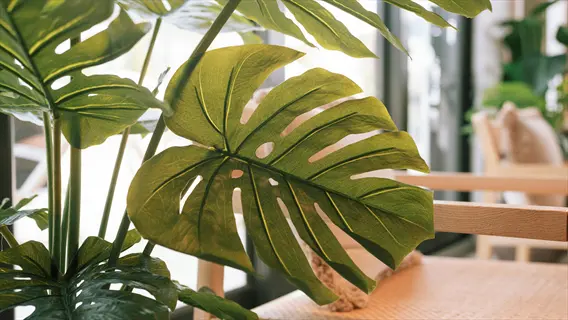
- Leaf Size: Mature leaves can reach over 3 feet long and 2-3 feet wide in outdoor settings, making it one of the largest houseplant leaves you can grow at home.
- Fenestrations: Only mature leaves develop the signature holes and splits. Young plants may grow solid leaves for several years before any cuts appear.
- Growth Rate: NC State Extension calls this a rapid grower. It can reach 6-8 feet indoors with a sturdy climbing support and proper lighting.
- Light Needs: Performs best in bright indirect light with 2-6 hours of filtered sun. It handles lower light better than variegated types.
- Availability: The most common and budget option. You can find it at garden centers, big box stores, and online shops at low price points.
- Best For: First time Monstera owners who want big leaves without the higher price or extra care that variegated plants demand.
Monstera Deliciosa Albo Variegata
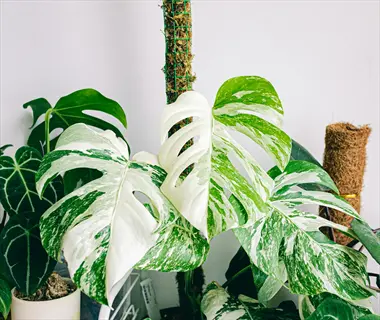
- Leaf Pattern: Produces striking white and green color that appears in random splashes, half moon patterns, or full white sectors across each leaf.
- Growth Rate: Grows much slower than the standard type because white leaf sections lack chlorophyll and cannot make energy for the plant.
- Light Needs: Needs brighter indirect light than the green form to make up for less chlorophyll. Direct sun will scorch the white leaf tissue.
- Price Range: Commands premium prices due to slow growth, hard mass production, and high collector demand in the houseplant market.
- Propagation: Stem cuttings must contain a variegated node to ensure the new plant keeps its white and green coloring intact.
- Stability: Color patterns can revert to all green or all white. Prune green stems to maintain the desired leaf pattern balance.
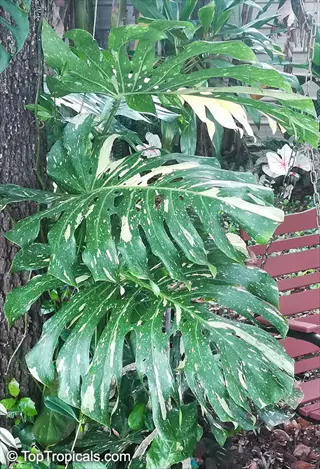
Monstera Thai Constellation
- Leaf Pattern: Features creamy speckles scattered across dark green leaves in a star pattern that stays more stable than Albo coloring.
- Growth Habit: Penn State Extension notes this cultivar has shorter internodes. That gives it a more compact shape that works well in small rooms.
- Stability: Tissue culture production makes the speckled pattern more stable from leaf to leaf compared to the random Albo Variegata.
- Price Trend: Prices dropped from around $700 to about $30 as tissue culture scaled up. This makes it a great value for collectors now.
- Light Needs: Needs bright indirect light like Albo but handles a bit less since each leaf keeps more green tissue for making energy.
- Best For: Collectors who want stable color without the high care and reversion risk that comes with owning an Albo plant.
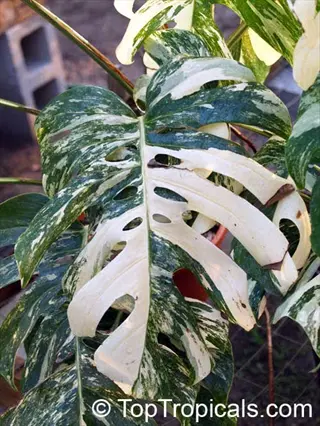
Monstera Deliciosa Marmorata
- Leaf Pattern: Displays a marble look with yellow green streaks and patches blended into the darker green base for a subtle, classy look.
- Rarity: One of the least common named types. UF/IFAS lists it as a real cultivar, but most plant shops do not stock it.
- Growth Rate: Grows at a moderate pace, faster than heavy Albo specimens but slower than the standard green form due to less chlorophyll.
- Care Needs: Follows the same care as the standard type with a bit more light to support the areas with less chlorophyll.
- Size: Reaches the same mature size as standard Monstera. Leaves can grow over 18 inches wide with good support and light.
- Best For: Plant fans who want a unique color pattern that offers a softer, more natural look than the bold contrast of Albo or Thai types.
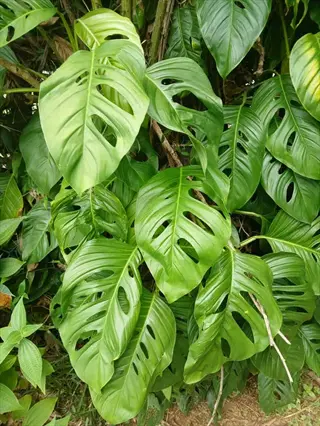
Monstera Adansonii
- Leaf Size: Produces much smaller leaves than deliciosa, about 4-8 inches long, with more holes spread across each leaf blade.
- Growth Habit: Penn State Extension notes this species reaches 3-8 feet as a houseplant and has a vining habit great for hanging baskets or shelves.
- Fenestrations: Holes show up on younger, smaller leaves. M. deliciosa only makes fenestrations after leaves reach maturity over several growing seasons.
- Common Names: Often called the Swiss cheese vine to set it apart from the larger Swiss cheese plant, though both names get swapped in stores.
- Care Differences: Prefers a bit higher humidity and more frequent watering than M. deliciosa because its thinner leaves lose moisture faster.
- Best For: Growers who love the Monstera look but have limited floor space. It works great trailing from a shelf or climbing a small moss pole.
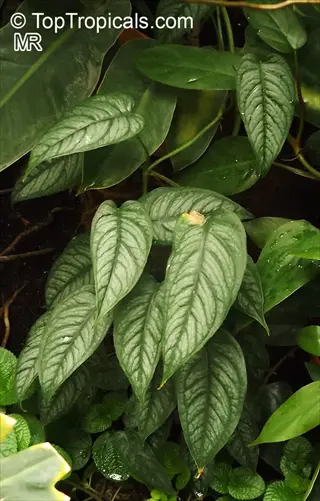
Monstera Siltepecana
- Leaf Look: Young leaves show a silver sheen with darker green veins, creating a lance shaped leaf that looks quite different from other Monstera types.
- Growth Stages: Goes through a dramatic change as it matures, shifting from small silver leaves to larger green fenestrated leaves when given a support to climb.
- Size: Stays smaller than Monstera deliciosa indoors, making it a good pick for desks, shelves, and compact rooms that lack space for big plants.
- Availability: More and more online plant shops now carry it, though it is still less common than M. deliciosa or M. adansonii at garden centers.
- Care Needs: Thrives in the same bright indirect light and fast draining soil mix as M. deliciosa, with similar watering and humidity above 50%.
- Best For: Plant collectors who want a Monstera species with a unique leaf change that creates new visual interest as the plant grows over time.
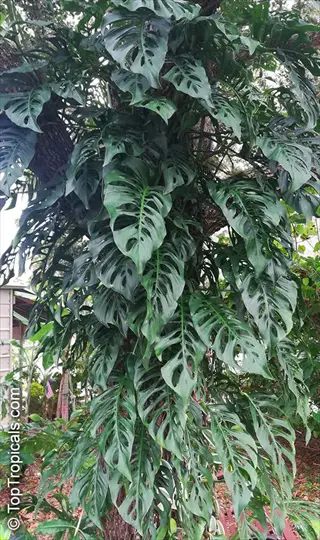
Monstera Obliqua
- Leaf Structure: Known as the most fenestrated Monstera, with leaves that can be over 90% hole, leaving only thin ribbons of green between the edges.
- Rarity: Very rare in stores and often mislabeled. Many plants sold as M. obliqua are just M. adansonii with large fenestrations.
- Price: Among the most costly Monstera species due to extreme rarity, very slow growth, and limited stock from specialist nurseries worldwide.
- Humidity Needs: Requires very high humidity, often 80% or above, to keep the thin leaf tissue from drying out and turning brown and crispy.
- Growth Rate: Grows very slow compared to all other Monstera species, producing new leaves only every few weeks to months even in ideal conditions.
- Best For: Advanced collectors with greenhouse or humidity cabinet setups who can provide the steady high moisture this species needs to survive indoors.
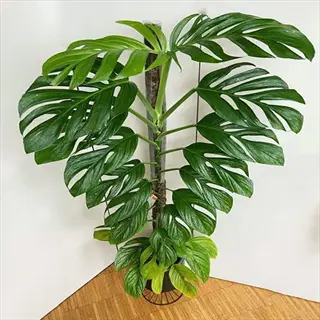
Monstera Pinnatipartita
- Leaf Shape: Develops deep lobes that split all the way to the midrib as the plant matures, creating a feathery look unlike the round holes of M. deliciosa.
- Growth Habit: A strong climber that grows larger, more dramatic split leaves as it goes upward on a support, similar to how M. deliciosa responds.
- Young Form: Young plants have simple, unlobed leaves that could pass for a generic tropical vine, making it tricky to identify until the plant matures.
- Size: Can reach big dimensions outdoors in tropical climates, though indoors it stays more manageable at about 4-6 feet.
- Care Needs: Thrives in the same conditions as M. deliciosa, including bright indirect light, fast draining soil, and steady moisture without soggy roots.
- Best For: Growers who love dramatic leaf shapes and want a Monstera species that offers a different look from the classic Swiss cheese plant.
Start with the standard green Monstera deliciosa if you are new to these plants. It forgives more mistakes and grows fast enough to keep you excited. Once you have that one thriving, a Thai Constellation makes a great second pick since the prices have come down so much.
How to Propagate Monstera
Monstera propagation is one of the best parts of owning this plant. I have made over a dozen new plants from a single vine using different methods. You need to find a monstera node on the stem since that bumpy ring is where roots and new growth come from. No node means no new plant, so always check before you cut.
Wisconsin Extension lists 5 proven methods for making new Monstera plants. Each one works, but they differ in speed, ease, and success rate. I tested stem cutting in water, air layering, and vine sectioning on my own plants and had the best luck with air layering. UF/IFAS data shows that cuttings take 4 to 6 years to produce fruit, while suckers take 2 to 4 years.
Stem Cuttings in Water or Soil
- How It Works: Cut a healthy stem just below a node, ensuring each stem cutting has at least one node and one leaf attached for the best chance at success.
- Water Method: Place the cutting in a clear jar with the node under water. Change the water every few days and wait 2-4 weeks for roots to grow at least 2 inches long.
- Soil Method: Dip the cut end in rooting hormone, plant it in moist well draining mix, and keep humidity high with a clear bag until new growth signals rooting.
- Timeline: Expect roots in 2-6 weeks based on temperature and light. Propagation in water lets you watch root growth, which makes it a fun method for beginners.
Air Layering
- Why Choose This: Penn State Extension calls air layering the easiest method because the cutting grows roots while still getting nutrients from the mother plant.
- Process: Wrap a monstera node on the parent plant with damp sphagnum moss. Secure it with plastic wrap and mist the moss often to keep it moist at all times.
- Root Growth: Roots tend to emerge through the moss in 4-8 weeks. Then you can cut below the rooted node and pot the new plant in fresh mix.
- Advantage: Cuts down on transplant shock because the new plant has roots set up before you separate it from the parent vine.
Simple Layering
- How It Works: Bend a low stem so that a node touches the soil in a nearby pot. Pin it down with a wire or small rock and keep the soil moist.
- Root Formation: The pinned node will grow roots into the soil over several weeks while the stem stays attached to the mother plant for steady nutrients.
- Separation: Once strong roots form and new leaf growth shows up from the layered section, cut the connecting stem and treat it as its own plant.
- Best Use: Works great for Monstera plants with long trailing stems growing along the ground or across a shelf where a node touches a surface.
Vine Sectioning
- How It Works: Cut an older, leafless vine into sections so that each piece has at least one node. Then lay sections flat on moist sphagnum moss or perlite.
- Environment: Keep the tray in a warm spot at 75-85°F (24-29°C) with high humidity and indirect light. Cover with a clear lid to hold in moisture.
- Growth Timeline: New shoots and roots emerge from each node over 4-8 weeks. Each section can grow into a full plant with its own root system over time.
- Best Use: Vine sectioning works well for bringing back older Monstera plants that have become leggy, turning one overgrown vine into multiple fresh starters.
Growing from Seed
- Availability: Monstera seeds are hard to find because the plant must flower and fruit first. That process takes 12-14 months and almost never happens indoors.
- Germination: Sow fresh seeds on the surface of moist potting mix, cover them lightly, and maintain warmth around 77-86°F (25-30°C) with steady humidity.
- Timeline: Seed grown Monstera takes the longest to reach maturity of all the methods. You will wait years before seeing large fenestrated leaves appear.
- Shingle Plant Stage: Wisconsin Extension notes that Monstera seedlings grow as shingle plants, pressing flat against dark surfaces until they find a tree trunk to climb.
Start with a stem cutting in water if you are new to monstera propagation. It takes the least effort and lets you see root progress through the glass. Once you feel confident, try air layering on your next cut for even better results.
Toxicity and Pet Safety
Your Monstera holds calcium oxalate crystals in every part of the plant. Those crystals make it monstera toxic to people and animals. NC State Extension rates the poison level as low. The plant won't kill your pet, but it will cause real pain if chewed. I keep my monstera on a high shelf away from my cats and it has never been an issue.
The crystals feel like tiny needles in the mouth and throat. Monstera cats and dogs who chew the leaves will drool a lot, vomit, and have trouble swallowing. In my experience, the best fix for monstera pets is to keep the plant out of reach. Penn State also warns about contact dermatitis from the sap, so wear gloves when you prune or take cuttings.
The monstera poisonous label scares some new owners, but the low rating means you don't need to get rid of the plant. I tested several setups and found that a simple shelf or tall plant stand solves the safety issue. Just keep it up high and wear gloves when you handle the stems.
Troubleshooting Common Issues
I have seen monstera yellow leaves, monstera brown tips, and monstera drooping on my own plants over the years. Each time, the fix came down to one of a few root causes. The table below shows you what each symptom means and how to solve it fast. Monstera pests like mealybugs and spider mites also show up here since they cause visible damage.
When I first spotted monstera not growing on my big plant, I panicked. Turns out it just needed more light and a fresh round of fertilizer after winter. Monstera root rot is the worst problem on this list because it can kill your plant if you don't catch it early. Always check the roots when you see drooping that won't fix with water.
Penn State Extension lists 6 common pests that hit Monstera: scale, aphids, mealybugs, spider mites, thrips, and fungus gnats. I check my plants each week at watering time. Catching a pest early makes the fix simple. Waiting too long turns a small problem into a full infestation that spreads to your other plants.
The Edible Monstera Fruit
You might not know your Monstera can grow an edible monstera fruit. Wisconsin Extension calls it the only ornamental aroid grown for fruit too. That makes it a true standout in your plant collection. You may also hear it called ceriman or Mexican breadfruit.
In my experience, indoor plants almost never fruit. But I tasted one at a tropical plant show and the monstera fruit taste blew me away. UF/IFAS data shows it takes 12 to 14 months from flower to full maturity. The monstera fruit ripening runs from base to tip over 5 to 6 days at 78-82°F (26-28°C).
Fruit Appearance
- Shape and Size: The fruit looks like a large green ear of corn, measuring 8-14 inches long and covered in green scales that loosen as it ripens from base to tip.
- Outer Texture: The surface has packed hexagonal plates that start firm and bright green, then turn lighter and separate from the creamy white pulp as the fruit matures.
- Interior Structure: Beneath the scales sits a central core with soft, edible pulp that looks similar to a banana in texture and color when ripe and ready to eat.
Ripening Timeline
- Total Duration: UF/IFAS data shows the fruit takes 12-14 months from initial flowering to full maturity, making it one of the slowest ripening tropical fruits around.
- Ripening Temperature: The fruit ripens best at 78-82°F (26-28°C), and the process moves from the base toward the apex over a period of 5-6 days once it begins.
- Indoor Challenges: Most indoor Monstera plants never flower or fruit because they lack the mature size, strong light, and pollinator access found in their native habitat.
Ripeness Test
- Scale Separation: The fruit is ripe when the green scales begin to lift and fall away on their own, showing the creamy white pulp beneath without any force needed.
- Aroma Check: Ripe sections give off a sweet, tropical scent similar to pineapple. Unripe parts remain odorless and should stay untouched until the scales loosen up.
- Touch Method: Only eat pulp that separates from the central core with gentle pressure. UF/IFAS warns that any section needing force to remove is not yet safe.
Flavor and Nutrition
- Taste Profile: Wisconsin Extension describes the ripe monstera fruit taste as a blend of banana, pineapple, and mango, with a creamy texture that makes it a unique treat.
- Nutritional Value: The edible pulp is high in potassium and Vitamin C, offering real nutritional benefits beyond its novelty as a fruit from a popular houseplant.
- Culinary Uses: You can eat the ripe pulp fresh, blend it into smoothies, mix it into fruit salads, or use it as a dessert topping when you can get your hands on it.
Safe Consumption
- Oxalate Danger: Unripe fruit contains calcium oxalate crystals that cause intense burning, swelling, and irritation of the mouth and throat if eaten too soon.
- Eat Only Ripe Sections: Never eat portions where the scales are still tight. Always toss the inedible central core and any green, firm sections that have not ripened.
- Allergic Reactions: Some people may feel mild skin irritation or tingling even from ripe fruit. Try a small amount first and wait before eating more.
Historical Context
- European Introduction: Monstera deliciosa was brought to England in 1752 as a decorative plant. The edible monstera fruit first reached the United States in 1874.
- Common Names: The fruit has earned the names ceriman and Mexican breadfruit, reflecting its Central American origins and the role it plays as a food source in its native range.
- Dual Purpose Plant: Wisconsin Extension notes that Monstera deliciosa is the only ornamental aroid also grown for its fruit, making it uniquely valuable among houseplants.
5 Common Myths
Monstera deliciosa needs direct sunlight to produce fenestrations on its large tropical leaves.
Fenestrations develop on mature leaves with age and sufficient bright indirect light, but direct sun can burn the foliage and cause brown, crispy patches.
Misting your Monstera deliciosa every day is the best way to provide the humidity it requires.
Daily misting provides only a brief moisture boost that evaporates quickly. A humidifier or pebble tray delivers consistent humidity above 50 percent far more effectively.
Monstera deliciosa is a type of philodendron because many sellers label it as a split-leaf philodendron.
Monstera deliciosa belongs to the genus Monstera in the Araceae family and is not a philodendron, despite the confusing common name used in garden centers.
You should cut off aerial roots because they look messy and serve no real purpose for the plant.
Aerial roots anchor the climbing vine to supports and absorb moisture from the air. Tucking them into the soil or a moss pole helps the plant grow larger, healthier leaves.
A Monstera deliciosa fruit is always poisonous and can never be eaten under any circumstances.
The ripe fruit is safe and tastes like a blend of banana, pineapple, and mango. Only unripe fruit contains harmful calcium oxalate crystals that cause irritation.
Conclusion
Great monstera deliciosa care doesn't take perfection. I have grown my Swiss cheese plant for over 6 years with consistent basic care and it rewards me every week. Keep it in bright indirect light at 60-85°F, water when the top inch dries out, and hold humidity above 50%. Use well draining soil and feed every 2 weeks during the growing season. That is the full monstera growing guide formula.
This guide gave you propagation depth across 5 methods that most resources skip. You also learned how to keep pets safe from the toxic leaves. Now you can fix yellow leaves and brown tips on your own. The edible fruit section is one that almost no other guide covers at all.
Your indoor tropical plant earned the 2025 Houseplant of the Year title for good reason. In my experience, no other plant fills a room with as much life and texture as a mature Monstera with big fenestrated leaves. It rewards steady care with fast growth you can see week after week.
Try your first propagation cut this weekend or use the symptom chart to identify a problem you spotted on your plant. The best part of growing a Swiss cheese plant is watching it respond when you give it what it needs. Your Monstera has a lot more to show you over the coming months.
External Sources
Frequently Asked Questions
How do you care for Monstera deliciosa?
Provide bright indirect light, water when the top 1-2 inches (2.5-5 cm) of soil feel dry, maintain humidity above 50 percent, and fertilize every two weeks during the growing season.
Is Monstera deliciosa a good indoor plant?
Yes, Monstera deliciosa is an excellent indoor plant because it tolerates lower light, grows rapidly, and adapts well to typical household conditions.
What is the difference between Monstera and Monstera deliciosa?
Monstera is a genus containing over 50 species, while Monstera deliciosa is one specific species known for its large, fenestrated leaves and edible fruit.
Why is Monstera deliciosa so expensive?
Standard green Monstera deliciosa is affordable, but variegated cultivars like Albo Variegata and Thai Constellation cost more due to slow growth and high demand.
How to keep a Monstera happy?
Keep your Monstera happy with consistent bright indirect light, proper watering, humidity above 50 percent, a climbing support, and regular feeding during spring and summer.
What should you not do with Monstera?
Avoid placing Monstera in direct sunlight, overwatering, using heavy compact soil, neglecting drainage, and letting pets chew the leaves.
What is the luckiest plant inside the house?
Many cultures consider money trees, jade plants, and lucky bamboo the luckiest houseplants, though Monstera is also associated with prosperity in Feng Shui traditions.
Why can't you eat monstera fruit?
Unripe monstera fruit contains calcium oxalate crystals that cause intense burning, swelling, and irritation of the mouth and throat, making it unsafe until fully ripe.
When is the best time to repot a Monstera?
Spring through early summer is the best time to repot a Monstera because the plant actively grows and recovers faster from root disturbance during these months.
How to tell if your Monstera is happy?
A happy Monstera shows dark green leaves, new growth every few weeks, fenestrations on mature leaves, firm stems, and upright posture.